Choosing a reliable DTH drill rig is the most significant investment decision for mining and quarrying professionals. To select the best equipment, you must prioritize the matching of air pressure capacity with the specific rock hardness of your site. A reliable DTH drill rig must provide enough impact energy to penetrate hard rock while maintaining low fuel consumption per meter. Most high-performance rigs utilize high-pressure air compressors to ensure the hammer functions at peak efficiency. Selecting a rig with a working pressure above 2.0 MPa can increase penetration rates by over 30% compared to low-pressure models.
You should also evaluate the structural integrity of the crawler and the hydraulic system. A down the hole drill rig operates in harsh, dusty environments that can quickly wear down inferior components. Prioritize rigs that feature heavy-duty hydraulic pumps and reinforced drill booms to ensure a lifespan of over 10,000 operating hours. Reliability is not just about power; it is about the machine’s ability to perform consistently without unscheduled downtime. Understanding these technical requirements allows you to maximize your return on investment.
Many operators focus only on the initial purchase price, which is often a mistake. The total cost of ownership depends on maintenance intervals and the availability of wear parts. A high quality down the hole hammer drill rig should offer easy access to filters and hydraulic valves for rapid servicing. By choosing a machine with standardized components, you reduce the risk of long-term project delays.
Key Specifications for a High Quality Down the Hole Hammer Drill Rig
Evaluating a high quality down the hole hammer drill rig requires a deep dive into its pneumatic and mechanical specifications. The air compressor is the heart of the system, as it drives the hammer located at the bottom of the hole. The air volume, measured in cubic meters per minute (m³/min), must be sufficient to clear cuttings from the hole effectively. If the air volume is too low, the drill bit will regrind dust, which wastes energy and accelerates wear.
Modern high-end rigs typically integrate the air compressor and the engine into one compact chassis. This configuration improves mobility and reduces the setup time between holes. Look for a DTH drill rig that offers a dual-stage air compressor for depths exceeding 20 meters. This ensures that the pressure remains constant even as the pipe string grows longer and heavier.
Understanding Air Pressure and Penetration Rates
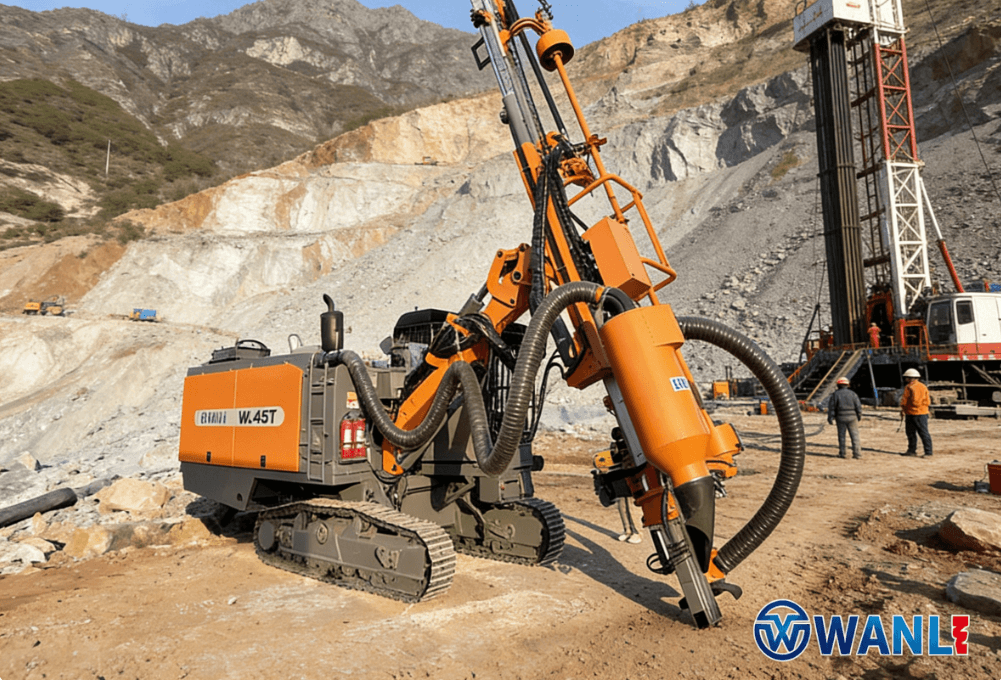
Air pressure directly determines the impact frequency and force of the down the hole hammer drill rig. In medium-hard rock, a pressure increase from 1.5 MPa to 2.4 MPa can double the drilling speed. This efficiency gain significantly reduces the labor cost per hole.
- High-pressure rigs (2.0 – 3.5 MPa) are best for granite and basalt.
- Medium-pressure rigs (1.2 – 2.0 MPa) suit limestone and softer ores.
- Low-pressure rigs (under 1.2 MPa) are generally reserved for shallow construction tasks.
Higher pressure also helps in managing groundwater influx during the drilling process. The powerful air blast clears water out of the hole, preventing the hammer from “drowning.” This capability is essential for deep-hole mining operations.
Torque and Rotation Speed Requirements
While impact energy breaks the rock, rotation is necessary to position the bit for the next strike. A reliable mining down the hole drilling rig must provide high torque to prevent the drill string from getting stuck. Torque ratings of 2,500 Nm or higher are standard for holes with diameters above 115mm.
Rotation speed should be adjustable based on the bit size and rock type. Faster rotation is used in softer formations, while slower, high-torque rotation is better for fractured hard rock. A variable displacement motor allows the operator to fine-tune these settings from the cabin.
Evaluating the Stability of a Mining Down the Hole Drilling Rig
A mining down the hole drilling rig must maintain extreme stability during the drilling process. Any vibration or movement of the rig can lead to misaligned holes or broken drill pipes. A heavy-duty crawler track system with a width of at least 300mm provides the necessary footprint for stability on uneven terrain. Crawler tensioning systems should be hydraulic to allow for easy adjustments in the field.
The boom design also plays a critical role in rig stability and versatility. A multi-angle boom allows the down the hole drilling rig to drill vertical, horizontal, and inclined holes. This flexibility is vital for slope stabilization and bench blasting in open-pit mines. The use of high-strength alloy steel in the boom construction prevents bending under the heavy weight of the feed system.
Hydraulic System Reliability and Cooling
The hydraulic system powers the tracks, the rotation head, and the feed cylinders. Using world-class hydraulic valves and pumps reduces the risk of oil leaks and pressure drops. A reliable DTH drill rig must also include an oversized oil cooling system.
- Oil Coolers: Essential for operating in ambient temperatures above 40°C.
- Filtration: Multiple stages of oil filtration prevent contamination from damaging the pump.
- Load-Sensing Hydraulics: These systems only provide power when needed, saving up to 15% in fuel.
- Hose Protection: Sleeved hydraulic hoses prevent abrasion from sharp rock fragments.
Excessive heat is the primary cause of hydraulic component failure. A well-designed cooling fan, often driven hydraulically, maintains the oil at an optimal viscosity. This ensures that the down the hole drill rig maintains its power even after hours of continuous operation.
Dust Collection and Environmental Safety
Mining regulations in most regions require advanced dust suppression systems. A high-quality mining down the hole drilling rig features a dry or wet dust collector. Dry collectors use heavy-duty filters and a vacuum system to capture fine particles. Dry dust collection systems can capture 99% of particles larger than 0.5 microns.
Wet dust suppression involves injecting a small amount of water into the air stream. This is highly effective but requires a constant water supply on-site. Choosing between these systems depends on your local environmental laws and water availability.
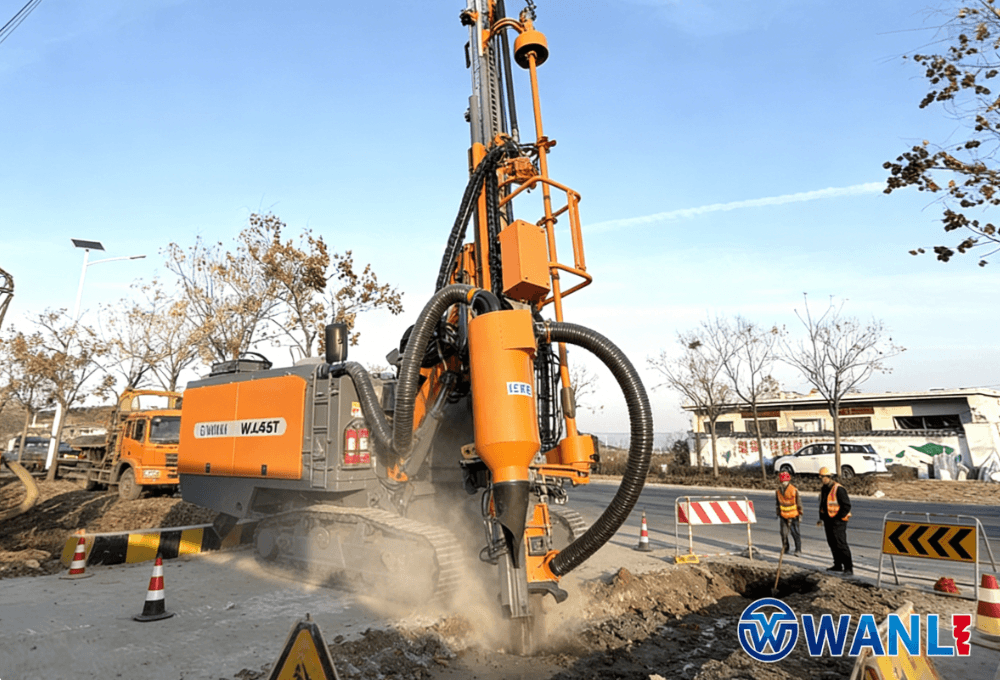
Durability Factors in a Down the Hole Drilling Rig Brand
Durability is defined by the quality of the raw materials and the precision of the assembly. When comparing brands for a down the hole drilling rig, look at the engine brand and the grade of steel used. Engines from reputable manufacturers like Cummins or Yuchai offer global parts support and high torque rise. These engines are specifically tuned to handle the variable loads of drilling.
The feed system, which pushes the hammer into the rock, is another high-wear area. Rigs using heavy-duty leaf chains or high-force cylinders are more durable than those using light-duty cables. The feed force should be easily adjustable to prevent putting too much pressure on the drill bit, which can cause premature failure.
Centralized Control Systems and Automation
Modern DTH drill rigs are increasingly utilizing electronic control systems. These systems provide real-time data on drilling depth, pressure, and engine health. Automation features like “auto-anti-jamming” can save thousands of dollars by preventing lost drill strings. This technology automatically reverses the rotation or reduces feed pressure if it senses the bit is getting stuck.
- GPS integration for precise hole positioning in large mines.
- Remote monitoring for fleet management and fuel tracking.
- Automated rod handling systems to reduce manual labor and improve safety.
- Digital depth counters to ensure every hole is drilled to the exact specification.
Serviceability and Parts Availability
A machine is only as reliable as its support network. Before purchasing a high quality down the hole hammer drill rig, verify the availability of consumables like filters, seals, and drill pipes. A reliable supplier should maintain a stock of critical components for 24-hour dispatch. Machines designed with “modular” components allow for quicker swaps in the field.
Check the layout of the engine compartment to see if common service points are reachable from the ground. Technicians are more likely to perform routine maintenance if it is easy to do. This simple factor can extend the life of your down the hole drilling rig by several years.
Choosing the Right DTH Rig Based on Project Scale
Selecting the perfect DTH drill rig requires a balance between power and portability. For large-scale mining, a heavy crawler rig with an onboard compressor is the industry standard. These machines are designed for 24/7 operation and large hole diameters. For smaller construction sites or water well drilling, a truck-mounted or lightweight crawler rig may be more cost-effective.
It is important to judge the rig’s suitability based on the “cost per meter” rather than just the “cost per hour.” A more expensive, high-pressure rig might drill twice as fast, effectively cutting your project timeline in half. To find a model that fits your specific depth and diameter requirements, you should consult with technical experts. You can explore a wide range of professional options by visiting the down the hole drilling rig category.
Evaluating the manufacturer’s engineering background is the final step in your judgment process. A factory that specializes in drilling technology will produce a more refined machine than a general machinery plant. Look for a partner who offers customized configurations for different geological conditions. This ensures that your DTH drill rig is optimized for your specific region.
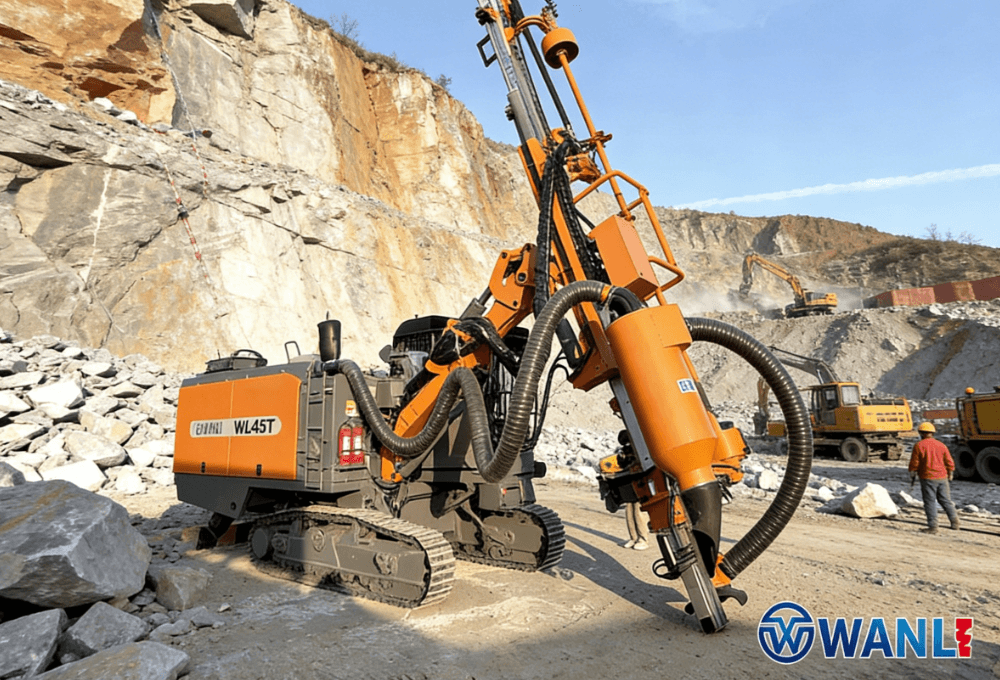
Summary
Choosing a reliable DTH drill rig depends on matching air pressure to rock hardness and ensuring high hydraulic quality. Prioritize high-pressure rigs with robust crawler systems to achieve maximum penetration and stability. By focusing on total cost of ownership and serviceability, you secure a machine that delivers long-term productivity. A well-chosen down the hole drilling rig becomes a cornerstone of your project’s economic success.
FAQ
1. What is the difference between DTH and Top Hammer drilling?
DTH (Down The Hole) drilling places the hammer directly behind the bit at the bottom of the hole. This means the impact energy does not have to travel through the drill string, making it much more efficient for deep and large-diameter holes. Top Hammer drilling keeps the hammer at the top, which is better for smaller, shallower holes in softer rock.
2. How much air pressure do I need for a DTH drill rig?
The required pressure depends on the rock hardness and desired speed. For hard rock like granite, you typically need a high quality down the hole hammer drill rig with at least 2.0 to 2.5 MPa (20-25 bar). For softer rock or shallower holes, 1.2 to 1.7 MPa may be sufficient.
3. Why is air volume (CFM) important for a down the hole drilling rig?
Air volume, measured in Cubic Feet per Minute (CFM) or m³/min, is responsible for flushing the rock cuttings out of the hole. If the volume is too low, the cuttings will accumulate, causing the drill bit to get stuck or wear out prematurely. A standard mining down the hole drilling rig usually requires between 15 and 30 m³/min.
4. Can a DTH drill rig be used for water well drilling?
Yes, many down the hole drill rigs are highly effective for water well drilling, especially in hard rock formations. These rigs can reach significant depths and maintain straight holes, which is essential for installing well casings.
5. How do I prevent the drill bit from getting stuck?
To prevent sticking, ensure you are using a rig with high rotation torque and adequate air flushing. Using a DTH drill rig with an automated anti-jamming system is the most reliable way to protect your equipment. Always monitor the “pullback” pressure to ensure the bit is not being overloaded.
Reference Sources
International Association of Drilling Contractors – DTH Drilling Standards and Safety.
Mine Safety and Health Administration (MSHA) – Equipment Safety and Dust Suppression.
The Society for Mining, Metallurgy & Exploration – Industrial Mining Machinery Performance Data.