Buying a drilling rig represents a major capital investment for any engineering or mining firm. The right machinery determines your project speed and overall profitability in 2026. Conversely, the wrong choice leads to frequent downtime and high maintenance costs.
Modern drilling technology offers a wide range of specialized solutions for global infrastructure. Some rigs excel in mineral exploration and soil sampling for scientific research. Others are designed for deep-water extraction in rural or industrial settings.
Geological conditions vary significantly across different job sites around the world. A rig that works in soft soil might fail in hard granite. This article provides a comprehensive framework for evaluating your next equipment acquisition.
How to Choose the Best Drilling Rig for Your Terrain?
The geological makeup of your site is the most important factor. You must ask what specific ground conditions the machine will encounter daily. Soft formations like sand or clay require different bit types than hard rock.
Buying a drilling rig without matching it to the soil leads to premature tool wear. Hard rock formations often require high-speed diamond core drilling for effective penetration. This technique uses constant rotation to cut through tough geological layers.
What Depth and Diameter Are Necessary?
Performance metrics define the true value of any industrial machine. You should closely examine the maximum drilling depth and hole diameter. Most professional projects require a safety margin of at least 20% beyond the expected depth.
Buying a drilling rig with insufficient power results in stalled projects and equipment damage. Torque and hoisting capacity are critical for deep-hole operations in 2026. A rig with a hoisting capacity of 15,000 kg can handle much heavier drill strings.
How Does Rock Hardness Impact Selection?
Rock compressive strength is measured in megapascals to determine drilling difficulty. Hard granite may exceed 200 MPa, requiring specialized heavy-duty machinery. Using the wrong equipment on hard rock increases fuel consumption by up to 35%.
Efficiency depends on the synergy between the drill bit and the rig’s power. If your primary goal is mineral sampling, a coring drilling rig is usually the necessary choice. These machines prioritize sample integrity over simple hole speed.
Key Technical Specifications When Buying a Drilling Rig?
Engine power, typically measured in kilowatts, dictates the machine’s overall stamina. A 90 kW diesel engine provides enough power for most medium-depth water wells. Smaller portable rigs might operate on 15 to 30 kW motors for shallow exploration.
Is the Power Source Compatible with Your Environment?
You must decide between diesel-powered engines and electric motors for your fleet. Diesel rigs are the industry standard for remote locations without grid access. They offer high mobility and independent operation for weeks at a time.
Buying a drilling rig with a Tier 4 engine ensures compliance with 2026 emission standards. Electric rigs are gaining popularity in underground mining and urban construction projects. They produce zero local emissions and significantly less noise during operation.
How Do Hydraulic Systems Enhance Performance?
Hydraulic pressure drives the core functions of modern drilling equipment. High-pressure systems allow for smoother control of the drill head and winch. You should look for rigs with cooling systems that prevent hydraulic fluid degradation.
The hydraulic pump capacity determines how many functions can operate simultaneously. A robust system prevents power drops when hoisting heavy loads from great depths. Reliability in these components is essential for maintaining consistent project timelines.
| Feature Type | Coring Drilling Rig | Water Well Drilling Rig |
| Primary Goal | Precise Rock Sampling | High-Volume Water Access |
| Typical Depth | 100m – 1,500m | 200m – 600m |
| Hole Diameter | 46mm – 150mm | 150mm – 500mm |
| Common Method | Diamond Wireline | Rotary / DTH Hammer |
| Portability | High (Modular) | Medium (Truck/Crawler) |
Why Does Portability Influence Operational Success?
The way a rig moves from site to site impacts your logistics budget. Trailer-mounted rigs are excellent for highway travel and frequent relocation. They allow teams to reach multiple sites in a single day.
Are Crawler Chassis Necessary for Your Projects?
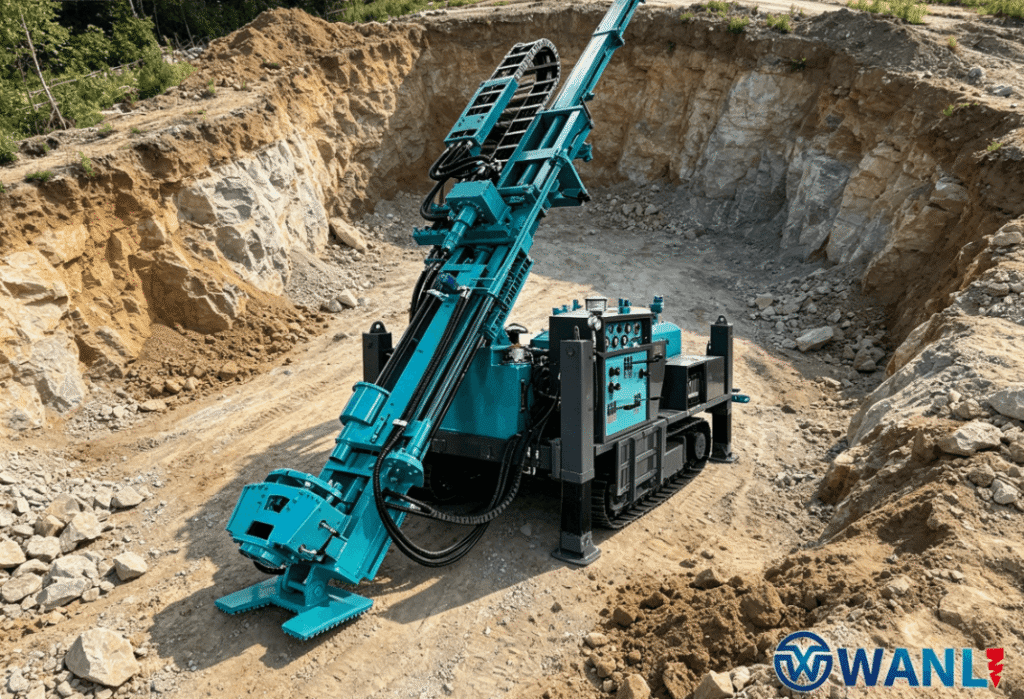
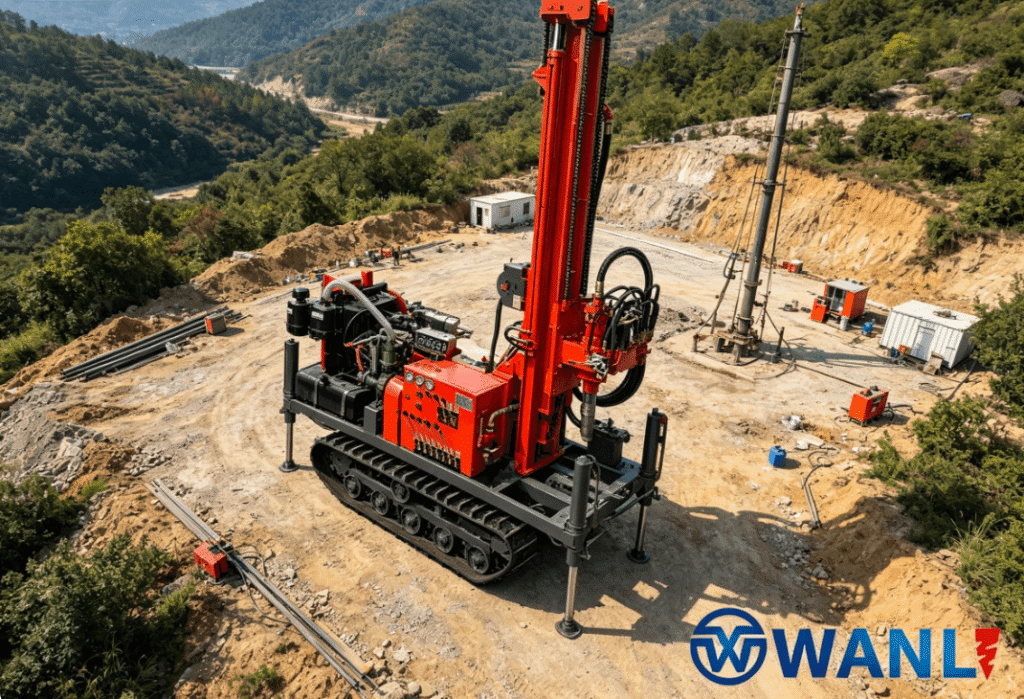
Buying a drilling rig on a crawler chassis is better for rugged, off-road terrain. Crawler rigs provide superior stability on uneven or muddy ground surfaces. Their wide tracks distribute weight evenly to prevent the machine from sinking.
This stability is crucial for exploration projects in forests or marshes. The typical travel speed for a crawler rig is 2 to 4 kilometers per hour. Determine if your future projects involve restricted access or sensitive environments.
What Are the Benefits of Modular Designs?
Modular or man-portable rigs are the best choice for extremely remote areas. These machines can be disassembled into smaller components for transport by hand. While they have lower depth capacities, they eliminate expensive road construction costs.
Technical adaptability is a major trend for the 2026 drilling industry. Modular units allow operators to fly equipment into mountain ranges via helicopter. This accessibility opens new opportunities for mineral discovery in untouched regions.
Assessing Long-term Maintenance and Support Requirements?
Long-term reliability depends on the availability of spare parts and technical service. You should ask about the standard maintenance intervals for hydraulic filters. A rig that requires specialized parts from overseas can cause weeks of downtime.
How Do Integrated Diagnostics Prevent Failure?
Modern rigs often feature integrated diagnostic systems to monitor hydraulic pressure. These systems help operators identify potential failures before they actually occur. Statistics indicate that proactive maintenance reduces unplanned downtime by nearly 30%.
Buying a drilling rig with a user-friendly control panel improves operator efficiency. Real-time performance data helps in adjusting drilling parameters on the fly. This precision prevents tool breakage and extends the life of the machine.
Is Local Technical Support Available?
Ease of access to the engine and hydraulic pumps is another critical factor. Technicians should be able to perform routine checks without dismantling the entire frame. Ask the seller for a comprehensive parts manual for the 2026 model.
Good after-sales support is as important as the machine’s initial performance. Verify if the manufacturer provides training for your local maintenance crew. Skilled technicians ensure the machine operates at peak efficiency for many years.
Choosing the Right Platform for Your Drilling Business?
Selecting equipment involves balancing current needs with future project possibilities. A versatile machine allows you to bid on a wider variety of contracts. You should determine if the rig supports multiple drilling techniques effectively.
Buying a drilling rig with a multi-purpose head increases your market competitiveness significantly. If your work focuses on rural irrigation, a water well drilling rig is the logical choice. These rigs handle large diameters from 200mm up to 500mm with ease.
Consider the cooling system capacity for your specific regional climate. Rigs operating in desert environments require oversized radiators to prevent overheating. Failure to adapt to local climates results in a 40% increase in component wear.
Summary
Buying a drilling rig requires a careful balance of geological assessment and technical specifications. By asking about depth capacity, power sources, and maintenance, you protect your investment. Focus on matching the rig’s torque and portability to your specific project environment for the best results in 2026.
FAQ
1. What is the most important factor when buying a drilling rig?
The geological condition of the site is the primary factor. You must ensure the rig’s torque and rotation speed are compatible with the specific rock layers. Matching the machine to the terrain prevents equipment failure and increases productivity.
2. How do I determine the required drilling depth?
Choose a rig that exceeds your deepest expected project by at least 20%. This safety margin prevents the engine and hydraulic system from running at maximum capacity. Operating below peak capacity extends the lifespan of all mechanical components.
3. Is a crawler-mounted rig better than a truck-mounted one?
It depends on your specific terrain and logistical needs. Crawler rigs offer superior stability and off-road capability for rugged or muddy sites. Truck-mounted rigs provide faster transport between distant locations via public highway systems.
4. What is the difference between air drilling and mud drilling?
Air drilling uses compressed air to remove cuttings and is faster in hard rock. Mud drilling uses fluid to stabilize the borehole and is essential in soft soil. The choice depends on whether the hole walls are likely to collapse during operation.
5. How often should I perform maintenance on a new rig?
Daily inspections of hydraulic levels and lubrication points are absolutely mandatory. Major service intervals typically occur every 250 to 500 hours of operation. Following the 2026 manufacturer guidelines ensures the machine remains under warranty protection.
Reference Sources
International Association of Drilling Contractors IADC
Occupational Safety and Health Administration OSHA Drilling Safety