A reverse circulation drilling rig is widely considered the fastest and most efficient method for large-scale mineral exploration. In the mining industry, time directly translates to operational costs and project deadlines. This technology consistently outperforms traditional diamond core drilling in terms of meters drilled per shift. Reverse circulation drilling rigs are typically three to four times faster than diamond core drilling systems.
The speed of the reverse circulation drilling rig comes from its unique dual-wall drill pipe design. High-pressure air or fluid is forced down the outer tube to drive the hammer. Simultaneously, the cuttings are carried back up through the inner tube to the surface. This continuous cycle allows for immediate sample recovery without stopping to pull up a core barrel. Commercial RC projects often achieve daily drilling rates exceeding 100 meters in favorable conditions.
Speed is not just about the penetration rate but also about the total project duration. Because samples are delivered instantly to a cyclone, geologists can analyze data in real-time. This reduces the downtime between drilling and decision-making for the next hole location. A high-performance reverse circulation drilling rig creates a streamlined workflow that maximizes every hour on the site.
Why is the Reverse Circulation Drilling Rig So Fast?
The technical architecture of a reverse circulation drilling rig is engineered for rapid progress. Unlike other methods that rely on mechanical extraction of a solid core, the RC method breaks rock into small chips. These chips are easily transported by air, making the entire process move significantly faster.
Instant Sample Delivery via Inner Tube
In standard drilling, the cuttings travel through the annulus between the pipe and the borehole wall. This often leads to contamination and slower transport speeds. A reverse circulation drilling rig uses the protected inner tube to shoot samples to the surface at high velocity. This prevents the sample from getting stuck or lagging behind the drill bit’s progress.
Eliminating Core Extraction Downtime
In diamond drilling, the crew must stop every few meters to retrieve the core sample. This involves pulling the entire inner wireline assembly, which takes considerable time at great depths. Reverse circulation rig drilling allows for continuous operation as long as the rods are being added. The absence of the “core pulling” step saves approximately 30% of the total time spent on a deep borehole.
Comparing Speed: Reverse Circulation Rig Drilling vs. Other Methods
To understand the value of this equipment, we must look at the specific performance data. Speed varies based on the hardness of the rock, but RC drilling remains the dominant leader in productivity. This efficiency makes it the primary choice for “greenfield” exploration where large areas must be mapped quickly.
RC vs. Diamond Core Drilling Efficiency
In hard rock formations, a diamond drill might advance at 15 to 25 meters per 12-hour shift. In contrast, a modern reverse circulation rotary drilling rig can achieve 100 to 150 meters in the same timeframe. This 400% increase in productivity allows mining companies to complete exploration programs months ahead of schedule. High-speed air hammers used in RC drilling provide the mechanical force needed to pulverize hard basalt or granite instantly.
Performance in Varied Geological Formations
RC rigs are exceptionally fast in dry, fractured, or loose ground. Traditional rotary rigs often struggle with “lost circulation” in these environments. However, the dual-wall system of the reverse circulation drilling rig maintains a closed loop of air. This allows the bit to maintain a high penetration rate even when the surrounding ground is unstable. The air-driven hammer strikes the rock thousands of times per minute, ensuring constant forward motion.
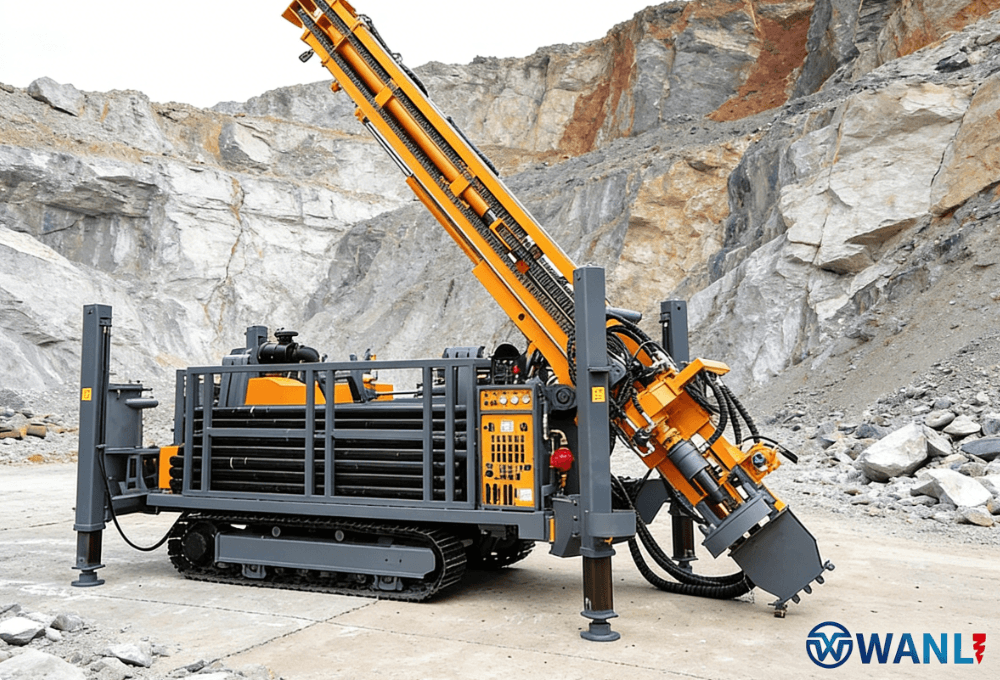
Technical Specs that Drive the Reverse Circulation Rotary Drilling Rig
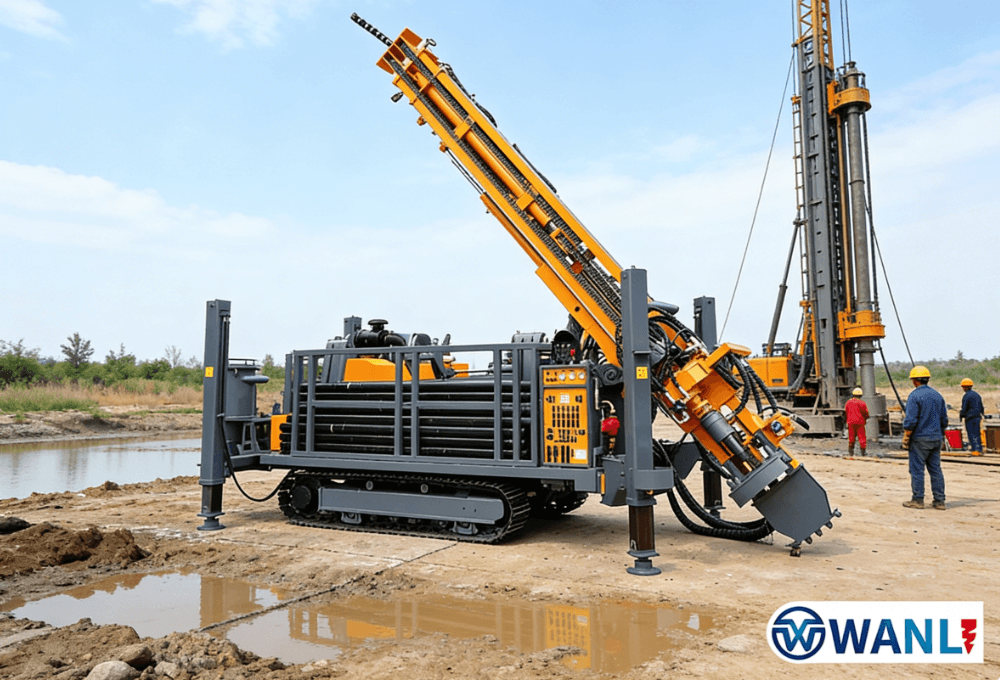
The speed of a reverse circulation rotary drilling rig is directly tied to its mechanical power. You cannot achieve high-speed drilling with underpowered engines or weak hydraulic systems. Modern manufacturers focus on increasing torque and lifting capacity to handle deep, fast operations.
High-Power Hydraulic and Engine Systems
A standard high-performance RC rig, such as those from top reverse circulation drilling rig manufacturers, features engines with over 130kW of power. For example, some models utilize a 132kW engine to provide the necessary energy for both rotation and the air compressor. High engine power ensures that the rig can maintain maximum torque even when reaching depths of 300 meters. Without this power, the rotation speed would drop as the weight of the drill string increases.
Torque and Lifting Capacity
Torque is what allows the bit to grind through hard formations without stalling. A top-tier reverse circulation rotary drilling rig can offer a torque of up to 10,000 Nm. This allows for the use of larger bits and faster rotation speeds. Additionally, a lifting capacity of 210 kN is essential for rapid rod handling and quick extraction of the drill string once the hole is finished. Greater lifting capacity reduces the time spent on non-drilling activities by at least 20%.
- Engine Power: 132kW is the benchmark for mid-to-deep RC rigs.
- Lifting Force: 210kN allows for the safe handling of heavy drill strings.
- Rotation Torque: 10,000Nm provides the force for hard rock penetration.
- Drilling Diameter: Capabilities up to 300mm ensure versatility for different sampling needs.
- Walking Speed: Crawler speeds of 2km/h help the rig move between holes quickly.
- Drilling Depth: 300 meters is a standard professional rating for commercial exploration.
How to Choose the Right RC Rig for Your Project
Selecting the best equipment requires evaluating your target depth and the hardness of the terrain. Not all reverse circulation drilling rig suppliers offer the same level of industrial durability. You must judge a rig by its build quality and the reputation of its hydraulic components.
Reliability is the hidden factor in drilling speed. If a rig breaks down frequently, its high penetration rate becomes irrelevant. You should look for reverse circulation drilling rig manufacturers who use high-grade steel for the mast and reputable brands for the hydraulic pumps. A well-built rig can operate for thousands of hours with minimal downtime. A reliability rating of over 95% is essential for maintaining a fast project schedule.
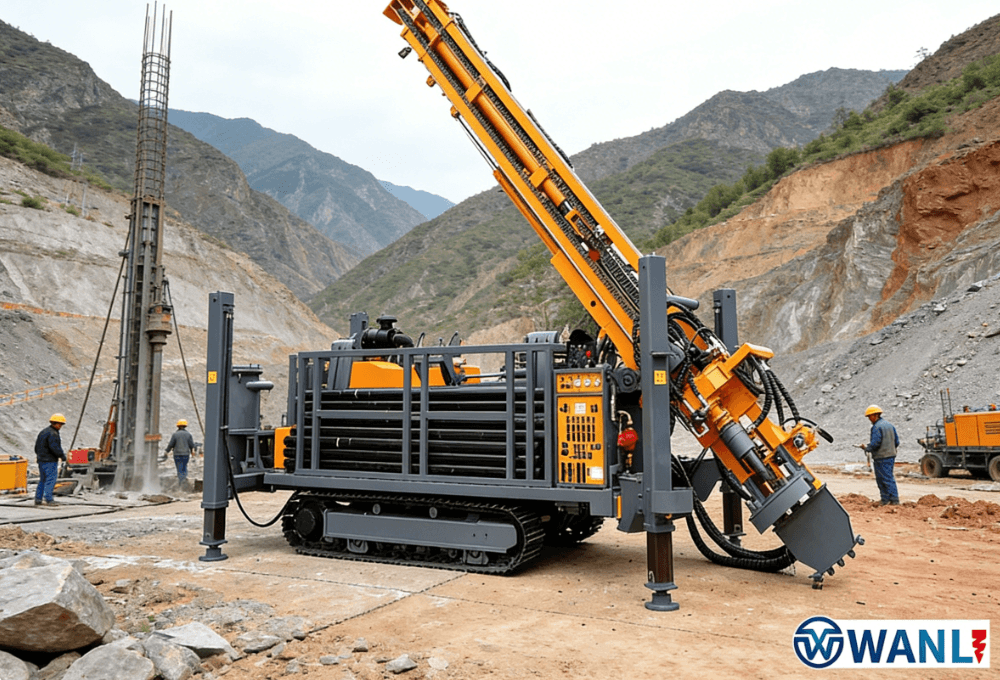
For those looking to expand their fleet, finding a reverse circulation drilling rig for sale with crawler-mounted mobility is highly recommended. Crawler tracks allow the rig to move across rugged mining sites without the need for support trucks. This independence speeds up the setup time between each hole location. Exploring the options from a specialized reverse circulation drilling rig provider allows you to match the technical specs of the Wanli RC rig to your specific geological challenges.
Summary
In summary, a reverse circulation drilling rig is exceptionally fast, offering three to four times the speed of diamond drilling. Its efficiency is driven by dual-wall pipe technology and high-power engines like the 132kW models found in Wanli rigs. By providing instant samples and daily progress of over 100 meters, it remains the gold standard for mineral exploration. Choosing a rig with 10,000Nm of torque and crawler mobility ensures you maintain this speed in even the harshest industrial environments.
FAQ
1. Is RC drilling more expensive than other methods because of its speed?
While the hourly rate for a reverse circulation drilling rig might be higher than diamond drilling, the cost per meter is usually lower. Because the rig completes the hole much faster, you spend less on labor, fuel, and site maintenance. Most mining companies find that RC drilling provides the best overall return on investment for exploration.
2. What makes reverse circulation rig drilling better for sampling?
Besides speed, the primary advantage is sample purity. Cuttings are transported inside the pipe, which means they never touch the borehole wall. This eliminates the risk of sample contamination. Reverse circulation drilling rig suppliers emphasize this accuracy as much as the speed of the equipment.
3. Can an RC rig be used for water well drilling?
Yes, many reverse circulation rotary drilling rig models are dual-purpose. They are excellent for water wells because they can drill large diameters very quickly in hard rock. However, the setup is more complex than a standard water well rig, so it is typically used for large industrial or municipal wells.
4. How deep can a reverse circulation drilling rig go?
A standard professional RC rig is usually rated for 300 to 500 meters. Some specialized ultra-deep RC rigs can reach 800 meters or more. The depth is limited by the air pressure capacity of the compressor and the lifting force of the rig’s hydraulic system.
5. Why do reverse circulation drilling rig manufacturers use crawler tracks?
Crawler tracks provide superior stability and mobility on uneven or soft ground common in mining sites. This allows the reverse circulation rig drilling process to continue in wet or muddy conditions where wheeled vehicles would get stuck. It also enables the rig to climb steep slopes to reach difficult exploration targets.
Reference Sources
Technical standards and safety guidelines for exploration drilling
Specifications for drill pipe and rotary equipment standards
Research papers on the efficiency of reverse circulation systems