The global construction and mining industries rely heavily on specialized machinery to access subsurface resources. Selecting the right equipment depends on geological conditions, depth requirements, and the specific goals of the project. Understanding the various types of drilling rigs is essential for engineers and project managers seeking efficiency. These machines range from massive structures for deep mining to mobile units for residential water wells.
Modern engineering has led to the development of highly specialized tools for different environments. Some rigs prioritize speed, while others focus on sample purity or mobility across rough terrain. This article provides a detailed breakdown of the five most critical drilling systems used in modern industry today. We will examine their mechanical advantages and practical applications in the field.
What are the Different Types of Drilling Rigs and Their Uses?
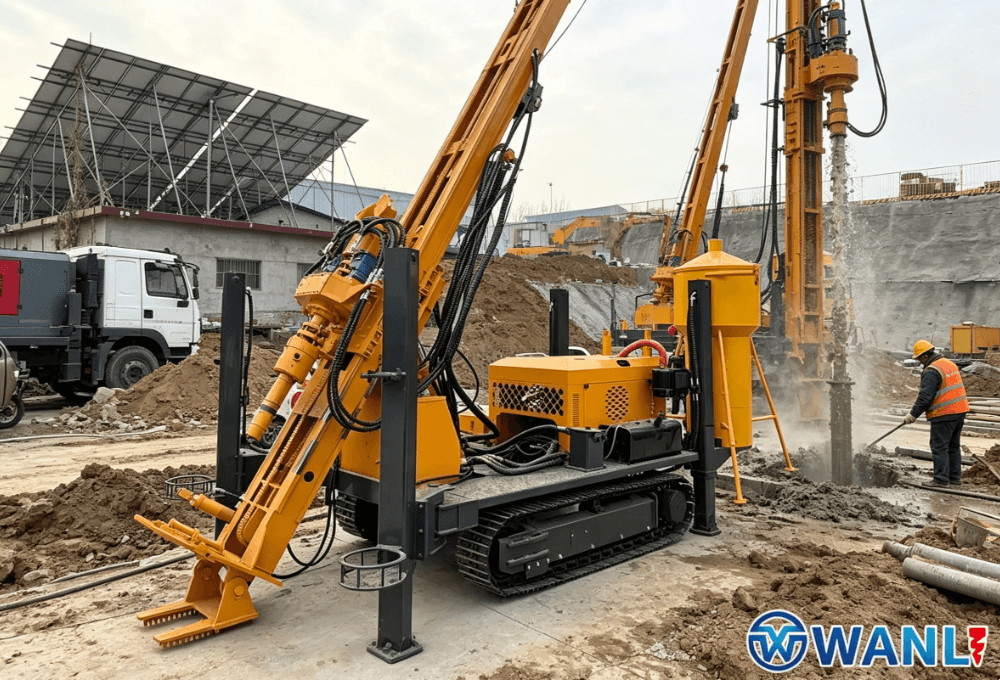
Choosing the right rig requires matching the machine’s mechanics to the ground material. Percussive rigs are ideal for hard rock, while rotary systems work best in softer soil. Each method offers unique benefits for specific industrial sectors like geotechnical engineering or resource extraction.
Reverse Circulation (RC) Drilling Rigs
Reverse Circulation (RC) Drilling Rigs are widely recognized for their speed and efficiency in mineral exploration. These rigs use a dual-wall drill pipe to transport cuttings back to the surface through an inner tube. This process prevents sample contamination and provides high-quality geological data quickly. In many large-scale mining operations, a professional RC reverse circulation drilling rig is preferred because it can reach depths of 500 meters or more.
Down-the-Hole (DTH) Drilling Rigs
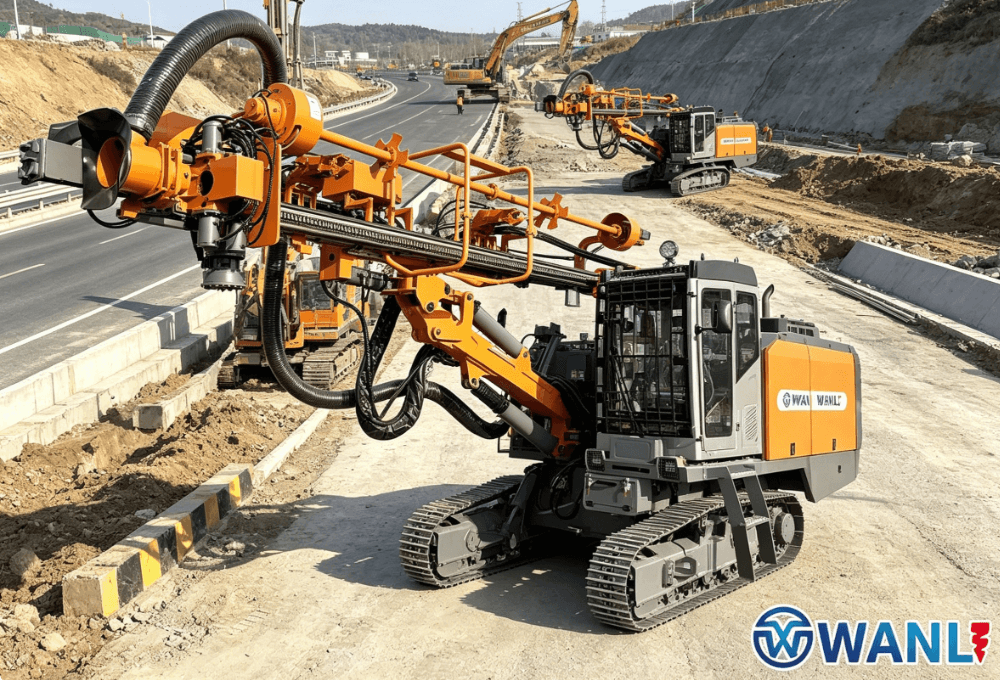
Down-the-Hole (DTH) Drilling Rigs utilize a pneumatic hammer located directly behind the drill bit. This design ensures that the impact energy is transferred with minimal loss, regardless of the depth. A high-performance down-the-hole drilling rig is the standard choice for hard rock formations in quarrying and open-pit mining. They typically operate at air pressures between 15 and 35 bar, ensuring high penetration rates in tough granite.
Coring Drilling Rigs
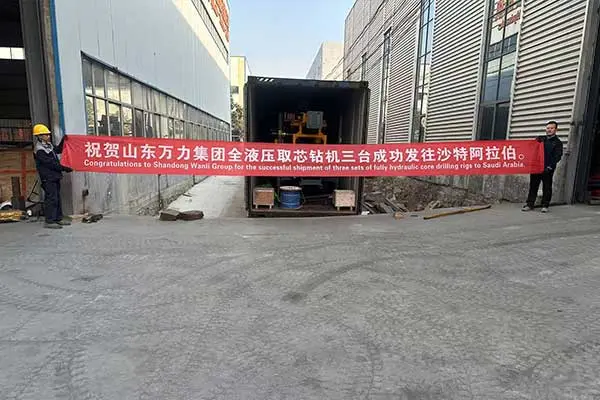
Coring Drilling Rigs focus on retrieving solid cylinders of rock, known as cores, for laboratory analysis. These machines use diamond-tipped bits to cut through the hardest materials with extreme precision. Utilizing a specialized coring drilling rig is indispensable for site investigations before building large infrastructure like bridges. Most professional coring units can achieve a core recovery rate of over 95%, ensuring total geological accuracy for engineers.
Key Features and Comparison of Top Drilling Systems
When evaluating types of drilling rigs, performance data provides a clear picture of their operational capacity. Most modern rigs are now powered by high-torque hydraulic systems to improve reliability. The table below summarizes the technical specifications typically found in high-quality industrial drilling equipment.
| Rig Type | Primary Power Source | Maximum Depth Range | Common Application |
| Reverse Circulation | Diesel/Hydraulic | 300 – 600 Meters | Mineral Exploration |
| Down-the-Hole | Compressed Air | 30 – 100 Meters | Blasting & Quarrying |
| Water Well Rig | Vehicle Mounted/Crawler | 200 – 1000 Meters | Agricultural & Domestic |
| Coring Rig | Hydraulic | 100 – 1500 Meters | Geotechnical Sampling |
| Vehicle Mounted | Truck Engine/PTO | 200 – 400 Meters | Rural Infrastructure |
Water Well Drilling Rigs
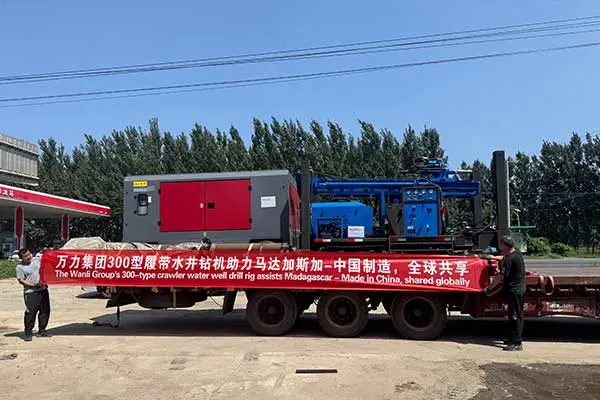
Water Well Drilling Rigs are designed specifically for accessing underground aquifers to provide clean water. These rigs are often mounted on tracks or trailers to reach remote rural locations. When searching for a reliable water well drilling rig, operators look for systems that use rotary or percussion methods. Modern water well systems can drill holes with diameters ranging from 4 inches to over 20 inches effectively.
Vehicle-Mounted Drilling Rigs
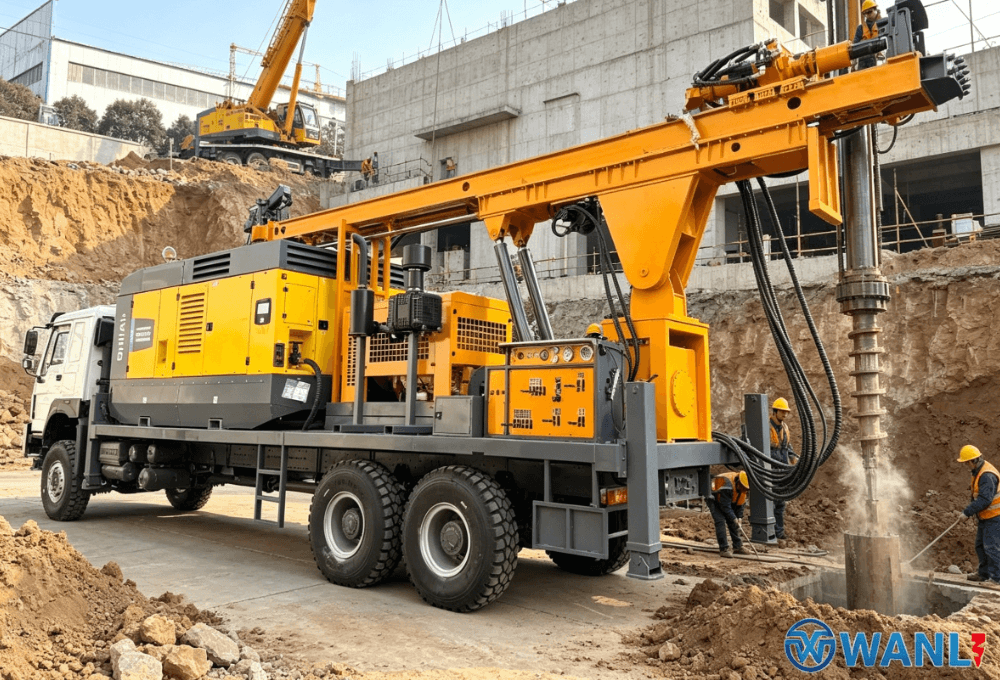
Vehicle-Mounted Drilling Rigs offer the highest level of mobility among all types of drilling rigs. By integrating the drilling mast onto a heavy-duty truck chassis, operators can move quickly between multiple sites. A versatile vehicle-mounted drilling rig is perfect for urban construction projects where space is limited. These units often feature advanced control panels that allow a single operator to manage the entire process efficiently.
Standards for Selecting Quality Drilling Equipment
Selecting the wrong machinery can lead to significant financial losses and project delays. Project managers must evaluate the “Pull-back” capacity, which measures the force the rig can apply to extract the drill string. A rig with a 20-ton pull-back capacity is sufficient for medium depths, but deep mining often requires 50 tons or more.
Furthermore, the rotation torque determines how well the bit can break through dense material. High-torque motors, often exceeding 6,000 Nm, are necessary for drilling large-diameter holes in compressed soil. You should also verify if the rig matches your local emission standards, especially if working in regulated urban zones.
The mast height is another practical consideration for your choice. A longer mast allows for longer drill pipes, which reduces the time spent on manual connections. However, shorter masts are required for projects with overhead clearances, such as drilling under power lines or inside tunnels. Always match the rig’s physical dimensions to your most frequent working conditions.
Summary
There are five primary types of drilling rigs including RC, DTH, Coring, Water Well, and Vehicle-Mounted units. Each serves a specific purpose, from mineral sampling to infrastructure development. By analyzing depth requirements and geological hardness, you can select the most efficient machine for your project’s unique demands.
FAQ
1. What is the main difference between RC and DTH drilling?
RC drilling uses a dual-tube system to collect samples internally, while DTH uses a hammer to break rock. RC is better for high-quality sampling, whereas DTH is primarily used for creating holes in hard rock.
2. How deep can a standard water well drilling rig go?
Most standard units can reach depths between 200 and 500 meters. However, specialized deep-reach rigs are capable of exceeding 1,000 meters for industrial or municipal water projects.
3. Which rig is best for narrow urban construction sites?
Vehicle-mounted or compact crawler rigs are best for narrow sites. Their small footprint and high mobility allow them to navigate tight spaces without sacrificing the power needed for foundation work.
4. Are diamond bits necessary for all coring rigs?
Yes, diamond bits are typically required for coring in hard rock. The hardness of the diamond allows the rig to cut a clean, solid cylinder of stone for precise analysis.
Reference Sources
International Association of Drilling Contractors (IADC) – Drilling Manual and Standards
National Ground Water Association (NGWA) – Water Well Drilling Best Practices
Geological Society of America (GSA) – Mineral Exploration and Core Sampling Techniques
American Society of Civil Engineers (ASCE) – Geotechnical Drilling Guidelines