Accessing clean groundwater requires precision engineering and heavy-duty machinery. A water well drilling rig is a complex machine designed to penetrate various geological layers. These rigs utilize mechanical power to rotate or strike a drill bit. This process creates a borehole that eventually reaches an underground aquifer. Understanding the water well drilling rig working principle is essential for project efficiency. Modern rigs integrate hydraulic systems and high-torque motors to handle challenging terrains.
How Does a Water Well Drilling Rig Work?
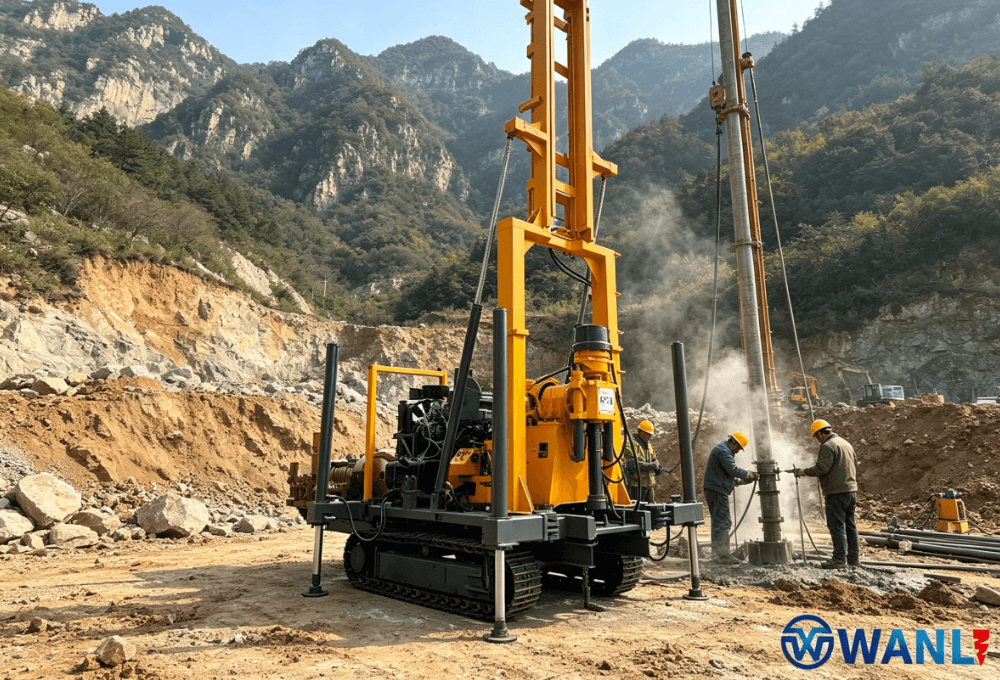
The fundamental water well drilling rig working principle relies on breaking rock and removing debris. Most modern rigs use the rotary drilling method to achieve depth. A powerful motor rotates a long string of drill pipes attached to a bit. As the bit spins, it grinds the soil and rock into small pieces. These pieces are known as “cuttings” in the drilling industry.
The Circulation and Removal Process
To keep the process running, the rig must remove these cuttings constantly. This is usually done using a circulating fluid or high-pressure air. In mud rotary drilling, a pump forces drilling fluid down through the drill pipe. The fluid exits through the bit and carries debris back to the surface. For harder rock formations, compressed air is often used instead of liquid.
Pressure and Penetration Dynamics
Heavy-duty rigs, such as the high-performance models in the water well drilling rig collection, utilize advanced hydraulic pressure. This pressure provides the “downward force” needed to penetrate dense granite or basalt. Without sufficient weight on the bit, the drilling process would stall. Therefore, the rig balances rotational speed with vertical pressure for optimal performance.
| Feature | Rotary Drilling | Percussion (Cable Tool) |
| Primary Motion | Continuous Rotation | Up-and-Down Impact |
| Best For | Soft to Medium Rock | Very Hard, Fractured Rock |
| Speed | High (50-200 RPM) | Low (20-40 Strokes/Min) |
| Hole Depth | Up to 1,000+ Meters | Generally under 300 Meters |
Key Components and Technical Systems
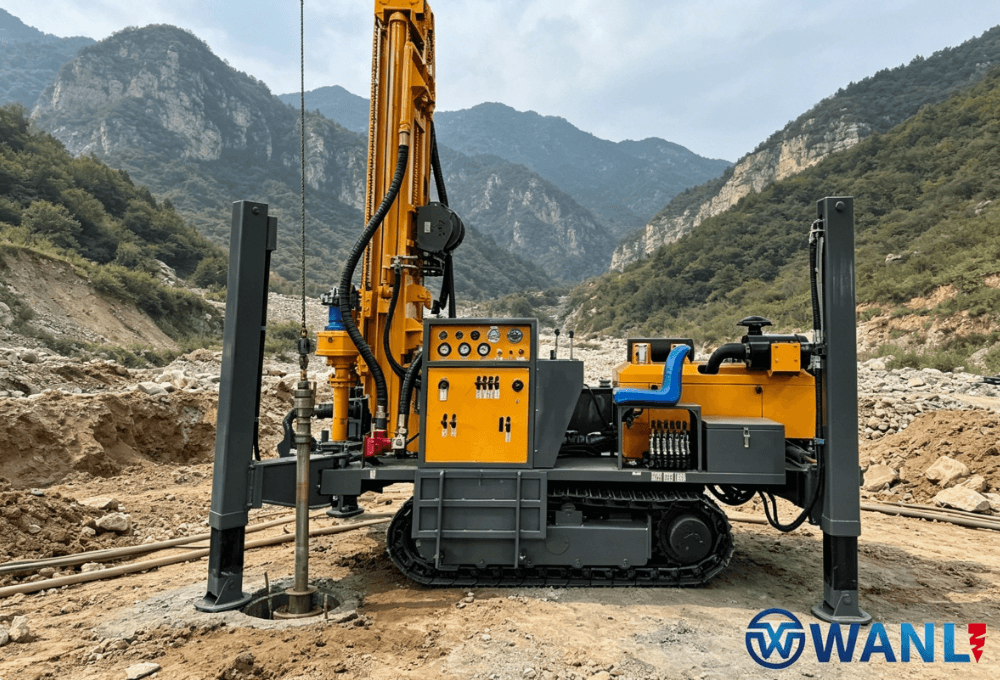
Every water well drilling rig consists of several critical subsystems. The power system, usually a diesel engine, drives the hydraulic pumps. These pumps provide energy for the rotation head and the hoisting winch. Modern engines for mid-sized rigs typically deliver between 80 kW to 160 kW of power. This energy ensures the rig can handle high-torque demands during deep drilling.
Structural Support and Lifting
The mast or derrick is the vertical structure that supports the drill string. It must be engineered to withstand immense tension and compression forces. For instance, a standard portable rig may have a lifting capacity of 15 to 30 tons. This capacity allows operators to pull heavy pipes out of the hole safely. Precision controls allow the operator to manage the feed rate within millimeters per minute.
Specialized Drill Bits
Another vital part is the drill bit, which comes in various designs. Tricone bits are popular for sedimentary rock due to their crushing action. PCD (Polycrystalline Diamond) bits are preferred for faster penetration in softer formations. Using the right bit can increase drilling speed by 30% to 50%. Proper cooling of the bit is necessary to prevent premature mechanical failure.
Common Types of Water Well Drilling Rigs
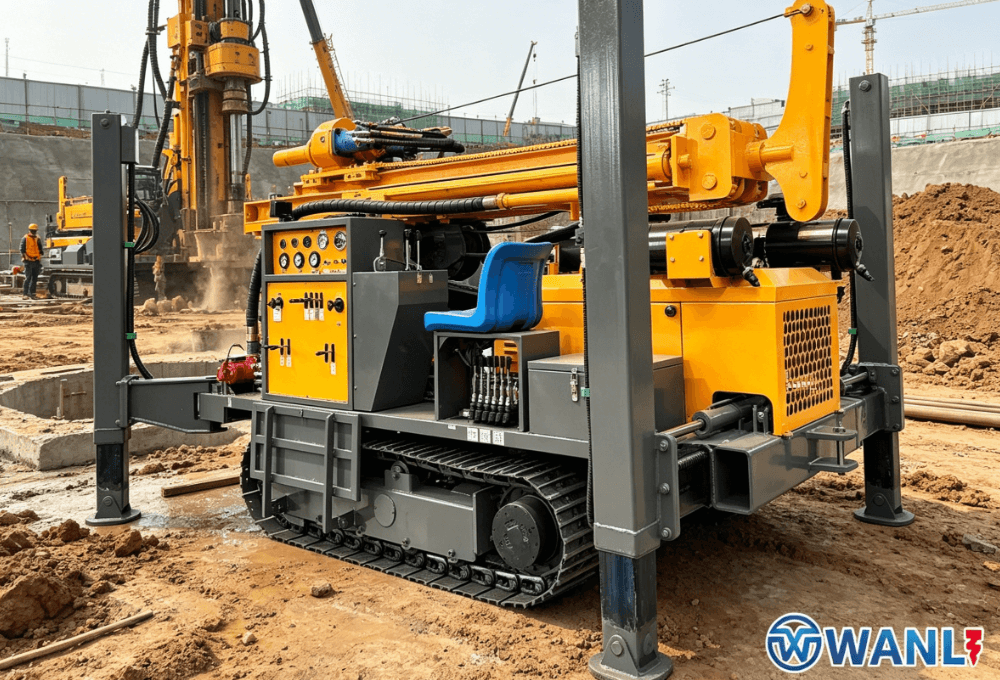
Rigs are often classified by their mounting style and drilling method. Crawler-mounted rigs are highly popular for remote or rugged locations. These machines use tracks to navigate steep slopes and muddy terrain. They offer excellent stability because of their low center of gravity. Most crawler rigs feature integrated leveling jacks to ensure a vertical borehole.
Mobile and Portable Solutions
Truck-mounted rigs provide superior mobility for urban or long-distance projects. These units can travel on highways at standard speeds, reducing transport costs. Once on-site, they deploy hydraulic outriggers for stabilization. They are ideal for residential well projects where time is a critical factor. These rigs often support depths ranging from 200 to 600 meters.
Specialized Environmental Rigs
Portable or modular rigs are used in areas with restricted access. These can be disassembled and transported by hand or small vehicles. While they have lower power, they are essential for reaching isolated villages. Regardless of size, every water well drilling rig must follow strict safety protocols. High-pressure hydraulic lines require regular inspection to prevent site accidents.
Selecting the Right Equipment for Your Project
Choosing a water well drilling rig depends heavily on your local geography. If you are drilling through thick clay, a mud rotary system is best. This system prevents the borehole walls from collapsing during the process. However, if you encounter hard limestone, a DTH (Down-The-Hole) hammer is necessary. DTH hammers use compressed air to strike the rock directly.
Assessing Technical Requirements
You must also consider the required borehole diameter and final depth. Residential wells usually require a 4-inch to 6-inch diameter. Industrial or agricultural wells might need diameters exceeding 12 inches. Ensure the rig’s torque rating matches the friction levels of the deeper soil. A rig with insufficient torque will struggle at depths beyond 300 meters.
Quality and Maintenance Standards
Finally, evaluate the ease of maintenance and spare parts availability. Rigs operating in harsh environments face significant wear on hydraulic seals. Opting for a professional water well drilling rig ensures access to durable components. High-quality steel and reliable valves extend the machine’s operational lifespan significantly. Consider the total cost of ownership rather than just the initial price.
Summary
The water well drilling rig working principle involves a synergy of rotation, pressure, and debris removal. Whether using rotary or percussion methods, the goal is to reach water-bearing layers efficiently. By matching the rig type to the geological conditions, operators can maximize productivity. Modern technology continues to make these machines safer, faster, and more versatile for global water needs.
FAQ
1. What is the most common drilling method for water wells?
Rotary drilling is the most common method used today. It is favored for its speed and ability to reach great depths in various soil types.
2. How deep can a standard water well rig drill?
A standard mobile rig can typically drill between 200 and 600 meters. Specialized deep-hole rigs can exceed 1,000 meters if necessary.
3. What is the role of drilling mud?
Drilling mud cools the bit, stabilizes the borehole walls, and carries rock cuttings to the surface. It also provides hydrostatic pressure to prevent groundwater from flooding the hole prematurely.
4. Can one rig handle all types of soil?
Most versatile rigs can switch between mud rotary and DTH air drilling. This allows them to handle both soft soil and hard rock formations efficiently.
5. How long does it take to drill a typical well?
A typical residential well usually takes 1 to 3 days to complete. This timeframe depends on the rock hardness and the required depth.
Reference Sources
American Society of Civil Engineers (ASCE) – Data on geological engineering and borehole stability.
British Geological Survey (BGS) – Research on drilling techniques and aquifer access.