Selecting the correct machinery is the foundation of any successful engineering or extraction venture. Whether you are tapping into groundwater or conducting mineral exploration, the decision impacts your total budget. To choose drilling rig models effectively, you must align machine capabilities with specific site geological conditions. This guide explores the technical parameters and operational requirements necessary for an informed investment.
The global drilling market offers diverse solutions ranging from portable units to massive truck-mounted systems. Each machine is engineered for specific torque, pull-back capacity, and rotation speeds. Understanding these nuances prevents equipment failure and minimizes environmental disruption during operations. We will analyze the core variables that define the ideal rig for your unique application.
Understanding Geological Conditions and Depth Requirements
Geology dictates the drilling method and the physical robustness required of the machine. Soft soils like clay or sand often require different flushing systems compared to hard granite or basalt. For instance, RC reverse circulation drilling rigs are superior in fragmented rock where sample purity is critical. These systems use dual-walled pipes to ensure cuttings reach the surface without contamination.
Drilling depth is another non-negotiable factor that influences your choice. Most medium-sized water well rigs efficiently reach depths of 200 to 600 meters. However, deep-core exploration may require specialized coring drilling rigs capable of penetrating over 1,500 meters. You must verify that the rig’s hoisting capacity exceeds the total weight of the drill string by at least 25%.
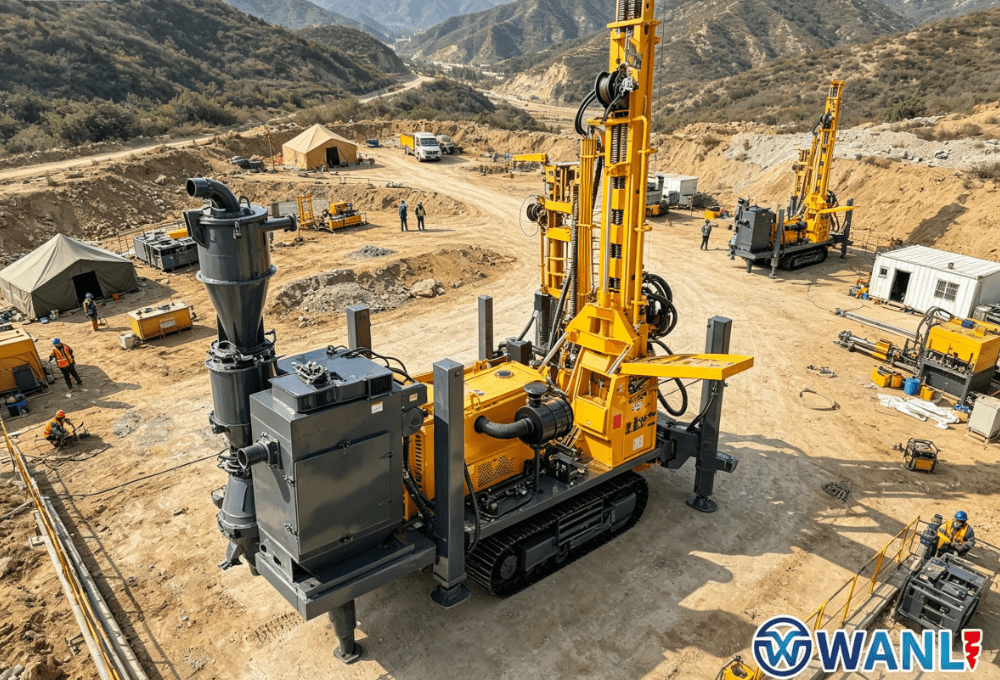
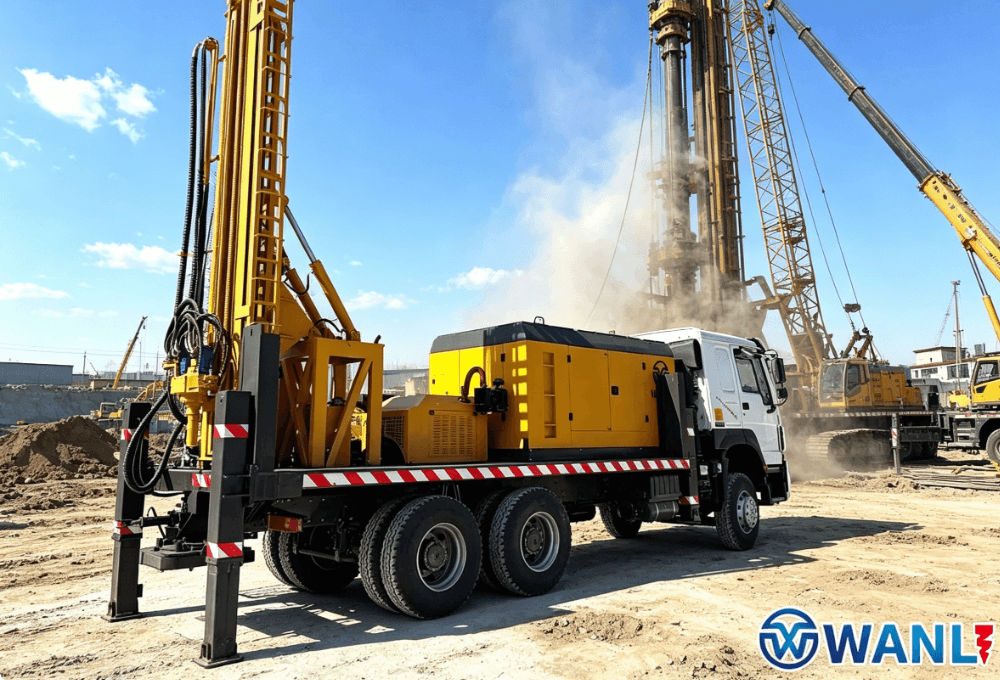
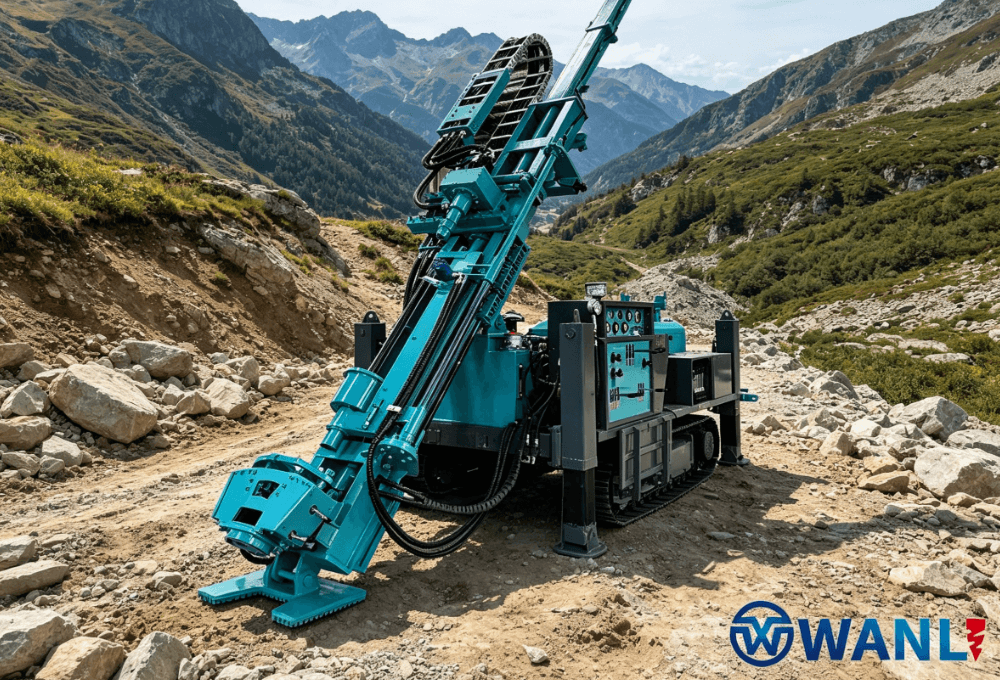
Surface conditions also determine the mobility platform of your equipment. Rugged mountainous terrain usually necessitates crawler-based systems for better traction and stability. Conversely, urban projects or widely dispersed sites benefit from vehicle-mounted drilling rigs. These units offer rapid deployment speeds and significantly reduce the logistical costs associated with heavy machinery transport.
| Rig Type | Primary Application | Maximum Depth Range | Common Power Source |
| Water Well Rig | Domestic/Industrial Water | 200m – 600m | Diesel Engine |
| Coring Rig | Mineral Exploration | 300m – 1500m | Hydraulic/Electric |
| DTH Rig | Mining/Quarrying | 20m – 100m | High-Pressure Air |
| RC Rig | Grade Control/Sampling | 100m – 500m | Compressed Air |
How to Evaluate Technical Specifications for Maximum Efficiency?
Evaluating technical data ensures the machine can handle the torque demands of your specific lithology. Rotational torque is vital for large-diameter holes, while high RPM is necessary for diamond bit efficiency. A standard down-the-hole drilling rig typically operates with air pressures between 1.05 and 2.4 MPa. These machines rely on high-impact energy to fracture hard rock formations rapidly.
The cooling and flushing systems are equally important for maintaining tool longevity. Air-based systems are excellent for dry, hard rock but fail in high-pressure water aquifers. For water-intensive environments, water well drilling rigs utilizing mud pumps are the industry standard. These pumps circulate drilling fluid to stabilize the hole wall and transport debris to the surface.
Fuel efficiency and power ratings directly influence your long-term operational costs. Modern rigs often feature Tier 4 or Stage V engines to meet strict international emission standards. Choosing a rig with an integrated control system allows operators to monitor fuel consumption and hydraulic pressure in real-time. This data-driven approach reduces downtime by predicting maintenance needs before a component fails.
Why Mobility and Site Accessibility Drive Rig Selection
The physical footprint of a rig determines its suitability for restricted work zones. Large-scale mining operations can accommodate massive stationary units, but residential projects require compact solutions. If your project involves multiple locations, a vehicle-mounted unit provides the flexibility to drive between sites. This eliminates the need for expensive low-loader trailers and specialized hauling permits.
Accessibility isn’t just about getting the rig to the site; it is about maneuvering once there. Crawler rigs distribute weight evenly, making them ideal for soft or marshy ground where wheels might sink. They provide a stable platform for leveling the mast on uneven slopes. This stability is crucial for maintaining hole verticality, especially in deep-hole applications where deviation can ruin the project.
Environmental regulations also play a role in the mobility and setup of your equipment. Urban areas often have strict noise and vibration limits that favor electric or sound-attenuated diesel engines. Choosing a rig with a modular design can also be beneficial. This allows the machine to be disassembled and transported via helicopter or small boat to remote exploration camps.
Selecting the Right Drilling Technology for Your Industry
Identifying the primary goal of your project—whether it is extraction, sampling, or construction—is the final step. For high-quality geological samples, specialized coring equipment is the industry benchmark. They utilize hollow bits to extract solid cylinders of rock, providing a clear map of subterranean layers. This precision is essential for determining the viability of mining investments.
In the construction sector, speed and hole diameter are usually the priorities. Foundations and piling often require high-torque rotary rigs that can handle large augers. If your project focuses on blasting for quarrying, a specialized percussion rig is the most cost-effective choice. These rigs are designed for high-frequency percussion rather than deep exploration.
For those focused on agricultural or residential utility, the priority is often simplicity and reliability. Dedicated water extraction rigs are designed for ease of operation and quick maintenance in the field. These machines often integrate the mud pump and drill pipe rack into a single mobile chassis. This configuration simplifies the supply chain for independent contractors and local municipalities.
Identifying the Optimal Drilling Configuration for Success
To choose drilling rig setups that actually perform, you must balance mechanical power with the specific drilling method. For instance, Reverse Circulation (RC) methods require significant air volume to lift heavy samples. If you select high-performance RC units, you must also invest in high-capacity air compressors. Matching the compressor’s CFM (Cubic Feet per Minute) to the hole diameter is critical for success.
Similarly, the choice between wireline and conventional coring depends on depth and time constraints. Wireline systems allow the inner tube to be pulled to the surface without removing the entire drill string. This saves hours of labor in holes deeper than 300 meters. Always calculate the “trip time” for drill rods when comparing the efficiency of different rig models.
Finally, consider the availability of spare parts and technical support in your region. A rig is only as good as its uptime. Selecting a platform that uses standardized hydraulic components and world-class engines ensures faster repairs. Look for manufacturers that provide detailed parts manuals and remote technical assistance to minimize potential project delays.
Summary
To successfully choose drilling rig equipment, first define your geological environment and target depth. Match the machine’s torque and flushing system to the rock hardness. Prioritize mobility based on site accessibility, and select the specific rig category—such as DTH, RC, or Coring—that aligns with your final project objective.
FAQ
1. What is the main difference between DTH and RC drilling?
DTH (Down-the-Hole) uses a hammer to crush rock for blast holes, while RC (Reverse Circulation) collects uncontaminated rock chips for geological sampling.
2. Can a water well rig be used for mineral exploration?
Generally no, because water well rigs lack the high-RPM rotation and wireline systems required for efficient core recovery in exploration.
3. Which rig is best for rocky mountainous terrain?
A crawler-mounted rig is best for mountains because its tracks provide superior stability and climbing ability on steep, uneven slopes.
4. Why is torque more important than speed in large-diameter drilling?
Torque provides the rotational force needed to overcome the friction of a large bit, whereas high speed is mainly for small diamond bits.
5. How does rig weight affect my project costs?
Heavier rigs require more expensive transport permits and trailers, but they provide the stability needed for deeper and wider boreholes.
Reference Sources
Society for Mining, Metallurgy & Exploration (SME), Mineral Exploration and Core Drilling Standards