Modern industrial projects require drilling methods that balance speed with precision. DTH drilling, also known as down the hole drilling, has emerged as a leading solution for challenging geological conditions. This technique involves a pneumatic hammer located directly behind the drill bit. Unlike top-hammer systems, the energy is delivered right at the point of impact.
The efficiency of down the hole drilling stems from its ability to maintain consistent energy transfer. As the hole gets deeper, the impact force remains constant because the hammer travels with the bit. This makes DTH drilling ideal for deep-hole applications in hard rock formations. Industries ranging from quarrying to water well construction rely on this technology for daily operations.
Understanding the mechanics of DTH drilling helps project managers optimize their equipment selection. By placing the striking mechanism at the bottom of the hole, mechanical energy loss is minimized. This results in straighter holes and faster penetration rates compared to alternative methods.
How Does DTH Drilling Improve Efficiency in Hard Rock?
The primary advantage of DTH drilling lies in its mechanical design. In traditional top-hammer drilling, energy travels through the entire drill string. This often leads to energy dissipation and rod vibration as depth increases. In contrast, down the hole drilling ensures the piston strikes the bit directly inside the hole.
Data shows that DTH drilling can maintain penetration rates even at depths exceeding 50 meters. For instance, in granite with a compressive strength of 200 MPa, DTH systems often outperform top-hammers by 20%. This efficiency reduces fuel consumption and labor costs per meter drilled.
| Feature | Top Hammer Drilling | DTH Drilling |
| Impact Location | Top of the drill string | Directly behind the bit |
| Energy Loss | High as depth increases | Extremely low |
| Hole Deviation | More likely in deep holes | High precision and straightness |
| Best Application | Shallow, soft to medium rock | Deep, hard rock formations |
Furthermore, the air used to drive the hammer also serves to flush out cuttings. This dual-purpose mechanism ensures the hole stays clean during the process. Maintaining a clean face at the bottom of the hole prevents “regutting” of chips. This significantly extends the lifespan of the carbide buttons on the drill bit.
Core Applications of Down The Hole Drilling
DTH drilling is a versatile technique used across multiple high-stakes industries. In the mining sector, it is the standard for blast hole creation. Precise hole alignment is critical for controlled explosions and fragmented rock output. Down the hole drilling provides the vertical accuracy needed to prevent dangerous wall instability.
Construction and Foundation Work
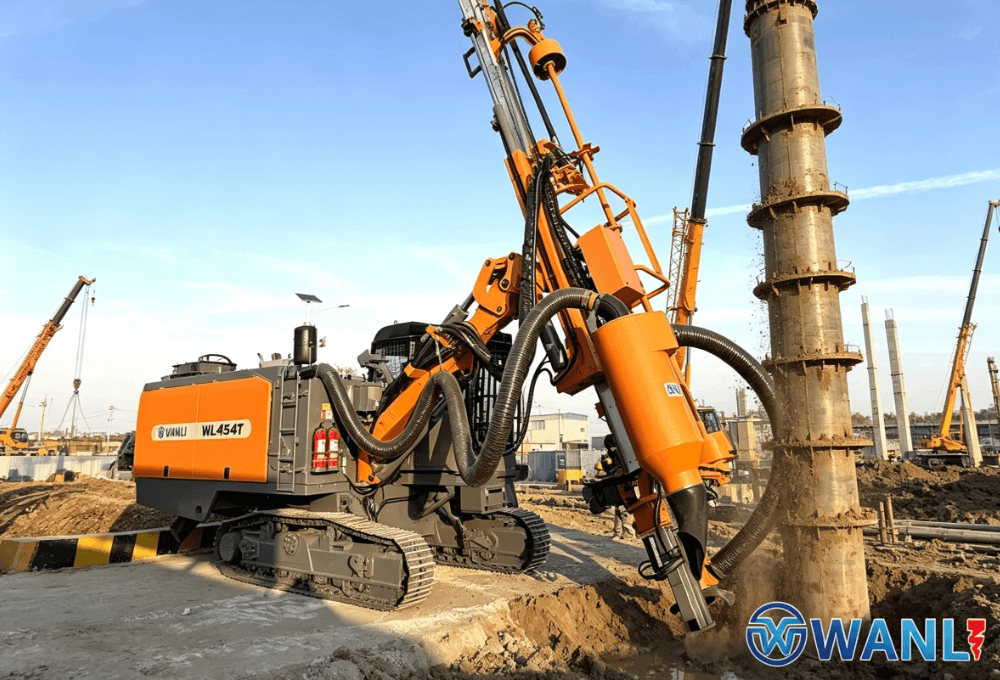
In the construction industry, this method supports foundation piling and anchoring. Heavy infrastructure like bridges and skyscrapers requires deep holes into bedrock. DTH drilling rigs can handle large diameters, often ranging from 100mm to over 250mm. This capability allows for the installation of heavy-duty support structures.
Water Well and Geothermal Drilling
Water well drilling also utilizes down the hole drilling for reaching deep aquifers. Since these wells often penetrate multiple rock layers, the adaptability of the DTH hammer is vital. It handles varying rock hardness without requiring frequent equipment changes. This saves time and reduces the overall cost of water access projects.
Technical Advantages of Modern DTH Systems
Reliability is a cornerstone of DTH drilling technology in modern engineering. Modern hammers are designed to operate at high pressures, typically between 20 and 35 bar. Higher air pressure translates directly into higher impact frequency and faster drilling speeds. Research indicates that increasing air pressure by 5 bar can boost penetration by up to 25%.
Another technical benefit is the reduction in noise at the surface level. Because the impact occurs deep underground, the acoustic footprint is lower than surface-impact methods. This is particularly beneficial for construction sites located in urban environments. It helps contractors comply with local noise ordinances while maintaining productivity.
Structural Integrity and Longevity
The durability of down the hole drilling components is also a major factor. The drill strings undergo less tensile stress compared to rotary or top-hammer systems. This leads to fewer pipe failures and less downtime for repairs. In large-scale mining operations, reducing “idle time” can save thousands of dollars per shift.
Choosing the Right Equipment for Your Project
Selecting the correct DTH drilling rig depends on several geological and technical factors. You must first evaluate the rock hardness and the required hole diameter. For softer formations, a lower-pressure hammer may suffice. However, hard basalt or quartz requires high-pressure systems to be effective.
Air compressor capacity is another critical judgment criterion for performance. The compressor must provide enough volume (CFM) to clear cuttings effectively. If the air volume is too low, the bit may get stuck. Conversely, excessive pressure in soft ground can cause hole erosion and instability.
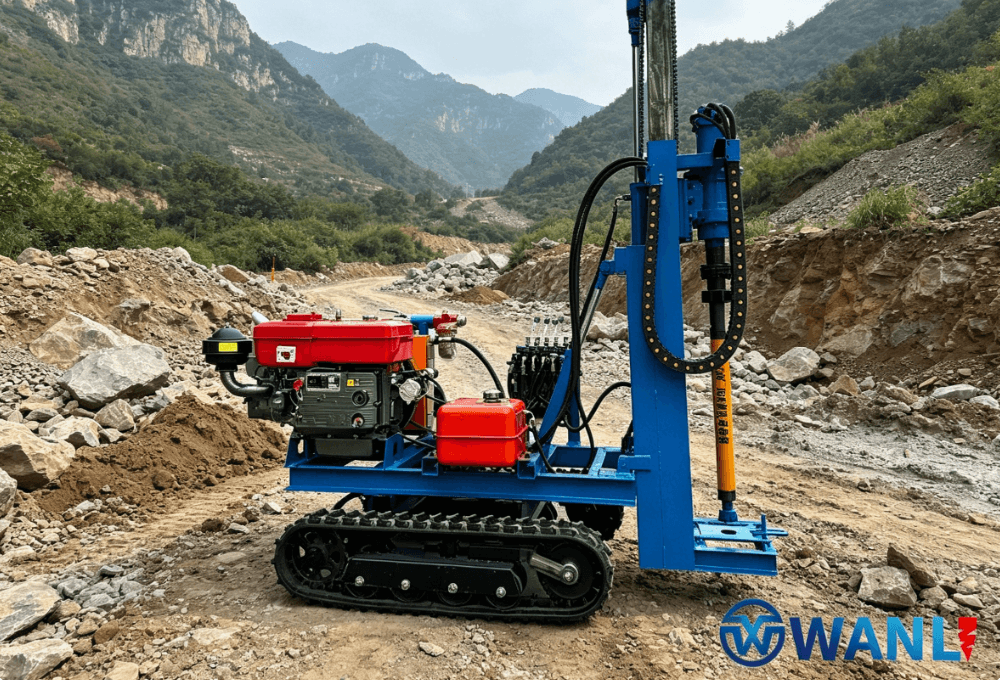
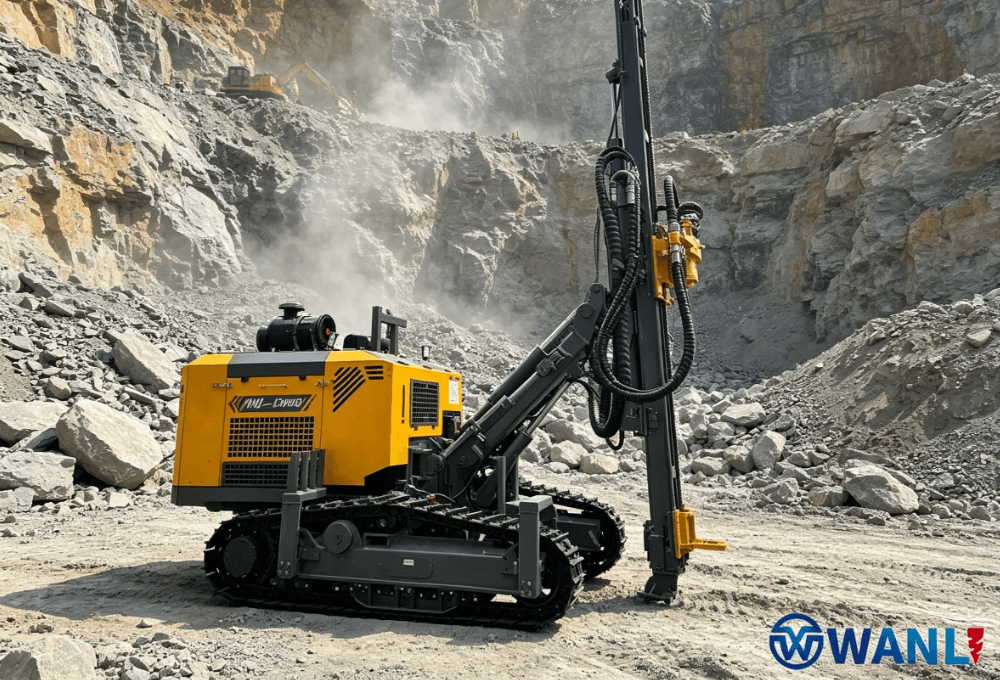
Project depth is the final major consideration for equipment selection. For holes deeper than 30 meters, down the hole drilling is almost always the superior choice. You should look for rigs that offer integrated control systems for torque and feed force. For those seeking heavy-duty solutions, exploring a specialized down the hole drilling rig ensures the machinery matches the geological demands of the site. These features allow operators to adjust parameters in real-time based on rock feedback.
Summary
DTH drilling is an essential technology for high-performance mining and construction. By delivering impact energy directly to the bit, it ensures maximum precision and speed. This method reduces energy loss, lowers operational costs, and handles the toughest rock. Choosing down the hole drilling equipment ensures project success in demanding geological environments.
FAQ
1. What is the main difference between DTH and Top Hammer drilling?
The main difference is the location of the impact mechanism. In DTH drilling, the hammer is located at the bottom of the hole. In top-hammer drilling, the hammer remains above the ground on the rig.
2. Can DTH drilling be used for soft soil?
No, down the hole drilling is specifically designed for hard rock. In soft soil, the pneumatic impact can cause the hole to collapse. Augur or rotary drilling is usually preferred for loose soil conditions.
3. How deep can a DTH rig drill?
Most standard DTH drilling setups easily reach depths of 30 to 60 meters. However, specialized high-pressure systems can reach depths exceeding 100 meters for water wells or geothermal energy.
4. What power source do DTH hammers use?
DTH hammers primarily use compressed air as their power source. This air drives the internal piston and also clears the rock debris from the hole.
Reference Sources
International Society of Explosives Engineers (ISEE): Blasting and Drilling Fundamentals.
National Ground Water Association (NGWA): Drilling Methods for Water Wells.
Mining, Metallurgy & Exploration (SME): Hard Rock Drilling Efficiency Studies.