Investing in a water well drilling rig is a significant capital expenditure. Whether you are a commercial contractor expanding your fleet or a farm owner seeking water independence, the question “how much is a water well drilling rig” does not have a single answer. Prices vary drastically—ranging from $5,000 for basic portable units to over $200,000 for high-performance crawler-mounted systems.
To make an informed decision, you must look beyond the initial sticker price. You need to evaluate drilling depth, geological compatibility, and the “total package” cost, including peripheral equipment like air compressors and drill rods.
Estimated Price Ranges by Rig Category
The cost of a drilling rig is primarily determined by its power, mobility, and the depth it can reach. Below is a breakdown of current market estimates:
| Rig Type | Typical Depth Capacity | Estimated Price Range (USD) | Primary Application |
| Small Portable/Trailer Rigs | 30m – 80m | $5,000 – $15,000 | Domestic wells, soft soil irrigation |
| Pneumatic Crawler Rigs | 100m – 300m | $25,000 – $65,000 | Hard rock, geothermal, professional boreholes |
| Heavy-Duty Crawler Rigs | 400m – 600m+ | $70,000 – $130,000 | Industrial water supply, deep mining |
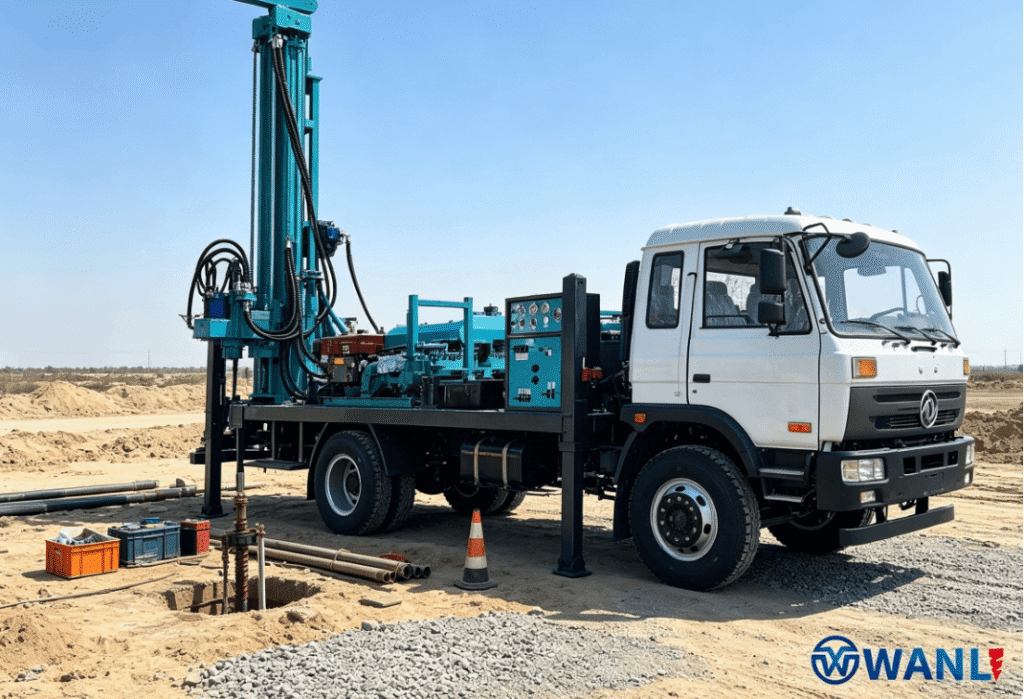
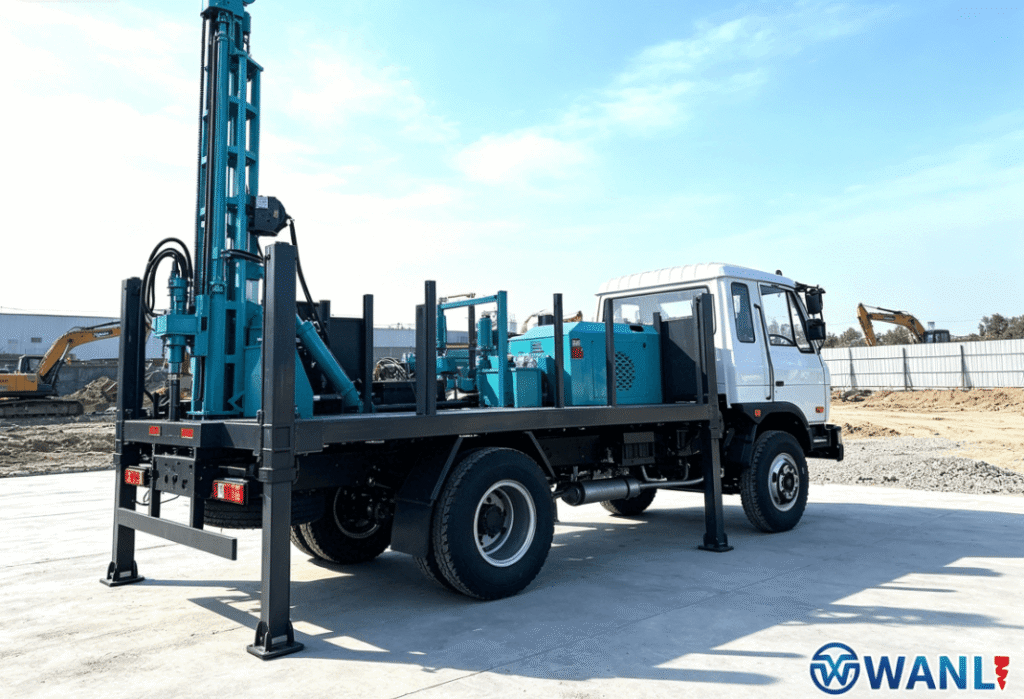
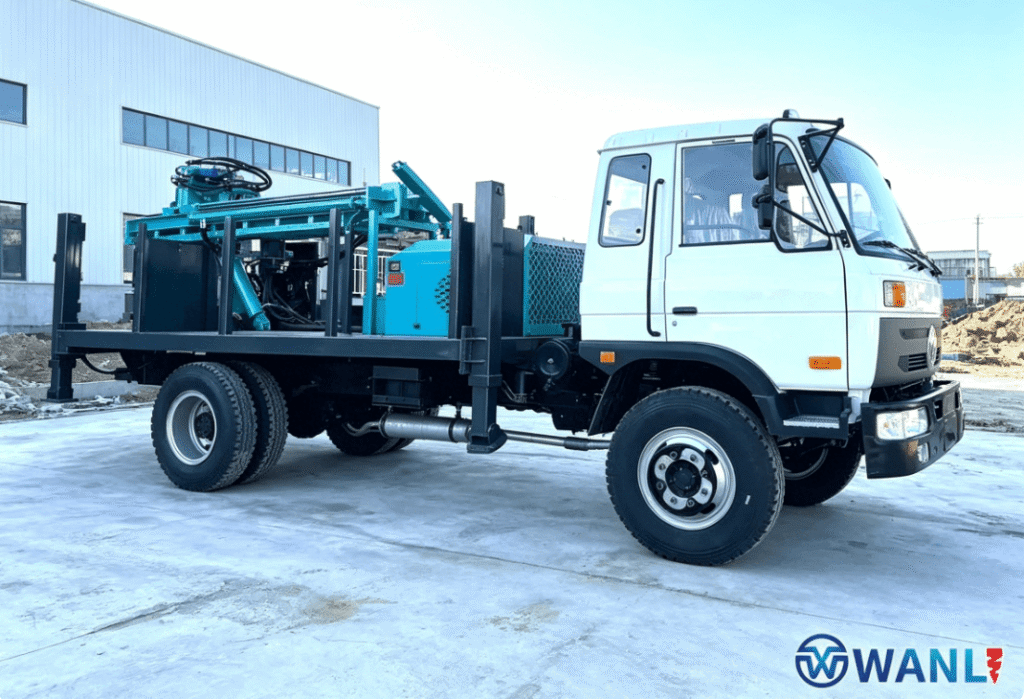
| Truck-Mounted Rigs | 200m – 500m | $100,000 – $250,000+ | Long-distance mobility, large-scale projects |
Core Technical Factors That Drive Costs
When evaluating a quote, engineering specifications determine the value. As a manufacturing consultant, I recommend focusing on these four technical pillars:
1. Lifting Force and Torque
The price of a rig scales with its hydraulic power. For instance, a rig capable of 15 tons of lifting force requires more robust hydraulic cylinders and a heavier chassis than a 5-ton model. High-torque rotation heads are essential for drilling through granite or basalt; if the torque is insufficient, the rig will stall, leading to costly downtime.
2. Power Source (Engine Brand)
The engine is the heart of the rig. Premium rigs often feature Yuchai, Quanchai, or Cummins engines. Choosing a recognized engine brand adds to the initial cost but ensures global parts availability and compliance with local emission standards (such as Tier 4 or Stage V).
3. Chassis and Mobility
Crawler-mounted rigs are the industry standard for rugged terrain. Steel tracks offer durability for mining environments, while rubber-clad tracks are preferred for residential areas to prevent pavement damage. The complexity of the hydraulic walking system significantly influences the final price.
4. Drilling Method Compatibility
Does the rig support both Mud Drilling and DTH (Down-the-Hole) Air Drilling? Multi-functional rigs that can switch between a mud pump (for soil/sand) and an air compressor (for hard rock) command a higher price but offer the greatest versatility for contractors working in diverse regions.
The “Hidden” Costs: The Full Package
When asking how much a rig costs, many first-time buyers forget that the machine itself cannot drill a hole. A complete operational setup requires:
- Air Compressors: For DTH drilling in rock, a high-pressure air compressor is mandatory. These often cost as much as—or more than—the drilling rig itself ($20,000 – $50,000).
- Drill Rods (Pipes): Depending on your target depth, you may need 100 to 300 meters of high-strength alloy pipes.
- Drill Bits: Different strata require different bits (Tricone bits for soil, PDC bits for medium rock, and DTH hammers for hard rock).
- Logistics and Shipping: These machines are heavy. International sea freight, customs duties, and inland delivery can add 10% to 20% to your total investment.
Application-Specific Cost Logic
Selecting the right rig is about matching the machine to the geology.
- For Agricultural Irrigation: If you are drilling in soft plains to depths of 150m, a medium-duty hydraulic crawler rig provides the best ROI. You don’t need the most expensive high-torque head, but you need reliability for long hours of operation.
- For Geothermal Heat Pumps: These projects require high precision and the ability to drill multiple holes quickly. A rig with a fast lifting speed and automated pipe handling (to reduce labor costs) is worth the premium.
- For Hard Rock Mining/Boreholes: You cannot compromise on the air compressor and the DTH hammer quality. An underpowered rig in hard rock will lead to broken drill strings and lost tools.
Why Quality Engineering Lowers the “True Cost”
In the drilling industry, the cheapest machine is often the most expensive over a five-year period. Professional-grade rigs, such as those found in the Wanli Water Well Drilling Rig lineup, focus on heavy-duty structural integrity.
Key indicators of a high-value rig include:
- Composite Boom Design: Increases lifting capacity while maintaining a compact footprint.
- Dual-Pump Hydraulic Systems: Allows for simultaneous rotation and lifting without power drops.
- Centralized Control Panels: Improves operator safety and reduces the learning curve for new crews.
Final Procurement Advice
Before requesting a quote, define your Max Depth, Max Diameter, and Primary Soil Condition.
If you are a contractor, look for a manufacturer that offers OEM support and clear technical documentation. While a “no-name” rig might save you $5,000 today, the lack of a hydraulic schematic or replacement seal kits can ground your operations for weeks during peak drilling season.
FAQ
Q: Can I use a small portable rig for commercial well drilling?
A: Generally, no. Small rigs lack the torque and pull-down force required to bypass heavy rock layers or handle large-diameter casings required for commercial wells. They are best suited for light domestic use or soil sampling.
Q: Does the price include the air compressor?
A: Rarely. Most manufacturers quote the “bare rig.” You must specify if you need a bundled package including a screw air compressor and drill tools.
Q: How long does a water well drilling rig last?
A: With proper hydraulic maintenance and engine servicing, a high-quality crawler rig can last 10–15 years. The ROI is typically achieved within the first 12–24 months of active contracting.
Q: Is it better to buy a truck-mounted or crawler-mounted rig?
A: Crawler rigs are better for off-road and “tight” job sites. Truck-mounted rigs are superior if your projects are spread hundreds of kilometers apart and you want to avoid the cost of a separate transport trailer.
Reference Sources:
- National Ground Water Association (NGWA) – Equipment Standards.
- International Society of Foundation Drilling (ADSC).
- ISO 9001:2015 Manufacturing Standards for Hydraulic Machinery.
- Technical Specifications from SDWanli Engineering Department.