In the context of the African continent, selecting water well drilling equipment is not merely a procurement task; it is an engineering challenge influenced by some of the most complex hydrogeological conditions on Earth. From the crystalline basement rocks of the East African Rift to the deep sedimentary basins of the Sahel, the “standard” rig often fails due to inadequate power, poor mobility, or high maintenance overhead.
For contractors and NGOs, the objective is “Borehole Success Rate.” Achieving this requires a shift from viewing a drilling rig as a single machine to viewing it as a balanced system of torque, pull-back capacity, and air/fluid management.
Geological Compatibility: DTH vs. Rotary Mud Drilling
The primary technical divide in water well drilling equipment for Africa is the method of penetration. The wrong choice leads to stalled projects and tool loss.
- Pneumatic DTH (Down-The-Hole) Drilling: This is the gold standard for the “Basement Complex”—regions characterized by hard granite, gneiss, and schist (common in West and Central Africa). DTH rigs utilize high-pressure air compressors to drive a hammer that pulverizes rock.
- Rotary Mud Drilling: Essential for coastal regions and sedimentary basins where loose sand, clay, and gravel are prevalent. The drilling fluid (bentonite or polymer) stabilizes the borehole wall to prevent collapse—a critical risk in the Nile Basin or Nigerian coastal areas.
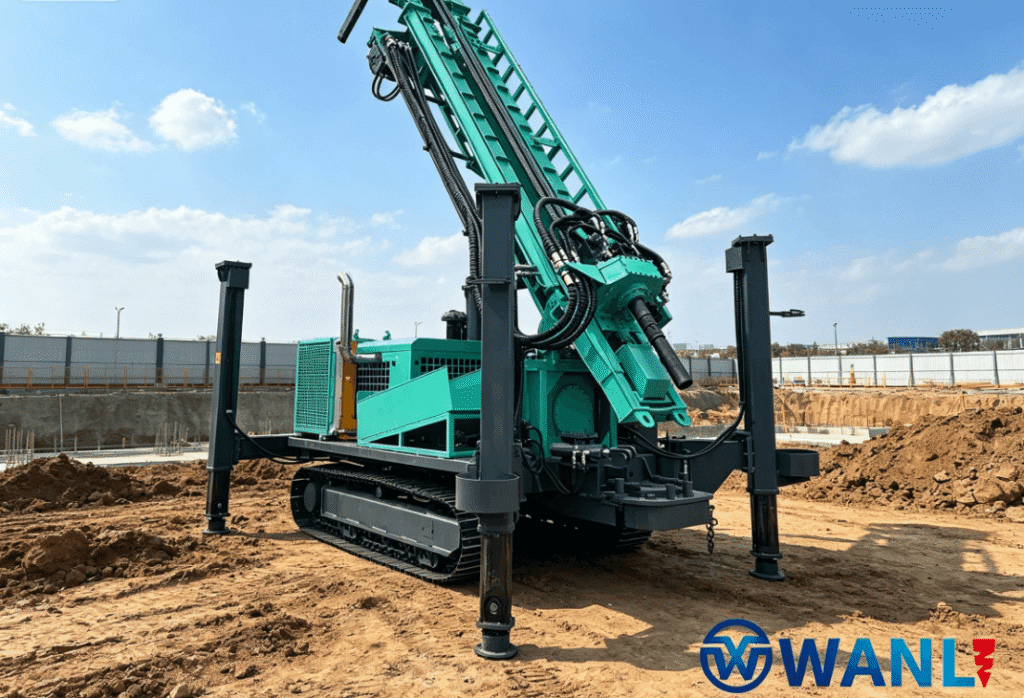
Technical Insight: Modern equipment, such as the Wanli Crawler Series, often features “Dual-System” capabilities. These rigs allow operators to switch between air and mud circulation, providing the versatility needed for multi-regional contracts.
Mobility Systems: Navigating the Last Mile
In many African drilling projects, the most significant logistical bottleneck is not the drilling itself, but reaching the site. Equipment must be selected based on the specific “Last Mile” conditions.
| Mobility Type | Best For | Technical Advantage |
| Crawler-Mounted | Off-road, mountainous, or muddy terrain | High ground contact area; low ground pressure; independent movement without a prime mover. |
| Tractor-Mounted | Agricultural areas and small-scale farms | Utilizes the tractor’s PTO (Power Take-Off); highly cost-effective for shallow wells. |
| Truck-Mounted | Long-distance regional deployment | High road speeds; carries drill pipes and tools on the same chassis. |
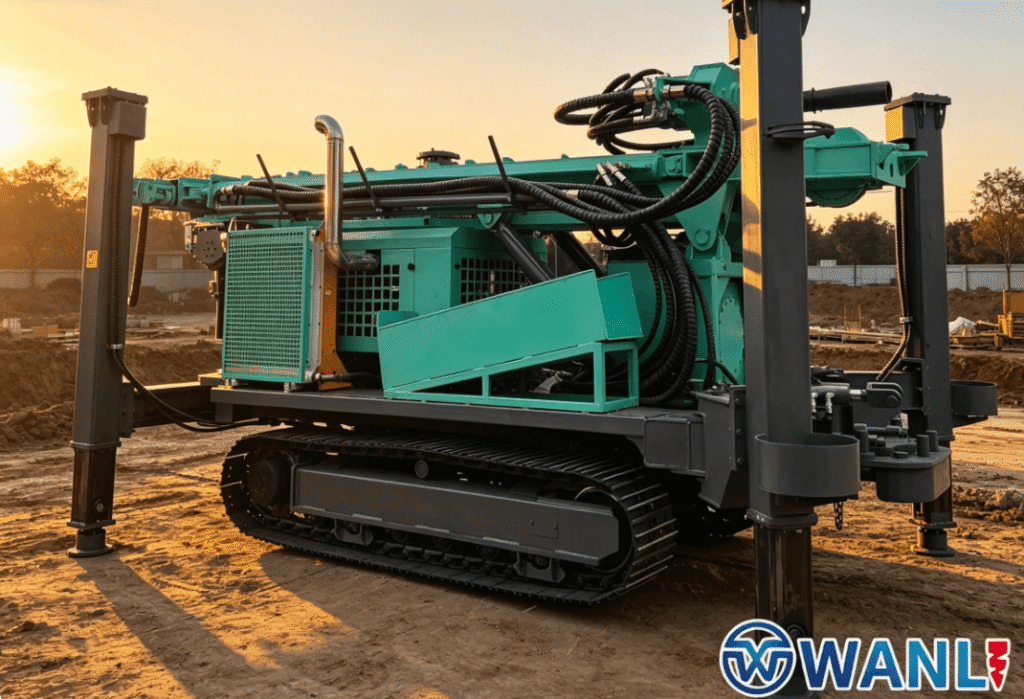
For rugged environments like Ethiopia or the DRC, hydraulic crawler rigs are preferred. Their low center of gravity and steel tracks allow them to navigate 25–30 degree inclines where truck-mounted rigs would risk tipping.
Critical Technical Specifications for High-Heat Environments
The African climate, characterized by high ambient temperatures and heavy dust loads, is punishing on hydraulic systems and diesel engines. When evaluating specifications, prioritize the following:
- Cooling Capacity: Ensure the hydraulic oil coolers and engine radiators are oversized. Overheating is the #1 cause of hydraulic pump failure in Sub-Saharan Africa.
- Engine Reliability: Preference should be given to engines with mechanical injection or simplified electronic controls (e.g., Cummins or Quanchai). These are easier to repair in remote areas where advanced diagnostic tools are unavailable.
- Hoisting Power (Pull-back): For deep aquifers (300m+), the rig must have a pull-back capacity significantly higher than the weight of the drill string to handle “stuck pipe” scenarios in swelling clays.
Matching Rig Depth to Aquifer Reality
The “Drilling Depth” rating on a spec sheet is often a theoretical maximum under ideal conditions. In practice, African aquifers vary significantly:
- Shallow Hand-Pump Wells (30–80m): Portable, lightweight hydraulic rigs are sufficient.
- Community Solar-Powered Wells (100–250m): Requires medium-duty rigs with at least 15–20 tons of lifting force.
- Industrial/Urban Supply (300–600m+): Heavy-duty pneumatic rigs with high-pressure compressors (25 bar+) are mandatory to clear cuttings from great depths.
Total Cost of Ownership (TCO) and Maintenance Logic
Commercial value in drilling equipment is realized through “Uptime,” not just a low initial purchase price. In the African market, the availability of wear parts—seals, filters, DTH hammer bits, and hydraulic hoses—is the deciding factor for long-term ROI.
Strategic Procurement Tip: When sourcing from manufacturers like SDWanli, international buyers should insist on a “Two-Year Wear Parts Kit.” This ensures that minor seal leaks or filter clogs don’t result in weeks of downtime while waiting for international shipping.
The Role of Manufacturer Expertise: The Wanli Edge
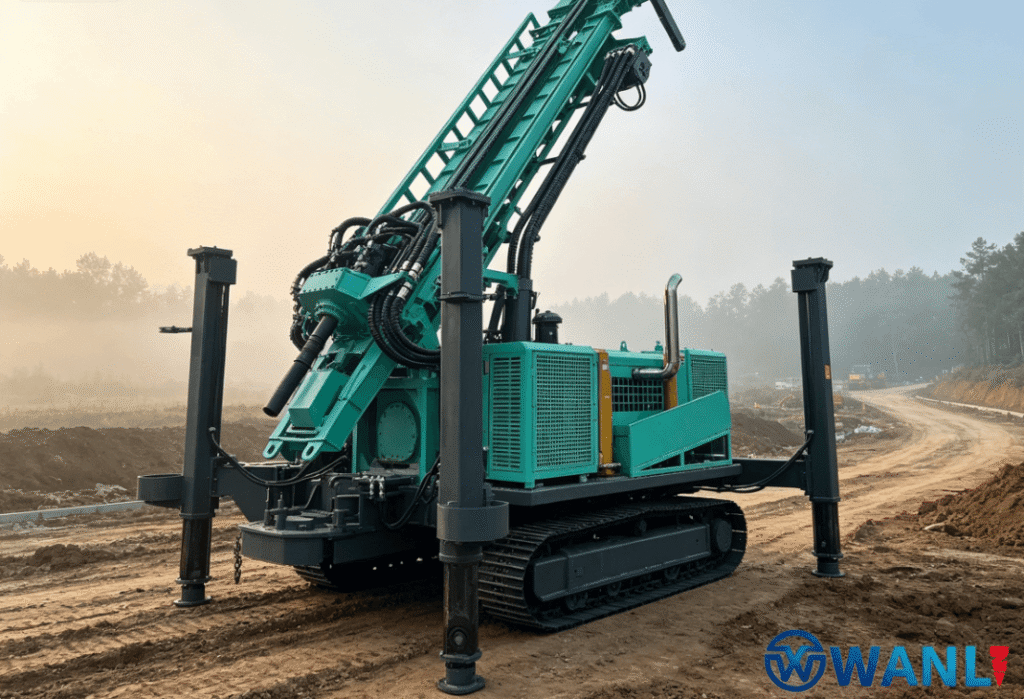
When evaluating water well drilling equipment for Africa, technical pedigree matters. SDWanli has engineered its rigs with a focus on simplified hydraulics and reinforced steel structures. Their crawler-mounted units are specifically designed for the high-torque requirements of hard-rock penetration, featuring:
- Multi-way Valve Blocks: Located for easy access and manual override.
- Reinforced Drill Masts: Capable of handling the vibration of high-pressure DTH hammers.
- High Torque Rotary Heads: Necessary for clearing larger diameter boreholes in mixed formations.
FAQ: Key Considerations for African Drilling Projects
Q: Is a truck-mounted or crawler-mounted rig better for West Africa?
A: It depends on the scale. For regional contractors covering hundreds of kilometers, truck-mounted rigs offer speed. However, for “community-to-community” drilling in rural areas with poor road infrastructure, crawler-mounted rigs are superior as they can traverse terrain where trucks get stuck.
Q: What air compressor capacity is needed for a 200-meter borehole in hard rock?
A: You generally need a compressor providing at least 21–25 bar (300–360 psi) and 900–1100 CFM. High pressure is required to overcome the hydrostatic head of the water column once the aquifer is reached.
Q: Can these rigs be customized for specific pipe lengths?
A: Yes. Professional OEMs like Wanli can adjust the mast height to accommodate 3-meter or 6-meter drill pipes depending on the buyer’s existing inventory or logistical constraints.
Q: How do we handle maintenance in remote areas?
A: Focus on “Mechanical Simplicity.” Opt for rigs with manual hydraulic control valves rather than complex PLC/Electronic-over-hydraulic systems, which are difficult to bypass if a sensor fails in the field.
Reference Sources
- IAH (International Association of Hydrogeologists): Hydrogeology of Africa Reports – Technical data on basement complex drilling.
- UNICEF / Skat Foundation: Rural Water Supply Network (RWSN) – Guidelines for professionalizing manual and mechanized drilling in Africa.
- ISO 22475-1: Geotechnical investigation and testing – Sampling methods and groundwater measurements.
- SGS Technical Inspections: Standards for hydraulic machinery and pressure vessel safety in mining/drilling.