Selecting the best coring drilling rig is the most critical capital decision in any mineral exploration campaign. A mismatch between the rig’s mechanical capabilities and the site’s geological reality often leads to borehole instability, poor core recovery, and exponential increases in “cost per meter.”
For project managers and lead geologists, the “best” rig isn’t necessarily the one with the highest horsepower. It is the machine that balances hoisting capacity, torque, and portability against the specific depth targets and rock formations of the project.
Core Selection Criterion 1: Matching Rig Type to Geological Formations
The geology of your tenement dictates the drilling method, which in turn narrows down the rig architecture. Mineral exploration typically involves moving from weathered overburden into hard-rock basement structures.
- Spindle-Type Coring Rigs: These are the workhorses of traditional exploration. Machines like the XY series are preferred for projects requiring high rotational speeds and mechanical reliability in remote areas. They excel in stable formations where manual control of the feed pressure is an asset for the driller.
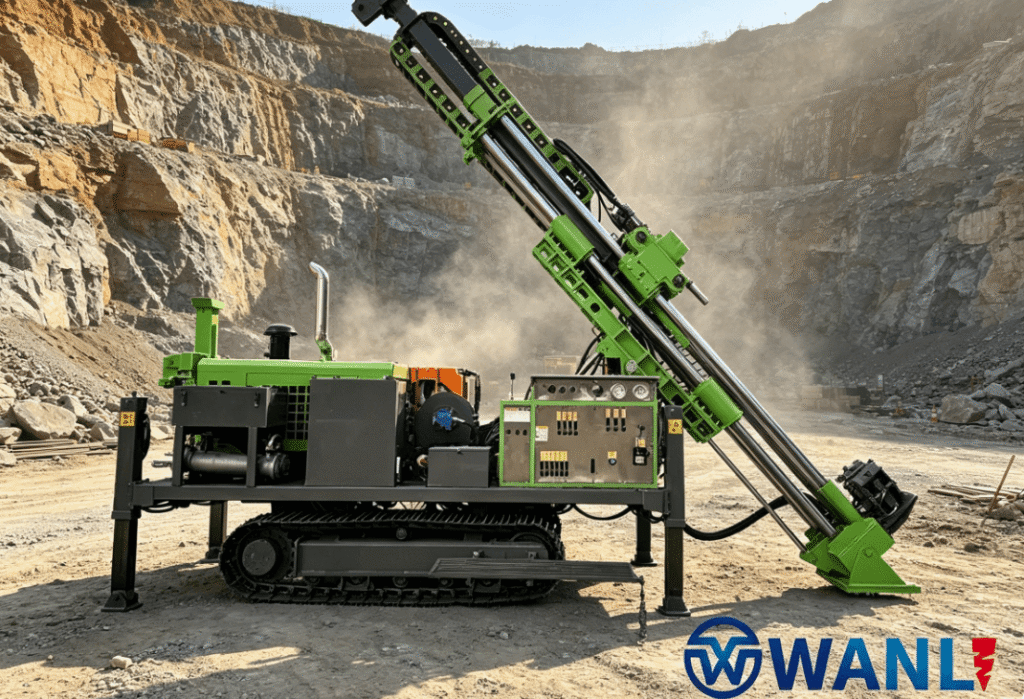
- Full Hydraulic Rigs: If your project involves complex, fractured strata or requires deep-hole wireline coring, hydraulic systems offer superior control. They provide infinitely variable speed and sensitive torque feedback, which is essential for preventing bit “burn” in hard-rock diamond drilling.
Critical Technical Specifications to Evaluate
When reviewing spec sheets from manufacturers like SD Wanli, three metrics determine the rig’s operational ceiling:
| Feature | Importance for Mineral Exploration |
| Hoisting Capacity | Determines the maximum weight of the drill string the rig can safely pull from the hole. |
| Spindle Torque | Crucial for maintaining rotation in “sticky” formations or when using large diameter bits (PQ/HQ). |
| Feed Stroke | Longer strokes reduce the time spent “re-chucking,” significantly increasing daily meterage. |
| Power Source | Diesel engines are standard for remote exploration, while electric motors are used for underground or environmentally sensitive sites. |
Coring Depth and Hole Diameter (NQ, HQ, PQ)
The “best” rig must align with your sampling requirements. In early-stage exploration, you might only need NQ-sized cores (approx. 47.6mm) for geochemical analysis. However, metallurgical testing often requires PQ-sized cores (approx. 85mm), which are significantly heavier.
- Shallow Exploration (0–300m): Portable, modular rigs are ideal. They can be broken down for transport by man-pack or light truck, minimizing site preparation costs.
- Mid-Range Deep Drilling (300–800m): This is the sweet spot for medium-duty rigs like the XY-3 or XY-4. These units offer the structural rigidity needed to maintain borehole verticality at depth.
- Deep Hole Projects (>1000m): These require heavy-duty hydraulic crawler-mounted rigs with automated rod handling systems to ensure crew safety and operational efficiency.
Mobility and Terrain Logistics
Mineral deposits rarely exist in easily accessible locations. The logistics of moving the rig can account for 20-30% of the total exploration budget.
- Skid-Mounted Rigs: Best for stable platforms and projects where the rig stays in one location for multiple weeks.
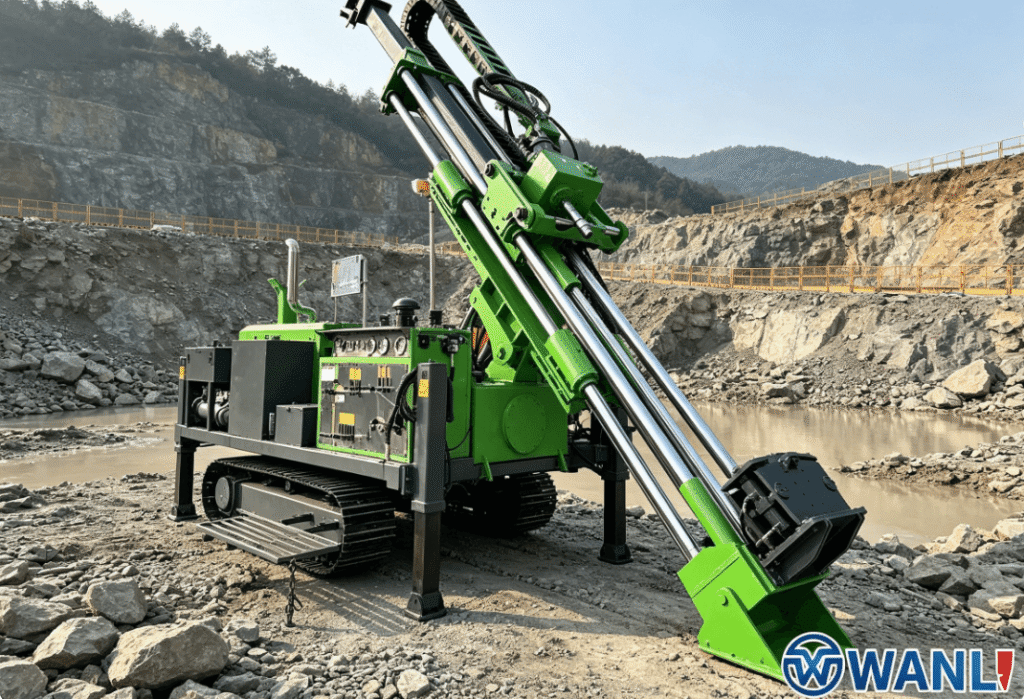
- Crawler-Mounted Rigs: Essential for “step-out” drilling programs where the rig must move between drill pads every 48 hours in rugged or muddy terrain.
- Trailer-Mounted Rigs: The preferred choice for infrastructure projects or greenfield exploration along existing road networks.
Maximizing Core Recovery: The “Silent” Factor
A high-performance coring rig is useless if it produces low core recovery rates. To ensure you are choosing the best coring drilling rig, verify its compatibility with modern wireline systems. Wireline drilling allows the inner tube containing the core sample to be hoisted to the surface without pulling the entire drill string.
Rigs designed with high-speed winches and precise hydraulic pulldown systems (like those found in the SD Wanli Coring Rig Category) minimize vibrations. Reduced vibration translates directly to higher-quality samples, especially in friable or “broken” mineralized zones.
ROI and Maintenance: The OEM Perspective
From a procurement standpoint, the cheapest rig often becomes the most expensive over a 24-month lifecycle. When evaluating suppliers, consider:
- Component Standardization: Does the rig use globally recognized hydraulic valves and motors (e.g., Rexroth or Vickers)? This ensures that a $50 part doesn’t ground a $5,000-a-day operation.
- Thermal Management: For projects in high-ambient temperatures (Australia, Africa, etc.), ensure the rig has an oversized cooling system for hydraulic fluids to prevent premature seal failure.
- Ease of Repair: In remote mineral exploration, “sophisticated” can be a liability. Mechanical spindle rigs are often favored in remote regions because they can be repaired by a local mechanic without specialized diagnostic software.
The Verdict: How to Choose?
- Define your target depth and add a 20% safety margin.
- Identify the largest core diameter needed for metallurgical assays.
- Assess site accessibility to choose between skid, crawler, or portable mounting.
- Prioritize torque over horsepower if drilling through abrasive or varying rock hardness.
For operators looking for a balance of traditional reliability and modern power, the XY series spindle rigs provide a proven platform for depths up to 600 meters, while hydraulic crawler units are the superior choice for high-production, deep-target mineral programs.
FAQ: Choosing a Coring Drilling Rig
1. What is the difference between a water well rig and a coring rig?
While both drill holes, a coring rig is designed with higher rotational speeds and specialized feed systems to extract intact rock samples. Water well rigs focus on torque and volume (air/mud) to clear cuttings quickly, often destroying the core structure in the process.
2. Can I use a surface coring rig for underground mineral exploration?
Technically possible, but not recommended. Underground rigs are designed with compact footprints, explosion-proof components (if in coal/gas environments), and specialized 360-degree drilling frames for up-hole and horizontal drilling.
3. What is the average lifespan of a professional coring rig?
With a strict maintenance schedule, a high-quality rig from a reputable manufacturer like SD Wanli can operate for 10–15 years. Major overhauls of the engine and hydraulic pumps are typically required every 5,000–8,000 operating hours.
4. How does “Wireline” capability affect rig choice?
Wireline-capable rigs require a specific “wireline winch” with high-speed retrieval and enough derrick height to handle rod sections. If your project is deeper than 100 meters, a wireline-compatible rig is mandatory for economic efficiency.
5. What certifications should I look for in a drilling rig?
Look for ISO 9001 for manufacturing quality, and ensure the diesel engines meet the Tier/Stage emission requirements of your specific region (e.g., EPA Tier 4 for the US/Europe).
Reference Sources
- ASTM D2113: Standard Practice for Rock Core Drilling and Sampling of Rock for Site Investigation.
- The International Society for Rock Mechanics (ISRM): Suggested Methods for Core Drilling and Sampling.
- Australian Drilling Industry Association (ADIA): Technical guidelines for mineral exploration drilling.
- ISO 21467: Earth-moving machinery and mobile road construction machinery — Drill rigs — Terminology and commercial specifications.