Selecting a borehole drilling equipment manufacturer is a high-stakes capital investment that dictates the operational efficiency of groundwater, geothermal, and mining projects for years. Unlike standard machinery, drilling rigs must withstand extreme torque, high-pressure hydraulic demands, and abrasive geological formations. For B2B buyers and project managers, the priority lies in finding a manufacturer that balances robust engineering with adaptable OEM capabilities and transparent lead times.
Key Evaluation Criteria for a Borehole Drilling Equipment Manufacturer
When vetting a factory, superficial metrics like “lowest price” often lead to catastrophic downtime in the field. A professional manufacturer evaluation should focus on engineering integrity and production scalability.
1. Engineering and Material Standards
A reputable manufacturer utilizes high-strength alloy steels for the mast and chassis to handle the stresses of deep-hole drilling. Inquire about the heat treatment processes for critical components like gears and drill pipes. Professional factories typically adhere to international standards such as API (American Petroleum Institute) or ISO 9001:2015 to ensure structural reliability.
2. Hydraulic System Integration
The heart of any modern borehole rig is its hydraulic system. Top-tier manufacturers often source or license technology from brands like Rexroth or Kawasaki to ensure smooth power distribution. Ask for specific pump flow rates and pressure ratings, as these determine the rig’s ability to handle heavy drill strings at depth.
3. Customization and OEM Capability
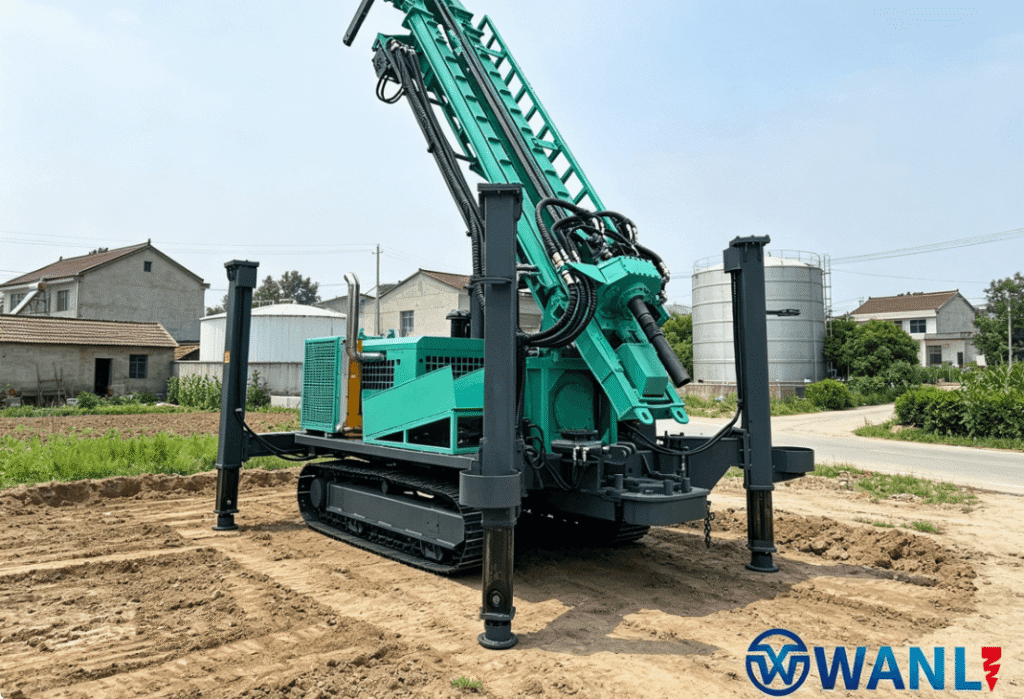
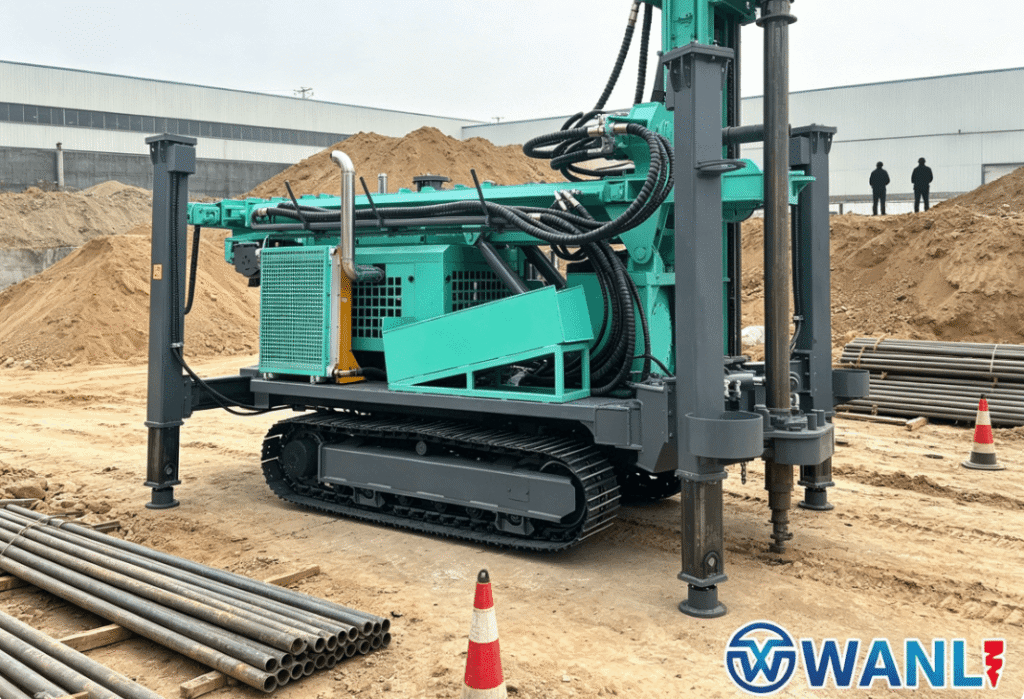
Industrial projects rarely follow a one-size-fits-all model. A high-value manufacturer offers modular configurations, allowing you to choose between crawler-mounted, truck-mounted, or tractor-mounted chassis depending on the terrain—be it mountainous regions or urban construction sites.
Technical Benchmarks: Matching Rigs to Geological Conditions
A manufacturer’s expertise is evident in how they help you match equipment to your specific drilling environment. Whether you are dealing with soft sedimentary layers or hard granite, the rig’s technical configuration must be optimized.
| Feature | Crawler-Mounted Pneumatic Rigs | Truck-Mounted Hydraulic Rigs |
| Primary Terrain | Rugged, off-road, mountainous | Developed roads, wide-area mobility |
| Drilling Method | DTH (Down-The-Hole) Hammer | Rotary or Mud Pump |
| Speed/Efficiency | High in hard rock | High in soil/sand layers |
| Stability | Self-leveling hydraulic legs | Outrigger-dependent |
| Typical Depth | 200m – 600m | 100m – 400m |
For hard rock formations, manufacturers should recommend rigs compatible with high-pressure air compressors for DTH drilling. Conversely, for agricultural water wells in sandy soil, a manufacturer focusing on high-torque rotary heads and integrated mud pumps is essential.
The Manufacturing Workflow and Quality Control
Understanding the factory’s internal workflow provides insight into the long-term reliability of the borehole equipment. A “Manufacturer & Factory Guide” is incomplete without auditing the quality control (QC) sequence:
- Raw Material Inspection: Ultrasonic testing of steel plates to detect internal flaws before welding.
- Precision Machining: Use of CNC centers for the rotary head and gearbox housings to ensure perfect alignment and minimize vibration.
- Hydraulic Pressure Testing: Every rig should undergo a 24-hour pressure holding test to ensure no leaks occur under maximum load.
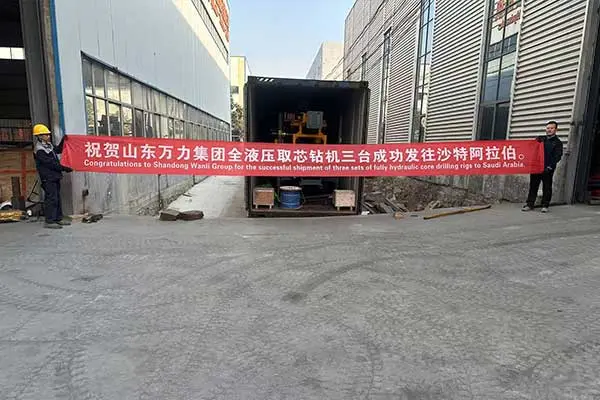
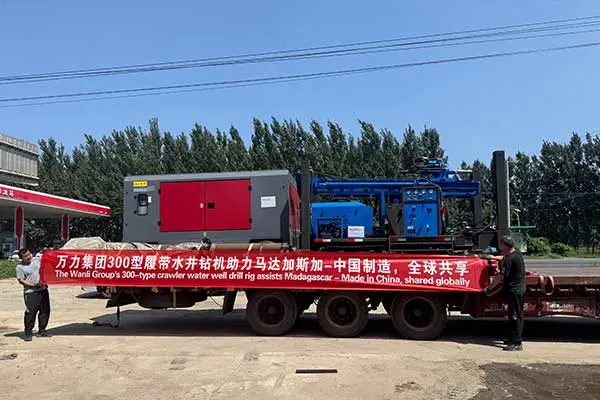
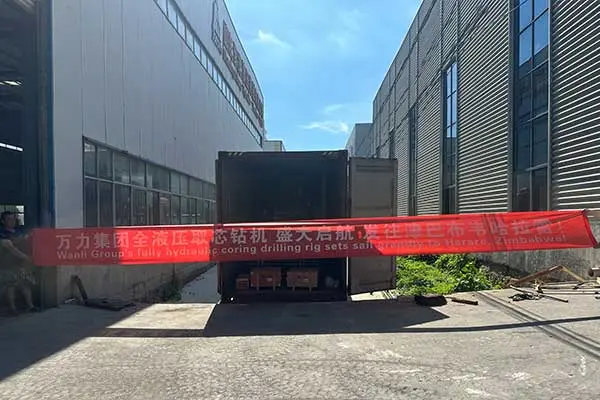
- Field Simulation: Leading manufacturers, such as Shandong Wanli Tools, conduct functional tests on-site at the factory to verify lifting capacity and rotation speeds before crating the equipment for export.
Navigating the RFQ Process: MOQ and Lead Times
In the transactional phase, clarity on logistics and procurement terms is vital for project planning.
- Minimum Order Quantity (MOQ): For large borehole rigs, the MOQ is typically one unit. However, for consumables like drill bits, hammers, and pipes, manufacturers may require a minimum volume to offset shipping costs.
- Lead Times: Standard rig models usually have a 15–30 day lead time. Custom configurations involving specific chassis (e.g., Sinotruk or Shacman) or specialized hydraulic upgrades can extend this to 45–60 days.
- Compliance and Documentation: Ensure the manufacturer provides a Certificate of Origin, CE certification (for EU markets), and detailed technical manuals in English. For international shipping, the use of 40HQ containers or Flat Rack containers is standard for larger crawler units.
Professional Sourcing with Shandong Wanli
For buyers seeking high-performance water well drilling rigs, Shandong Wanli stands as a prominent manufacturer specializing in both pneumatic and hydraulic systems. Their product range covers diverse depth requirements—from 200-meter portable units to 600-meter industrial crawler rigs.
By integrating advanced DTH technology with rugged chassis designs, they provide solutions for geological exploration, irrigation, and geothermal heating. Their factory capability emphasizes rapid response to OEM requests, ensuring that the rig’s specifications—from engine brand to drilling diameter—align with the client’s localized operational needs.
FAQ: Professional Procurement of Borehole Equipment
Q: Can I customize the engine brand for my drilling rig?
A: Yes. Most professional manufacturers offer engine options like Cummins, Deutz, or Yuchai to ensure you have access to local spare parts and maintenance services in your specific region.
Q: What is the difference between a pneumatic rig and a hydraulic rig?
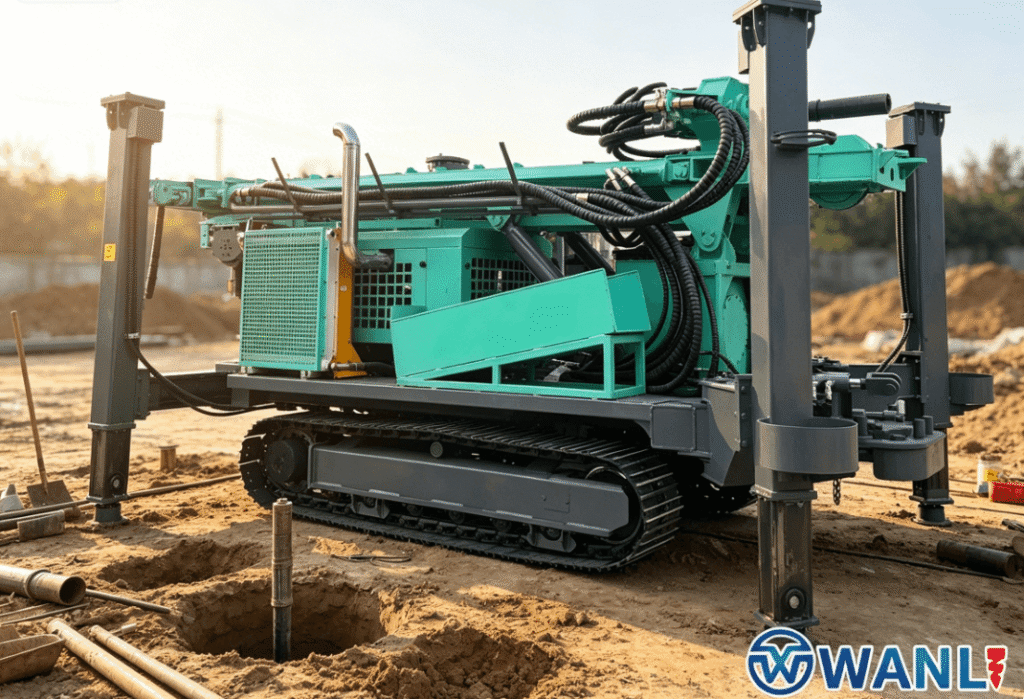
A: A pneumatic rig uses compressed air (via a compressor) to drive a DTH hammer for hard rock. A hydraulic rig uses fluid power for rotation and lifting, often utilized with mud pumps for softer formations. Many modern borehole rigs are “multi-functional,” allowing for both methods.
Q: How do you handle after-sales support for international orders?
A: Manufacturers typically provide a 12-month warranty on core components (engine, hydraulic pumps, valves). Technical support is usually delivered via video consultation, and wear-and-tear parts are stocked globally or shipped via express air freight to minimize downtime.
Q: Are drill pipes and bits included in the initial quote?
A: Generally, a base quote includes the rig itself. Consumables like drill pipes, DTH hammers, and tricone bits are listed as “recommended accessories” based on your target drilling depth and hole diameter. It is best to include these in your initial RFQ to ensure compatibility.
Reference Sources
- ISO 9001:2015 – International Standard for Quality Management Systems in Manufacturing.
- DCDMA (Diamond Core Drill Manufacturers Association) – Standards for drilling equipment dimensions and tolerances.
- American Petroleum Institute (API) – Specifications for drilling and production equipment.
- SGS Group – Industrial manufacturing inspection and verification protocols.