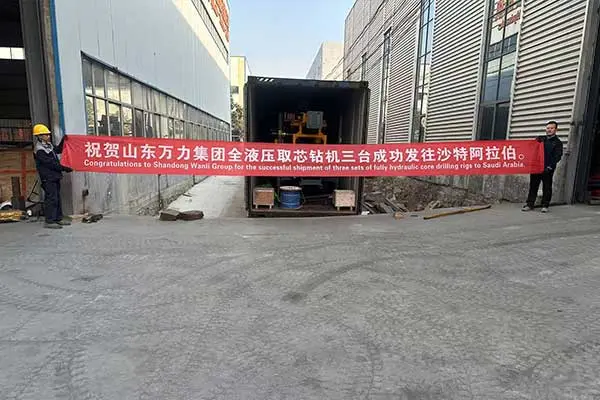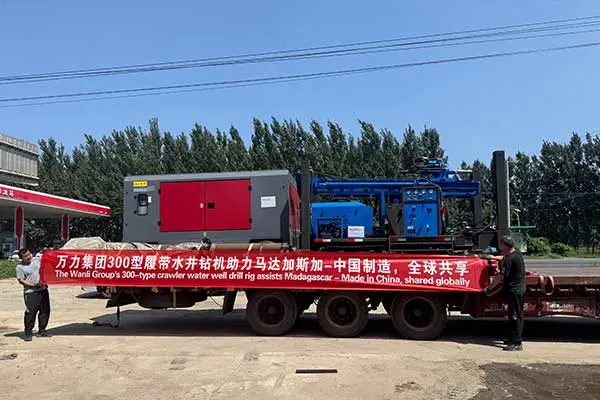
Procuring a reverse circulation drilling rig is a capital allocation decision that directly determines your exploration program’s penetration rate, sample integrity, and total cost per meter. For mining contractors, geological exploration bureaus, and quarry operators, the rig specification must match your target depth, formation profile, and site mobility constraints. Shandong Wanli’s RC Reciprocating Mud Pump Circulation Drilling Rig is engineered specifically for 500-1000 m boreholes in loose layers and bedrock, delivering 15-35 m/h cutting footage efficiency with a Cummins 153 kW power plant.
Why Reverse Circulation Technology Wins for Mineral Exploration
Reverse circulation (RC) drilling uses liquid (mud or water) or compressed air as the circulation medium. Per ISOPE research published by the Deep Drilling Department of the Institute of Exploration Techniques (China), RC drilling “has been used widely in the mineral exploration” because it adopts dual-wall drill pipes: the drilling fluid enters the annular space between the inner and outer pipes to the hole bottom, then carries cores and cuttings up to the surface through the central passage of the inner pipes.
The engineering consequence is decisive: RC drilling produces cleaner samples faster from deeper holes compared to conventional methods. As Epiroc’s technical documentation states, RC drilling “uses a hammer to break the rock into chips that are brought to the surface with compressed air… generally faster and more cost-effective, making it ideal for early-stage exploration and for quickly outlining potential mineralized zones.”
The sample recovery chain is critical for B2B buyers:
- The RC hammer or roller bit fractures rock at the hole bottom
- The dual-wall drill pipe transports the cuttings through the inner tube
- The sample passes through a cyclone and sample splitter at the surface
- The cyclone separates rock chips from air
- Samples are collected in bags for geological analysis
DrillExpeRT Africa confirms RC drilling “typically reaches depths of up to 400 meters” with a Ø140 mm hole size, offering “superior sample quality relative to rotary air blast (RAB) drilling” while being “less expensive than core (DD) drilling.”
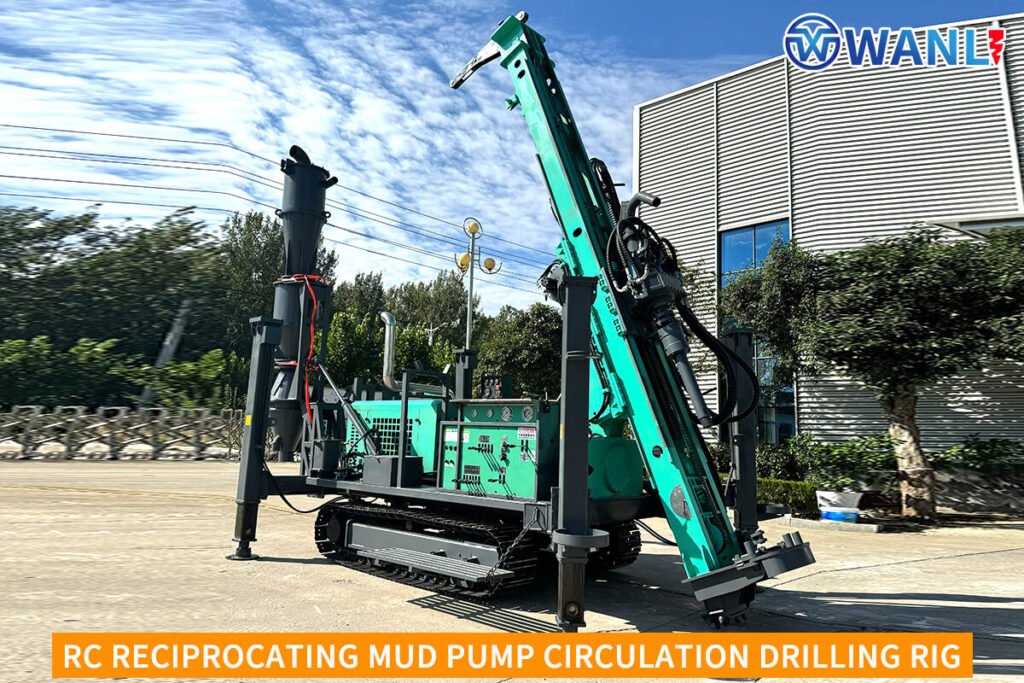
Wanli RC Reciprocating Mud Pump Circulation Drilling Rig: Core Specifications
Shandong Wanli’s flagship RC rig delivers verifiable performance metrics:
| Parameter | Specification |
|---|---|
| Drilling depth | 500-1000 m |
| Drill hole diameter | 100-300 mm |
| Working pressure | 1.5-3.5 MPa |
| Air consumption | 17-42 m³ |
| Drill rod length | 3 m |
| Drill rod diameter | 89 / 102 / 114 mm |
| Power head pressure | 7 T |
| Lifting force | 28 T |
| Lifting speed | 23 m/min |
| Rapid advance | 33 m/min |
| Maximum torque | 8500-11000 N·m |
| Penetration speed | 40 m/min |
| Engine | Cummins 153 KW |
| Maximum slewing speed | 40-140 r/min |
| Outrigger stroke | 1.7 m |
| Cutting footage efficiency | 15-35 m/h |
| Weight | 12 T |
| Climbing ability | 30° |
| Adaptability | Loose layer, bedrock |
| Overall dimensions | 6.8 × 2.1 × 2.8 m |
| Impact or | Medium-high wind pressure |
Source: Shandong Wanli RC Reciprocating Mud Pump Circulation Drilling Rig product page
The 28-ton lifting force and 8500-11000 N·m torque output position this rig for sustained operation in both loose overburden and competent bedrock. The 30° climbing ability and 12-ton weight indicate a truly mobile crawler platform suited for rough terrain deployment.
Commercial Comparison Table 1: 500-1000m Class RC Rig Head-to-Head
| Parameter | Wanli RC Reciprocating Mud Pump | Shandong Runli 1000m RC | WOMI HLRC-600XL | Source |
|---|---|---|---|---|
| Max drilling depth | 500-1000 m | 1000 m | 600 m | Wanli / Runli / WOMI |
| Drill hole diameter | 100-300 mm | 105-800 mm | Not specified | Wanli / Runli / WOMI |
| Engine power | Cummins 153 KW | Not disclosed | 132 KW (Yuchai/Weichai) | Wanli / WOMI / Runli |
| Max torque | 8500-11000 N·m | 12000/6000 N·m | 12000 N·m | Wanli / Runli / WOMI |
| Lifting force | 28 T | 52 T | 20 T | Wanli / Runli / WOMI |
| Cutting footage efficiency | 15-35 m/h | 10-35 m/h | Not disclosed | Wanli / Runli |
| Climbing ability | 30° | 21° | 25° | Wanli / Runli / WOMI |
| Weight | 12 T | 17.8 T | 12 T | Wanli / Runli / WOMI |
| Air consumption | 17-42 m³ | 16-96 m³/min | Not disclosed | Wanli / Runli |
| Approx. price (USD) | Contact for quote | $35,000-40,000 | Not disclosed | Runli |
Sources: Wanli product page; Shandong Runli 1000m RC Rig (Made-in-China); WOMI HLRC-600XL (cnwomitechnology.com)
Where Wanli wins decisively:
- Climbing ability: 30° outperforms Runli’s 21° and WOMI’s 25°—critical for mountain exploration and remote site access
- Engine power: 153 KW Cummins exceeds WOMI’s 132 KW, delivering stronger torque reserve for hard rock penetration
- Weight efficiency: At 12 T, Wanli matches WOMI’s 12 T but is 5.8 T lighter than Runli’s 17.8 T—reducing transport and site preparation costs
- Air efficiency: 17-42 m³ consumption is significantly tighter than Runli’s 16-96 m³ range, indicating better fuel-to-air economy
Commercial Comparison Table 2: Mid-Depth RC Rig Alternatives
| Parameter | Wanli RC Rig | WANHAI WHFsl400 | Source |
|---|---|---|---|
| Max drilling depth | 500-1000 m | 400 m | Wanli / WANHAI |
| Drill hole diameter | 100-300 mm | 105-400 mm | Wanli / WANHAI |
| Lifting force | 28 T | 22 T | Wanli / WANHAI |
| Weight | 12 T | 11 T | Wanli / WANHAI |
| Certification | Not disclosed | CE, RoHS, ISO 9001:2000/2008 | WANHAI |
| Production capacity | Not disclosed | 5000 sets/year | WANHAI |
Sources: Wanli product page; WANHAI WHFsl400 (Made-in-China)
For projects requiring 500-1000 m capability, Wanli’s rig operates in a higher depth class than WANHAI’s 400 m-rated unit, with 27% greater lifting force (28 T vs 22 T). WANHAI holds CE, RoHS, and ISO 9001:2000/2008 certifications—Wanli’s comparable certification documentation is available upon request for specific project tenders.
Application Fit: When Wanli’s RC Rig Is the Optimal Choice
You should prioritize this reverse circulation drilling rig when:
- Your target depth is 500-1000 m—Wanli’s rig sits in the exact sweet spot for medium-to-deep mineral exploration, exceeding WANHAI’s 400 m class
- Terrain is challenging—The 30° climbing ability outperforms all comparable rigs in this depth class (Runli 21°, WOMI 25°)
- Bedrock and loose layers both present—the 8500-11000 N·m torque range and 7T power head pressure handle formation transitions without rig changes
- Mobility and rapid site-to-site relocation matter—At 12 T with crawler mobility, the rig moves between drill pads without separate transport infrastructure
- Penetration rate drives program economics—15-35 m/h cutting footage efficiency matches Runli’s top-end performance while consuming less air (17-42 m³ vs 16-96 m³)
- Power reliability is non-negotiable—The Cummins 153 KW engine provides globally supported, field-serviceable power
Consider alternatives when:
- Your maximum depth requirement is ≤400 m—WANHAI WHFsl400 at a lower price point may suffice
- You require the absolute maximum lifting force (>50 T)—Runli’s 1000m rig offers 52 T but at 17.8 T weight and 21° climbing ability
- You need ISO/CE certification documentation upfront for tender compliance—WANHAI publishes these certifications openly; Wanli provides them on a per-project basis
Technical Specification Framework for Your RFQ
When preparing your RFQ for a reverse circulation drilling rig, specify:
- Target depth & diameter: Wanli’s 500-1000 m × 100-300 mm envelope covers most mineral exploration and water well programs
- Formation profile: The rig adapts to both loose layers and bedrock with medium-high wind pressure impactors
- Air compressor specification: 17-42 m³ air consumption at 1.5-3.5 MPa working pressure—size your compressor accordingly
- Site mobility requirements: 30° climbing ability and 2-4 km/h travel speed for rough terrain
- Power source: Cummins 153 KW diesel—globally supported service network
- Torque requirement: 8500-11000 N·m maximum torque for hard rock penetration
- Lifting force: 28 T lifting force with 23 m/min lifting speed for efficient rod handling
- Sample recovery system: Dual-wall drill pipe with inner tube return (per ISOPE-published RC methodology)
- Drill rod configuration: 3 m rods, 89/102/114 mm diameters
- Transport dimensions: 6.8 × 2.1 × 2.8 m overall—verify site access roads accommodate this footprint
The Total Cost of Ownership Equation
For B2B procurement teams, the initial purchase price is only 30-40% of a rig’s 5-year total cost of ownership. The Wanli RC rig’s TCO advantages:
| TCO Factor | Wanli RC Rig Advantage | Source |
|---|---|---|
| Fuel efficiency | 153 KW engine with 17-42 m³ air consumption (tighter than Runli’s 16-96 m³) | Wanli / Runli |
| Site mobility | 30° climbing, 12 T weight—minimal site prep | Wanli |
| Penetration rate | 15-35 m/h — faster hole completion = lower labor cost per meter | Wanli |
| Engine serviceability | Cummins’ global service network | Wanli |
| Rig versatility | Handles loose layers AND bedrock—one rig for multiple formations | Wanli |
| Outrigger stability | 1.7m outrigger stroke for secure setup on uneven ground | Wanli |
The 15-35 m/h cutting footage efficiency directly translates to shorter project timelines. For a 1000 m exploration program, completing holes 20% faster than a 10-20 m/h rig saves substantial labor and equipment mobilization costs.
Why Reverse Circulation Over Conventional Methods
The comparative advantage of RC drilling for B2B exploration programs, as documented by ISOPE and Epiroc:
- Sample integrity: The dual-wall pipe system prevents cross-contamination between depth intervals—critical for accurate grade estimation
- Speed: RC drilling achieves “cleaner samples faster from deeper holes” (ISOPE)
- Cost-effectiveness: “Less expensive than Core (DD) drilling” while delivering “superior sample quality relative to rotary air blast (RAB) drilling” (DrillExpeRT Africa)
- Depth capability: RC “typically reaches depths of up to 400 meters” per DrillExpeRT Africa, with Wanli’s rig extending to 1000 m
- Early-to-mid stage exploration: “Ideal for early-stage exploration and for quickly outlining potential mineralized zones” (Epiroc)
FAQ
Q1: What is a reverse circulation drilling rig, and how does it work?
A: A reverse circulation drilling rig uses liquid (mud/water) or compressed air as a circulation medium with dual-wall drill pipes. The fluid enters the annular space between inner and outer pipes, reaches the hole bottom, and carries cores/cuttings up through the central passage of the inner pipe to the surface for collection. Per ISOPE research, this method “has been used widely in the mineral exploration” because it improves drilling efficiency while reducing cost.
Q2: How deep can Wanli’s RC rig drill?
A: The RC Reciprocating Mud Pump Circulation Drilling Rig delivers 500-1000 m depth capability with a 100-300 mm hole diameter. This positions it in the medium-to-deep exploration class, exceeding WANHAI’s 400m-rated WHFsl400 model.
Q3: What is the advantage of reverse circulation over conventional rotary drilling?
A: RC drilling produces cleaner, uncontaminated samples faster from deeper holes. The dual-wall pipe system transports cuttings through the inner tube, preventing cross-contamination between depth intervals. Epiroc confirms RC is “generally faster and more cost-effective” than core drilling, making it ideal for early-to-mid-stage exploration.
Q4: What engine power does the Wanli RC rig use?
A: The rig is powered by a Cummins 153 KW diesel engine—part of the globally supported Cummins power portfolio, ensuring field-serviceable reliability in remote exploration sites.
Q5: How does Wanli’s rig compare to Shandong Runli’s 1000m RC rig?
A: Wanli offers 30° climbing ability (vs. Runli’s 21°), a 153 KW engine (vs. Runli’s undisclosed but lower power-to-weight), and 12 T weight (vs. Runli’s 17.8 T). Runli counters with 52 T lifting force (vs. Wanli’s 28 T) and a wider diameter range (105-800 mm vs. 100-300 mm). Wanli wins on mobility and power-to-weight; Runli wins on maximum lifting force.
Q6: What air compressor sizing does the Wanli RC rig require?
A: The rig consumes 17-42 m³ of air at 1.5-3.5 MPa working pressure. This is more efficient than Runli’s 16-96 m³/min range, indicating better fuel-to-air economy for sustained operation.
Q7: Can the rig handle both loose overburden and bedrock?
A: Yes. The Wanli RC rig is explicitly designed for “loose layer, bedrock” adaptability, with 8500-11000 N·m torque output and 7T power head pressure to manage formation transitions without rig changes.
Q8: What certifications does Wanli hold?
A: Wanli provides certification documentation on a per-project basis for international tenders. Comparable rigs in the market (WANHAI WHFsl400) carry CE, RoHS, and ISO 9001:2000/2008. Contact Wanli’s engineering team for project-specific certification requirements.
Q9: What is the rig’s mobility profile?
A: The crawler-mounted rig weighs 12 T, climbs 30° slopes (best-in-class for this depth range), travels at 2-4 km/h, and fits within 6.8 × 2.1 × 2.8 m transport dimensions. This enables self-contained site-to-site relocation without separate transport vehicles.
Q10: How do I initiate a procurement conversation?
A: Prepare your RFQ with target depth, hole diameter, formation profile, site mobility requirements, and compressor specifications. Submit to Wanli’s engineering team, who will evaluate your parameters against the rig’s 500-1000 m × 100-300 mm envelope, 28 T lifting force, and 8500-11000 N·m torque capacity.
Making the Procurement Case
When presenting a reverse circulation drilling rig acquisition to your board or exploration committee, anchor the discussion in four verifiable pillars:
- Technology superiority: RC drilling with dual-wall pipes produces cleaner samples faster from deeper holes (ISOPE-confirmed), making it the preferred method for mineral exploration
- Specification match: Wanli’s rig delivers 500-1000 m depth, 28 T lifting force, 8500-11000 N·m torque, 30° climbing ability, and 15-35 m/h cutting efficiency—a verifiable match for medium-to-deep exploration programs
- Competitive positioning: Against Runli’s 1000m rig, Wanli offers superior mobility (30° vs 21°) and power-to-weight (12 T vs 17.8 T). Against WANHAI’s 400m rig, Wanli operates in a higher depth class with 27% greater lifting force
- TCO advantage: The Cummins 153 KW engine, 17-42 m³ air efficiency, and 15-35 m/h penetration rate combine to minimize 5-year total cost of ownership
For B2B buyers evaluating reverse circulation drilling rig investments, the evidence-based path is clear: specify your depth requirement, verify torque and lifting force against formation hardness, confirm mobility matches your terrain, and select a supplier with verifiable engine power and air consumption data. Shandong Wanli’s RC Reciprocating Mud Pump Circulation Drilling Rig delivers on all four dimensions.
When your next exploration project demands reliable, high-sample-integrity drilling at 500-1000m depth, understanding reverse circulation drilling rig selection criteria is the first step. The next step is matching your specific depth targets, formation profile, and site conditions to the right rig configuration.
To explore how Wanli’s RC Reciprocating Mud Pump Circulation Drilling Rig would perform in your application, visit our product page at https://sdwanli.com/product/rc-reverse-circulation-drilling-rig/rc-reciprocating-mud-pump-circulation-drilling-rig/. Our engineering team can evaluate your exploration parameters—target depth, hole diameter, formation type, site mobility, and compressor specifications—and prepare a customized configuration recommendation with a transparent quotation. Reach out today, and let us help you calculate the exact return on investment this reverse circulation technology can deliver for your exploration program.
References
- RC Reciprocating Mud Pump Circulation Drilling Rig — Full product specifications. Shandong Wanli Construction Machinery Co., Ltd. https://sdwanli.com/product/rc-reverse-circulation-drilling-rig/rc-reciprocating-mud-pump-circulation-drilling-rig/
- RC Reverse Circulation Drilling Rig Rock Powder Sampling Drilling Rig—Cross-reference specifications. Shandong Wanli. https://sdwanli.com/product/rc-reverse-circulation-drilling-rig/rc-reverse-circulation-drilling-rig-rock-powder-sampling-drilling-rig/
- Zhang, Y., Zhang, L., Wang, H. (2015). The Reverse Circulation (RC) Drilling Techniques for the Mineral Resources Exploration and Production in the Ocean. ISOPE 2015 Proceedings. https://publications.isope.org/proceedings/ISOPE/ISOPE%202015/papers/15TPC-0362Zhang.pdf
- Exploration and Geoscience—Reverse Circulation Drilling. Epiroc. https://www.epiroc.com/en-il/applications/mining/exploration-and-geoscience
- RC Drilling Equipment Reverse Circulation Drilling Rig for Sale (WHFsl400). WANHAI, Made-in-China. https://wanhaimachine.en.made-in-china.com/product/dEBpkFcVfSRU/China-RC-Drilling-Equipment-Reverse-Circulation-Drilling-Rig-for-Sale.html
- 1000 m Low Consumption Reinforced Concrete RC Reverse Circulation Drilling Rig. Shandong Runli Mining Machinery, Made-in-China. https://m.made-in-china.com/product/1000m-Low-Consumption-Reinforced-Concrete-RC-Reverse-Circulation-Drilling-Rig-Significantly-Reduces-Water-Consumption-Compared-to-Mud-Drilling-in-Arid-Areas-2101041342.html
- Gas Lift Reverse Circulation Drilling Rig (HLRC-600XL). WOMI Technology. https://www.cnwomitechnology.com/Solar-powered-drilling-rig.html
- Reverse Circulation Exploration. DrillExpeRT Africa. https://www.drillexpertsafrica.com/reversecirculation.html