Choosing between power sources is one of the most critical decisions in modern drilling operations. Whether you are executing deep-hole mineral exploration or residential water well drilling, the drive system impacts everything from daily fuel logistics to long-term maintenance cycles. While diesel engines have historically dominated remote exploration, the shift toward electrification is accelerating due to environmental regulations and the precision offered by electric motors.
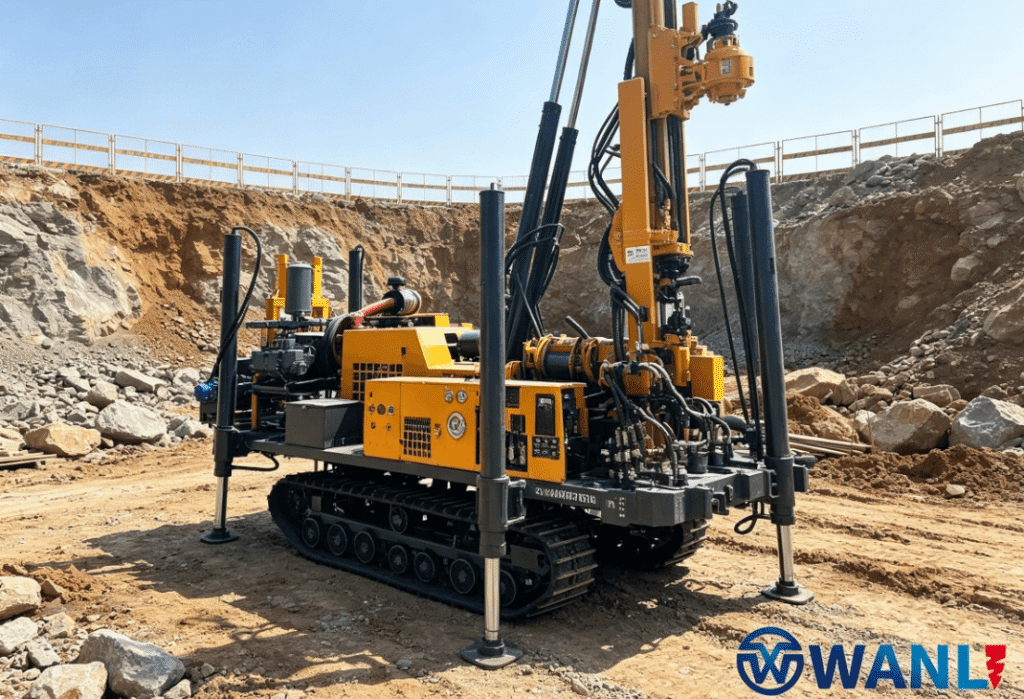
Technical Performance Summary: Diesel vs Electric Drilling Rigs
For a quick assessment of how these power systems compare in real-world drilling environments, refer to the technical breakdown below:
| Feature | Diesel Powered Rigs | Electric Powered Rigs |
| Primary Advantage | High mobility and autonomy | Lower OPEX and zero onsite emissions |
| Best Application | Remote exploration, off-grid water wells | Underground mining, urban sites, stationary sites |
| Maintenance | Frequent (oil, filters, cooling systems) | Minimal (bearing lubrication, brush checks) |
| Power Control | Mechanical/Hydraulic throttle response | Variable Frequency Drive (VFD) precision |
| Environmental | High CO2/NOx; Noise levels 100dB+ | Zero local emissions; Low noise (<80dB) |
| Initial Cost | Standard | Generally higher (requires grid/gen-set infra) |
The Enduring Utility of Diesel-Powered Drilling Rigs
Diesel remains the industry standard for “wildcat” drilling and remote geotechnical surveys. In these scenarios, the primary constraint is not just power, but the logistics of power delivery.
Advantages of Diesel Systems
The most significant benefit is operational autonomy. For core drilling in unmapped mountainous terrain or rural water well projects, a diesel rig only requires a fuel tank to remain operational.
- High Torque at Start-up: Diesel engines provide the high initial torque required to break static friction in deep-hole casing operations.
- Integrated Hydraulics: Most water well drilling rigs utilize diesel engines to drive hydraulic pumps, providing a reliable, self-contained system for rotation and hoisting.
- Field Repairability: Mechanical diesel systems are often easier to troubleshoot in remote areas where specialized electrical engineers are unavailable.
Operational Drawbacks
- Fuel Logistics: Transporting diesel to remote sites can account for 20-30% of total project costs.
- Regulatory Pressure: Modern rigs must now comply with Tier 4 Final or Stage V emission standards, which require complex Diesel Particulate Filters (DPF) and Urea (DEF) systems, increasing the weight and maintenance burden.
The Rise of Electric Drilling Rigs in Modern Infrastructure
As ESG (Environmental, Social, and Governance) targets become mandatory for large-scale mining and construction firms, electric rigs are moving from niche applications to mainstream adoption.
Why Engineers Prefer Electric Drives
Electric rigs, particularly those used in coring drilling, offer a level of “fine-tuning” that diesel engines struggle to match.
- Precision Control via VFD: Variable Frequency Drives allow operators to maintain constant torque at extremely low RPMs. This is vital for delicate core recovery where maintaining the integrity of the geological sample is paramount.
- Energy Efficiency: Electric motors typically operate at 90-95% efficiency, whereas diesel engines lose significant energy through heat and mechanical friction.
- Safety in Enclosed Spaces: For underground coring or urban basement drilling, the absence of exhaust fumes eliminates the need for expensive auxiliary ventilation systems.
Practical Limitations
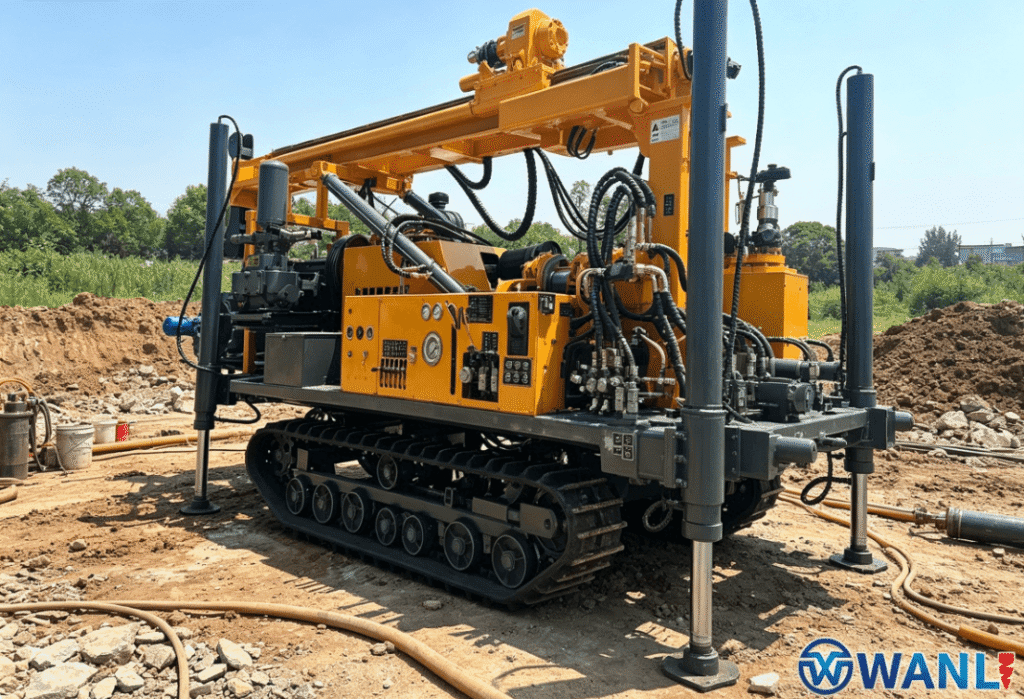
The “umbilical cord” is the electric rig’s greatest weakness. Relying on a local power grid or a massive portable transformer limits the rig’s radius of operation. Furthermore, the high-voltage cables required for heavy-duty drilling present specific site safety risks that require specialized training.
Application Suitability: Matching the Rig to the Project
The choice between diesel vs electric drilling rigs often depends on the specific drilling methodology and the site’s proximity to infrastructure.
1. Core Drilling for Mineral Exploration
In mineral exploration, portability is king. Coring drilling rigs are often moved every few days. Diesel is usually the winner here because setting up electrical infrastructure for a short-term “scout” hole is rarely cost-effective. However, if a mine moves into the production phase with a fixed grid, transitioning to electric rigs can slash operational costs.
2. Water Well Drilling
For water well drilling rigs, the decision is often driven by the “Noise and Nuisance” factor.
- Urban/Residential Areas: Electric or hybrid rigs are preferred to meet municipal noise ordinances.
- Agricultural/Rural Areas: Diesel rigs are favored for their ability to traverse rugged farmland and operate without needing a 3-phase power supply.
Maintenance and Long-Term Reliability Factors
From a manufacturing and fleet management perspective, the maintenance profiles of these two systems are diametrically opposed.
Diesel Maintenance: Requires a rigid schedule of oil changes, coolant flushes, and injector testing. In dusty drilling environments (like desert water well sites), air filter replacement is a daily necessity to prevent engine dusting.
Electric Maintenance: The primary focus shifts from the “power plant” to the “protection system.” Ensuring the control cabinet is free of moisture and checking the integrity of cable insulation are the primary tasks. An electric motor has significantly fewer moving parts, which typically results in a longer Mean Time Between Failures (MTBF) compared to internal combustion engines.
Decision Framework: Diesel or Electric?
When consulting on a procurement project, we recommend evaluating these four factors:
- Site Accessibility: If you are more than 1km from a reliable power drop, diesel is the default choice.
- Depth and Torque Requirements: For ultra-deep holes (1000m+), electric motors offer more consistent power delivery without the “power drop” associated with high-altitude diesel operation.
- Local Emission Laws: Are you operating in a “Low Emission Zone”? If so, the cost of a Tier 4 diesel engine may equal the cost of an electric setup.
- Operational Duration: For projects lasting 12+ months in one location, the electricity savings usually offset the higher initial capital expenditure of an electric rig within the first year.
FAQ: Common Questions on Diesel vs Electric Rigs
Q: Can a diesel rig be converted to electric?
A: Yes, many manufacturers offer “Dual Drive” or conversion kits. This typically involves replacing the diesel engine with an electric motor that drives the existing hydraulic pumps. It is a common strategy for rigs transitioning from exploration to production.
Q: Which system performs better in extreme cold?
A: Electric rigs generally perform better in sub-zero temperatures because they don’t face “gelling” fuel issues or battery cranking failures. However, the hydraulic fluid in both systems must still be pre-heated to maintain proper viscosity.
Q: Is the drilling speed different between the two?
A: Rate of Penetration (ROP) is largely determined by the drill bit and the hydraulic pressure. However, electric rigs often show a more consistent ROP because the motor does not “bog down” under sudden load increases as a diesel engine might.
Q: How does altitude affect these rigs?
A: Diesel engines lose approximately 3% of their power for every 1,000 feet of elevation due to thinner air. Electric motors are unaffected by altitude, making them superior for high-altitude mining operations.
Reference Sources
- International Society of Explosives Engineers (ISEE): Technical guidelines on drilling energy efficiency.
- EPA Nonroad Diesel Greenhouse Gas Standards: Regulations for Tier 4 engines.
- Mining Magazine: Electrification Trends in Surface and Underground Drilling.
- ISO 12100:2010: Safety of machinery — General principles for design — Risk assessment and risk reduction.