Coring drilling equipment represents a significant capital investment. In geotechnical exploration, mineral mining, and infrastructure sampling, the longevity of your rig directly impacts the cost per meter drilled. Extending the service life of coring drilling equipment is not merely about “cleaning the machine”; it requires a technical understanding of mechanical fatigue, hydraulic integrity, and the physics of the borehole.
When equipment fails prematurely, the cause is rarely a single catastrophic event. Instead, it is usually the result of cumulative “micro-stressors”—unmanaged vibration, contaminated fluids, or improper Weight on Bit (WOB) application. By implementing a rigorous operational framework, you can significantly delay the onset of structural fatigue and component wear.
Why Mechanical Fatigue is the Silent Killer of Coring Rigs
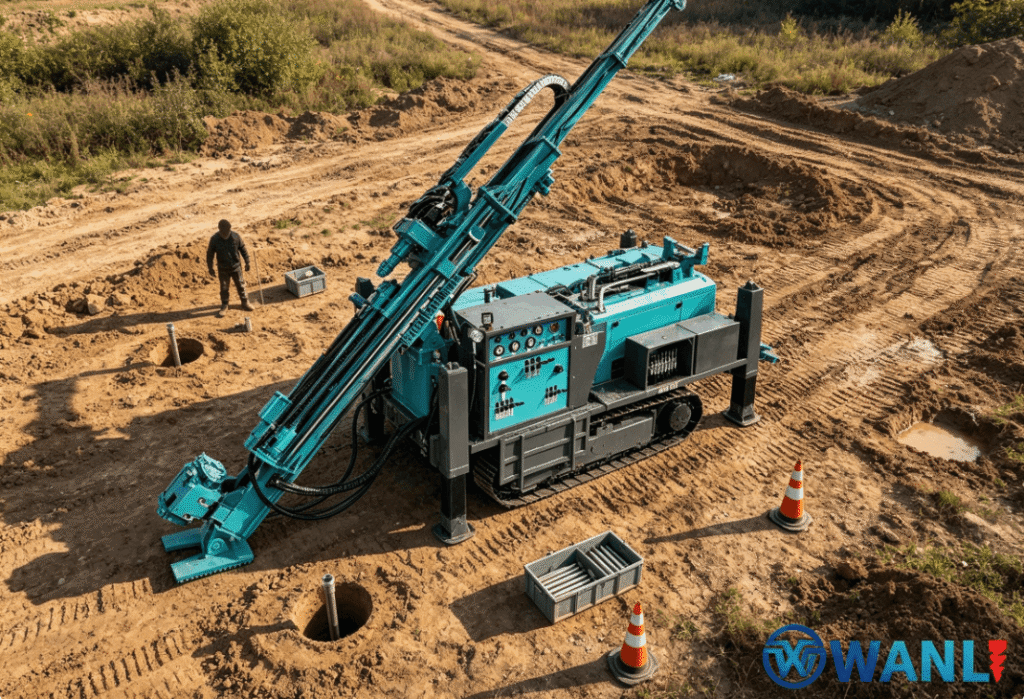
The primary threat to coring drilling equipment service life is cyclic loading. Coring rigs, particularly those used in hard rock applications, operate under high-frequency vibrations. If the rig is not properly stabilized or if the drill string is allowed to “whip” within the borehole, the resulting harmonic resonance can cause hairline fractures in the mast, feed system, and rotation head.
To mitigate this, operators must ensure the rig is perfectly leveled and anchored before rotation begins. Even a minor misalignment of the mast can lead to uneven bearing wear in the rotation head, eventually necessitating a full overhaul long before the manufacturer’s service interval.
Optimizing Operational Parameters for Component Longevity
Precision operation is the most effective way to protect your hardware. Many operators prioritize penetration rate (ROP) over equipment health, but this is a false economy.
- Balancing RPM and WOB: High rotation speeds (RPM) combined with excessive Weight on Bit generate extreme heat at the diamond bit face. This heat conducts upward through the inner and outer tubes of the core barrel. Overheating can detemper the steel, making it brittle.
- Managing Torque Spikes: Abrupt changes in torque often indicate a change in geological strata or a blocked bit. Forcing the rotation through a “grabby” formation places immense strain on the hydraulic motors and drive chains.
- Vibration Dampening: Utilizing stabilizers and ensuring the drill rods are properly greased reduces the lateral movement of the string, protecting the spindle bearings and the threaded joints of the rods themselves.
The Critical Role of Drilling Fluids and Filtration
In coring operations, the drilling fluid (mud) serves as the “lifeblood” of the system. Its primary role is cooling the bit and transporting cuttings to the surface. However, its impact on the service life of the pump and the internal components of the rig is often underestimated.
If the drilling fluid contains a high percentage of abrasive solids (sand or rock flour), it acts like liquid sandpaper. It will rapidly erode the liners and pistons of the mud pump and wear down the internal bypass valves of the core barrel.
Best Practices for Fluid Management:
- Use High-Quality Additives: Polymers and bentonite reduce friction between the rod string and the borehole wall, lowering the required torque and reducing the load on the engine.
- Maintain Proper Solid Control: Use settling tanks or centrifuges to ensure that abrasive cuttings are not recirculated back into the borehole.
- Monitor pH Levels: Corrosive groundwater can attack the metallurgy of the drill rods and the rig’s cooling system. Maintaining a slightly alkaline mud (pH 8.5–9.5) helps inhibit corrosion.
Strategic Maintenance of the Hydraulic System
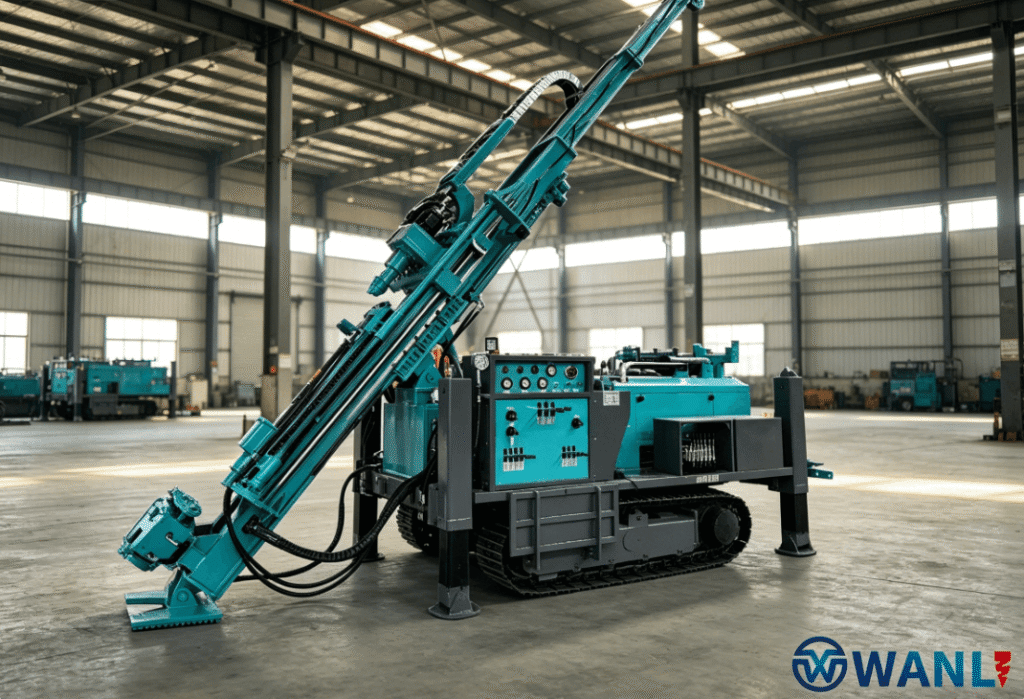
Modern coring rigs, such as the advanced hydraulic coring drilling rigs manufactured by companies like Shandong Wanli, rely on high-pressure hydraulic circuits. The hydraulic system is sensitive to two main enemies: heat and contamination.
- Oil Cleanliness: Over 70% of hydraulic failures are caused by contaminated oil. Microscopic particles can score the precision-ground surfaces of control valves, leading to “drift” in the feed system.
- Temperature Regulation: Hydraulic oil loses its viscosity and lubricating properties if it exceeds 60°C (140°F). Ensure that oil coolers are free of dust and debris, especially when operating in high-ambient-temperature environments.
- Hose Integrity: Inspect hoses for “weeping” or external abrasion. A burst hose doesn’t just cause downtime; it can lead to cavitation in the pump, causing permanent internal damage within seconds.
Geological Adaptability and Equipment Selection
One of the most overlooked aspects of extending equipment life is matching the rig to the environment. Using a lightweight rig designed for shallow soil sampling in deep, hard-rock mineral exploration will inevitably lead to structural failure.
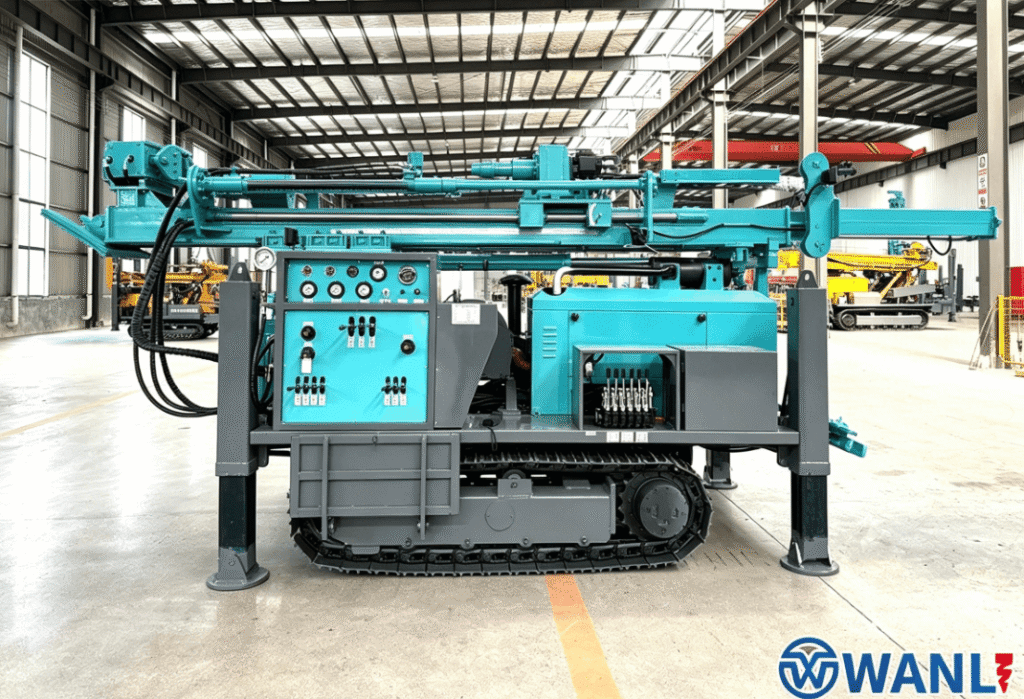
Platforms like SDWanli offer a variety of configurations—from crawler-mounted units for rugged terrain to spindle-type rigs for specific depth requirements. Choosing a rig with a “power reserve” (i.e., its maximum capacity is 20% higher than your deepest hole) ensures that the engine and hydraulics are never pushed to their absolute thermal or mechanical limits.
Daily Technical Inspection Checklist
To maximize your coring drilling equipment service life, the following inspections should be non-negotiable at the start of every shift:
| Component | Inspection Focus | Risk of Neglect |
| Rotation Head | Check for oil leaks and unusual noise/vibration. | Bearing seizure; gear tooth failure. |
| Wireline Hoist | Inspect cable for fraying; check brake tension. | Core barrel drop; safety hazard. |
| Chuck Jaws | Ensure teeth are sharp and free of debris. | Rod slippage; ruined rod threads. |
| Foot Clamp | Verify hydraulic pressure and alignment. | Loss of drill string down the hole. |
| Mast Slides | Apply clean grease; check for “play” or looseness. | Inaccurate drilling; uneven feed pressure. |
Conclusion: A Culture of Care
Extending the service life of coring drilling equipment is a combination of engineering-led operation and proactive maintenance. When operators treat the rig as a precision instrument rather than a blunt tool, the results are reflected in lower maintenance costs, higher resale value, and fewer “lost holes.” By focusing on vibration control, fluid chemistry, and hydraulic purity, you ensure that your equipment remains a productive asset for decades, not just years.
FAQ
Q: How often should I change the hydraulic oil in my coring rig?
A: While manufacturer guidelines usually suggest 1,000 to 2,000 hours, you should rely on oil analysis. If the rig operates in high-dust or high-humidity environments, intervals may need to be shortened. Always change filters more frequently than the oil itself.
Q: Can using the wrong drill rod grease affect the rig’s life?
A: Yes. Low-quality grease can fail under high torque, leading to “galling” of the threads. This forces the rig’s rotation head to work harder to break joints, increasing mechanical wear on the drive system.
Q: Why is the “break-in” period important for new drilling equipment?
A: During the first 50–100 hours, internal components “seat” themselves. It is critical to operate at reduced loads and perform an early oil and filter change to remove any “wear-in” metallic particles from the system.
Q: How does bit selection impact the service life of the rig?
A: An incorrectly selected bit (e.g., too hard a matrix for the rock) will “polish.” This requires the operator to apply excessive WOB to maintain penetration, which puts unnecessary stress on the feed cylinders and the rig’s frame.
Reference Source
- ASTM D2113: Standard Practice for Rock Core Drilling and Sampling of Rock for Site Investigation.
- ISO 10097-1: Wireline diamond core drilling equipment — System A.
- Australian Drilling Industry Association (ADIA): Technical manuals on drilling fluid management and rig maintenance.