Geological exploration is the foundation of mining, civil engineering, and environmental assessment. A poorly planned drilling program leads to high costs, lost core samples, and safety risks. Success depends on aligning your technical objectives with the physical realities of the site.
Effective planning ensures that the data gathered is representative of the subsurface conditions. This guide outlines the professional workflow for designing a robust exploration program from initial assessment to rig demobilization.
Phase 1: Defining Objectives and Scope
Before moving a single piece of equipment, you must define what the project needs to achieve. Are you mapping a mineral deposit, testing soil load-bearing capacity, or identifying groundwater aquifers?
The objective dictates the drilling depth, the required core diameter, and the sampling frequency. For instance, mineral exploration often requires deep wireline coring to retrieve high-quality samples from specific lithological units. In contrast, geotechnical surveys might focus on Standard Penetration-Testing (SPT) in the upper soil layers.
Setting clear KPIs (Key Performance Indicators) is essential. These typically include target core recovery percentages (e.g., >90%), maximum allowable deviation, and daily meterage goals.
Phase 2: Geological Site Characterization
You cannot select the right equipment without understanding the ground conditions. A preliminary desktop study should involve reviewing existing geological maps, satellite imagery, and historical borehole logs.
Key geological factors include:
- Overburden Thickness: Determines the type of casing and starter bits required.
- Rock Hardness (Mohs Scale): Influences the choice of drill bits (impregnated diamond vs. tungsten carbide).
- Formation Stability: Identifying fractured zones or karst features helps in planning mud programs to prevent borehole collapse.
- Hydrogeology: High water tables or artesian pressures require specific blowout prevention and pressure management strategies.
Phase 3: Selecting the Right Drilling Equipment
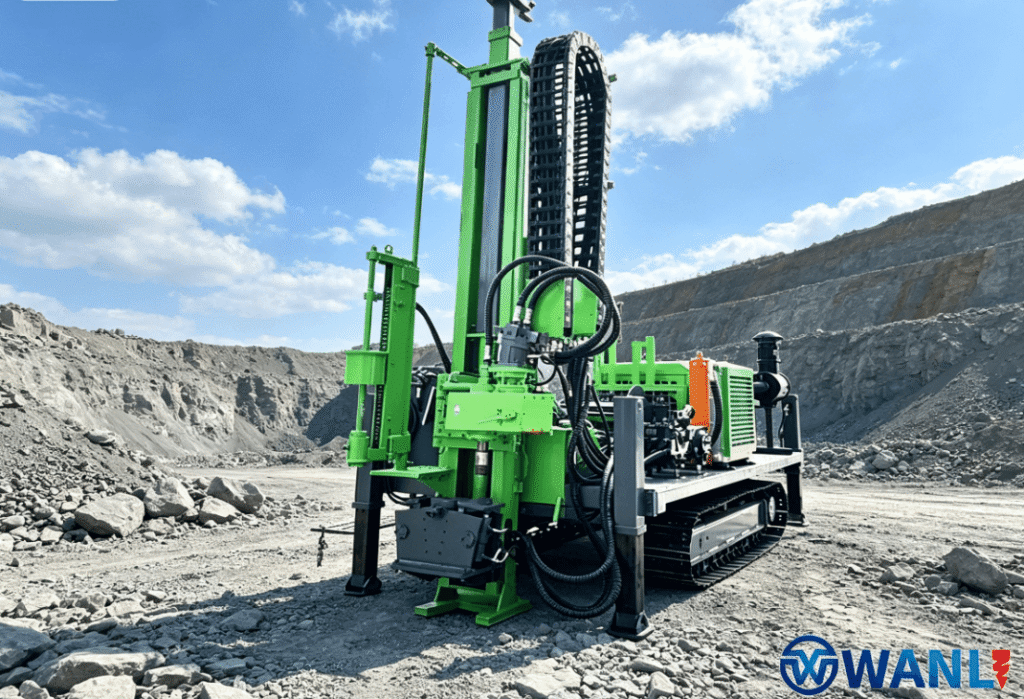
Rig selection is the most critical technical decision in the planning process. The rig must have the torque, hoisting capacity, and pump pressure to reach the target depth safely.
For many geological projects, coring drilling rigs are the standard choice because they provide continuous physical samples.
| Feature | Spindle Type Rigs (e.g., HZ Series) | Full Hydraulic Core Rigs |
| Best Use Case | Shallow to medium depth, cost-sensitive projects | Deep exploration, high-precision angle drilling |
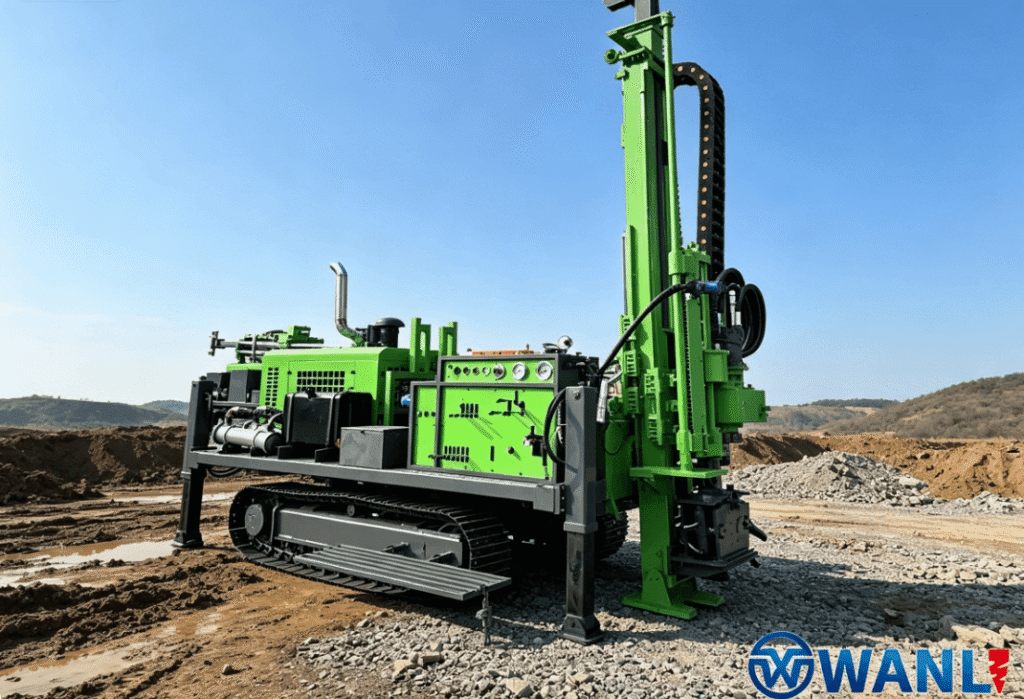
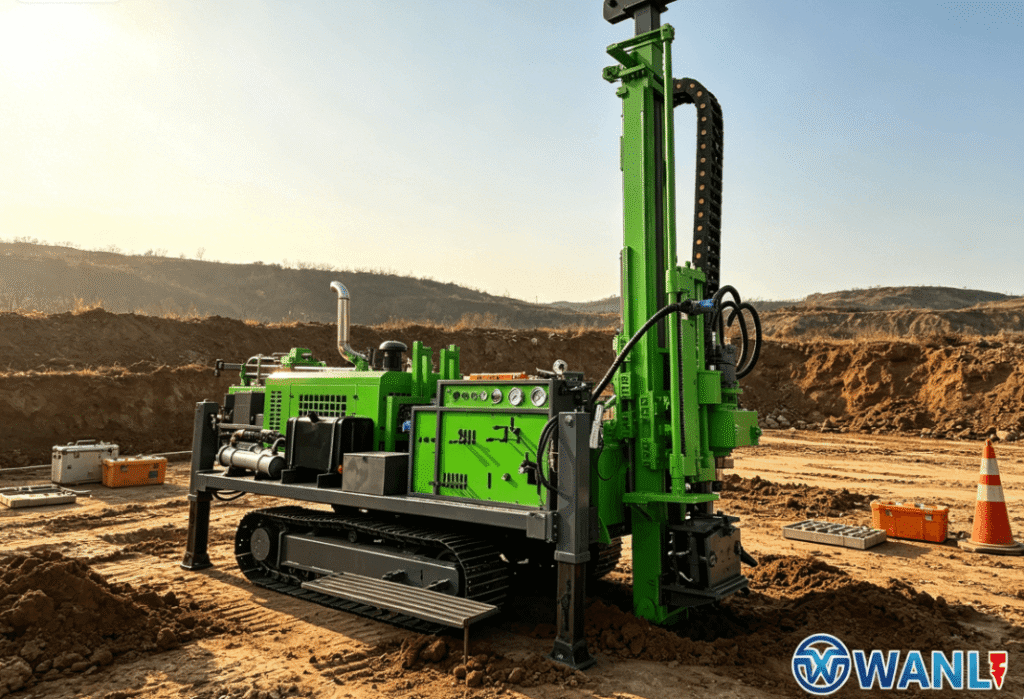
| Mobility | Often trailer or skid-mounted | Often crawler-mounted for rugged terrain |
| Control | Manual gear shifts, mechanical feel | Precise hydraulic pressure and rotation control |
| Maintenance | Simpler, easier to repair in remote areas | Requires specialized hydraulic technicians |
If your project is located in a mountainous or densely forested area, portability becomes a priority. Modular rigs that can be disassembled and transported by man-pack or helicopter are necessary for remote greenfield exploration. For established sites, crawler-mounted hydraulic rigs offer the fastest setup and move times.
Phase 4: Logistics and Infrastructure Planning
Logistics often consume up to 40% of an exploration budget. A successful plan must address the “Four Pillars” of site support:
- Water Supply: Coring requires significant water for cooling bits and flushing cuttings. You must plan for water sources, pumping stations, and pipelines.
- Access Routes: Can the chosen rig reach the collar location? You may need to factor in road construction or site clearing.
- Fuel and Consumables: Estimate the consumption of diesel, drilling polymers, and spare parts (bits, core lifters, inner tubes).
- Waste Management: Plan for the containment and disposal of drilling fluids and cuttings in compliance with local environmental regulations.
Phase 5: Core Handling and Data Management
The core sample is the primary product of the project. If it is damaged or mislabeled, the entire investment is wasted.
Establish a “Chain of Custody” for every meter of core. This involves:
- Immediate Logging: A geologist should perform a preliminary log at the rig side.
- Core Boxing: Use durable, weather-resistant core boxes. Ensure depth markers are placed accurately after every run.
- Photography: Take high-resolution photos of the “wet” core before it undergoes any oxidation or drying.
- Storage: Secure the samples in a core shed that protects them from the elements and unauthorized access.
Phase 6: Safety and Risk Mitigation
Drilling environments are inherently hazardous. Your plan must include a site-specific Health, Safety, and Environment (HSE) plan.
Key safety considerations include:
- High-Pressure Systems: Regular inspection of hydraulic hoses and “whip-checks” on air lines.
- Rotating Equipment: Strict “no-go” zones and emergency stop testing.
- Communication: Satellite phones or radio systems for teams working in “blind” or remote locations.
- Weather Contingencies: Protocols for lightning, heavy rain, or extreme heat.
Integrating Technical Specifications
When you plan a geological exploration drilling project, the technical compatibility of your “drill string” is vital. For example, if you are using an NQ-sized wireline system, ensure your rig’s hoist capacity can handle the weight of the rods at the maximum target depth, including a 20% safety margin for “stuck pipe” scenarios.
Modern exploration also utilizes downhole geophysics. If your plan includes gamma or resistivity logging, ensure the borehole is conditioned properly with the right mud weight to stay open during the logging process.
FAQ
What is the difference between RC drilling and diamond coring in exploration?
Reverse Circulation (RC) drilling produces rock chips and is faster and cheaper for bulk sampling. Diamond coring provides a solid cylinder of rock, which is essential for detailed structural geology and mineralogy. Most advanced projects use a combination of both.
How do I choose the right bit for my drilling project?
Bit selection depends on the rock’s Unconfined Compressive Strength (UCS). Hard, abrasive formations require impregnated diamond bits with a specific matrix hardness, while softer formations may utilize surface-set diamond or PDC bits.
How can I improve core recovery in fractured ground?
Improving recovery often involves using triple-tube core barrels, adjusting the mud chemistry to stabilize the formation, and reducing the drill’s rotation speed and feed pressure.
What are the environmental requirements for a drilling site?
Typically, you must prevent soil contamination from fuel or oils, use biodegradable drilling additives, and reclaim the site (plugging the hole and re-seeding the surface) once the project is finished.
What is the maximum depth a portable core rig can reach?
Portability usually limits depth. However, advanced spindle-type rigs like the HZ-200 can reach 200 meters, while larger, specialized hydraulic rigs can exceed 1,500 meters depending on the rod size used.
Reference Sources
- ASTM D2113: Standard Practice for Rock Core Drilling and Sampling of Rock for Site Investigation.
- JORC Code: Australasian Code for Reporting of Exploration Results, Mineral Resources and Ore Reserves.
- ISO 14688-1: Geotechnical investigation and testing — Identification and classification of soil.
- Australian Drilling Industry Training Committee (ADITC): The Drilling Manual.
- International Society for Rock Mechanics (ISRM): Suggested Methods for Rock Characterization and Testing.