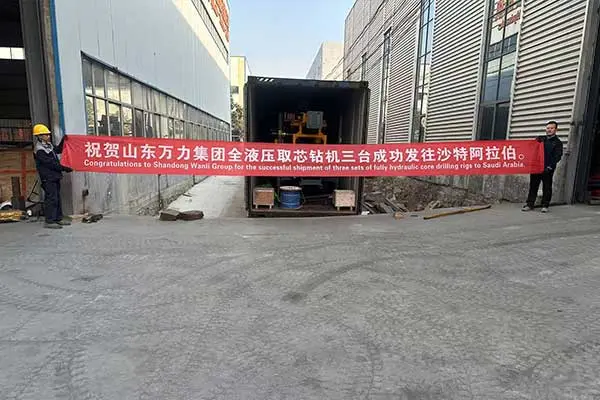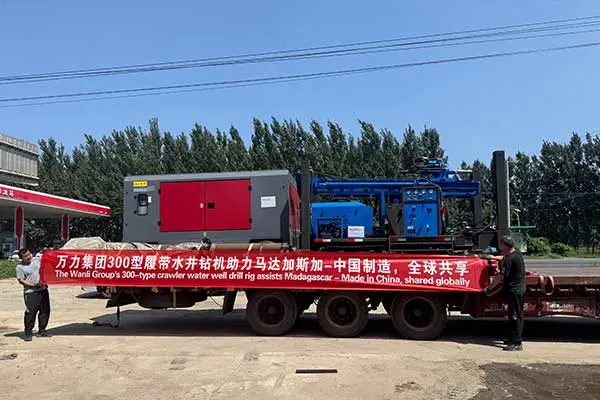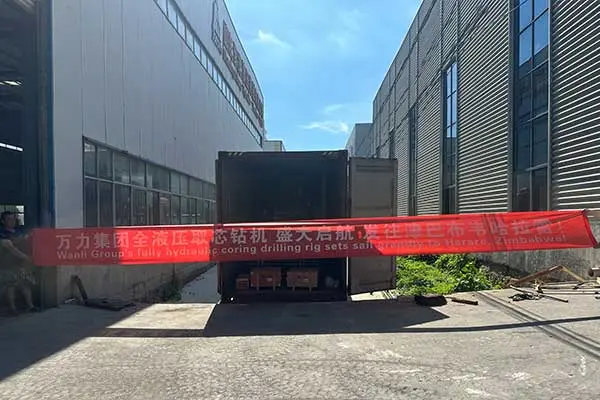
Exporting heavy-duty industrial machinery like water well drilling rigs involves far more than simple freight forwarding. For procurement managers and engineering firms, the transition from a manufacturing facility in China to a job site in Africa, Southeast Asia, or South America represents a high-stakes logistical challenge. A single oversight in compliance or a failure in maritime packaging can lead to structural damage, hydraulic contamination, or costly customs seizures.
Navigating this process requires a deep understanding of mechanical integrity, international trade regulations, and the specific configurations of the equipment being moved—whether it is a trailer-mounted pneumatic rig or a heavy crawler-mounted hydraulic unit.
Technical Compliance and International Standards
The first step in a safe export process is ensuring the machinery meets the regulatory and geological requirements of the destination country. Not all drilling rigs are built for every environment.
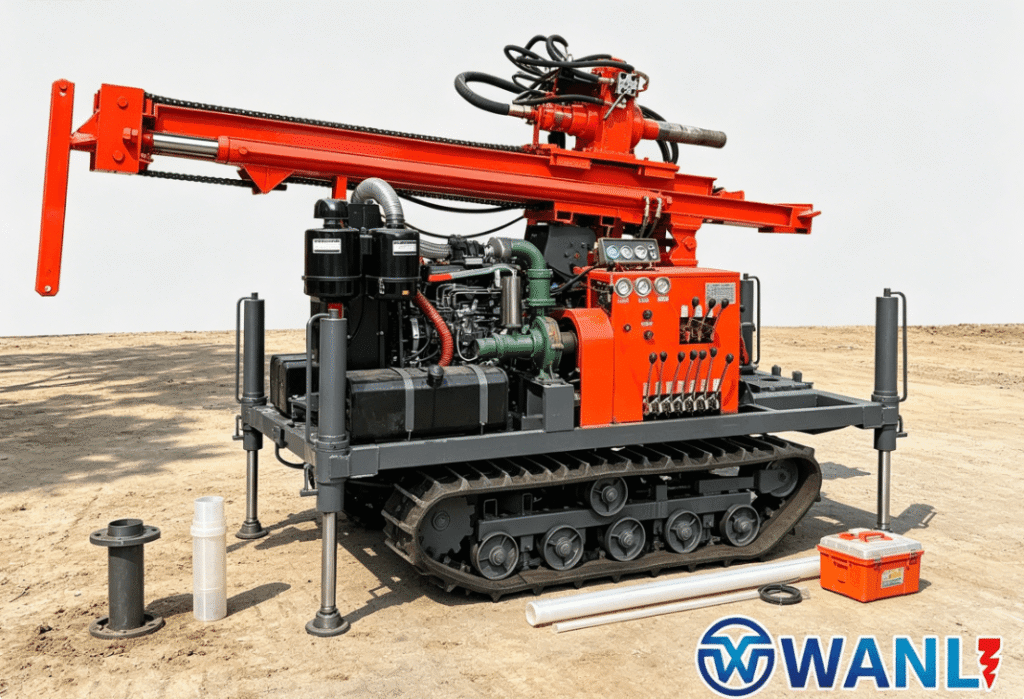
When evaluating equipment for export, such as the FY-series crawler rigs, it is critical to verify the engine emissions standards (EPA or Euro stages) and electrical configurations.
Key Compliance Checkpoints:
- Certifications: Ensure the manufacturer holds ISO 9001:2015 for quality management and CE certification if the equipment is bound for the European Economic Area.
- Engine Specs: Verify if the diesel engines are compatible with the local fuel quality of the destination. High-sulfur fuel in certain regions can damage Tier 4 engines without proper modification.
- Pressure Vessel Regulations: For pneumatic rigs utilizing high-pressure air compressors, the air tanks must comply with local safety standards (such as ASME or PED).
Strategic Logistics: Protecting the Machine in Transit
A water well drilling rig is a precision instrument housed in a rugged chassis. During maritime transport, the primary enemies are salt-spray corrosion and kinetic impact from shifting loads.
1. Anti-Corrosion Treatment
The high-salinity environment of ocean freight can cause rapid oxidation on exposed hydraulic cylinder rods and control valves. Experts recommend applying a specialized VCI (Volatile Corrosion Inhibitor) wax or heavy-duty grease to all chrome-plated surfaces. For long-haul transit, “shrink-wrapping” the entire control console provides a secondary barrier against moisture.
2. Containerization vs. RO-RO
The choice of shipping method depends heavily on the rig’s dimensions and weight:
- Standard Containers (40ft HQ): Ideal for modular or smaller trailer-mounted rigs. This provides the best protection from the elements but requires professional disassembly and reassembly expertise.
- Flat Rack Containers: Used for wider crawler rigs that exceed standard container widths.
- Roll-on/Roll-off (RO-RO): Best for large, self-propelled crawler units. While convenient, the machinery is more exposed to the elements during the voyage.
| Shipping Method | Protection Level | Cost Efficiency | Best For |
| Container (FCL) | Highest | High | Modular/Compact Rigs |
| Flat Rack | Medium | Moderate | Wide Crawler Rigs |
| RO-RO | Lowest | Variable | Large, Mobile Units |
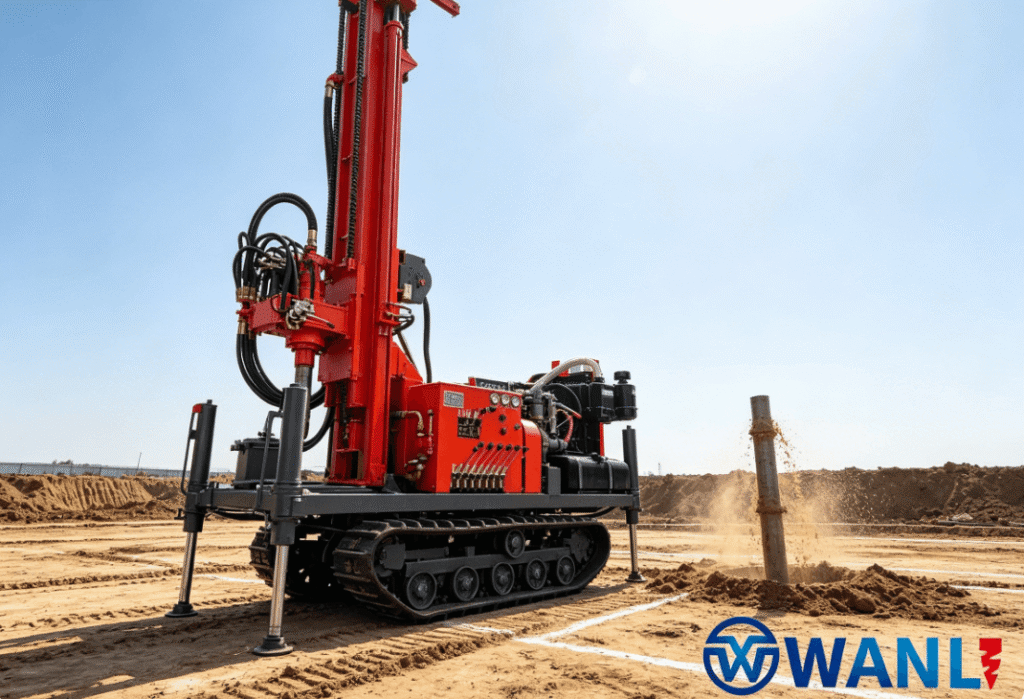
Verifying Manufacturer Export Capability
A successful export hinges on the manufacturer’s ability to provide technical support beyond the factory gate. When sourcing from specialized providers like Shandong Wanli, look for “Export-Ready” indicators:
- Customization for Terrain: Can the manufacturer adjust the torque and lifting force based on the specific borehole diameters and geological strata (e.g., hard rock vs. sedimentary) of the destination?
- Tooling Integration: A safe export should include a fully matched set of drill pipes, hammers, and bits. Mismatched threads (API standards) are a common cause of operational failure upon arrival.
- Documentation Accuracy: Errors in the Bill of Lading, Commercial Invoice, or Packing List can result in “Demurrage” charges that erode project margins. Ensure the HS Code (typically under 8430.41) is correctly classified.
Pre-Shipment Inspection (PSI) Protocol
Before the rig is secured for transport, a rigorous technical inspection is mandatory. This is not just a functional check but a safety audit to ensure the machine arrives in “Turn-Key” condition.
- Hydraulic System Seal: Check for any weeping at the fittings. Extreme pressure changes during transit can exacerbate minor leaks.
- Fluid Management: For most international shipping, fuel tanks must be drained to less than 1/4 capacity, and batteries must be disconnected and terminals insulated to prevent fire hazards.
- Mechanical Locking: The mast (derrick) must be lowered and mechanically locked. Hydraulic drift during transit can cause the mast to shift, leading to catastrophic structural damage to the carrier vessel or the rig itself.
Ensuring On-Site Commissioning Success
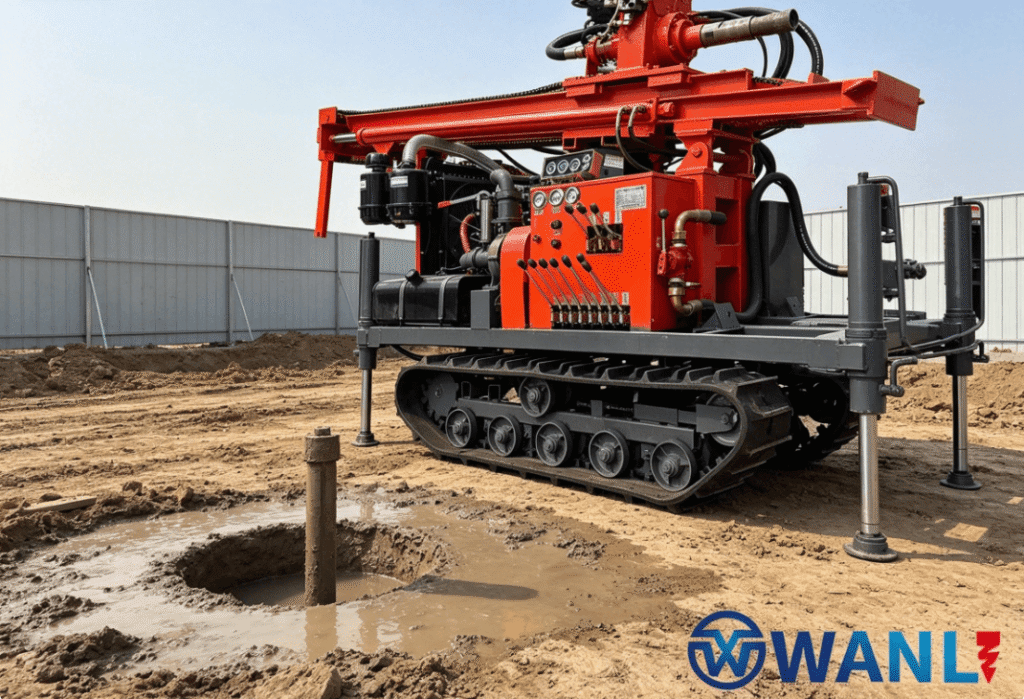
The export process technically ends only when the machine is successfully commissioned at the destination. Professional exporters provide detailed “Reassembly Manuals” and digital support. If you are importing a multi-functional rig capable of both air and mud drilling, ensure the manifold systems are clearly labeled in the language of the end-user.
By focusing on these technical and logistical safeguards, importers can significantly reduce the risks associated with the international procurement of water well drilling equipment, ensuring the longevity of the machine and the safety of the operators.
FAQ
Q: What is the typical lead time for exporting a customized water well drilling rig?
A: For standard models, production typically takes 15–20 days. Customizations for specific depths (e.g., 600m+) or specialized crawler chassis may extend lead times to 30–45 days, excluding ocean transit time.
Q: How do I handle the customs clearance for drilling rigs in Africa or Southeast Asia?
A: It is essential to partner with a local clearing agent who understands the “Certificate of Conformity” (CoC) requirements, such as PVOC for Kenya or SONCAP for Nigeria. Your manufacturer should provide the necessary technical data sheets to facilitate this.
Q: Can I ship the drill bits and pipes inside the same container as the rig?
A: Yes, this is recommended for cost efficiency. However, they must be securely “chocked and blocked” using heat-treated (ISPM 15) timber to prevent them from rolling and damaging the rig’s hydraulic lines during sea swells.
Q: What are the MOQ (Minimum Order Quantity) requirements for industrial rigs?
A: Most manufacturers, including Shandong Wanli, allow for an MOQ of 1 unit. However, shipping costs per unit significantly decrease when ordering multiple units or combining the rig with a full year’s supply of wear parts (consumables).
Reference Sources
- International Organization for Standardization (ISO): ISO 9001:2015 Quality Management Systems
- American Petroleum Institute (API): API Spec 5DP – Specification for Drill Pipe
- International Maritime Organization (IMO): Safe Packing of Cargo Transport Units (CTU Code)
- CE Marking: EU Machinery Directive 2006/42/EC