Selecting the right equipment for small-scale groundwater access or residential irrigation requires a balance between mobility and mechanical power. While heavy-duty truck-mounted rigs dominate large industrial sites, a trailer mounted water well drilling rig offers the specific agility needed for narrow access points and budget-conscious “small projects.”
Whether you are a local contractor, a farm owner, or an OEM project manager, understanding the technical limitations and performance thresholds of these compact units is essential for a successful borehole project.
Why Small Projects Demand Trailer-Mounted Configurations
Small projects typically involve drilling depths between 30 and 200 meters, often in residential backyards, remote farmland, or boutique construction sites. Standard truck-mounted rigs often face “site rejection” due to their weight and footprint, which can damage landscaped areas or fail to navigate narrow rural roads.
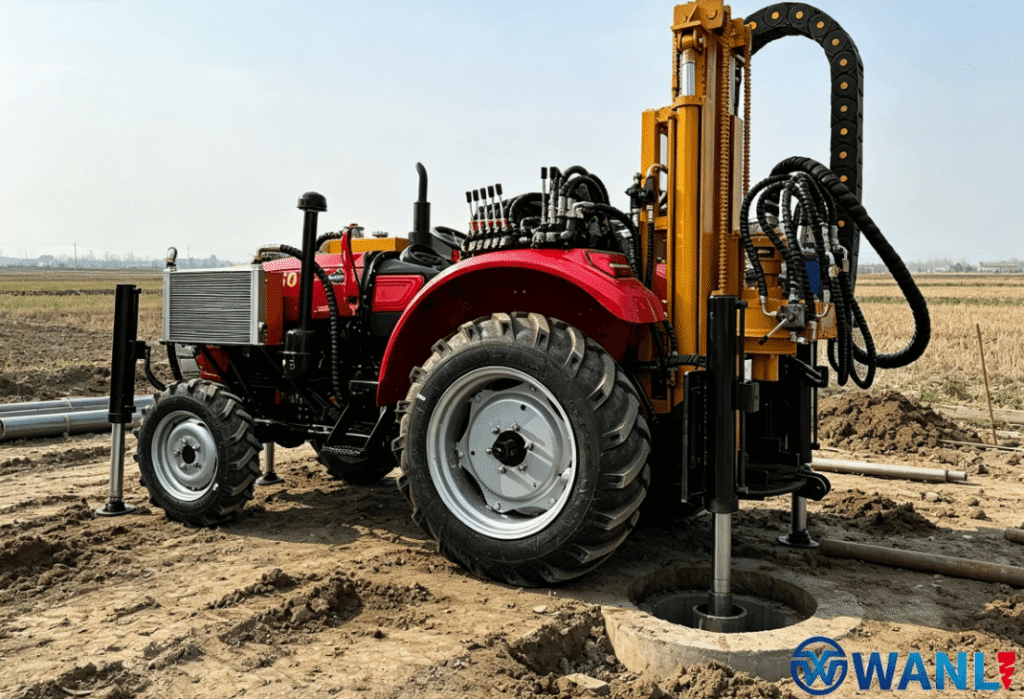
A trailer-mounted setup solves these logistical hurdles. By decoupling the power unit and the drill from the primary transport vehicle, operators gain:
- Enhanced Maneuverability: Ability to be towed by standard pickup trucks or tractors.
- Lower Operational Costs: Reduced fuel consumption and maintenance compared to heavy-duty trucks.
- Site Versatility: Smaller footprint allows for drilling in confined spaces where traditional rigs cannot deploy stabilizers.
Technical Specifications for Small-Scale Rigs
When evaluating a trailer mounted water well drilling rig, the hardware configuration must match the geological reality of your site. Not all “small” rigs are created equal.
| Feature | Typical Specification for Small Projects | Impact on Operations |
| Drilling Depth | 100m – 300m | Determines suitability for deep aquifers vs. shallow wells. |
| Hole Diameter | 90mm – 220mm | Matches standard PVC or steel casing sizes. |
| Power Source | Diesel Engine (20HP – 60HP) | Vital for torque and hydraulic pump efficiency. |
| Drilling Method | Mud Rotary or DTH (Down-the-Hole) | Dictates performance in soft soil vs. hard rock. |
| Lifting Force | 5kN – 15kN | Essential for recovering drill strings from deep boreholes. |
Hydraulic vs. Mechanical Drive Systems
For modern small projects, the industry has largely shifted toward full hydraulic systems. Mechanical rigs, while simpler to repair in some remote areas, lack the precision required for varied geological layers.
- Hydraulic Advantage: Hydraulic motors provide infinitely variable speeds for the rotary head. This is crucial when transitioning from topsoil to fractured rock, as it prevents bit stalling and reduces the risk of snapping drill rods.
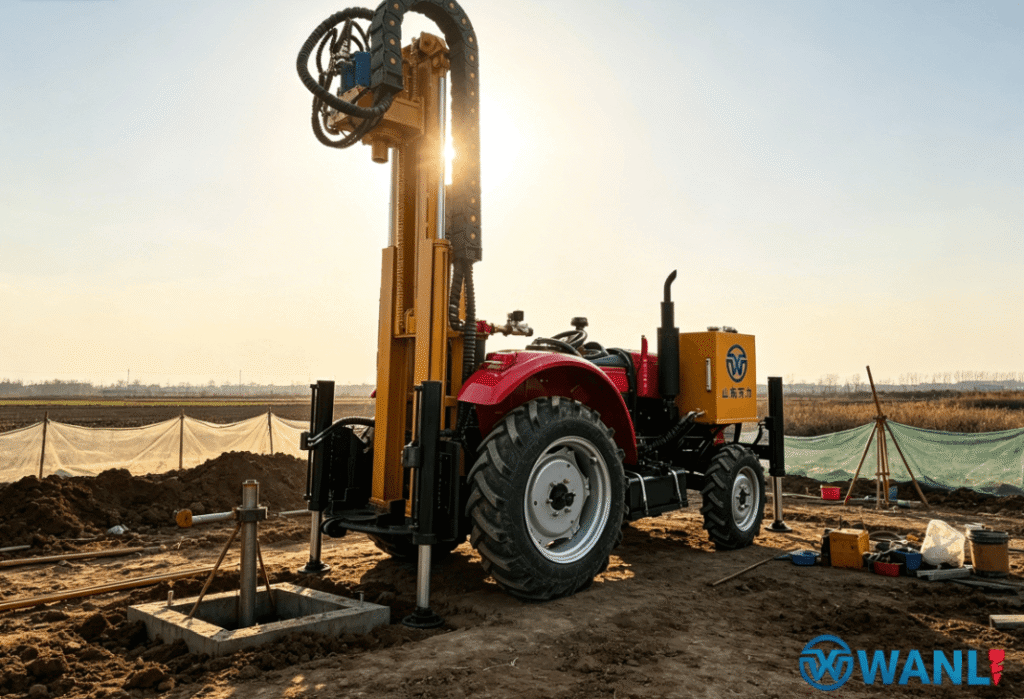
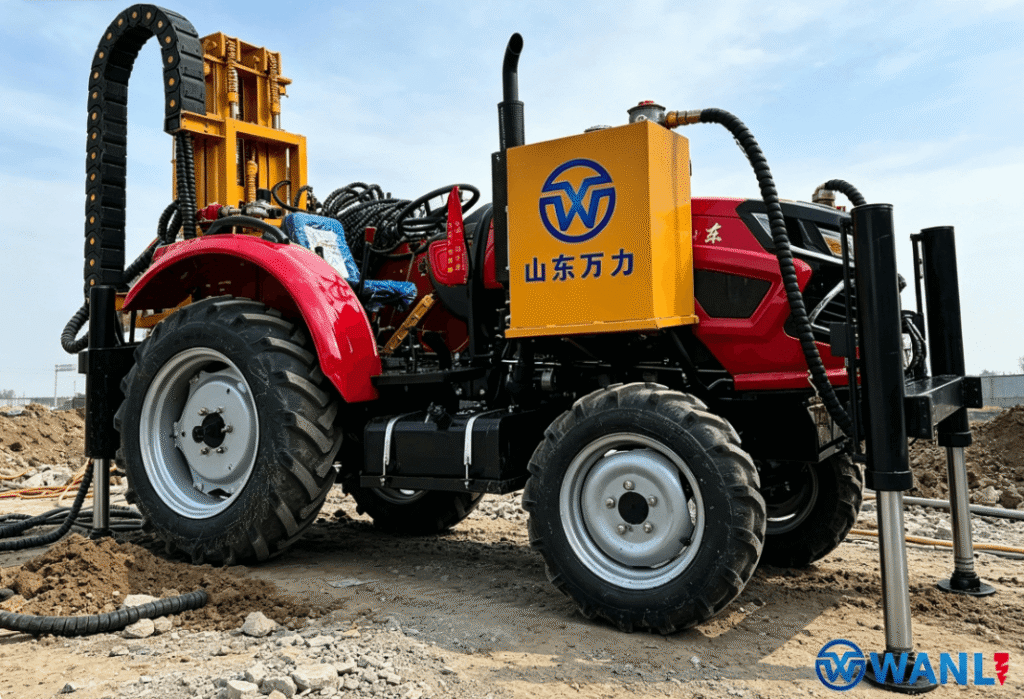
- Pressure Control: High-quality trailer rigs, such as those featured in the SD Wanli water well drilling rig lineup, utilize integrated hydraulic legs. These allow for rapid leveling on uneven terrain, which is a common challenge in rural small-scale projects.
Choosing the Right Drilling Method for Small Sites
The effectiveness of a trailer mounted water well drilling rig depends heavily on the drilling medium used.
Mud Rotary Drilling
This is the standard for soil, sand, and clay. The rig uses a mud pump to circulate drilling fluid, which stabilizes the hole wall and carries cuttings to the surface. It is the most cost-effective method for residential irrigation wells in alluvial plains.
DTH (Down-the-Hole) Air Drilling
If the small project is located in a mountainous or rocky region, air drilling is mandatory. This requires the rig to be paired with a high-pressure air compressor. The compressed air powers a pneumatic hammer that shatters rock efficiently. Many compact trailer rigs are now designed as “multi-functional,” allowing operators to switch between mud and air depending on the strata encountered.
Commercial Considerations: Evaluating Your ROI
From a procurement perspective, a trailer-mounted rig represents a strategic investment for contractors expanding into the “private well” market. When analyzing potential ROI, consider the following cost drivers:
- Customization (OEM/ODM): Many manufacturers, including SD Wanli, offer customization for engine brands (e.g., Changchai vs. Cummins) and chassis strength. For small projects in high-altitude or tropical environments, cooling system upgrades are non-negotiable.
- Lead Times and Logistics: Because these rigs are compact, they often fit into standard shipping containers (20GP), significantly lowering international freight costs compared to oversized machinery.
- Ease of Maintenance: For small-scale operations, downtime is the greatest expense. Opt for rigs that use standardized hydraulic hoses and valves that can be sourced locally.
Key Factors for Successful Project Execution
To maximize the lifespan of a trailer-mounted unit, engineers recommend a “matched-component” approach. This means ensuring your drill rods, bits, and casing tools are weight-rated for your specific rig’s lifting capacity. Overloading a small rig with heavy-duty rods can lead to hydraulic pump failure or structural fatigue on the trailer frame.
Furthermore, always verify the ground bearing capacity. Even “small” rigs exert significant localized pressure through their stabilizer legs during the pull-back phase of drilling.
FAQ
Q: Can a trailer mounted water well drilling rig handle hard rock?
A: Yes, provided the rig is equipped for DTH (Down-the-Hole) drilling and paired with a sufficiently powerful air compressor. Most modern hydraulic trailer rigs are designed to handle both soft soil and hard rock layers.
Q: What is the maximum depth a small trailer rig can reach?
A: While “small” usually implies 100-200 meters, some high-performance trailer-mounted units can reach up to 300-400 meters depending on the borehole diameter and the geological conditions.
Q: Do I need a special license to tow these rigs?
A: This depends on regional regulations. Most small project rigs weigh between 1,500kg and 3,500kg. In many jurisdictions, a standard heavy-duty towing permit or a specific trailer endorsement on your driver’s license may be required.
Q: How do I maintain the hydraulic system on a portable rig?
A: Regular maintenance includes checking hydraulic oil levels daily, inspecting hoses for abrasions, and replacing filters every 250–500 operational hours. Keeping the hydraulic fluid free of dust and water is the single most important factor for rig longevity.
Reference Sources
- ASTM D1452: Standard Practice for Soil Exploration and Sampling by Auger Borings.
- NGWA (National Ground Water Association): Best Practices for Well Construction.
- ISO 21467: Earth-moving machinery — Horizontal directional drills — Terminology and specifications.
- SGS Technical Reports: Safety and performance standards for portable drilling equipment.