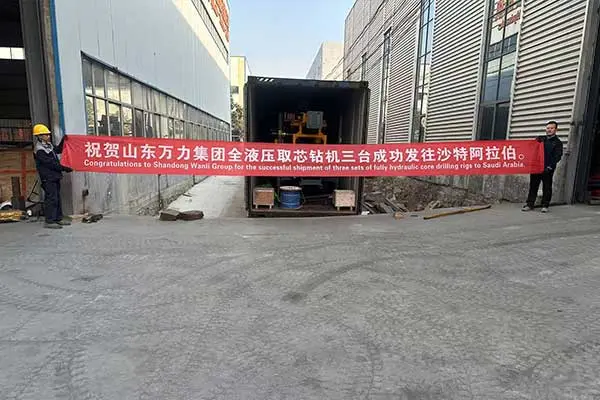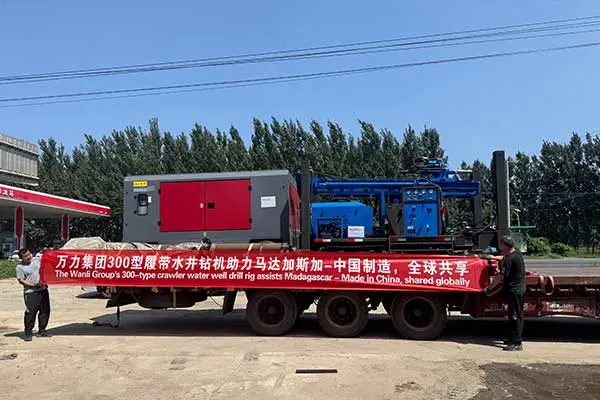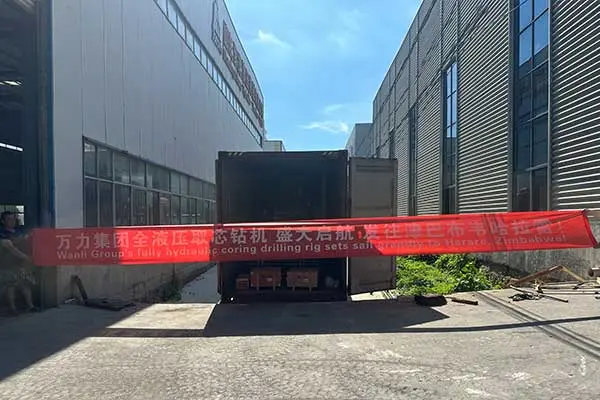
Mineral exploration success hinges on the ability to retrieve high-quality geological samples from significant depths. As surface-level deposits become increasingly scarce, the industry has shifted toward deeper strata, requiring a specialized class of equipment: the deep hole core drilling rig. These machines are engineered to handle the immense pressures, rotational torque, and hoisting capacities required to reach 1,000 to 3,000 meters or more.
For project managers and procurement officers, selecting a deep hole rig is not merely a purchase; it is a long-term capital investment that dictates the operational efficiency of a drilling campaign.
Critical Engineering Features of Deep Hole Core Drilling Rigs
A deep hole core drilling rig differs from standard geotechnical equipment primarily through its structural integrity and hydraulic power distribution. When drilling beyond 1,000 meters, the weight of the drill string becomes a critical factor, necessitating advanced hoisting systems and precise feed control.
1. High-Torque Hydraulic Systems
Deep exploration requires consistent rotation through varying geological formations, from soft overburden to hard crystalline rock. Modern rigs, such as those featured in the SD Wanli coring series, utilize variable displacement pumps. These systems allow operators to fine-tune torque and RPM independently, ensuring the diamond bit maintains an optimal “kerf” without premature wear.
2. Mast Structure and Hoisting Capacity
The mast must support the static weight of miles of steel drill rod plus the dynamic force required to “break” the string during retrieval. For deep hole applications, look for rigs with telescopic masts or reinforced lattice structures capable of handling NQ, HQ, and PQ rod weights. A high-speed hydraulic winch with an integrated braking system is essential for safety and speed during wireline retrieval.
3. Wireline Coring Technology
Deep hole exploration is almost exclusively performed using wireline (WL) technology. This allows the inner tube containing the core sample to be hoisted to the surface through the drill string, eliminating the need to pull the entire rod string out of the hole. This saves hundreds of hours of “tripping” time over the course of a project.
Technical Specification Comparison: Deep Hole vs. Standard Rigs
| Feature | Standard Core Rig (300-600m) | Deep Hole Core Rig (1000m+) |
| Engine Power | 60 – 90 kW | 130 – 250+ kW |
| Hoisting Capacity | 30 – 50 kN | 120 – 300+ kN |
| Spindle Torque | 2,000 – 4,000 Nm | 6,000 – 15,000+ Nm |
| Drilling Diameter | Mostly NQ/HQ | PQ/HQ/NQ/BQ Capability |
| Cooling System | Standard Air/Oil | High-Capacity Dual Cooling |
Application Logic: Matching the Rig to the Terrain
The choice of a deep hole core drilling rig is often dictated by the “footprint” and the “geology.”
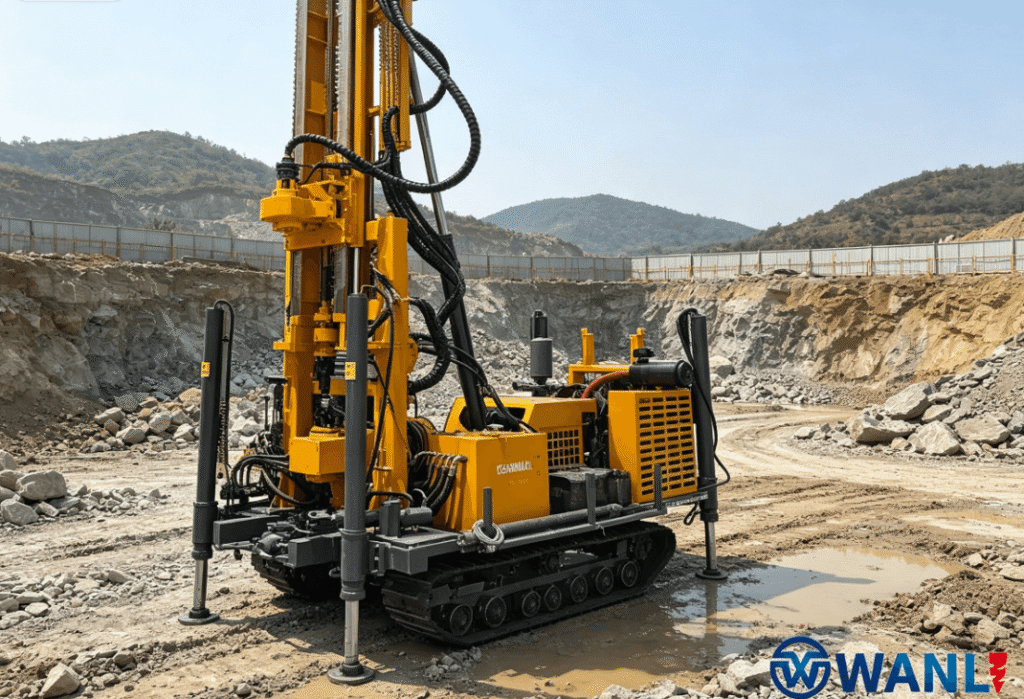
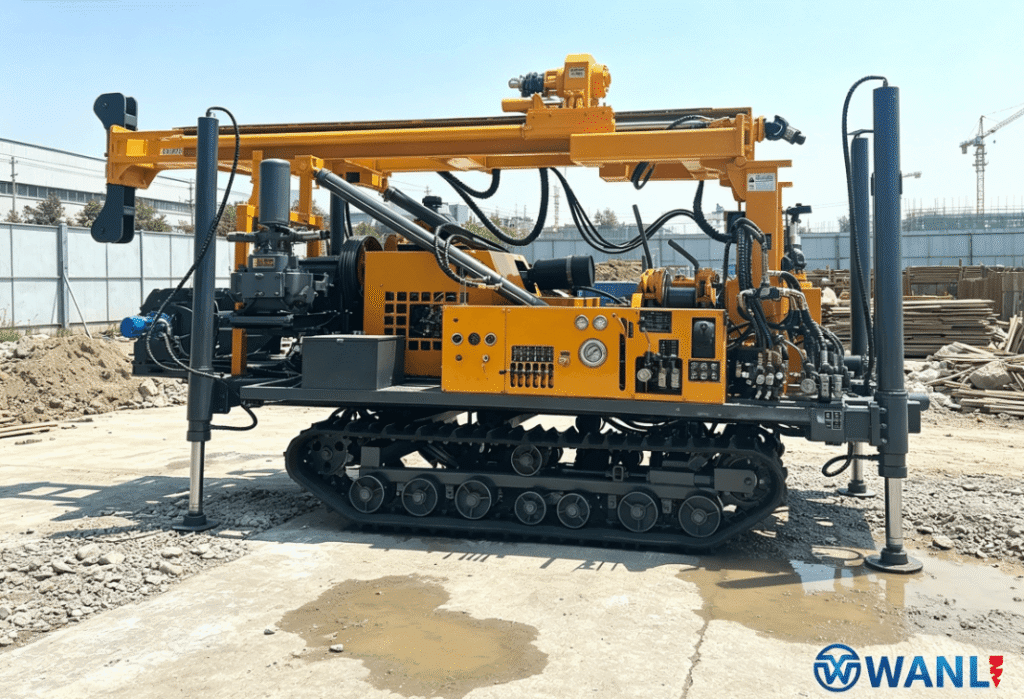
- Greenfield Exploration: For remote sites with limited infrastructure, a crawler-mounted hydraulic rig is preferred. Its self-propelled nature allows it to navigate rugged terrain without the need for heavy auxiliary transport.
- Established Mines: In active mining sites where space may be constrained, skid-mounted or trailer-mounted rigs provide a stable platform for vertical or high-angle inclined drilling.
- Hard Rock Formations: In regions with high Mohs hardness (e.g., granite or basalt), the rig must offer high-speed rotation (up to 1,000+ RPM) to allow diamond bits to cut effectively.
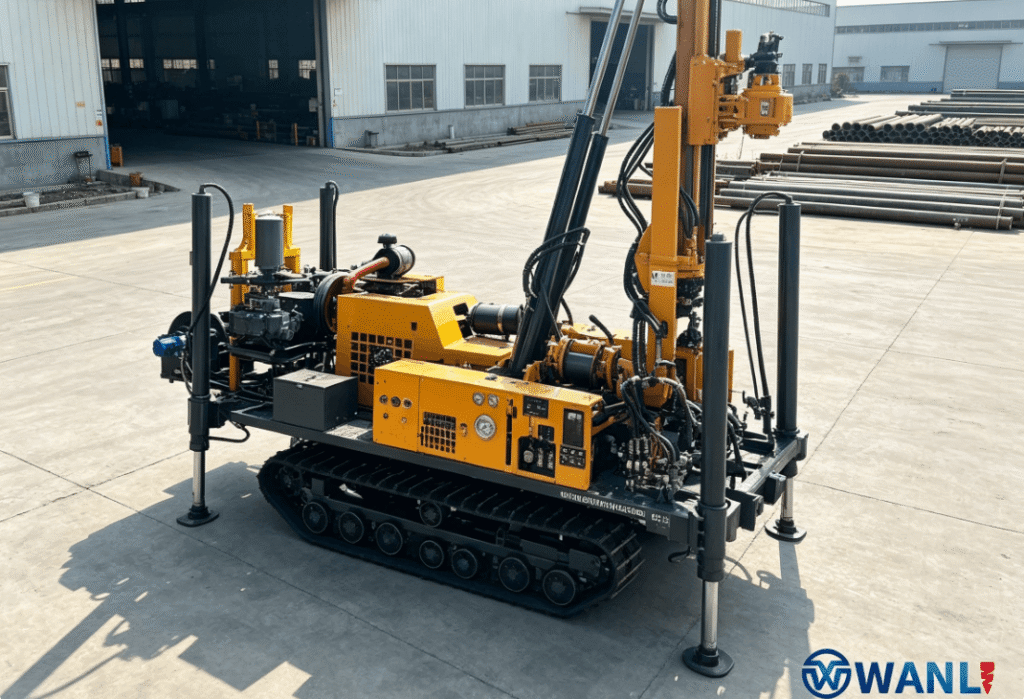
Procurement Strategy: Evaluating Manufacturers and ROI
When moving toward a transaction, industrial buyers must look beyond the initial price tag. The Total Cost of Ownership (TCO) in mineral exploration is heavily influenced by downtime and parts availability.
Customization and OEM Capabilities
Every geological project has unique constraints. Reliable manufacturers like SD Wanli offer customization options for power units (Diesel vs. Electric), chassis types, and mud pump integration. For deep hole projects, ensure the manufacturer can provide a “turnkey” package that includes the drill, the power pack, and the specialized hydraulic rod handlers.
Compliance and Quality Standards
In the B2B mining sector, equipment must meet rigorous safety and environmental standards. Ensure your supplier complies with ISO 9001 for manufacturing quality. Furthermore, verify that the hydraulic components (valves, pumps, and motors) are sourced from reputable brands (e.g., Rexroth, Kawasaki, or equivalent) to ensure global serviceability.
Lead Times and Logistics
A deep hole core drilling rig is a complex assembly. Typical lead times range from 30 to 60 days depending on the level of customization. Proactive procurement managers should also inquire about “consumable packages”—spare seals, filters, and hydraulic hoses—to be shipped with the rig to prevent operational delays in remote locations.
Operational Efficiency: The Role of the Mud Pump
In deep hole drilling, fluid management is as vital as the rig itself. The mud pump must deliver high-pressure drilling fluid to cool the bit and carry cuttings to the surface across great vertical distances. For 1,000m+ holes, a triplex piston pump with adjustable flow rates is the industry standard. This prevents “hole collapse” and ensures the borehole remains lubricated under high pressure.
Next Steps for Project Integration
If you are currently evaluating a deep hole core drilling rig for an upcoming exploration phase:
- Define Depth Requirements: Determine your maximum target depth and the preferred core diameter (NQ is standard for deep exploration).
- Assess Power Needs: Choose between diesel engines for remote sites or electric motors for underground or environmentally sensitive areas.
- Request a Technical Datasheet: Analyze the torque-to-speed ratio and the lifting capacity of the main winch.
- Confirm After-Sales Support: Ensure the manufacturer provides technical documentation and remote troubleshooting support.
For detailed technical specifications and model comparisons, exploring the Coring Drilling Rig category provides a comprehensive view of current market capabilities.
FAQ
Q1: What is the maximum depth a hydraulic core drilling rig can reach?
While “deep hole” typically starts at 1,000 meters, specialized hydraulic rigs can reach depths of 3,000 meters or more. The limiting factors are the hoisting capacity of the winch and the tensile strength of the drill rods.
Q2: Can these rigs be used for both vertical and inclined drilling?
Yes. Most professional deep hole rigs feature a tilting mast that allows for drilling at angles between 45 and 90 degrees. This is essential for intersecting mineral veins that are not horizontal.
Q3: What is the typical MOQ for industrial drilling rigs?
In the B2B manufacturing sector, the Minimum Order Quantity (MOQ) is typically one unit. However, many suppliers offer tiered pricing or “exploration packages” when purchasing multiple units or a complete set of drilling tools.
Q4: How are deep hole rigs transported to remote mining sites?
Crawler-mounted rigs are the most mobile. For extremely remote areas, modular rigs can be disassembled into smaller components for transport via light truck or helicopter, then reassembled at the drill pad.
Q5: What certifications should I look for in a manufacturer?
Look for ISO 9001:2015 for quality management, CE certification for safety (especially if importing to Europe), and specific mining safety certifications required by your local jurisdiction.
Reference Sources
- International Society for Rock Mechanics and Rock Engineering (ISRM): Technical standards for core recovery and borehole stability.
- ISO 9001:2015: Quality management systems for heavy machinery manufacturing.
- The Society for Mining, Metallurgy & Exploration (SME): Guidelines for mineral exploration equipment and drilling best practices.
- ASTM D2113: Standard Practice for Rock Core Drilling and Sampling for Site Investigation.