Choosing a crawler mounted water well drilling rig is a commercial and technical decision, not simply a horsepower comparison. Buyers must match the drilling method, formation, borehole programme, mobility, service model, and documentation before requesting a final quotation. This guide separates supplier-published information from specifications that still require project-specific confirmation.
What a crawler-mounted rig should solve
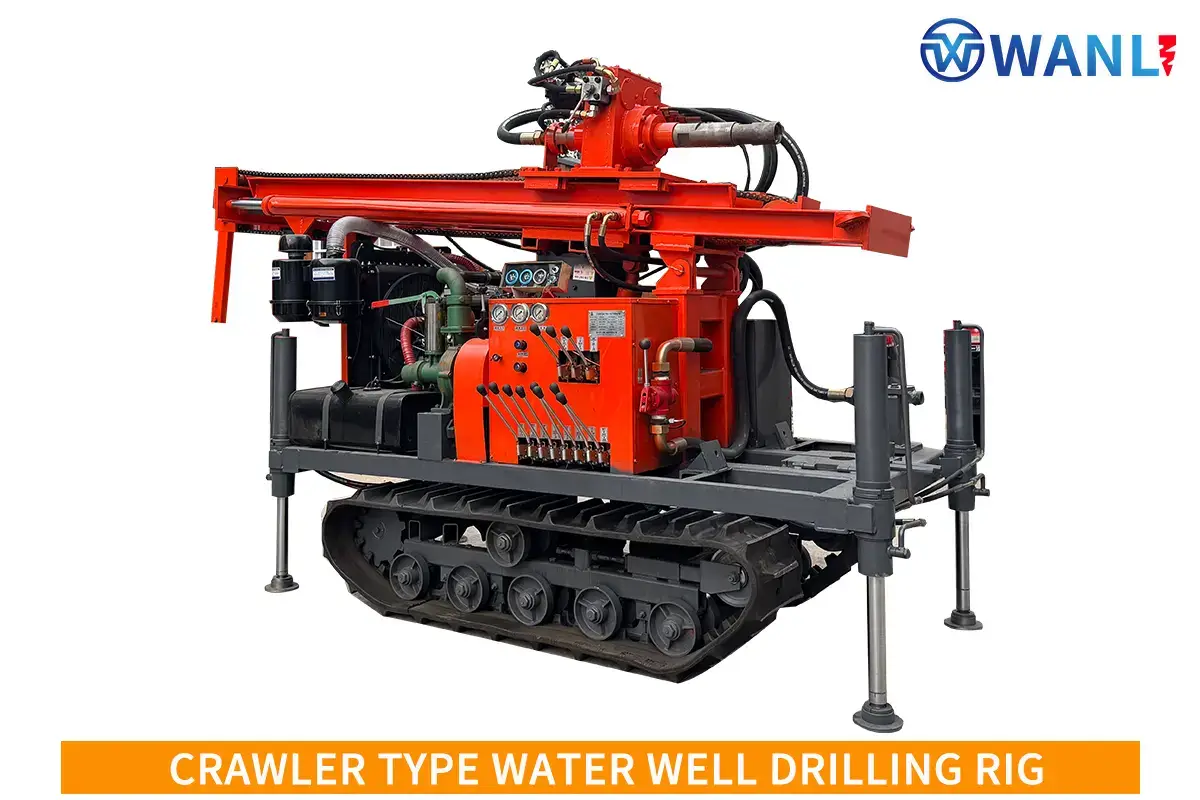
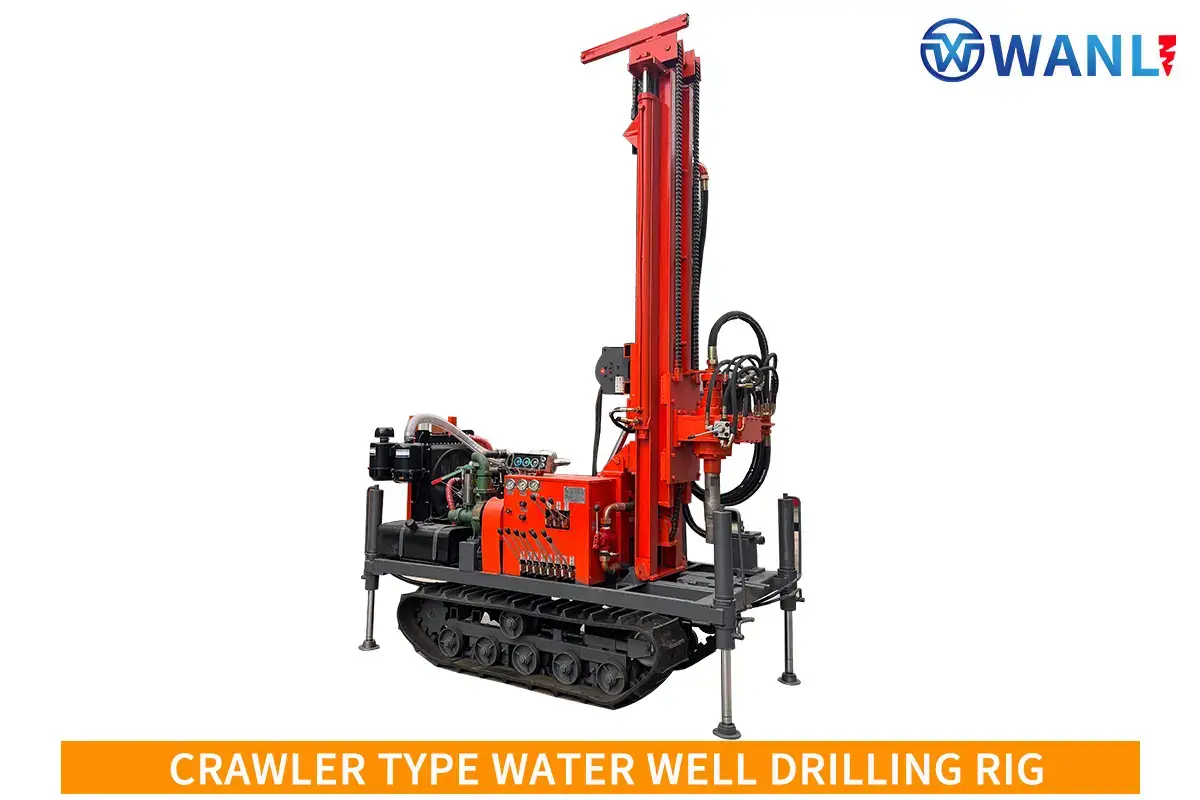
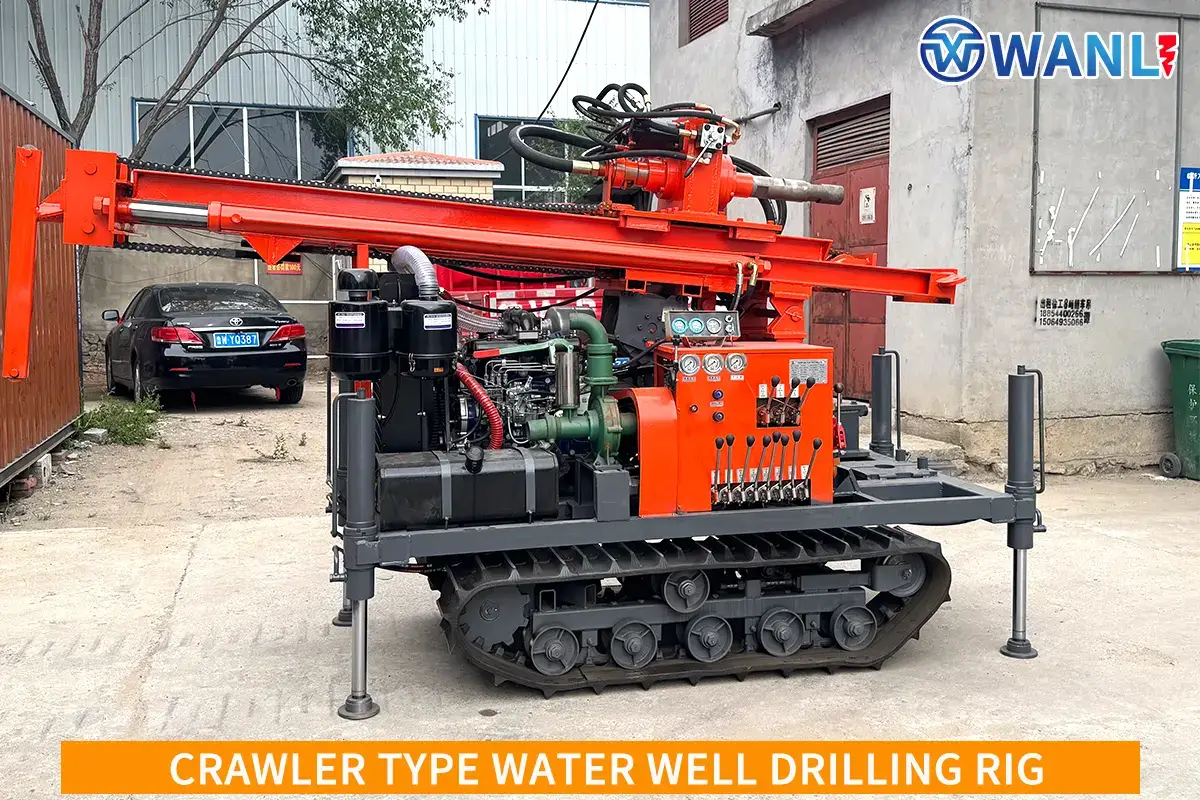
The SD Wanli crawler water well drill page describes a low-ground-pressure crawler chassis for movement on mountains and muddy terrain, full hydraulic drive, high torque, adjustable speed, user-friendly operation, and safety protection. These are relevant buying criteria, but they do not replace a site assessment. Actual mobility depends on slope, soil bearing capacity, access width, transport rules, and the complete machine configuration.
The supplier’s Crawler Type Water Well Drilling Rig page identifies mud rotary drilling, diesel power, pump and engine as core components, and water-well application. It lists a maximum drilling depth of 1,500 m, 4,500 kg weight, 2.5 km/h driving speed, and 1.4 m high-leg stroke. These are published reference data, not a guaranteed result in every formation. Depth, diameter, productivity, and stability must be confirmed against casing, tooling, fluid system, and geology in the RFQ.
Match the drilling method to the formation
Independent groundwater guidance states that the best drilling method depends on ground conditions and other project factors [1]. Mud rotary circulates drilling fluid through the borehole, carries cuttings to the surface, and can support borehole stability where fluid control is appropriate. It is not automatically best for every rock, gravel, or unstable interval. Confirm the bit types, drill rods, mud pump, settling arrangement, and casing programme.
Air rotary and down-the-hole systems are associated with air-driven cutting and hammer action, bucket auger is primarily used in unconsolidated material and large-diameter boreholes, cable-tool drilling uses percussion, and reverse circulation generally needs a larger footprint and settling pit [1]. The US EPA’s Manual of Water Well Construction Practices also presents well construction as a specification and planning exercise rather than a one-size-fits-all equipment purchase [2].
| Buyer consideration | Published crawler-rig information | RFQ confirmation required |
|---|---|---|
| Operating concept | Mud rotary drilling is listed | Fluid circuit, pump model, flow, pressure, and solids control |
| Access and movement | Crawler mobility is described | Ground pressure, gradeability, turning radius, transport dimensions, and site restrictions |
| Depth and diameter | Max. 1,500 m and multiple diameter entries are listed | Formation-specific achievable depth, casing, rods, and tooling limits |
| Power and controls | Diesel power and hydraulic drive are described | Exact engine, output, hydraulic circuit, fuel use, and emissions compliance |
| Documentation | Machinery test report and outgoing-inspection video are listed | Test scope, language, traceability, and acceptance criteria |
How to evaluate the published specification
Link each specification to a measurable acceptance condition. “Maximum drilling depth” should identify formation, hole diameter, rod length, casing, drilling method, and whether it is a design limit or field result. The page lists diameter values from 140 mm through 1,000 mm, but its formatting includes an ambiguous “8001000 mm” sequence. Request a clean, model-specific data sheet before comparing bids.
The same page shows both “CUMMINS” and “yuchai” in separate engine fields. This matters for procurement, spare parts, emissions planning, and service support, so do not infer that both engines are included. Request the exact engine brand and model, nameplate photograph, rated power, applicable emissions standard, and quoted configuration.
RFQ and selection checklist
Describe the well programme before asking for price. Include target depth, finished-hole and casing diameters, geological log if available, overburden and rock intervals, water-table information, drilling-fluid requirements, operating hours, ambient temperature, altitude, and access. State whether the rig will be transported complete or disassembled, and identify destination-country import, safety, electrical, and emissions requirements.
Ask the manufacturer to confirm in writing:
- Exact crawler chassis, dimensions, operating weight, ground pressure, gradeability, and transport requirements.
- Drilling method, rotary torque, speed range, mast stroke, pullback and crowd force, rod diameter, and tooling.
- Mud pump model, rated flow and pressure, mixing or settling equipment, connections, and fluid recommendations.
- Engine brand and model, rated power, fuel system, emissions documents, hydraulic components, and electrical equipment.
- Achievable depth and diameter for the stated formation, casing programme, and drilling fluid—not only the catalogue maximum.
- Test scope, machinery test report, inspection video, warranty, spare parts, manuals, commissioning, and after-sales response.
- Quotation validity, accessories, packing, Incoterm, production schedule, payment milestones, and exclusions. Lead time must be confirmed for the specific order.
Review the water well drilling rig product category and the Crawler Type Water Well Drilling Rig product page when building a shortlist. The final offer should still be based on written technical confirmation.
Commercial checks before purchase
For importers and distributors, the key commercial question is not only initial price. Confirm what is included, which wear parts are supplied, whether the quoted engine and pump are available locally, and how technical support is delivered across time zones. A one-year warranty and 24-hour online support are listed on the product page; ask for scope, exclusions, response channel, language, and parts policy in the pro forma invoice or contract.
Request consistent brochures, nameplates, manuals, packing lists, and photographs before ordering. If crawler chassis, engine, pump, or diameter range varies between units, the model code and documentation should state that variation clearly.
Frequently asked questions
Is the listed 1,500 m depth guaranteed?
No. It is a maximum stated on the product page. Achievable depth depends on formation, diameter, casing, tooling, rods, fluid, operator practice, and configuration. Request project-specific confirmation.
Is the crawler chassis suitable for every muddy or mountainous site?
No. The page describes low-ground-pressure mobility, but buyers must confirm ground pressure, slope limits, access width, turning space, transport dimensions, and local safety requirements.
Which engine is supplied?
The page contains both CUMMINS and yuchai entries. Because this is inconsistent, confirm the exact engine brand and model in the quotation, nameplate records, and final inspection documents.
What should a distributor request before approving the order?
Request a model-specific data sheet, configuration list, test scope, inspection video, warranty, spare-parts package, packing details, and written confirmation of the drilling programme.
Request a project-specific quotation
Send the target depth, borehole and casing diameters, geological information, access conditions, destination country, and operating schedule. The manufacturer can then confirm whether the published crawler configuration and mud rotary package are appropriate, identify exclusions, and prepare a comparable RFQ.
References
[2] U.S. Environmental Protection Agency, “Manual of Water Well Construction Practices,” 1975.