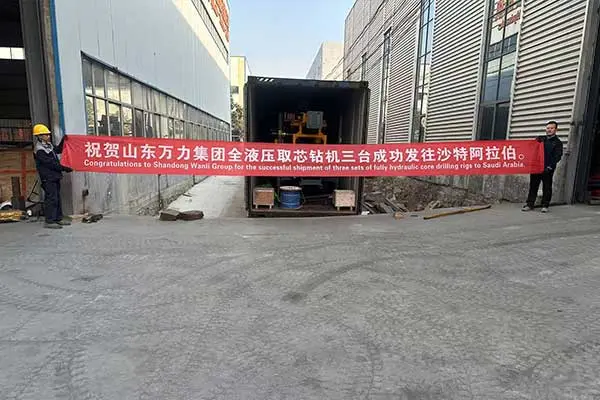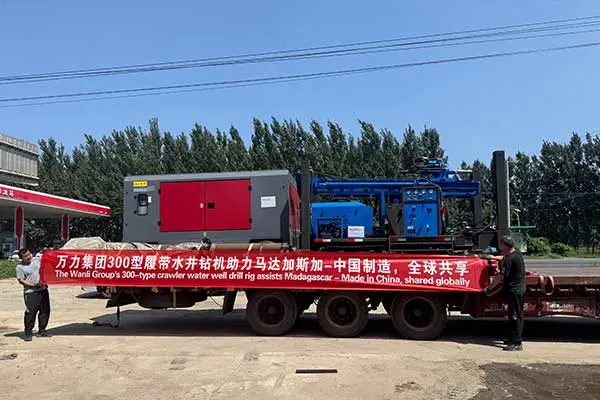
Specifying a hydraulic core drilling rig is a capital-intensive decision that dictates core recovery quality, site relocation speed, and non-productive downtime across the entire exploration campaign. For mining companies, geological survey bureaus, and engineering contractors operating in Africa, Southeast Asia, and Europe, the priority goes far beyond unit price. It is about securing a manufacturing and engineering partner whose hydraulic power distribution, hoisting capacity, and deep-hole compatibility can withstand hard-rock formations and remote site conditions. Shandong Wanli Construction Machinery Co., Ltd. answers this need with its Oil Cylinder Lifting Core Drilling Rig, a machine engineered around total cost of ownership rather than headline specifications alone.
Why ASTM D2113 Remains the Benchmark for Core Quality
Any serious hydraulic core drilling rig discussion must begin with sampling integrity. ASTM D2113, Standard Practice for Rock Core Drilling and Sampling of Rock for Site Exploration, establishes the guidelines, requirements, and procedures for core drilling, coring, and sampling of rock. The standard explicitly states that rock cores are samples of record of the existing subsurface conditions at given borehole locations, and it applies to boreholes that are vertical, horizontal, or angled, covering both hard and soft rock, as well as surface drilling and drilling from adits and exploratory tunnels.
This standard matters for B2B buyers because it frames every procurement decision: a rig is only as valuable as the quality of the core it returns. A hydraulic core drilling rig must therefore deliver stable rotational speed, precise feed control, and high hoisting capacity to satisfy the spirit of D2113 across varying geological formations.
The Engineering Levers That Define a Modern Hydraulic Rig
A deep-capable hydraulic core drilling rig differs from standard geotechnical equipment primarily through structural integrity and hydraulic power distribution. When drilling beyond 1,000 meters, the weight of the drill string becomes a critical factor, necessitating advanced hoisting systems and precise feed control.
The critical engineering features include:
- High-torque hydraulic power head: Variable displacement pumps allow operators to fine-tune torque and RPM independently, ensuring the diamond bit maintains an optimal kerf without premature wear
- Oil cylinder lifting and feeding: Single or dual hydraulic cylinders driving the rotation head through a chain multiplication mechanism provide long feeding travel and high lifting force for deep-hole wireline coring
- Mast structure: Telescopic or reinforced lattice masts must handle NQ, HQ, and PQ rod weights while supporting dynamic breaking forces during retrieval
- Wireline coring technology: Eliminates the need to pull the entire rod string, saving hundreds of hours of tripping time over a project lifecycle
- Load-sensitive hydraulic system: Delivers high working efficiency and large torque while managing heat dissipation through air and water cooling
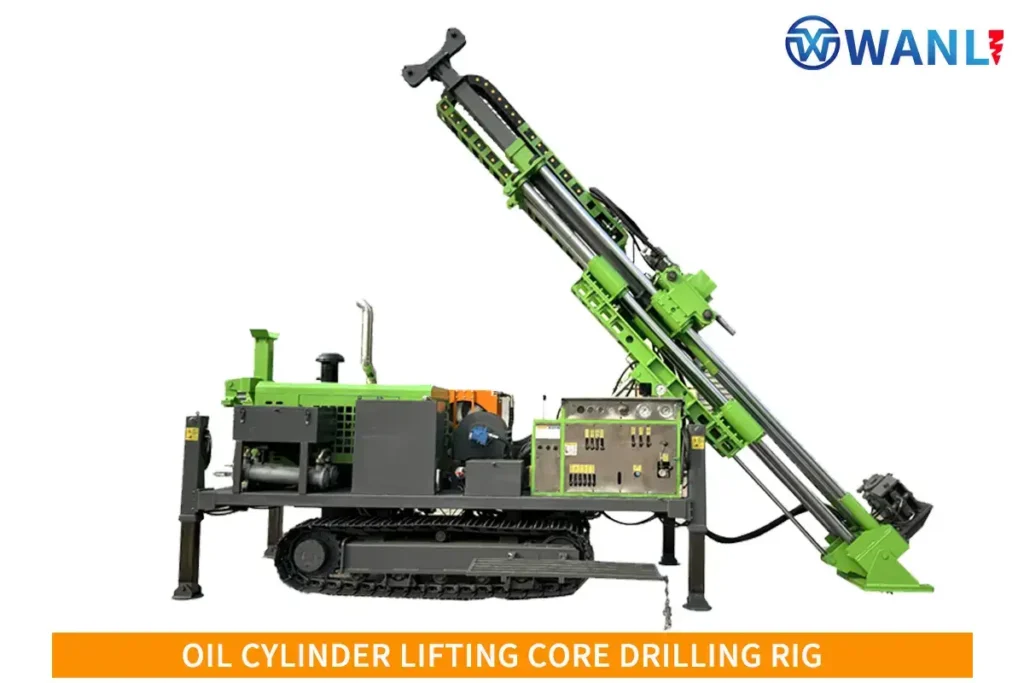
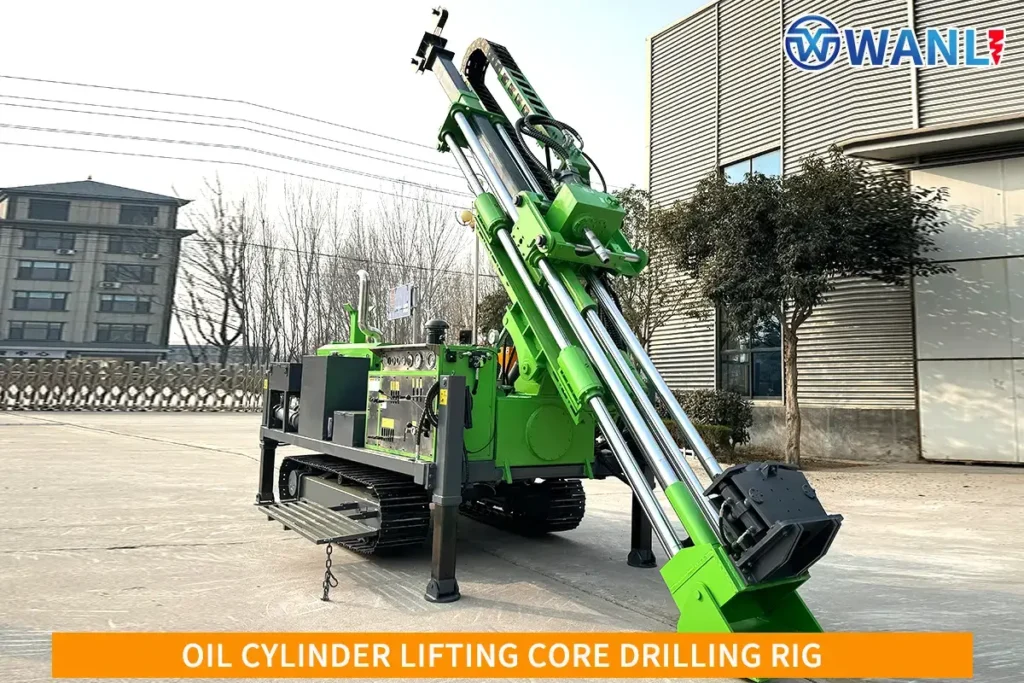
Wanli’s Oil Cylinder Lifting Core Drilling Rig integrates these subsystems into a cohesive machine. According to the SD series product documentation, these rigs are lightweight, efficient, mast-touching, fully hydraulic crawler-mounted core drilling rigs designed for deep core drilling in a depth range of 200-2000 m, with BTW, NTW, and HTW diameter compatibility.
How Wanli’s Rig Compares with Commercial Alternatives
For procurement managers, hard-parameter comparison is the fastest path to a confident decision. The following tables contrast Wanli’s hydraulic core drilling rig line with representative competitors in the global market.
Drilling Depth and Torque Capability
| Dimension | Wanli SD Series | SAM-5A | SAM-6F | RLD800 |
|---|---|---|---|---|
| BQ max depth | 1000-2500 m (by model) | 1500 m | 2200 m | Not specified |
| NQ max depth | 600-2000 m (by model) | 1300 m | 1800 m | 1000 m |
| HQ max depth | 400-1400 m (by model) | 1000 m | 1450 m | 800 m |
| Max torque | Up to 4263 N·m | 4650 N·m | 6600 N·m | 1800 N·m |
| Max lifting force | Not specified | 150 kN | 250 kN | 300 kN |
Wanli’s SD series spans a broad depth envelope from 200 to 2000 m, positioning it competitively against mid-range commercial rigs. While SAM-6F and RLD800 offer higher absolute torque and lifting force in their heaviest configurations, Wanli’s advantage lies in its balanced combination of depth capability, torque of up to 4263 N·m, and Cummins engine reliability across the 200-2000 m working range.
Power, Mobility, and Configuration
| Dimension | Wanli Oil Cylinder Lifting Rig | SAM-4 | HYDX-6 | RLD800 |
|---|---|---|---|---|
| Engine | Cummins 6CTA8 / 6BTA5 | Not specified | 179 kW Cummins 6CTA8.3 | 92 kW Yuchai 4-cylinder |
| Power head drive | Piston motor with mechanical gear shifting | Not specified | Dual motor closed circuit | Axial plunger pump + inclined-axis motor |
| Feeding mechanism | Oil cylinder chain double-speed | Not specified | Oil cylinder chain double-speed | Oil cylinder chain double-speed |
| Mast operation | Oil cylinder lift/fall, 0-90° drilling angle | Not specified | Oil cylinder lift/fall, 0-90° | 45-90° drilling angle |
| Mobility | Crawler-mounted, self-propelled | Not specified | Steel crawler self-propelled | Wireless remote control crawler |
| Deep-hole focus | 200-2000 m depth range | Medium-duty, BQ 1200 m | BQ 2000 m, NQ 1600 m | BTW 1200 m |
Wanli’s rig shares the same oil cylinder chain double-speed feeding mechanism and crawler-mounted mobility as top-tier competitors like HYDX-6 but distinguishes itself through Cummins engine standardization and the 200-2000 m depth range that addresses both medium and deep exploration requirements in a single platform.
Matching Rig Capability to Geological Conditions
A professional hydraulic core drilling rig manufacturer must adapt equipment to the application. Based on Wanli’s product engineering, the primary deployment scenarios include:
Greenfield Exploration in Remote Terrain
For remote sites with limited infrastructure, a crawler-mounted hydraulic rig is preferred. Its self-propelled nature allows it to navigate rugged terrain without heavy auxiliary transport. Wanli’s full hydraulic crawler configuration delivers precisely this capability.
Established Mine Sites
In active mining environments where space is constrained, the rig’s oil cylinder lifting mast with a 0-90° drilling angle enables both vertical and high-angle inclined drilling, maximizing coverage from a limited footprint.
Hard Rock Formations
In regions with high Mohs hardness, such as granite or basalt, the rig’s high-speed rotation capability (up to 940 rpm or 1120-448 rpm depending on gearing) allows diamond bits to cut effectively while maintaining core integrity per ASTM D2113 sampling practices.
Deep-Hole Wireline Coring
The integrated feeding/lifting system driven by hydraulic cylinders through chain multiplication provides the long feeding travel and high lifting force required for deep-hole wireline coring operations.
The Specification Conversation: What Your Manufacturer Should Discuss
A credible hydraulic core drilling rig supplier begins every project with engineering questions:
- diameter—BQ, Target drilling depth and rod risk—typical diameter—BQ, NQ, HQ, or PQ compatibility determines power head torque and hoisting capacity requirements
- Geological formation — soft overburden versus hard crystalline rock dictates rotation speed range and feed force
- angle—vertical, drilling angle—vertical, inclined, or horizontal configurations change mast, feed, and stabilization requirements
- requirements—crawler-mounted Mobility requirements—crawler-mounted for greenfield sites, skid or trailer-mounted for established mines
- Power unit preference—diesel (Cummins) for off-grid operations, or electric for underground/urban environments
- compatibility—ropeWireline coring compatibility—rope core winch capacity, wire rope length, and lifting speed
- system—high-capacity cooling system—high-capacity dual air and water cooling for sustained deep-hole operation
- sourcing—ISO Compliance and component sourcing—ISO 9001 manufacturing, Rexroth/Kawasaki equivalent hydraulic components for global serviceability
Wanli’s engineering team addresses each of these dimensions through customizable configurations, ensuring the delivered rig matches the specific exploration campaign rather than a generic stock unit.
Why the Manufacturer’s Total Capability Matters
When procurement teams select a hydraulic core drilling rig, several commercial risks must be mitigated:
- risk—can the manufacturer deliver the rig on schedule? Wanli’s 300,000+ square meter facility and 2000+ workforce provide the capacity buffer for complex assemblies
- risk—does quality consistency risk—does the manufacturer enforce standards from raw material to finished product? Wanli’s comprehensive quality management system enforces discipline at every stage
- Parts availability risk—can critical hydraulic components be serviced globally? Wanli specifies reputable brands (Rexroth, Kawasaki, or equivalent) for global serviceability
- Lead time risk — typical deep-hole rig lead times range from 30 to 60 days depending on customization level
- Consumable package — proactive shipment of spare seals, filters, and hydraulic hoses prevents operational delays in remote locations
For B2B buyers managing multi-year exploration programs, these risks determine whether a rig fleet delivers consistent value or becomes a perpetual maintenance burden.
Frequently Asked Questions
Q: What drilling depth can a Wanli hydraulic core drilling rig achieve?
A: Wanli’s SD series full hydraulic crawler core drilling rigs are designed for deep core drilling in a depth range of 200-2000 m, with BTW, NTW, and HTW diameter compatibility. Specific depth capacity varies by rod diameter: BQ reaches 1000-2500 m depending on model, NQ 600-2000 m, HQ 400-1400 m, and PQ 200-1100 m.
Q: Why is ASTM D2113 relevant when selecting a hydraulic core drilling rig?
A: ASTM D2113 establishes the standard practice for rock core drilling and sampling, defining rock cores as samples of record of existing subsurface conditions at given borehole locations. The standard applies to vertical, horizontal, or angled boreholes in hard and soft rock. A rig’s ability to deliver stable rotational speed, precise feed control, and high hoisting capacity directly impacts compliance with the sampling integrity principles of D2113.
Q: What are the key engineering features of Wanli’s Oil Cylinder Lifting Core Drilling Rig?
A: The rig integrates a crawler chassis with steel tracks for self-movement across rough terrain, a full hydraulic power head with piston motor and mechanical gear shifting delivering up to 4263 N·m torque, and an oil cylinder chain double-speed feeding system providing long feeding travel and high lifting force. The mast uses an oil cylinder lift/fall with 0-90° drilling angle capability, powered by a Cummins 6CTA8 or 6BTA5 engine.
Q: How does Wanli’s rig compare to SAM Drilling and other commercial rigs?
A: Wanli’s SD series offers a balanced depth range of 200-2000 m with torque up to 4263 N·m, positioning competitively against SAM-4 (medium-duty, BQ 1200 m) and approaching SAM-6F (heavy-duty, BQ 2200 m, 6600 N·m torque). Against RLD800, Wanli’s rig delivers comparable mobility with Cummins engine standardization and broader depth flexibility.
Making the Right Rig Procurement Decision
Selecting a hydraulic core drilling rig is a long-term operational commitment. The wrong choice surfaces as poor core recovery, missed project milestones, excessive tripping time, and unreliable after-sales support. The right choice becomes invisible: cores arrive intact and compliant with ASTM D2113 sampling practices, exploration data is trustworthy, and the rig fleet delivers consistent value across complex working conditions.
Shandong Wanli Construction Machinery Co., Ltd. combines a 300,000+ square meter manufacturing base, 2000+ skilled employees, and a proven export track record across 180+ countries and regions. The Oil Cylinder Lifting Core Drilling Rig embodies Wanli’s engineering philosophy, integrating full hydraulic power head drive, oil cylinder chain double-speed feeding, Cummins engine reliability, and crawler-mounted mobility into a single platform designed for 200-2000 m deep core drilling. For B2B procurement teams specifying drilling equipment for their most demanding exploration projects, the partnership conversation should start at the engineering level and extend through the full equipment lifecycle.
To discuss your exploration requirements, request detailed specifications, or obtain a customized quotation for your hydraulic core drilling rig project, visit sdwanli.com and contact the engineering team directly. A well-selected hydraulic core drilling rig is the foundation of every successful exploration program, and the specification process should begin today.
References
- ASTM International, ASTM D2113-14 Standard Practice for Rock Core Drilling and Sampling of Rock for Site Exploration. https://www.astm.org/d2113-14
- Shandong Wanli Construction Machinery Co., Ltd., Crawler Core Drilling Rig: Smarter B2B Buying Decisions. https://sdwanli.com/news/crawler-core-drilling-rig-2
- Shandong Wanli Construction Machinery Co., Ltd., Deep Hole Core Drilling Rig Guide: Procurement & Technical Specs. https://sdwanli.com/news/deep-hole-core-drilling-rig-guide-procurement-technical-specs