Choosing between a portable water well drilling rig and a fixed platform is a decision that balances geological necessity with logistical constraints. For drilling contractors and project managers, the choice dictates not only the potential depth of the borehole but also the overall cost of mobilization. Understanding the mechanical tradeoffs between these two configurations is essential for optimizing site efficiency.
In the industrial sector, the comparison of a portable water well drilling rig vs fixed units often centers on “mass versus mobility.” While fixed rigs offer the stability required for deep-aquifer exploration, portable units provide the agility needed for remote or restricted environments. This guide analyzes the technical performance indicators that distinguish these two essential categories.
Understanding Mechanical Design and Stability
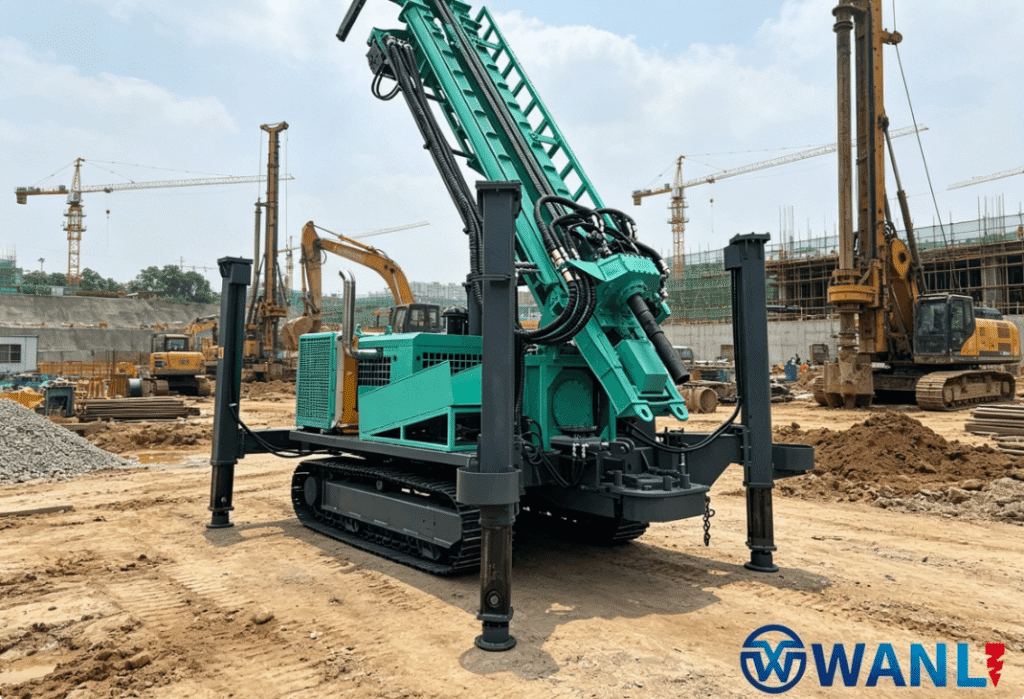
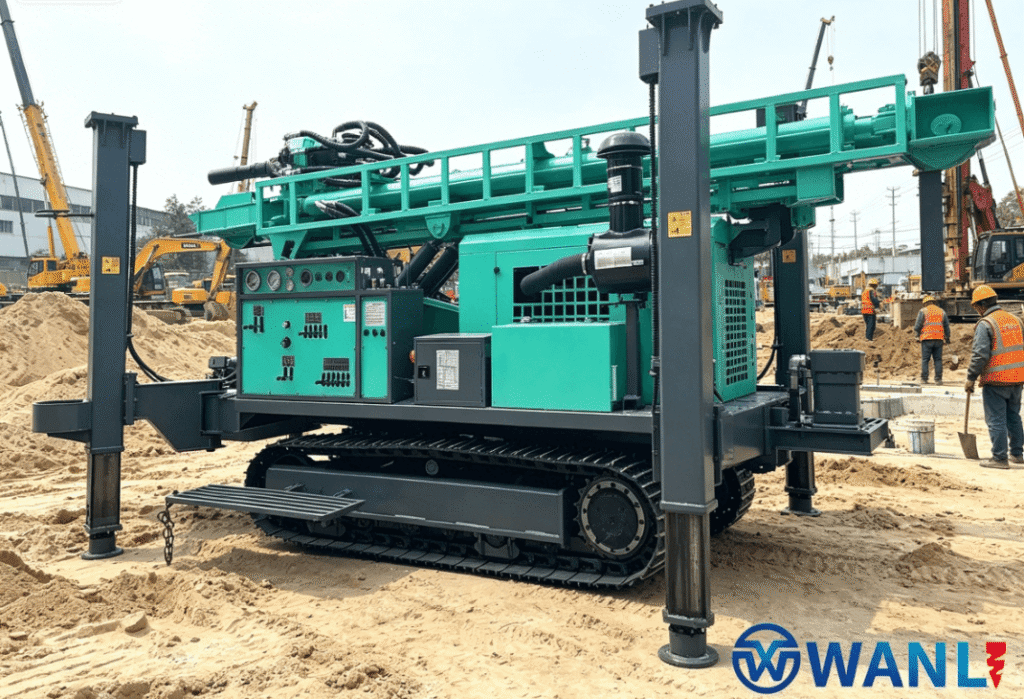
The primary technical difference lies in how each rig manages reactive force and torque. Fixed rigs, typically mounted on heavy crawler tracks or integrated truck chassis, use their significant structural weight to stabilize the mast during high-torque operations.
How do Fixed Rigs Manage Structural Torque?
Fixed rigs are engineered for high-pressure environments where the drill string weight can exceed several tons. These units, such as those found in professional water well categories, utilize hydraulic leveling jacks to create a stable foundation. This stability is critical when using heavy-duty casings or drilling through hard overburden where vibration must be minimized to maintain borehole verticality.
Why is Portability Critical for Restricted Sites?
Portable rigs are designed for “point-of-use” efficiency. These systems are often modular, allowing them to be transported via small trailers or even disassembled for manual transport into mountainous regions. While they lack the massive pull-down force of fixed units, they allow for groundwater access in locations where heavy machinery cannot physically enter, such as residential backyards or dense agricultural zones.
Performance Comparison: Depth and Geological Limits
The geological formation and the target depth of the water table are the ultimate deciders in equipment selection. Portable rigs are typically optimized for shallow to medium depths, while fixed rigs handle industrial-scale requirements.
Does Formation Hardness Dictate Rig Selection?
Fixed rigs are generally more versatile regarding drilling methods. They easily support both rotary mud drilling and high-pressure DTH (Down-the-Hole) air hammer systems. If the project involves drilling through granite or basalt, the stability of a fixed rig is required to handle the aggressive impact of the air hammer.
| Feature | Portable Drilling Rig | Fixed/Heavy-Duty Rig |
| Transport | Light truck or trailer | Heavy-duty carrier or self-propelled |
| Max Depth | 50 – 150 Meters | 200 – 600+ Meters |
| Setup Time | 30 – 60 Minutes | 2 – 5 Hours (inc. leveling) |
| Labor Needs | 2 Operators | 3 – 5 Operators |
| Terrain | Tight spaces, soft ground | Open areas, rugged job sites |
| Power Source | Small Diesel/Electric | High-output Multicylinder Diesel |
Operational Suitability and Site Accessibility
The decision process must account for “total mobilization cost.” Moving a 15-ton crawler rig requires specialized logistics and permits, which may not be cost-effective for small-scale domestic wells.
When Should You Deploy a Portable Rig?
A portable rig is the optimal choice for projects where the ROI depends on rapid movement between multiple sites. If the depth is less than 150 meters and the terrain is soft or sedimentary, a portable unit reduces fuel consumption and labor costs. It is the industry standard for rural irrigation and domestic drinking water projects.
When is a Fixed Crawler Rig Necessary?
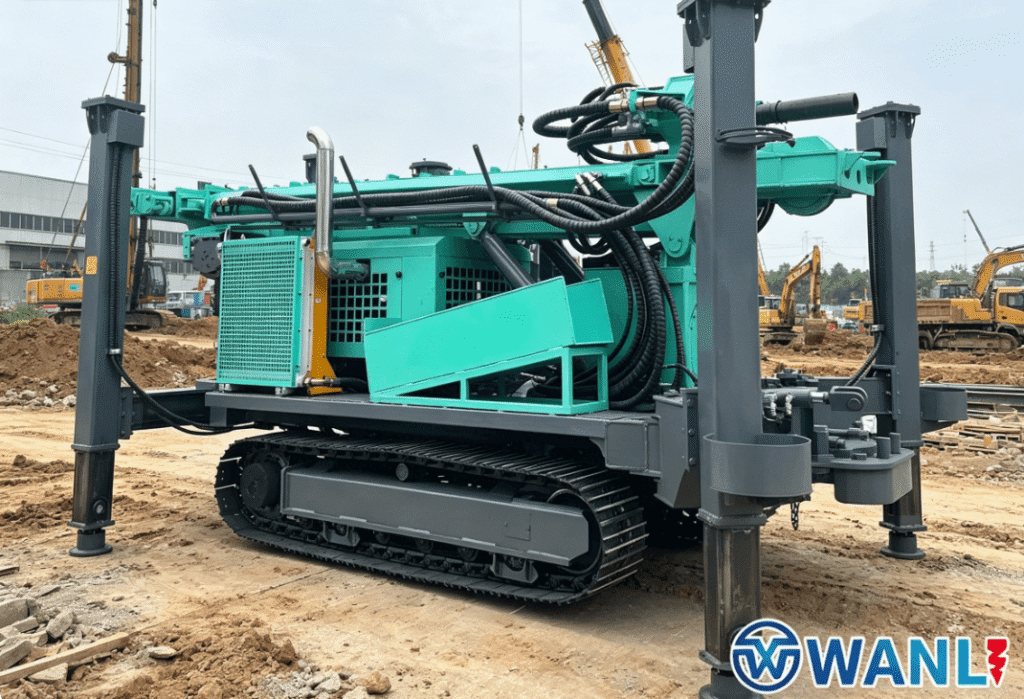
For municipal water supplies, geothermal heating, or deep industrial cooling wells, a fixed rig is mandatory. The ability to handle larger pipe diameters and set deep steel casings requires a hydraulic system with high lifting capacity. In these scenarios, the “time on hole” is significantly reduced by the power of a fixed unit, outweighing the higher mobilization costs.
Summary
The choice between a portable water well drilling rig and a fixed unit depends on the specific project parameters. Portable rigs offer unmatched accessibility and lower capital expenditure for shallow wells in restricted areas. Fixed rigs provide the necessary power, stability, and depth capacity for large-scale industrial or municipal projects. Selecting the right rig ensures geological success while maintaining operational profitability.
FAQ
1. Can a portable rig drill through solid rock?
Yes, provided it uses a high-torque motor and a compatible DTH hammer. However, the penetration rate is slower than a fixed rig. The depth is limited by the rig’s ability to lift the total weight of the drill string.
2. What are the maintenance differences between the two?
Portable rigs have simpler hydraulic systems and smaller engines, resulting in lower maintenance costs. Fixed rigs require specialized technicians for their complex multi-way valves and large-displacement engines. They follow a stricter service schedule due to higher operating pressures.
3. Is a truck-mounted rig considered portable or fixed?
A truck-mounted rig is technically a mobile fixed platform. It provides the mobility of a vehicle but functions as a fixed platform once deployed. It offers the power of a heavy-duty unit with faster transport speeds than crawler-based rigs.
4. How does hole diameter affect the choice?
Large diameter wells (over 300mm) generally require fixed rigs. The torque needed to rotate a large bit and the volume of fluid required to flush cuttings demand high-capacity power units. These are typically only found on larger, stationary platforms.
Reference Sources
NGWA Water Well Construction Equipment Standards