A wheel mounted water well drilling rig is a practical option when a contractor needs to move drilling equipment between sites without accepting the logistics of a heavy crawler or a permanently installed platform. Its value is not simply that it has wheels. The right wheeled configuration can shorten relocation time, support dispersed agricultural or domestic-well work, and reduce the transport equipment needed for a multi-site program. The trade-off is that mobility, ground pressure, lifting capacity, and drilling method must match the formation and the required borehole.
Shandong Wanli’s public product pages show several different wheeled or vehicle-mounted configurations rather than one universal specification. For example, its Wheel Type Water Well Drilling Rig page lists a supplier-published maximum depth of 150 m, a 75–325 mm diameter range, a 22 hp engine, 550 kg machine weight, and wheel traction or track-type mobility.[1] A separate three-wheeled model is listed with a maximum depth of 200 m, 100–250 mm drilling diameter, 13-ton lifting force, and 3,400–4,700 N·m swing torque.[2] These figures are published product information, not a project guarantee; the final configuration should be confirmed in writing before purchase.
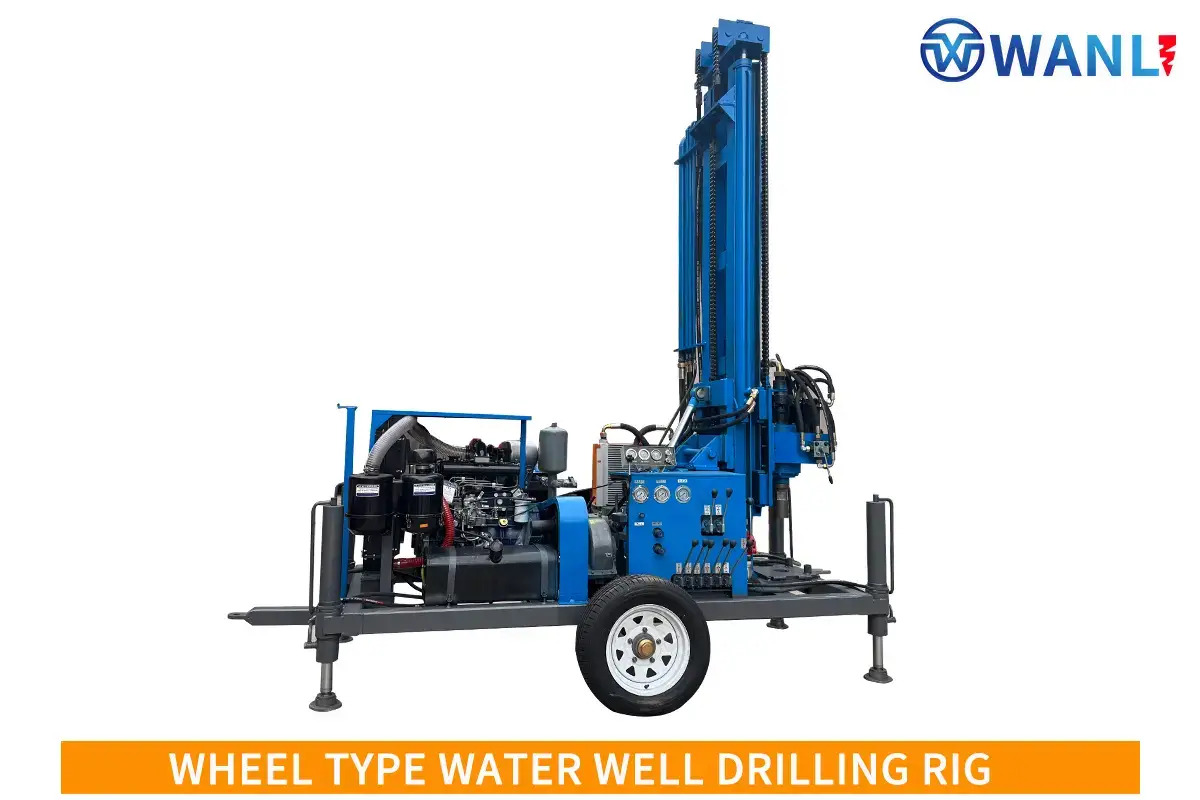
Figure 1. Public product image of a wheel type water well drilling rig. Image source: Shandong Wanli Wheel Type Water Well Drilling Rig.
Where a wheel mounted rig is a good fit
The strongest application case is a drilling program with frequent moves and reasonably predictable access. Farm irrigation wells, rural domestic-water wells, small community projects, groundwater investigation, and contractor work spread across multiple parcels can all benefit from a machine that can be towed or driven between locations. The commercial question is whether savings in mobilization and setup outweigh any reduction in deep-hole capacity or off-road stability.
A wheeled rig may also suit sites where a truck, tractor, or towing vehicle can reach the pad but a crawler would be unnecessarily expensive to transport. The public description of Wanli’s wheeled water well drill identifies a wheeled chassis, external traction, and maneuverability as its core characteristics.[3] That makes it important to assess the complete transport arrangement: towing capacity, road restrictions, turning space, site gradients, and the distance from the access road to the borehole.
| Application | Why wheels can help | Main confirmation needed before ordering |
|---|---|---|
| Agricultural irrigation programs | Faster movement between fields and dispersed boreholes | Required depth, casing diameter, soil profile, and local access |
| Domestic or rural water wells | Lower transport complexity for small and medium projects | Expected water table, borehole diameter, and drilling method |
| Contractor multi-site work | More productive use of one rig across separate jobs | Towing arrangement, daily relocation plan, and spare tooling |
| Preliminary groundwater investigation | Convenient movement between test points | Required sampling method and whether a water-well rig is appropriate |
| Restricted construction or utility sites | Smaller wheeled units may reach areas inaccessible to larger carriers | Ground bearing, overhead clearance, turning radius, and permits |
Main benefits for buyers
1. Mobility can reduce mobilization friction
A wheel mounted water well drilling rig can be attractive when a contractor’s work is measured across many sites rather than one deep borehole. Moving a compact unit may require less specialized transport than moving a large crawler or a truck-mounted drilling package. However, the phrase “mobile” does not automatically mean road legal or self-propelled. Wanli’s product information distinguishes wheel traction, track-type travel, and vehicle-mounted mobility across different listings.[1] [4] Ask the supplier to state whether the quoted machine is self-propelled, towable, or integrated with a road vehicle.
2. It can support a flexible project portfolio
Wheeled equipment can give a small or mid-sized drilling business a practical way to serve several customer segments. One model may be positioned for smaller wells, while a heavier three-wheeled or truck-mounted model may support larger diameters or deeper work. Wanli’s vehicle-mounted product page lists diameters from 100 to 400 mm and publishes different depth entries—500 m in one field and 400–1,000 m in another.[4] The inconsistency is precisely why buyers should request a model-specific data sheet and a written statement of the tested or quoted working range.
3. Setup and access may be simpler on prepared ground
On firm, level ground with sufficient bearing capacity, wheels can make positioning straightforward. This can be useful for agricultural plots, roadside work, and established construction areas. The benefit disappears if the pad is soft, steep, muddy, or badly rutted. Wanli’s three-wheeled page publishes a 30-degree climbing-angle figure, but that number should not be treated as permission to operate on every slope; actual stability depends on surface condition, machine configuration, drilling position, and the manufacturer’s operating instructions.[2]
4. A range of drilling methods can be specified
The rig should be selected around geology, not around the chassis alone. Loose sand and unstable overburden may require mud circulation or casing support, while hard rock may require a pneumatic DTH hammer and a compatible compressor. Wanli’s soil-selection guide describes mud rotary for loose formations and DTH systems for hard rock, while also emphasizing that torque, depth, and lifting capacity must be matched to the project.[5] A wheel-mounted chassis is therefore only one part of the drilling package; the pump, compressor, drill pipe, hammer, bits, and flushing arrangement matter just as much.
Important trade-offs and limits
A wheeled rig is not automatically the best choice for deep or difficult ground. A crawler can distribute load over a larger track area and may provide more dependable traction on soft or uneven terrain. A heavy truck-mounted unit can offer greater lifting and power capacity, but it may need more road space, permits, and a larger working pad. Wanli’s own comparison article frames portable and fixed equipment as a balance between access, stability, depth, and mobilization cost.[6]
Ground conditions are especially important. If the borehole requires high pullback force, large casing, or continuous DTH drilling, compare the complete hydraulic and air system—not only the advertised depth. The three-wheeled product page lists 1.7–2.5 MPa air pressure, 17–31 m³/min air consumption, and 13-ton lifting force.[2] These are supplier-published values that should be checked against the selected hammer, pipe size, compressor, altitude, and formation. They should not be converted into a guaranteed penetration rate.
| Decision factor | Wheeled configuration may be suitable when… | Consider another configuration when… |
|---|---|---|
| Access | Roads, fields, and pads are firm enough for the machine and towing vehicle | Soft ground, steep cross-slopes, or no vehicle access are expected |
| Depth | The required depth falls comfortably within the confirmed working range | The project is near the catalogue maximum or needs a large safety margin |
| Diameter | The casing and final borehole fit the verified rotary head and tooling | Large casing requires more torque, lifting force, or fluid capacity |
| Relocation | The contractor moves frequently between prepared sites | The rig will remain on one site for a long deep-hole campaign |
| Method | The supplier can match mud, air, casing, or combination drilling to geology | The proposed package lacks a compatible compressor, mud pump, or hammer |
| Support | Parts, manuals, inspection documents, and service arrangements are documented | Warranty, delivery, certification, and after-sales scope are vague |
What to include in an RFQ
A useful RFQ should describe the project before asking for a price. State the target depth and diameter, expected casing size, geological profile, altitude, climate, number of wells, site access, and preferred drilling method. Include whether the rig must be self-propelled, towable, or road-registered. Ask for a complete list of included equipment, such as drill pipes, bits, DTH hammer, air compressor, mud pump, hydraulic hoses, and leveling or stabilizing components.
Request a line-by-line response to the following: rated depth by diameter and formation; rotary speed and torque; lifting force; engine make and rated power; compressor or mud-pump requirements; dimensions and transport weight; axle or towing requirements; inspection and test documents; warranty exclusions; spare-parts availability; delivery terms; and applicable certification. Any conflict in the supplier’s public figures—such as the two depth entries on the vehicle-mounted page—should be resolved in the quotation and commercial contract.[4]
For model selection, buyers can review Wanli’s water well drilling rig category and compare it with the vehicle-mounted drilling rig category. If the project is primarily about hard-rock drilling, also review the company’s pneumatic water well drilling rig page. These are useful starting points, but the supplier should confirm the exact build and accessories for the buyer’s site.
Conclusion: match mobility to the whole drilling system
The business case for a wheel mounted water well drilling rig is strongest when mobility, repeat site access, and moderate drilling requirements are more important than maximum depth or extreme-terrain traction. Wheels can simplify movement between agricultural, domestic, and contractor sites, but the purchase decision should be based on the complete drilling system and a documented project fit. Compare the chassis, depth and diameter range, lifting force, torque, flushing method, transport requirements, and support package together.
For a project-specific recommendation, send Wanli the target depth, diameter, geology, site access, number of wells, and required delivery market through the water well drilling rig product category. Ask for a written configuration, scope of supply, inspection documents, warranty terms, and confirmed performance limits before placing an order.
Frequently Asked Questions
1. What is a wheel mounted water well drilling rig used for?
It is used for water-well drilling where the equipment must be moved between sites by wheels, wheel traction, towing, or an integrated vehicle. Typical applications include agricultural irrigation, rural domestic wells, and contractor programs, subject to geology and confirmed machine capability.
2. Is a wheeled rig suitable for hard rock?
It can be suitable if the selected rig, DTH hammer, compressor, drill pipe, and bits are compatible with the formation. The chassis alone does not determine hard-rock performance. Confirm air pressure, air volume, torque, lifting force, and the supplier’s recommended drilling method in writing.
3. How deep can a wheel mounted water well drilling rig drill?
There is no single standard depth. Wanli publicly lists 150 m for one wheel-type model, 200 m for a three-wheeled model, and conflicting depth entries for a vehicle-mounted model.[1] [2] [4] Treat these as supplier-published catalogue figures and request a model- and diameter-specific working range for the project.
4. Are wheel mounted rigs better than crawler rigs?
Neither is universally better. Wheels may be more convenient for firm, accessible sites and frequent relocation, while crawlers may provide better traction and ground distribution on rough or soft terrain. Compare the complete transport, stability, depth, and tooling requirements.
5. What should I ask for in a quotation?
Provide the target depth, diameter, geology, casing, site conditions, drilling method, and transport needs. Ask the supplier to confirm the exact model, engine, torque, lifting force, compressor or mud-pump requirements, included tooling, inspection documents, warranty scope, certification, delivery terms, and spare-parts support.
References
[1] Shandong Wanli: Wheel Type Water Well Drilling Rig
[2] Shandong Wanli: Three Wheeled Water Well Drilling Rig
[3] Shandong Wanli: Wheeled Water Well Drill
[4] Shandong Wanli: Vehicle Mounted Water Well Drilling Rig
[5] Shandong Wanli: How to Choose a Water Well Drilling Rig by Soil Type
[6] Shandong Wanli: Portable vs Fixed Water Well Drilling Rigs
[7] Simco Drilling: Questions to Ask Before Buying a Drilling Rig