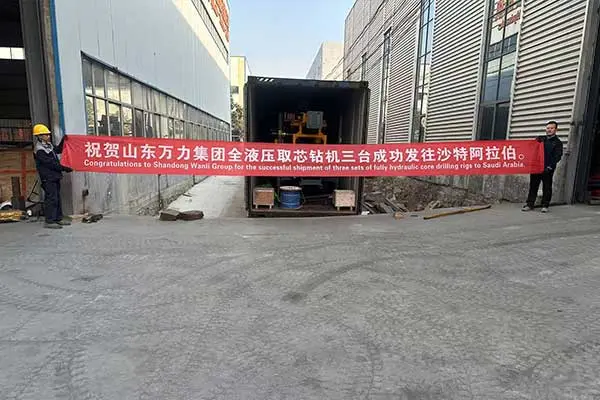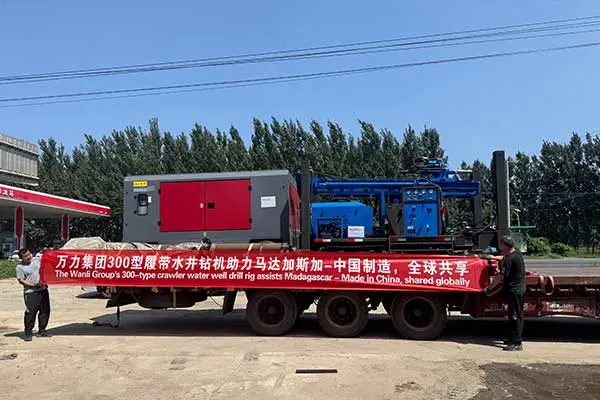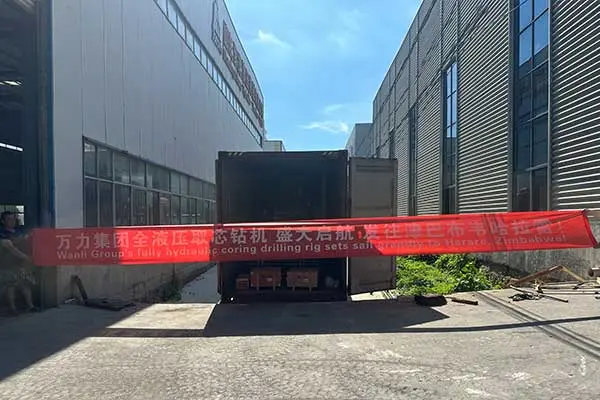
The global drilling landscape has shifted. A decade ago, procurement managers prioritized Western European or North American brands for high-stakes mineral exploration and deep-bore water projects. Today, the data tells a different story. Overseas buyers are increasingly pivoting toward the leading China drilling rig manufacturer ecosystem, not merely for cost savings, but for a unique blend of modular engineering, rapid lead times, and technological parity.
Whether you are managing a geotechnical site investigation in Southeast Asia or a large-scale irrigation project in Africa, understanding the strategic advantages of Chinese manufacturing is essential for optimizing your equipment CAPEX.
Technical Parity: Beyond the “Low-Cost” Myth
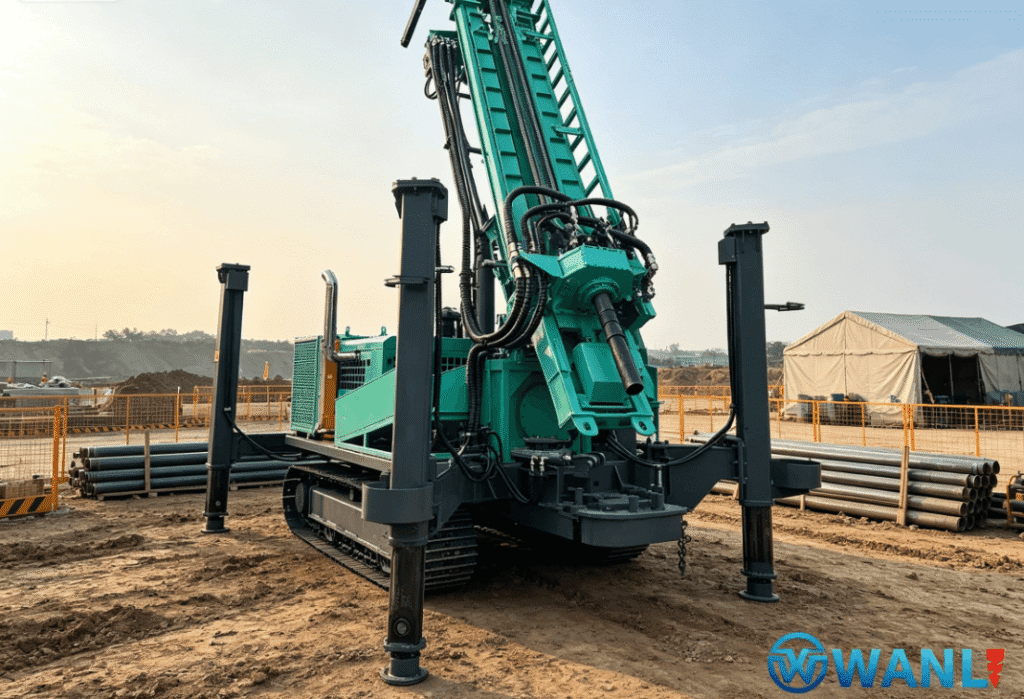
Modern Chinese drilling rigs are no longer “entry-level” alternatives. Manufacturers have moved toward integrating global Tier-1 components into robust, locally engineered chassis.
In the current market, a high-quality China drilling rig manufacturer like SDWanli utilizes hydraulic systems and power units that rival international standards. Key technical features often include:
- Global Engine Compatibility: Integration of Cummins, Deutz, or Yuchai engines ensures that operators can find local service and spare parts anywhere in the world.
- Advanced Hydraulic Architecture: High-pressure hydraulic pumps and motors (often based on Rexroth or Parker designs) provide the precise torque control required for sensitive coring operations.
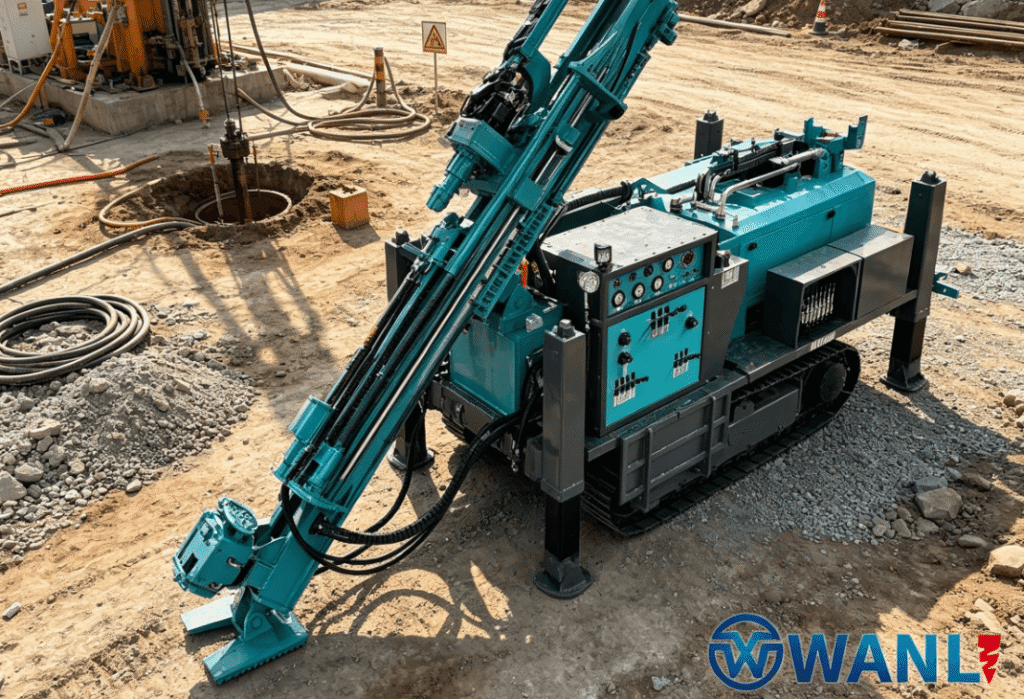
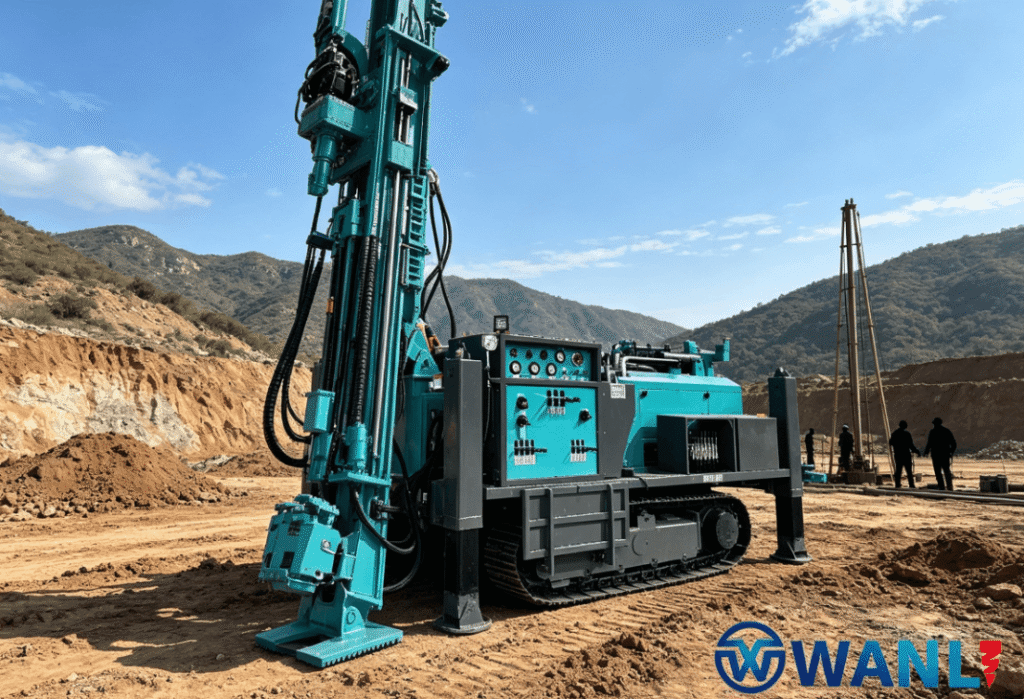
- Modular Design: Chinese rigs are frequently built on crawler or truck-mounted platforms that allow for rapid reconfiguration between mud rotary and DTH (Down-the-Hole) air drilling.
For engineers, this means the performance gap has closed. A rig’s ability to maintain constant bit pressure and rotation speed—critical for high core recovery rates—is now a standard deliverable from top-tier Chinese factories.
Application Versatility: From Geotechnical Coring to Water Wells
One reason buyers favor Chinese suppliers is the sheer breadth of the product catalogs. Unlike boutique manufacturers that specialize in only one niche, Chinese industrial hubs produce specialized equipment for diverse geological conditions.
Coring Drilling Rigs
For mineral exploration and site investigation, coring drilling rigs from China are designed for portability and depth. These units often feature:
- Wireline Coring Capabilities: Optimized for HQ, NQ, and PQ diameter drilling.
- High-Speed Spindle Heads: Vital for diamond bit efficiency in hard rock formations.
- Compact Footprints: Ideal for mountainous or densely forested exploration sites where logistics are a constraint.
Water Well Drilling Rigs
In the agricultural and municipal sectors, water well drilling rigs must balance power with mobility. Chinese manufacturers excel here by offering:
- Dual-System Rigs: The ability to switch between foam, air, and mud drilling in a single session.
- High Lift Capacity: Essential for handling heavy casing strings in deep aquifers (300m to 1000m+).
- Telescopic Masts: Reducing setup time and allowing for easier transport on public roads.
The Economic Logic: Total Cost of Ownership (TCO)
The primary driver for choosing a China drilling rig manufacturer remains the ROI (Return on Investment). However, savvy buyers look past the initial “sticker price” to the Total Cost of Ownership.
- Lower Initial CAPEX: Chinese rigs typically cost 30% to 50% less than their Western counterparts. This allows drilling contractors to deploy two rigs for the price of one, doubling their project capacity.
- Affordable Consumables: Drill pipes, bits, and hammers manufactured in China offer significant savings on “wear and tear” items, which usually constitute the highest ongoing operational cost.
- Rapid Lead Times: While European manufacturers may quote 6-12 months for a custom build, Chinese factories often deliver within 30-60 days due to vertically integrated supply chains.
Customization and OEM Flexibility
In the drilling industry, “one size fits all” rarely works. Soil conditions in the Australian Outback differ vastly from the volcanic rock of the Andes.
Overseas buyers value the willingness of Chinese manufacturers to provide OEM (Original Equipment Manufacturer) services. A reputable manufacturer can modify:
- Crawler Width: For stability on soft ground.
- Winch Capacity: For specialized deep-hole recovery.
- Control Interfaces: Offering both manual hydraulic levers (for ease of repair in remote areas) and digital monitoring systems (for data-driven projects).
This flexibility allows project managers to “spec” a machine that fits their exact geological challenges without the “custom-build” price premium charged by legacy brands.
Evaluating a China Drilling Rig Manufacturer: A Procurement Checklist
If you are moving toward a transaction, use these criteria to vet your potential supplier:
- Certifications: Ensure the factory holds ISO 9001:2015 and CE certification (if importing to Europe). For oil and gas applications, API (American Petroleum Institute) standards are a must.
- Hydraulic Component Sourcing: Ask for a detailed bill of materials. Reliable rigs use recognized brands for valves and pumps.
- After-Sales Support: Does the manufacturer provide video technical support? Do they have a rapid-response spare parts department?
- Shipping Logistics: Verify the manufacturer’s experience with Break Bulk or Flat Rack container shipping to ensure the rig arrives without structural damage.
Conclusion
The decision to partner with a China drilling rig manufacturer is a strategic move toward operational efficiency. By leveraging the technical maturity of brands like SDWanli, international buyers gain access to high-performance machinery that protects their margins without compromising on-site safety or drilling precision. As the industry moves toward more demanding exploration targets, the agility and value of the Chinese manufacturing sector will remain a cornerstone of global drilling success.
FAQ
Q1: How do Chinese drilling rigs handle extreme weather conditions?
Most leading manufacturers offer “Tropical” or “Arctic” packages. This includes upgraded cooling systems for high-ambient temperatures (common in Africa/Middle East) or pre-heating systems and specialized hydraulic fluids for sub-zero operations.
Q2: Can I get spare parts locally for a Chinese-made rig?
Yes, if you choose a manufacturer that uses “standardized” components. By utilizing engines like Cummins and hydraulic pumps with international mounting patterns, you can source 80% of critical maintenance parts from local industrial suppliers.
Q3: What is the typical lifespan of a Chinese water well rig?
With a rigorous maintenance schedule (oil changes, greasing, and timely seal replacement), a high-quality Chinese rig has a service life of 10-15 years in active duty, comparable to mid-tier global brands.
Q4: How does the shipping process work for heavy crawler rigs?
Rigs are typically shipped via 40HC containers (if they fit after dismantling the mast) or via Flat Rack/Ro-Ro (Roll-on/Roll-off) vessels for larger truck-mounted or crawler units
Reference Sources
- ISO 9001:2015 Quality Management Systems – International Organization for Standardization
- API Spec 4F – Specification for Drilling and Well Servicing Structures – American Petroleum Institute
- DCDMA (Diamond Core Drill Manufacturers Association) Standards – Industry standards for core bit and rod sizing.
- SGS Group – Industrial Manufacturing Services – Third-party inspection and verification for Chinese machinery