Reaching a 200-meter depth in groundwater exploration requires robust mechanical engineering. Geologists and contractors need precise control over torque and axial pressure. A 200m water well drilling rig handles complex geological strata efficiently. Selecting the right configuration impacts daily drilling progress and operational costs.
Engineers must match the equipment to the specific regional geology. A mismatch between rig capacity and soil hardness causes severe project delays. Purchasing decisions directly dictate overall site profitability.
Technical Specifications of a 200m Water Well Drilling Rig
| Specification | Typical Range |
|---|---|
| Maximum Drilling Depth | 200 m |
| Drilling Diameter | 90–300 mm |
| Rotary Torque | 4,000–15,000 N·m |
| Rotary Speed | 0–120 rpm |
| Pulling Force | 12–15 tons |
| Engine Power | 75–110 kW |
| Hydraulic Pressure | 20–25 MPa |
| Air Consumption (DTH) | 17–30 m³/min |
| Drilling Method | DTH / Mud Rotary |
| Available Chassis | Crawler / Truck / Trailer |
Core Mechanics for 200m Depth Operations
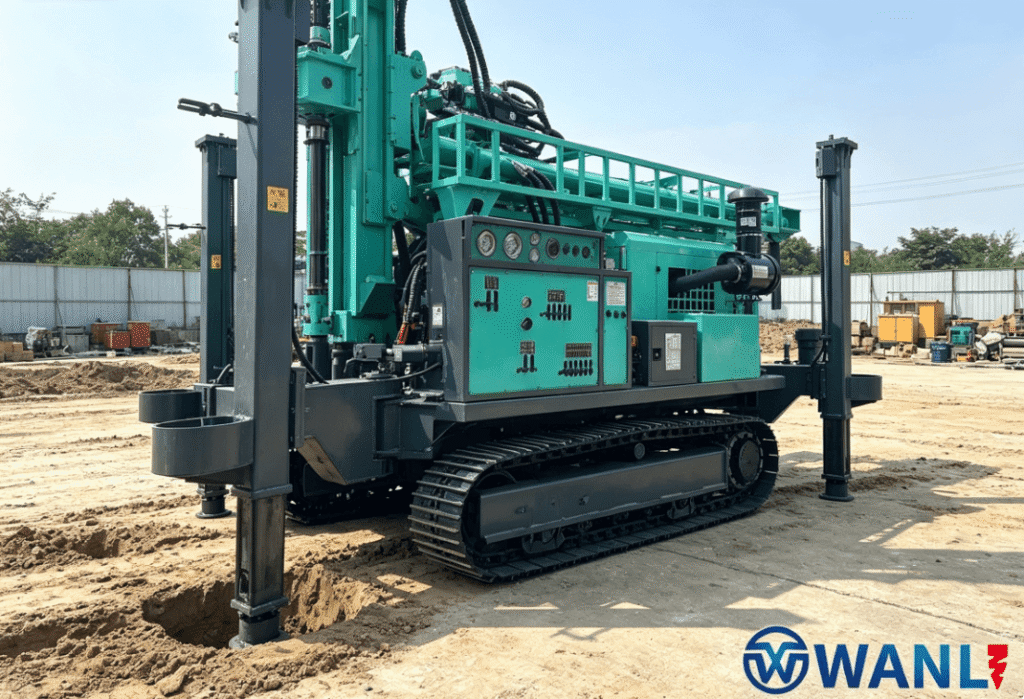
Drilling to 200m demands specific rotary speeds and lifting capacities. Equipment must overcome significant borehole friction and fluid hydrostatic pressure. The hydraulic top drive serves as the central component for these operations.
Key technical thresholds for this depth include:
- Rotary Torque: Rotary torque requirements typically range from 4,000 to 15,000 N·m depending on formation hardness and drilling diameter.
- Lifting Force: Minimum 12-15 tons to pull heavy drill pipes.
- Air Capacity: High pressure (1.45–2.5 MPa) for DTH hammers.
- Mud Pump Flow: Adequate volume to flush cuttings effectively.
Operators continuously monitor hydraulic gauge feedback during operation. Maintaining structural integrity prevents borehole collapse in loose soil. Proper mast alignment ensures straight vertical boreholes for casing installation.
Pneumatic vs. Mud Pump Systems at 200m
Choosing between air and mud circulation changes the entire operational workflow. The primary drilling medium determines cutting removal efficiency and wall stability. Buyers must evaluate their target strata before finalizing pump specifications.
| Feature | Pneumatic (DTH) System | Mud Pump System |
| Best For | Hard rock, granite, limestone | Clay, sand, loose soil |
| Flushing Medium | High-pressure air from compressor | Bentonite mud mixture |
| Drilling Speed | Up to 20-30 meters per hour | 5-10 meters per hour |
| Wall Stability | Lower in soft, unconsolidated formations | High (creates protective mud cake) |
| Operational Cost | High fuel consumption (compressor) | Lower energy requirements |
Air-drilling excels in mountainous rocky terrains with solid formations. Mud drilling remains mandatory for unconsolidated sedimentary basins. Dual-system rigs offer maximum versatility but increase initial capital expenditure.
Chassis Configurations for Groundwater Exploration
Mobility dictates site accessibility and mobilization costs. Different terrains require specific undercarriage designs for safe operation. Ground clearance and weight distribution are critical engineering factors.
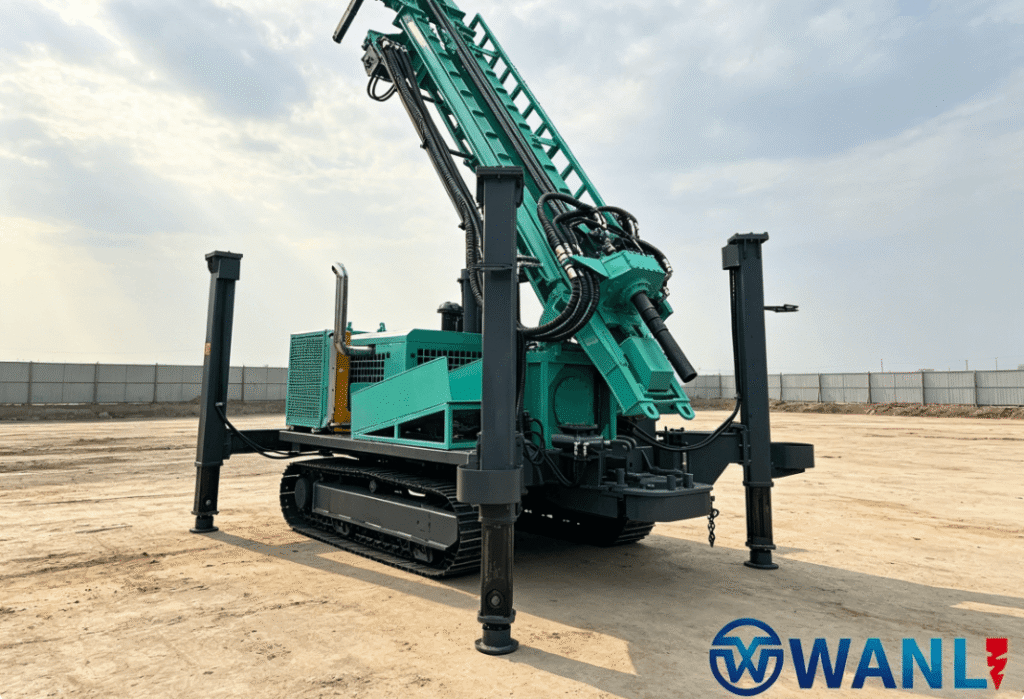
Crawler Mounted Rigs
Steel tracks provide excellent traction on muddy or steep inclines. They distribute rig weight evenly across fragile surfaces. This design dominates rugged off-road exploration sites.
Truck Mounted Rigs
Integrating the rig onto a commercial chassis ensures rapid highway transit. Contractors deploy these for residential or agricultural well drilling. It eliminates the need for expensive flatbed transport trailers.
Tractor and Tricycle Rigs
Compact designs fit easily into confined rural spaces. These units offer extreme maneuverability for shallow to medium-depth projects. They are highly cost-effective for localized agricultural water access.
Key Procurement Factors for Drilling Rigs
Evaluating a 200m water well drilling rig goes beyond basic specifications. Buyers must analyze hydraulic component origins and structural steel grades. Factory production capacity determines long-term reliability and maintenance intervals.
Procurement checklists should prioritize:
- Hydraulic Valves: Proportional valves ensure smooth mast adjustments.
- Winch Systems: Dual winches improve casing installation efficiency.
- Mast Strength: Q345B or higher grade steel prevents mast deformation.
- Spare Parts: Standardized API threads guarantee global tool compatibility.
Factory audits reveal true manufacturing competence and capacity. ISO 9001 compliance demonstrates rigorous quality control protocols. Direct OEM partnerships often secure better warranties and technical support.
Manufacturer Capabilities: Shandong Wanli Context
Matching project requirements with established manufacturers reduces procurement risks. Shandong Wanli Construction Machinery Co., Ltd. provides comprehensive drilling solutions. Their product lineup addresses diverse geological demands globally.
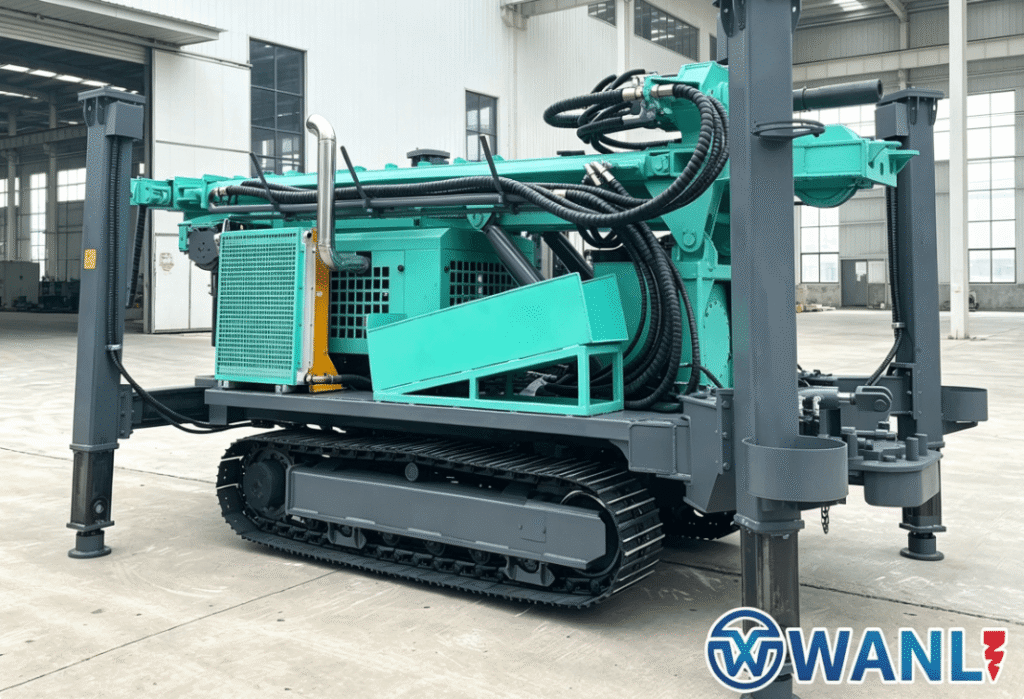
The factory engineers various chassis options for water exploration. Their catalog includes specialized crawler, truck-mounted, and tricycle setups. Deep hole models integrate robust mud pumps for complex strata stability.
For contractors requiring specialized modifications, the company supports custom configurations. Buyers can easily evaluate their 200m water well drilling rig options online. This flexibility optimizes the machinery for targeted regional geology and specific project budgets.
FAQ
What is the standard lead time for a 200m custom rig?
Standard production usually takes 15 to 25 days. Custom hydraulic layouts or specialized chassis integrations may extend this timeline to 40 days.
Can a 200m rig drill through solid granite?
Yes, when equipped with a high-pressure air compressor and DTH hammer. Rock drilling requires substantial rotary torque and high-impact frequency.
How do I choose between steel and rubber tracks?
Steel tracks withstand sharp rocky terrain and heavy loads. Rubber tracks prevent damage to paved urban surfaces and residential driveways.
What information is needed for an accurate RFQ?
Specify the target depth, anticipated geological formation, preferred chassis, and required hole diameter. This ensures precise hydraulic component matching.
Do these rigs support casing installation?
Most 200m models feature secondary auxiliary winches. These are specifically designed for lifting and setting heavy steel or PVC casings safely.
Reference Sources
- API Specification 4F: Specification for Drilling and Well Servicing Structures. (American Petroleum Institute).
- ISO 13535:2000: Petroleum and natural gas industries — Hoisting equipment.
- National Ground Water Association (NGWA): Best Management Practices for Water Well Construction and Maintenance.
- ASTM D1586: Standard Test Method for Standard Penetration Test (SPT) and Split-Barrel Sampling of Soils.