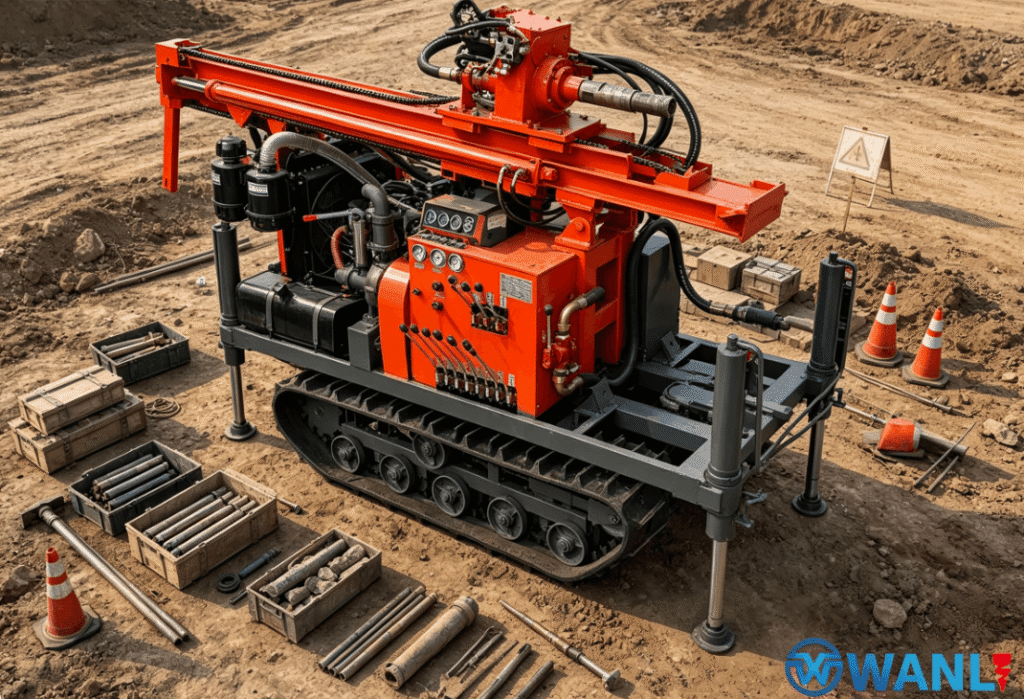
Evaluating equipment parameters is a mandatory phase for engineering contractors and B2B procurement teams. The XY-1 is a highly compact, spindle-type coring machine designed for operational efficiency in complex terrain. It handles residential groundwater extraction, geotechnical site investigations, and industrial blast hole drilling.
Purchasing managers must analyze precise mechanical tolerances rather than just basic baseline pricing. Structural durability, hydraulic stability, and transmission reliability directly impact field operational uptime. This guide breaks down the core mechanical limits, performance tradeoffs, and commercial evaluation criteria for heavy machinery buyers.
Core XY-1 Water Well Drilling Rig Specifications
To secure baseline compatibility for your upcoming geotechnical project, you must review exact factory ratings. The standard configuration prioritizes a highly compact footprint alongside robust hydraulic stability. Exceeding these engineering limits will accelerate component fatigue and increase maintenance overhead.
- Maximum Drilling Depth: 100 meters.
- Initial Hole Diameter: 110 mm.
- Final Hole Diameter: 75 mm at maximum depth limits.
- Drill Rod Diameter: 42 mm standard configuration.
- Spindle Stroke: 450 mm maximum travel distance.
- Max Spindle Lifting Capacity: 25 kN.
- Spindle Pull-Down Force: 15 kN.
- Base Weight: 500 kg (excluding power unit).
- Dimensions (LxWxH): 1640 × 1030 × 1440 mm.
Reviewing these exact XY-1 water well drilling rig specifications prevents critical equipment mismatch in the field. Engineers rely on these parameters to match machinery against specific terrain and rock hardness requirements. Operating continuously at the absolute 100-meter depth limit requires stringent thermal management.
The 500 kg base weight allows for rapid deployment in mountainous or densely forested terrain. Crews can manually disassemble the skid-mounted chassis for transport via light trucks or all-terrain vehicles. This extreme portability defines the core commercial value proposition of the XY-1 platform.
Spindle Mechanics and Hydraulic Feed Performance
The mechanical transmission system features a highly reliable three-speed planetary gearbox configuration. Operators can manually toggle the spindle rotation between 142, 285, and 570 rpm. This flexibility allows drilling crews to adapt rotation speeds dynamically to varying geological formations.
A 450mm spindle stroke actively reduces the frequency of manual interventions during continuous coring. The hydraulic automatic feeding mechanism applies up to 15 kN of continuous downward thrust. This maintains consistent bit engagement and prevents premature wear on the diamond matrix cutting tools.
In heavy-duty applications, the rod holding mechanism utilizes an upper spherical jaw chuck. This allows operators to re-grip and advance the 42mm drill rod without shutting down the primary engine. The result is a measurable and consistent increase in daily drilling meterage and reduced operator fatigue.
Proper drill bit selection determines the ultimate success of the boring operation. Operators must match the cutting tool to the specific soil profile or bedrock encountered. Tungsten carbide bits are deployed for soft clay, while diamond core bits handle high-abrasion granite.
Continuous high-speed drilling generates immense thermal friction along the primary spindle shaft. Operators must follow strict daily lubrication schedules to protect the thrust bearings. Neglecting thermal management in the transmission will inevitably lead to catastrophic mechanical failure during operation.
Hoisting Capacity and Mud Pump Integration
Extracting the drill string from a deep borehole requires the full 25 kN lifting capacity of the rig. The integrated hoisting mechanism utilizes a 9.3mm heavy-duty wire rope with a 27m drum capacity. This winch system safely manages the immense dead weight of deep casing pipes and mud-covered drill rods.
Proper fluid circulation is absolutely critical for stabilizing the borehole walls during deep soil penetration. The equipment utilizes a horizontal single-acting piston mud pump driven directly by the main power plant. Fluid pressure flushes loose rock cuttings from the cutting face up to the surface.
Diesel configurations achieve a maximum mud pump fluid displacement of 95 L/min. The pump maintains a continuous working pressure of 0.7 MPa to ensure consistent fluid velocity. Operators must monitor hydraulic gauges to detect sudden pressure drops indicating potential borehole collapse.
The primary hydraulic system relies on an independent YBC-12/125 gear oil pump. It delivers a rated pressure of 12.5 MPa at a constant displacement rate. This dedicated fluid flow guarantees that the hydraulic feeding mechanism never stalls under heavy axial load.
Routine maintenance on the mud pump requires regular replacement of rubber seals and piston components. Abrasive sand and gravel suspended in the drilling fluid rapidly erode internal pump valves. Procurement teams should always order spare pump rebuild kits alongside the primary machinery.
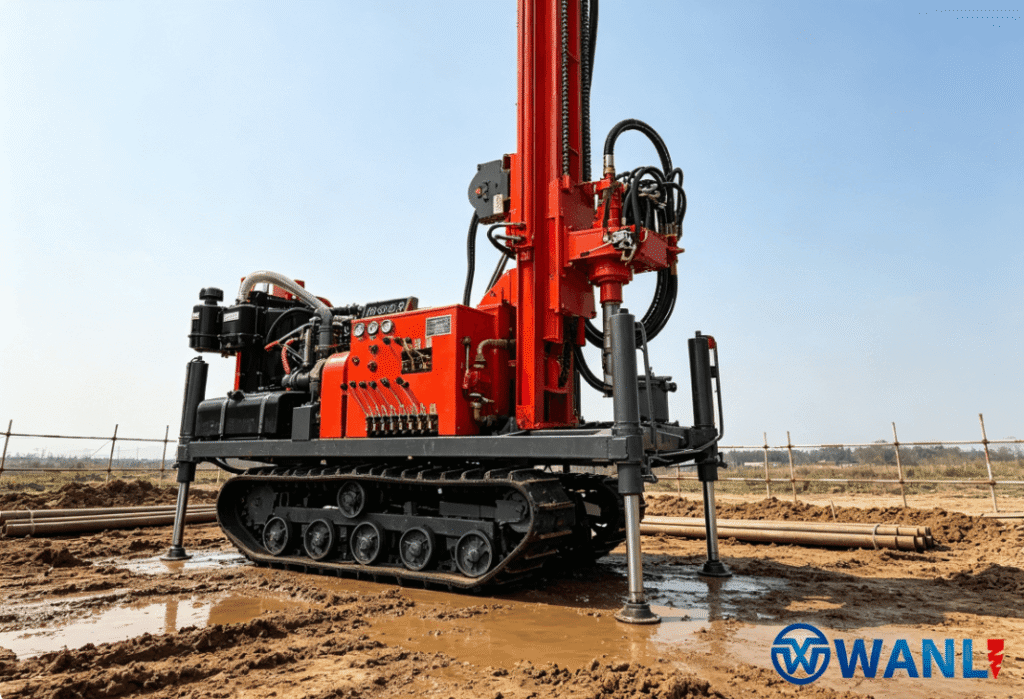
Power Unit Configurations for Field Deployment
Field environments and geographical constraints dictate the optimal power engine selection for the rig. The standard diesel configuration utilizes a 12.1KW ZS1100 engine running at 2200 rpm. This provides reliable torque in remote off-grid locations lacking dedicated electrical infrastructure.
The ZS1100 diesel engine utilizes a simple, naturally aspirated single-cylinder architecture. This lack of complex electronic control units makes field repairs extremely straightforward for onsite mechanics. Fuel efficiency remains exceptionally high even during continuous maximum-load geotechnical coring operations.
For indoor structural coring, tunnel exploration, or noise-restricted urban zones, buyers can specify electric power units. These setups feature a 7.5KW Y132M-4 electric motor running at 1440 rpm. Electric configurations eliminate exhaust emissions and significantly reduce operational vibration.
Selecting the right power plant impacts the total weight and footprint of the machinery. Diesel engines require supplementary fuel storage tanks and daily filter inspections in dusty environments. Electric motors require heavy-duty extension cabling and access to stable industrial power grids.
Manufacturer Sourcing and Factory Evaluation Criteria
Identifying a reliable OEM factory prevents costly downtime and ensures long-term parts availability. Buyers should carefully inspect structural chassis welds, frame rigidity, and hydraulic hose burst pressure ratings. High-quality manufacturers mount the mast, winch, pump, and engine on a single unified structural base frame.
Procurement teams analyzing commercial catalogs, such as the comprehensive water well drilling rig series from established suppliers, must verify factory testing protocols. A reliable heavy machinery supplier conducts thorough hydraulic pressure retention tests and spindle alignment checks before export packaging.
Standardized manufacturing ensures that consumable components are universally compatible across older field platforms. Buyers should evaluate if the factory utilizes multi-axis CNC machining for critical rotational gear parts. Precision-machined components significantly reduce operational vibration and extend the lifespan of the entire transmission.
Commercial evaluation also involves checking strict compliance with regional engineering and safety directives. Always confirm that the supplier provides accurate, translated operation and maintenance manuals in your engineering team’s native language. Robust after-sales technical support ensures long-term operational viability and higher return on investment.
Standard B2B RFQ Workflow and Procurement Logic
Initiating an accurate RFQ requires the structured submission of specific technical and geological documentation. Do not simply ask a manufacturing supplier for a generic machinery price list. Provide the engineering team with your target geological conditions, rock hardness ratings, and maximum depth requirements.
- Specify Power Unit: State explicitly whether you require diesel or electric power based on site logistics.
- Request Consumables: Always order extra 42mm drill rods, mud pump seals, and tungsten bits.
- Confirm Lead Times: Standard factory assembly, calibration, and load testing take 15 to 25 days.
- Verify Packaging: Ensure the machinery is dismantled, oiled, and secured in export-grade plywood crates.
Minimum Order Quantities for heavy geotechnical drilling machinery typically start at one complete set. However, shipping a single 500 kg unit via Less than Container Load increases overall freight vulnerability and costs. Experienced B2B buyers often consolidate rig orders and spare parts into full 20-foot shipping containers.
International B2B transactions typically utilize Free on Board (FOB) or Cost, Insurance, and Freight (CIF) incoterms. Standard commercial payment structures require a 30% telegraphic transfer deposit before assembly begins. The remaining 70% balance is cleared after the factory provides video proof of testing and the final bill of lading.
Using this highly structured RFQ process ensures that the delivered equipment matches the baseline XY-1 water well drilling rig specifications exactly. Clear communication eliminates post-delivery technical mismatches, prevents costly project delays, and guarantees optimal drilling performance.
FAQ
Q: What is the standard lead time for a customized XY-1 drill rig?
A: Factory production, assembly, and load testing typically require 15 to 25 days. Requesting custom engine modifications, specialized mud pumps, or custom chassis painting will add approximately one week to this manufacturing schedule.
Q: Can the standard XY-1 chassis be modified for crawler mounting?
A: The standard XY-1 utilizes a compact skid-mounted base frame weighing 500 kg designed for manual relocation. Integrating this specific model into a heavy crawler chassis requires factory re-engineering of the entire hydraulic distribution system.
Q: How is the machinery packaged for international sea freight?
A: Manufacturers disassemble the main chassis mast, engine, and mud pump prior to shipping. Components are heavily lubricated and secured in reinforced, fumigated wooden crates to prevent moisture corrosion and transit shifting.
Q: Does the mud pump come standard with the base unit?
A: Yes, a horizontal reciprocating single-acting piston pump is integrated into the common base frame. However, you must specify your required fluid displacement rates and terrain requirements during the initial RFQ phase to ensure compatibility.
Q: What is the typical Minimum Order Quantity (MOQ) for international orders?
A: The MOQ is generally one complete machinery unit. However, purchasing bulk spare parts, such as drill rods and core bits, concurrently is highly recommended to minimize future air-freight replacement costs.
Reference Sources
- ISO 21467:2004 – Earth-moving machinery and mobile road construction machinery — Drill rigs — Terminology and commercial specifications.
- ASTM D2113-14 – Standard Practice for Rock Core Drilling and Sampling of Rock for Site Investigation.
- ISO 13535:2000 – Petroleum and natural gas industries — Hoisting equipment.
- Official OEM Technical Whitepapers – XY-1 Core Drilling Rig Product Tolerances and Operational Safety Guidelines.