Mineral exploration requires a delicate balance between mechanical raw power and precision handling. In the hierarchy of spindle-type drilling machines, the XY-4 core drilling rig has established itself as a versatile workhorse, particularly for projects targeting depths between 600 and 1,000 meters. For project managers and drilling engineers, selecting this rig isn’t just about the depth rating; it’s about understanding how its mechanical transmission handles varying geological strata.
The XY-4 series is specifically designed for diamond bit and tungsten-carbide bit drilling. Whether the objective is metallic mineral prospecting or geothermal well tapping, the rig’s architecture focuses on torque stability and high-speed rotation. This technical overview explores the operational logic, engineering advantages, and commercial considerations of the XY-4 to help you determine its fit for your next exploration campaign.
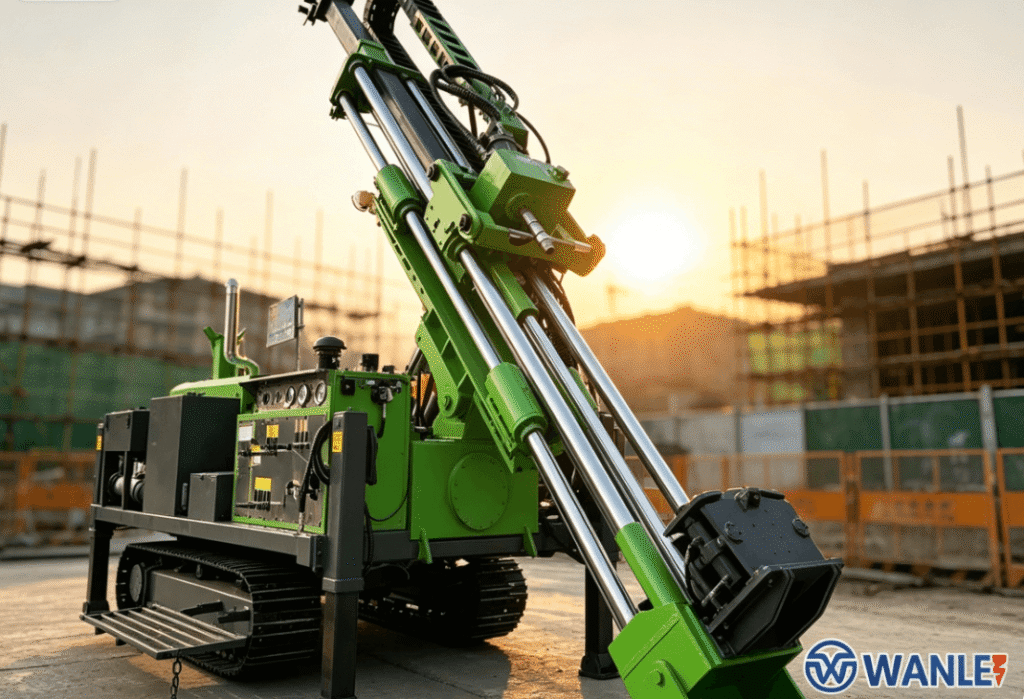
Mechanical Spindle Architecture: Why It Still Dominates
While the industry has seen a shift toward full hydraulic top-drive systems, the mechanical spindle design of the XY-4 remains a preferred choice for remote mineral exploration. There are three primary reasons for this:
- Direct Torque Transmission: The mechanical gearbox provides a more direct transfer of power from the engine to the drill string. In hard rock formations (Grade VII-IX), this translates to consistent RPMs that are critical for diamond bit performance.
- Field Repairability: In high-altitude or deep-forest exploration sites, hydraulic failures can halt a project for weeks due to the need for specialized technicians and clean-room environments for repairs. The XY-4’s mechanical components—gears, clutches, and shafts—are manageable for site mechanics.
- Cost-Efficiency: For the 1,000-meter depth class, the XY-4 offers a significantly lower CapEx compared to full hydraulic rigs of similar capacity, without sacrificing core recovery quality.
Technical Performance Matrix
Understanding the XY-4 requires a deep dive into its core specifications. Below is a breakdown of the typical performance parameters found in high-tier manufacturing standards, such as those provided by SD Wanli.
| Feature | Specification Detail | Operational Impact |
| Drilling Depth | 600m (BQ) – 1000m (NQ) | Optimized for medium-depth mineral deposits. |
| Spindle Speed | 80 – 1500 RPM (Variable) | Wide range allows for both slow-speed soil sampling and high-speed diamond coring. |
| Max Torque | 2500 – 3200 Nm | Essential for overcoming friction in deep-hole drilling. |
| Spindle Stroke | 600mm | Reduces the frequency of rod handling, increasing ROP (Rate of Penetration). |
| Power Unit | Diesel Engine or Electric Motor | Diesel is standard for remote sites; Electric for controlled industrial environments. |
Application Suitability and Geological Constraints
The XY-4 core drilling rig is not a “one-size-fits-all” solution. Its performance is heavily dictated by the drilling fluid system and the operator’s ability to manage bit pressure.
Hard Rock Exploration
In crystalline basement rocks or quartz-heavy formations, the XY-4 excels when paired with a high-pressure mud pump. The high spindle speed (up to 1500 RPM) is the sweet spot for impregnated diamond bits, which require high peripheral speeds to effectively “self-sharpen” the matrix.
Sedimentary and Loose Formations
When drilling through overburden or weathered layers, the rig’s lower gear ratios provide the necessary torque to drive large-diameter casing. However, operators must monitor the hydraulic feeding system carefully to prevent “bit balling” or excessive vibration which can damage the core barrel.
Engineering Advantages: The Hydraulic Feeding System
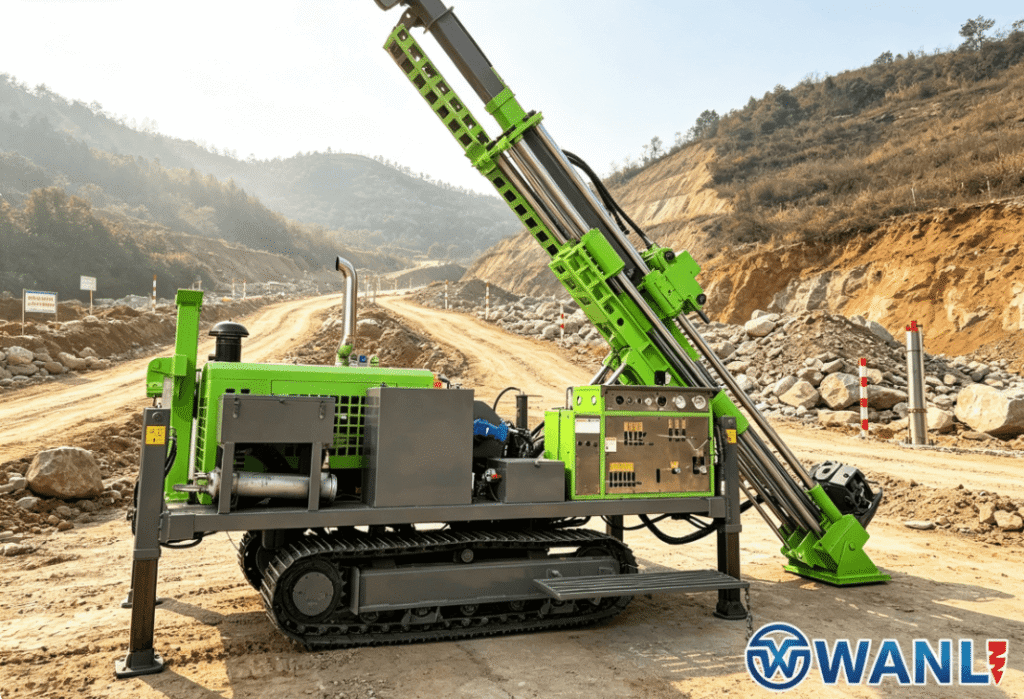
One of the defining features of the XY-4 is its double-cylinder hydraulic feeding system. Unlike manual or gravity-fed small rigs, the XY-4 allows for:
- Constant Bit Pressure: Essential for maintaining the integrity of the core, especially in fractured zones where pressure drops can lead to core loss.
- Fast Lifting/Lowering: The hydraulic integration allows for rapid movement of the spindle, which significantly cuts down the “dead time” during rod changes.
- Safety Interlocks: Modern XY-4 iterations include pressure gauges that provide real-time feedback on down-hole conditions, allowing the driller to sense “drilling breaks” (sudden changes in strata) before they cause a tool failure.
Manufacturing Quality and EEAT Considerations
When procuring an XY-4 core drilling rig, the distinction between a “generic” build and an “engineering-grade” build lies in the metallurgy and quality control. At the manufacturing level, such as the standards observed in the SD Wanli product line, several factors determine the rig’s longevity:
- Gear Hardening: The transmission gears must undergo high-frequency quenching to prevent tooth shearing under high-torque loads.
- Sealing Systems: High-quality hydraulic seals (often sourced from international brands) prevent fluid leaks that are common in cheaper models when operating under high ambient temperatures.
- Chassis Stability: A reinforced skid or trailer mount is vital. Excessive vibration during high-speed rotation doesn’t just annoy the operator; it creates “hole deviation,” making it impossible to accurately map the ore body.
Commercial Evaluation: Evaluating Suppliers and ROI
For B2B procurement, the “cheapest” rig often becomes the most expensive after six months of downtime. When evaluating the XY-4 for purchase, consider these commercial metrics:
- Component Commonality: Ensure the manufacturer uses standard bearing and seal sizes. This allows your team to source wear parts locally rather than waiting for international shipping.
- Customization Capability: Does the supplier offer options for different power units (Cummins vs. local brands) or specialized winch capacities?
- Technical Support Documentation: A professional manufacturer provides comprehensive parts manuals and hydraulic schematics. Without these, troubleshooting in the field is a guessing game.
Operational Synergy: Pairing the Rig with the Right Tools
The XY-4 is only as effective as the “business end” of the drill string. For optimal ROI, the rig should be paired with:
- Wireline Core Barrels: While the XY-4 is a spindle rig, it can be adapted for wireline systems (especially NQ size), which dramatically increases efficiency at depths beyond 300 meters.
- High-Stability Mud Mixers: Consistent fluid viscosity is required to cool the bit and carry cuttings to the surface, especially given the XY-4’s high-speed capabilities.
Final Technical Assessment
The XY-4 core drilling rig remains a cornerstone of mineral exploration because it bridges the gap between light portable rigs and heavy-duty truck-mounted platforms. It offers the rotational speeds required for modern diamond coring and the mechanical ruggedness needed for harsh environments. For companies focusing on gold, copper, or base metal exploration at moderate depths, the XY-4 provides a predictable, maintainable, and high-performance solution.
FAQ
Q1: What is the maximum drilling depth for an XY-4 rig?
While rated for 1,000 meters using NQ drill rods, the practical “efficient” depth is often cited between 600m and 800m, depending on the hardness of the strata and the skill of the operator.
Q2: Can the XY-4 be used for water well drilling?
Yes, it is capable of drilling water wells, particularly in hard rock areas. However, its design is optimized for “coring” (extracting rock samples). For high-volume water wells in soft soil, a dedicated rotary table rig might be more efficient.
Q3: How does the XY-4 compare to the XY-44?
The XY-44 is often considered an upgraded version with higher power and slightly better torque characteristics. The XY-4 is generally more compact and easier to transport to remote locations.
Q4: Is the rig available in a crawler-mounted version?
Many manufacturers, including SD Wanli, offer the XY-4 core drilling rig on different platforms, including skid-mounted, trailer-mounted, or integrated onto a crawler chassis for increased mobility in rugged terrain.
Q5: What are the maintenance requirements for the mechanical transmission?
Regular lubrication of the gearbox and monitoring of the clutch plates are essential. Unlike hydraulic systems, the mechanical transmission requires periodic manual inspections of gear mesh and bearing play to prevent catastrophic failure.
Reference Sources
- International Society for Soil Mechanics and Geotechnical Engineering (ISSMGE): Standards on drilling terminology and core recovery techniques.
- ASTM D2113: Standard Practice for Rock Core Drilling and Sampling of Rock for Site Investigation.
- ISO 22475-1: Geotechnical investigation and testing — Sampling methods and groundwater measurements.
- SD Wanli Technical Documentation: Core drilling rig specifications and application guides.