Crawler Mounted Water Well Drilling Rig Manufacturer Guide: 10 Checks Before You Buy
A crawler mounted water well drilling rig can be a strong option where the job site is muddy, uneven, remote, or inaccessible to a truck-mounted unit. Yet a crawler undercarriage alone does not prove that a rig will meet a well programme. The right purchase depends on drilling method, formation, hole diameter, depth, access route, transport plan, service model, and the exact equipment included in the order.
This guide helps contractors, distributors, and project buyers evaluate a water well drilling rig manufacturer before committing to a quotation. It focuses on verifiable supplier evidence, model-specific technical confirmation, and acceptance criteria. It also uses publicly available Shandong Wanli information as an example of what buyers can review, and what they should still request in writing.[2] [3] [4]
| Evaluation area | Why it matters | What to request from the manufacturer | Acceptable evidence |
|---|---|---|---|
| Drilling programme | Catalogue depth alone does not define field capability. | A depth-and-diameter statement tied to formation, casing, rods and method. | Signed data sheet and quotation annex. |
| Mobility and access | Crawlers must suit the actual ground, slope and transport route. | Operating weight, ground pressure, gradeability, dimensions and loading plan. | GA drawing, transport drawing and test record. |
| Power and fluid system | Engine, hydraulic and mud/air configuration drive performance and support needs. | Exact engine model, rated power, compressor or mud-pump data, and hydraulic component list. | Nameplate photos, component schedule and factory test report. |
| Quality and support | A machine is only as usable as its documentation, inspection and parts response. | Inspection scope, manuals, warranty terms, spares list and support channel. | Inspection video, reports, sample manuals and contract terms. |
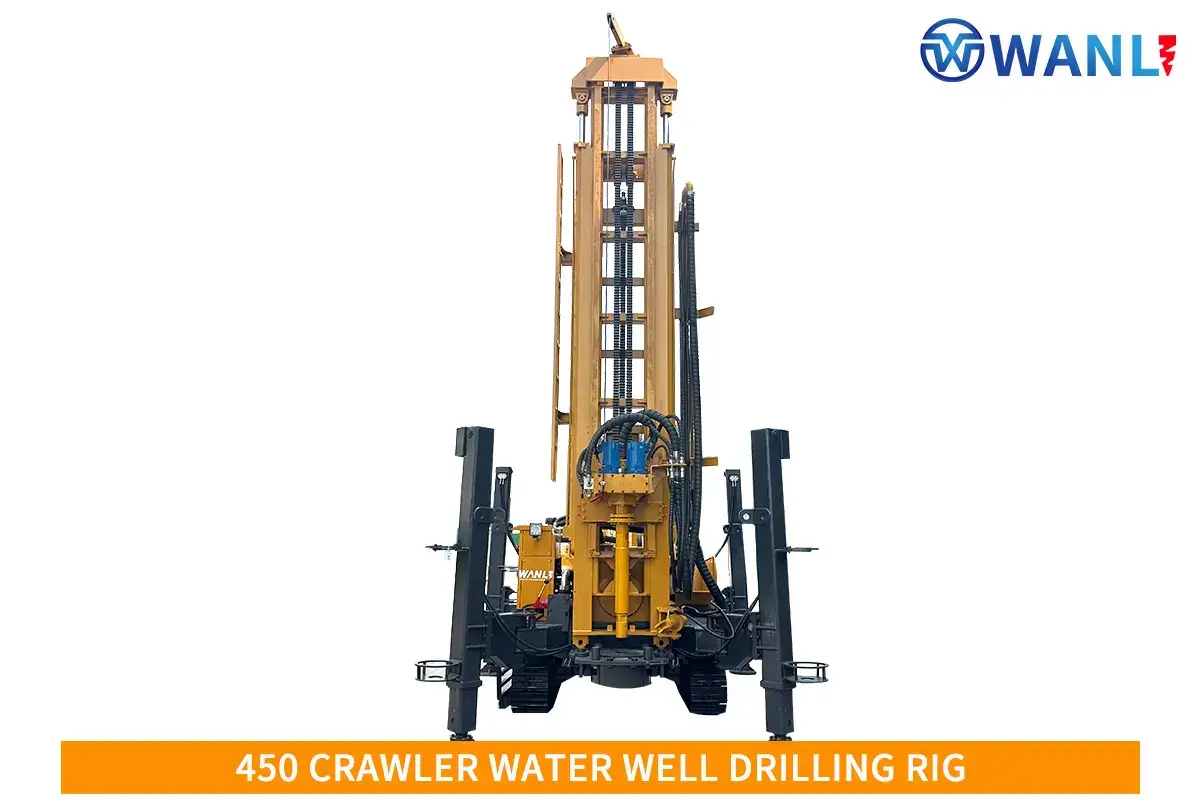
Figure 1. Supplier-published front view of the 450 Crawler Water Well Drilling Rig. View the original product listing.
What Is a Crawler Mounted Water Well Drilling Rig?
A crawler mounted water well drilling rig is a borehole drilling machine installed on a tracked chassis. Compared with truck, tractor, trailer, or wheeled formats, its main value is site mobility where surface conditions are poor or access is constrained. The chassis is not a drilling method by itself. A buyer must separately establish whether the machine uses mud rotary, air rotary, down-the-hole hammer, reverse circulation, or another suitable process.
The drilling process must fit the ground conditions and well design. The National Ground Water Association’s WellOwner resource notes that the best method depends on ground conditions and other project factors. It describes mud rotary as a closed-loop system that cleans and recirculates drilling fluid, while down-the-hole drilling uses rotary-percussion cutting action.[1]
Why Manufacturer Verification Matters Before You Buy
Crawler-rig listings often show impressive maximum depths, wide diameter fields, engine names, and broad application claims. Those fields are useful for a first shortlist, but they cannot substitute for a configuration matched to the buyer’s actual geology and finished-well specification. A rig that reaches a quoted depth in one hole size and formation may not achieve it in another.
Manufacturer pages may also combine base-machine details, optional equipment, and data from multiple versions. For example, Shandong Wanli’s public crawler listings identify mud rotary drilling, diesel power, 4,500 kg weight, 2.5 km/h travel speed, and a 1.4 m high-leg stroke. The same pages also contain fields for both CUMMINS and Yuchai engines, so buyers should request the exact engine model and a configuration sheet rather than assume both are supplied.[5] [6]
Buyer rule: Treat every website capacity, component name, delivery indication, warranty statement, and support claim as a starting point for an RFQ. The commercial document, technical annex, and final inspection record should state what the buyer will actually receive.
1. Start With the Well Programme, Not the Rig Brochure
Send the manufacturer a concise project brief before comparing machines. It should state the target depth, finished-hole diameter, casing plan, expected formations, rock intervals, water-table information, drilling-fluid approach, working hours, altitude, ambient temperature, and destination country.
This approach prevents the common mistake of buying by nominal depth alone. Ask the supplier to declare the achievable depth for the proposed hole diameter, rod size, casing programme, drilling method, and expected geology. If the site data are incomplete, the quotation should identify the assumptions and the resulting limits.
| Project input | Why the manufacturer needs it | Risk if omitted |
|---|---|---|
| Geological log or expected formations | Determines the suitable drilling method, bit, hammer, torque, and circulation approach. | A machine may be mismatched to the formation. |
| Finished-hole and casing diameters | Defines tooling, rod, mast, and circulation requirements. | A maximum depth claim may be misread. |
| Water depth and total target depth | Helps size rods, pullback, mast stroke, and consumables. | The rig may not complete the intended programme. |
| Site access and bearing conditions | Determines crawler suitability, transport, stability, and setup plan. | Delivery or movement may be impractical. |
| Destination compliance | Identifies electrical, safety, emissions, import, and documentation needs. | Customs or job-site acceptance may be delayed. |
2. Confirm the Drilling Method and Circulation Package
Do not use the term “water well rig” as if it describes one drilling system. The National Ground Water Association lists several methods, including air rotary, down-the-hole, mud rotary, bucket auger, cable tool, and reverse circulation. It notes that reverse circulation requires a larger rig footprint and a settling pit, which may affect the site plan even where the rig itself is mobile.[1]
For a mud-rotary proposal, ask for the mud-pump model, rated flow and pressure, hose and connection details, mixing and solids-control requirements, and recommended fluid arrangement. For air or DTH drilling, request compressor pressure and flow, hammer sizes, bit sizes, and the duty-cycle limitations. The answer should identify included equipment and separately priced options.
3. Evaluate Crawler Mobility With Measurable Site Data
A crawler chassis is often selected for reduced ground pressure and movement over rough terrain. Shandong Wanli’s crawler product page describes full hydraulic drive, a low-ground-pressure crawler chassis, high torque, adjustable speed, and safety protection. These are relevant capabilities, but they are not site-specific guarantees.[4]
Ask for operating weight, ground pressure, gradeability, turning radius, track width, stowed and working dimensions, loading angle, and transport method. Compare those figures with the access road, bridge limits, turning space, slope, soft-ground condition, and any local restrictions. Require the manufacturer to state whether outriggers, pads, or a separate transport vehicle are included.
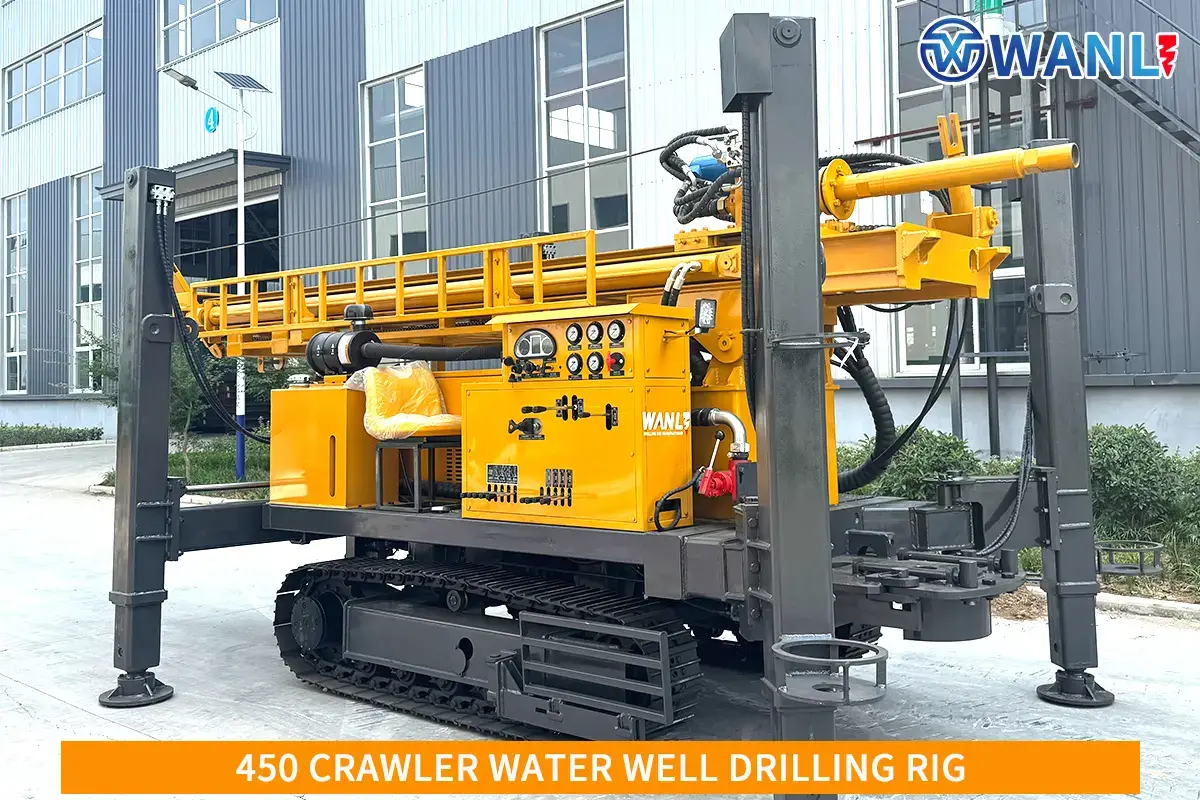
Figure 2. Supplier-published product image showing the tracked undercarriage and deployed stabilisers on the 450 Crawler Water Well Drilling Rig. View the original product listing.
4. Separate Published Capacity From Contracted Capability
One Shandong Wanli crawler listing publishes a maximum depth of 1,500 m and a series of diameter values. Its formatting includes the ambiguous sequence “8001000 mm,” so it should not be read as a clean, model-specific diameter range without clarification.[5] The same caution applies to all supplier listings that combine multiple variants under one name.
A reliable manufacturer will translate the general listing into a model-specific offer. The offer should show the rig model, drilling method, actual diameter and depth range, rotary torque and speed, feed and pullback force, mast stroke, rod size, tooling, fluid or air package, and operating weight. Those values should be tied to the customer’s stated drilling programme.
5. Audit Engine, Hydraulic, and Electrical Configuration
The engine is a procurement and service decision, not a cosmetic line item. Request the brand, model, rated output, emissions standard, fuel system, service interval, local availability of filters and common parts, and a photograph of the nameplate. If the supplier offers more than one engine option, the quotation must identify the selected option and the price impact.
The same rule applies to hydraulic pumps, motors, valves, cooling system, hoses, and electrical equipment. The 450 crawler listing names the pump and engine as core components and mentions 220V electrical equipment. Buyers should ask which components are standard, which are optional, and which electrical standard will be supplied for the destination.[5]
6. Verify the Manufacturer Beyond Marketing Claims
A credible supplier review should combine public information, documentation, and direct verification. Shandong Wanli states that it performs R&D and manufacturing for industrial, mining, construction, tunnel, and geological-exploration equipment. Its About page also lists company-published figures of 2,000+ employees, 300,000+ square metres of factory area, 40+ product categories, and 180+ exporting countries and regions.[2]
These figures can help a buyer build a preliminary profile, but they are not a substitute for buyer due diligence. Request the legal company name, factory address, business registration, product-specific quality controls, manufacturing or assembly scope, photographs or live video of the proposed machine, and reference documentation that is appropriate for the purchase. Verify all material claims independently where your procurement policy requires it.
| Manufacturer check | Ask for | What it tells you |
|---|---|---|
| Product identity | Model code, serial-number format, configuration sheet, and GA drawing. | Whether the quotation describes one identifiable machine. |
| Manufacturing evidence | Factory tour, production photos, test area details, and build schedule. | Whether the supplier can support the proposed production scope. |
| Quality controls | Incoming inspection, assembly checks, and final test procedure. | How the supplier controls repeatability before shipment. |
| Documentation | Manual sample, parts book, wiring/hydraulic drawings, and inspection report. | Whether your team can commission and maintain the rig. |
| Export readiness | Packing list, shipping dimensions, HS-code guidance, and destination documents. | Whether the offer is prepared for an international transaction. |
7. Turn Support and Warranty Into Contract Terms
A product page may say “after-sales support,” but that phrase has little value without a defined response process. The Shandong Wanli 450 crawler listing publishes a one-year warranty, machinery test report, outgoing-inspection video, and 24-hour online support. Buyers should confirm the warranty scope, start date, exclusions, response channel, language, parts availability, and responsibility for freight or field service.[5]
Ask for a recommended commissioning spares kit that identifies part numbers, quantities, lead times, and prices. For distributors, request training materials, troubleshooting process, service bulletins, and a named technical contact. If support is remote, establish a time-zone plan and the documents required before an engineer can diagnose a fault.
8. Build a Factory Acceptance Test Around Your Well Programme
A meaningful factory acceptance test is more useful than a generic running video. Before production is complete, agree on the test checklist, measurable criteria, inspection date, witness method, and handling of non-conformities. The test need not replicate the full geology, but it should prove that the supplied configuration functions as specified.
Check cold and normal start, travel movement, mast raise and lower, feed and pullback, rotary speed and torque response, hydraulic leakage, safety devices, controls, rod handling if included, mud-pump or air connections, and the supplied tools and accessories. Collect serial numbers, nameplate photos, inspection records, photographs, video, packing lists, and final configuration lists before releasing the final payment.
9. Compare Quotations on Included Scope, Not Headline Price
Public crawler-rig prices were not verified for the models discussed here. For that reason, buyers should request a project-specific quotation rather than rely on marketplace or unrelated listing prices. Ask the manufacturer to provide the currency, Incoterm, quotation validity, payment milestones, production schedule, packing method, and all exclusions.
The scope table should distinguish the base rig from engine options, mud or air equipment, drill rods, bits, hammer, casing tools, rod handler, winch, generator, lights, spare parts, training, commissioning, and shipping. A lower headline price can become a higher landed and operating cost if critical equipment, documents, or wear parts are excluded.
10. Use This RFQ Checklist Before Selecting a Supplier
A disciplined RFQ protects both buyer and supplier because it makes the basis of comparison explicit. Send the same project brief and requested evidence list to each shortlisted manufacturer. Then compare the written responses line by line rather than comparing promotional labels.
| RFQ item | Required supplier response |
|---|---|
| Project basis | Written confirmation of formation assumptions, depth, diameter, casing, and drilling method. |
| Proposed configuration | Model-specific rig, engine, hydraulic system, circulation package, tooling, and accessories. |
| Performance basis | Applicable depth/diameter range with stated conditions and limitations. |
| Mobility | Operating weight, ground pressure, dimensions, gradeability, transport and setup requirements. |
| Quality | Test procedure, machinery test report scope, inspection video, and acceptance criteria. |
| Service | Warranty terms, remote-support process, manuals, spares package, training, and parts lead times. |
| Commercial terms | Detailed inclusions/exclusions, Incoterm, payment schedule, packing, production time, and quotation validity. |
| Compliance | Destination-specific safety, electrical, emissions, and export documentation to be provided. |
A Transparent Example: What to Review on a Public Manufacturer Site
Shandong Wanli’s water well drilling rig category shows several water-well rig formats, including crawler, deep-hole, pneumatic, tractor, three-wheeled, and vehicle-mounted listings.[3] That breadth can help a buyer decide whether a crawler format is truly the right configuration for the site rather than assuming it is always preferable.
The crawler water well drilling rig page is a useful starting point for discussing hydraulic drive, crawler mobility, torque, speed adjustment, and optional customisation.[4] The buyer should then request the exact model sheet and quotation, because published crawler pages include items that need configuration-level clarification, including engine selection and applicable depth/diameter conditions.[5] [6]
For a project-specific discussion, buyers can use the manufacturer’s contact page and submit the well programme, destination, and required documentation list. The goal is not to obtain a generic price first. It is to receive a comparable technical and commercial offer that identifies exactly what will be tested, shipped, supported, and warranted.
Final Verdict
The best crawler mounted water well drilling rig manufacturer is not the supplier with the largest brochure number. It is the supplier that can document a configuration appropriate to your formation, hole design, access conditions, and operating model, then test and support that configuration under clear written terms.
Use public websites to create a shortlist and to identify product categories, stated capabilities, and available documentation. Make the final selection only after the manufacturer confirms the project-specific drilling basis, machine configuration, inspection scope, spares and support plan, commercial inclusions, and destination requirements in writing.
Frequently Asked Questions
What is a crawler mounted water well drilling rig?
A crawler mounted water well drilling rig is a borehole drilling machine on a tracked undercarriage. It is commonly considered where a project needs movement across uneven, muddy, or remote ground, but its drilling method and site suitability still require separate technical review.
How deep can a crawler water well drilling rig drill?
Depth depends on the rig configuration, hole diameter, formation, casing, rods, drilling method, tooling, and operator practice. Some supplier pages publish maximum figures, but buyers should request a written, project-specific depth statement instead of treating a catalogue maximum as a guarantee.[5] [6]
Is a crawler rig better than a truck-mounted water well drilling rig?
Neither format is automatically better. A crawler format can suit difficult ground and off-road access, while a truck-mounted rig may better suit projects that need road transport and rapid relocation. Compare access, load limits, working footprint, setup needs, and the intended drilling programme.
What should I ask a water well drilling rig manufacturer before buying?
Ask for a model-specific configuration, formation-based depth and diameter statement, mobility data, engine and hydraulic details, drilling-fluid or air package, test procedure, documentation, warranty, spares, delivery terms, and exclusions. The answer should appear in the quotation and technical annex, not only in email or marketing material.
How do I verify a water well drilling rig before shipment?
Agree on a factory acceptance test before final payment. Review the stated test results, serial numbers, nameplates, configuration list, inspection video, reports, supplied accessories, packing list, manuals, and any unresolved non-conformities against the agreed acceptance criteria.
References
[1] WellOwner / National Ground Water Association, “Well Drilling Methods”.
[2] Shandong Wanli Construction Machinery Co., Ltd., “About Us”.
[3] Shandong Wanli, “Water Well Drilling Rig” product category.
[4] Shandong Wanli, “Crawler water well drilling Rig”.
[5] Shandong Wanli, “450 Crawler Water Well Drilling Rig”.
[6] Shandong Wanli, “Crawler Type Water Well Drilling Rig”.