Selecting the most efficient drilling method remains a primary challenge for site managers in 2026. The technical debate often centers on RC drilling vs DTH drilling for various geological conditions. Both techniques use percussive force to fracture hard rock formations effectively. However, the way they handle cuttings and samples differs fundamentally.
These differences impact everything from project timelines to total operational budgets. Reverse Circulation (RC) is famous for high-purity geological sampling. Down-The-Hole (DTH) is recognized for its speed and simplicity in construction. Choosing the wrong method can lead to contaminated data or unnecessary expenses.
In the 2026 industrial landscape, precision and cost-efficiency are more important than ever. Companies must evaluate rock hardness, depth requirements, and the need for chemical analysis. This article provides a comprehensive technical breakdown of both systems. We will explore why one might outperform the other in specific scenarios.
What Are the Key Technical Differences Between RC Drilling vs DTH Drilling?
The primary distinction between these two methods lies in the path of the air and cuttings. RC drilling utilizes specialized dual-wall drill pipes to create a closed system. Compressed air is forced down the outer annulus of the pipe. This air then returns through the central inner tube.
The inner tube carries the rock cuttings directly to the surface at high speeds. This prevents the sample from touching the borehole walls. Consequently, the sample remains uncontaminated by other geological layers. This is a critical factor for accurate mineral resource estimation in 2026.
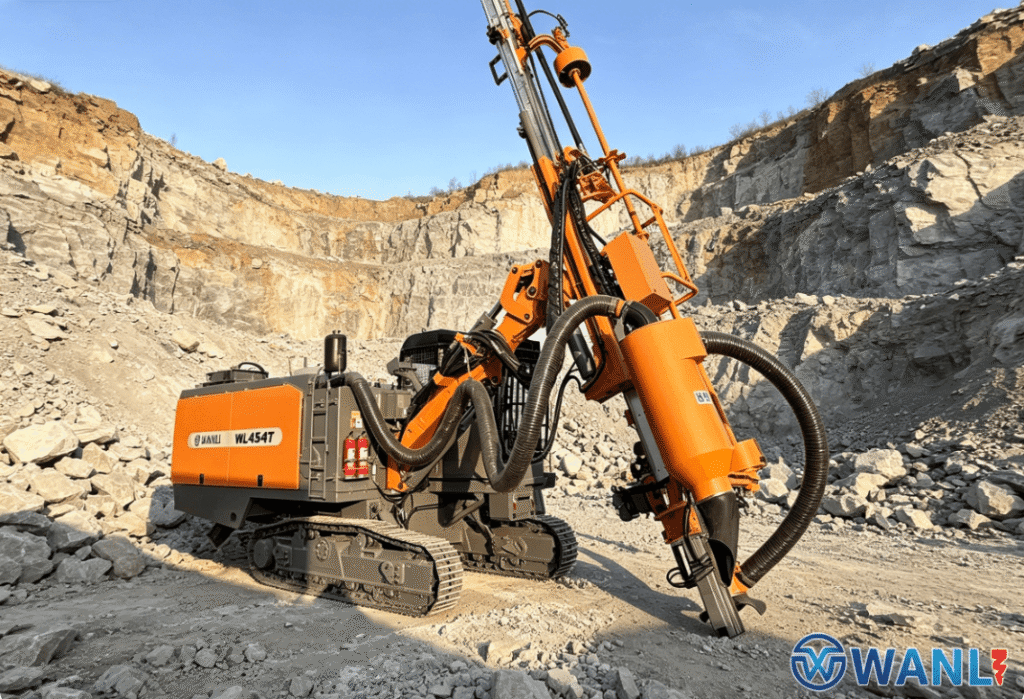
DTH drilling operates with a different mechanical philosophy. The hammer is located at the bottom of the drill string. It strikes the rock directly, ensuring maximum energy transfer. The air travels down the drill pipe to power the hammer.
In a DTH system, the cuttings are blown up the outside of the drill pipe. They travel through the space between the pipe and the rock wall. This exposure to the wall can lead to “wall wash.” This often results in the mixing of different rock layers in the sample.
Mechanical Operations and Airflow Dynamics
The airflow in RC drilling vs DTH drilling serves different primary functions. In RC systems, air volume is calculated to create a venturi effect. This effect creates a vacuum at the bit face. It pulls cuttings into the inner tube almost instantly.
DTH systems focus on air pressure to maximize the impact force of the piston. High-pressure air is essential for clearing heavy cuttings from deep holes. The air must have enough velocity to lift rocks through the annulus. In 2026, most DTH rigs operate between 25 and 35 bar pressure.
The drill bits also feature different porting designs. RC bits have an internal opening for the cuttings to enter the pipe. DTH bits have external flushing holes to push cuttings outward. These designs are not interchangeable and require specific rig configurations.
Sample Integrity and Recovery Rates
Sample integrity is the most significant advantage of the RC method. Data from 2026 mining reports suggests that RC recovery rates average 98%. This high percentage ensures that the laboratory receives a representative portion of the ore. Accurate sampling reduces the risk of making poor investment decisions.
DTH drilling is less concerned with sample purity. It is primarily used when the physical hole is the end goal. This includes blast holes for mining or foundation holes for skyscrapers. In these cases, the chemical composition of the dust is secondary to the speed of the hole.
Contamination in DTH occurs because of the open return path. Cuttings from a depth of 50 meters may mix with soil from 10 meters. If you are looking for specific mineral grades, this mixing is unacceptable. For 2026 exploration projects, RC is the mandatory standard for this reason.
Why Is RC Drilling the Standard for Modern Mineral Exploration?
The mining industry in 2026 demands high-speed data without sacrificing accuracy. RC drilling fills the gap between cheap DTH drilling and expensive diamond coring. It is significantly faster than coring, often by a factor of three. This allows exploration teams to cover more ground in a single season.
The ability to drill in fractured or soft ground is another benefit. Since the air is contained within the pipes, it does not pressurize the formation. This prevents the borehole from collapsing in unstable conditions. It also allows for drilling through underground aquifers without losing the sample.
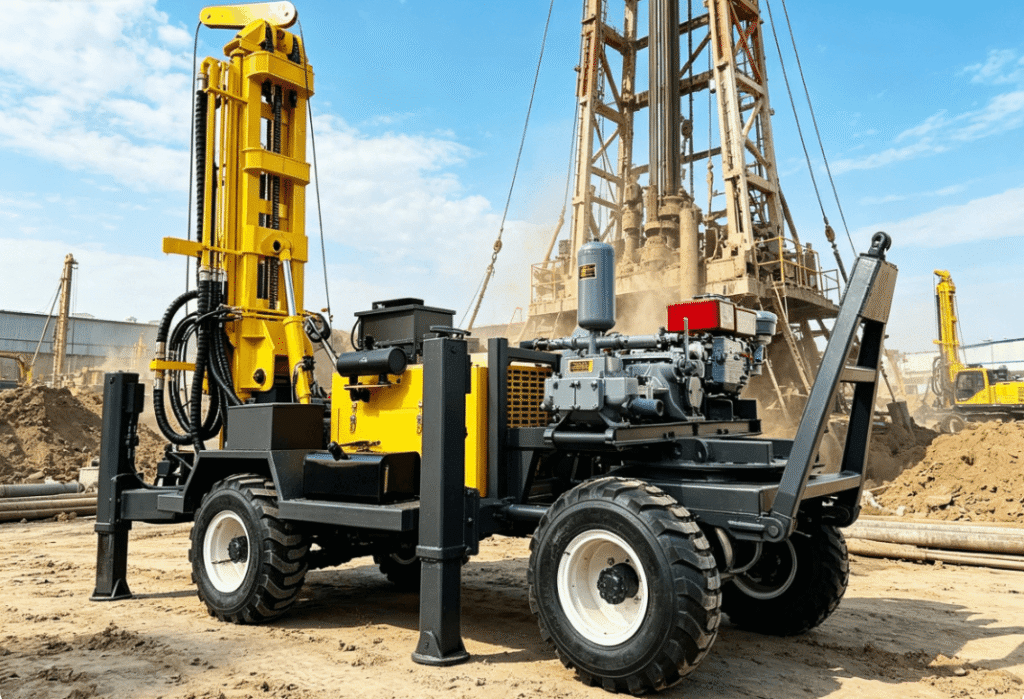
The weight of the RC drill string is generally higher. This requires a rig with substantial pull-back and torque capacity. Most 2026 RC rigs are equipped with automated pipe handling systems. These systems improve safety and reduce the labor required for deep holes.
Depth and Efficiency in Hard Rock
RC drilling can reach impressive depths with modern technology. It is common for exploration holes to exceed 400 meters in 2026. Some specialized setups can reach up to 800 meters under ideal conditions. The penetration rate stays consistent because the energy is delivered by the hammer at the bit.
Efficiency is measured by the “cost per meter of quality data.” While RC has a higher initial setup cost, the data quality is superior. The speed of RC allows for “real-time” geological logging. Geologists can bag samples every meter and get instant feedback on the ore body.
The use of auxiliary compressors and boosters is standard in RC operations. These machines ensure that the air pressure remains high at the bottom of the hole. This is especially important when encountering high-pressure groundwater. The air must overcome the water head to lift the cuttings.
Environmental Impact and Dust Control
Modern environmental regulations in 2026 are quite strict. RC drilling is inherently cleaner than DTH because of the cyclone system. The cuttings are directed from the inner tube into a sealed cyclone. This device slows the material down and drops it into a collection bag.
DTH drilling can create significant dust clouds if not managed properly. The cuttings are blown out of the top of the hole into the open air. Operators must use water injection or dust collectors to stay compliant. This adds another layer of complexity and cost to the DTH process.
Noise pollution is also a consideration for projects near urban areas. Since the RC hammer is at the bottom of the hole, the noise is somewhat muffled. However, the compressors and the rig engine are still significant noise sources. 2026 rig designs focus heavily on sound dampening for both methods.
How to Evaluate the Costs and Productivity of These Drilling Methods?
Economic factors usually dictate the choice between RC drilling vs DTH drilling. DTH drilling is almost always cheaper on a per-meter basis. The equipment is simpler, and the drill pipe is less expensive to manufacture. For simple blasting projects, DTH is the most logical financial choice.
RC drilling involves a higher capital investment. The dual-wall pipe is a complex piece of engineering. The swivels and discharge hoses also require frequent maintenance. However, the value of the geological information collected is much higher. In the 2026 mining market, data is the most valuable asset.
Productivity also depends on the mobility of the rig. DTH rigs are often more compact and easier to move in rugged terrain. RC rigs require more support equipment, including a large compressor truck and a sample truck. This larger footprint can be a disadvantage in remote or steep locations.
Fuel Consumption and Maintenance
Fuel is a major operational expense for any drilling project in 2026. RC drilling typically consumes more fuel because of the higher air volume requirements. The compressor must work harder to maintain the vacuum effect and the hammer power. Operators must budget for 20% to 30% higher fuel costs compared to DTH.
Maintenance schedules for RC rigs are more intensive. The inner tubes of the drill pipes can wear out from the abrasive cuttings. If an inner tube fails, the sample quality drops immediately. Regular inspections of the “O-rings” and seals are necessary to prevent air leaks.
DTH maintenance focuses on the hammer and the bit. The hammer requires constant lubrication through the air line. Modern 2026 hammers are designed for easy field stripping and repair. This minimizes downtime and keeps the project on schedule.
Labor Requirements and Mobility
The complexity of RC drilling usually requires a larger crew. You need a lead driller, a helper, and a dedicated sample technician. The sample tech is responsible for bagging and labeling the rock chips. In 2026, many sites also use automated sampling systems to reduce errors.
DTH drilling can often be handled by a two-person team. The process is more straightforward and requires less manual handling of the cuttings. This lower labor cost makes it ideal for small-scale construction or quarrying. The rigs are also faster to set up and tear down.
Mobility is a key factor when planning a 2026 exploration program. Track-mounted rigs are the standard for both methods in difficult terrain. However, the total “fleet” size for an RC operation is larger. You must ensure that access roads can handle multiple heavy vehicles.
How to Choose the Right Equipment for Your 2026 Project?
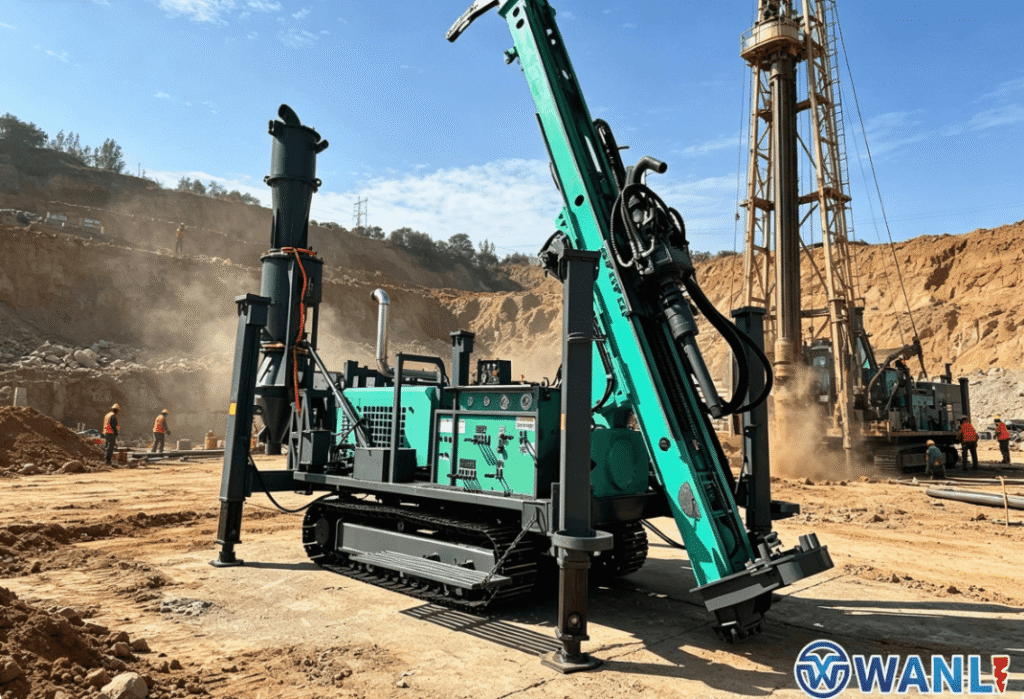
The decision should start with the final goal of the hole. If you need to map a gold deposit, you must use a method that prevents contamination. Looking at specialized RC reverse circulation drilling rigs is the first step. These machines are built specifically to maintain sample integrity in tough conditions.
If your project is a 2026 infrastructure development, speed is likely your priority. For drilling foundation piles or anchor holes, DTH is unbeatable. You should investigate modern down-the-hole drilling rigs that offer high penetration rates. These rigs provide the power needed for hard rock without the complexity of RC systems.
Consider the depth of your target and the rock hardness. DTH is highly effective for shallow to medium depths in very hard granite. RC excels when you need to go deep and collect data every meter. Always check the manufacturer’s torque and air pressure specs to ensure they match your ground conditions.
The reliability of the manufacturer is a critical factor in 2026. High-quality components reduce the risk of mid-project failures. Downtime in a remote location can cost thousands of dollars per day. Choosing a rig with a proven track record ensures your project stays on track and under budget.
| Metric | RC Drilling (2026) | DTH Drilling (2026) |
| Typical Sample Recovery | 96% – 99% | 60% – 80% |
| Maximum Effective Depth | 500m – 800m | 100m – 300m |
| Cost per Meter | High ( | Low ($) |
| Setup Complexity | High | Medium |
| Air Pressure Range | 20 – 35 Bar | 10 – 35 Bar |
| Best Application | Exploration / Grade Control | Blasting / Construction |
Summary
In 2026, the choice between RC drilling vs DTH drilling depends entirely on your project goals. RC drilling is the better option for high-accuracy geological sampling and deep exploration. DTH drilling remains the most efficient choice for construction, quarrying, and simple hole creation in hard rock.
FAQ
1. Which method is better for water well drilling in 2026?
DTH drilling is generally better for water wells because it is faster and more cost-effective. The sample purity is not a major concern when your goal is simply to reach an aquifer. DTH rigs can easily penetrate the hard basalt layers often found above groundwater.
2. Is the sample from RC drilling always 100% accurate?
No method is perfect, but RC is the most accurate percussive technique available. In 2026, recovery rates are very high, but human error during bagging can still occur. Proper maintenance of the dual-wall pipe seals is also required to prevent minor leaks and mixing.
3. Can I use a DTH hammer on an RC rig?
Yes, most RC rigs actually use a specialized RC hammer that is based on DTH technology. The main difference is that the RC hammer has a hollow center to allow cuttings to pass through. You cannot use a standard “closed” DTH hammer for reverse circulation sampling.
4. What is the main cause of high costs in RC drilling?
The high cost is primarily due to the expensive dual-wall drill pipe and the high fuel consumption. The rig also requires a more complex air swivel and a cyclone collection system. These components require specialized manufacturing and frequent maintenance in 2026.
5. Why do 2026 mining companies still use DTH if RC is more accurate?
Mining companies use DTH for production activities like creating blast holes. Accuracy is not needed for a hole that will be filled with explosives. DTH allows them to drill hundreds of holes quickly and at a much lower cost than RC.
Reference Sources
National Ground Water Association. Equipment Standards for Down-The-Hole Water Well Construction.
Geological Society of America. Sampling Integrity in Modern Percussion Drilling.