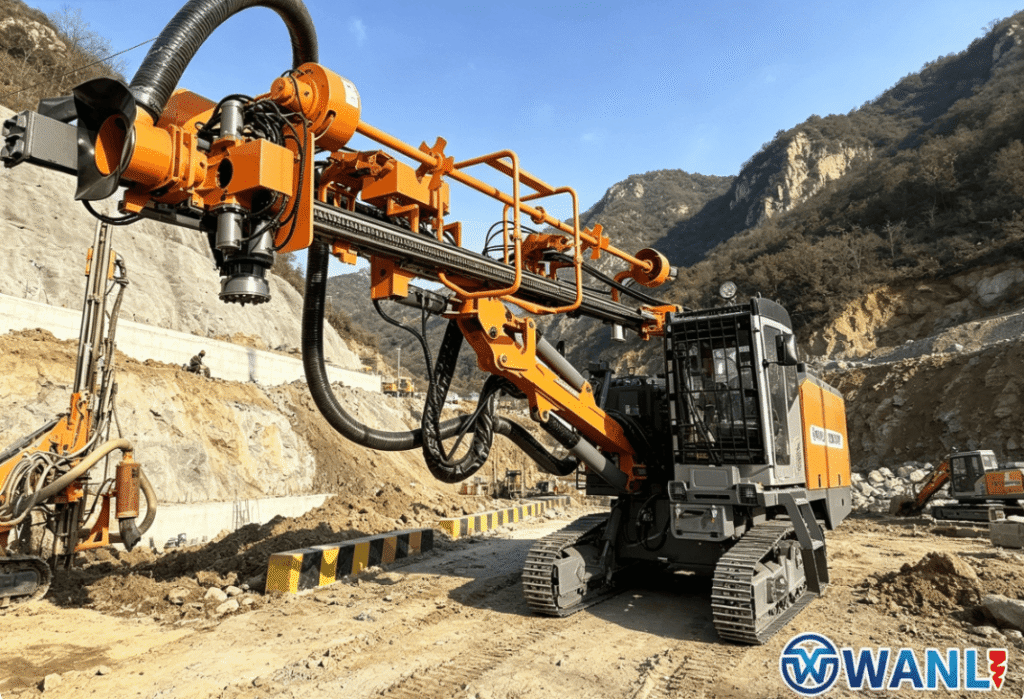
DTH drilling technology remains a cornerstone of modern heavy engineering. It utilizes a pneumatic hammer positioned at the base of the drill string. This design ensures that impact energy is delivered directly to the drill bit. Consequently, DTH drilling rig applications are highly effective in challenging geological environments. These machines have become indispensable for projects requiring deep, straight holes in hard rock.
The efficiency of this method comes from its unique percussive action. As the bit rotates, the hammer strikes the rock surface repeatedly at high frequencies. This allows for rapid penetration even in materials like granite or basalt. Many industries have adopted this technology to meet tight deadlines in 2026. Understanding the breadth of these applications is essential for project managers and site engineers.
Most infrastructure developments today rely on the precision of these specialized rigs. They offer a balance of power, accuracy, and versatility across various sectors. Whether it is for resource extraction or urban development, the technology excels. This article provides a detailed look at where these machines provide the most value.
What Are the Primary DTH Drilling Rig Applications in Modern Engineering?
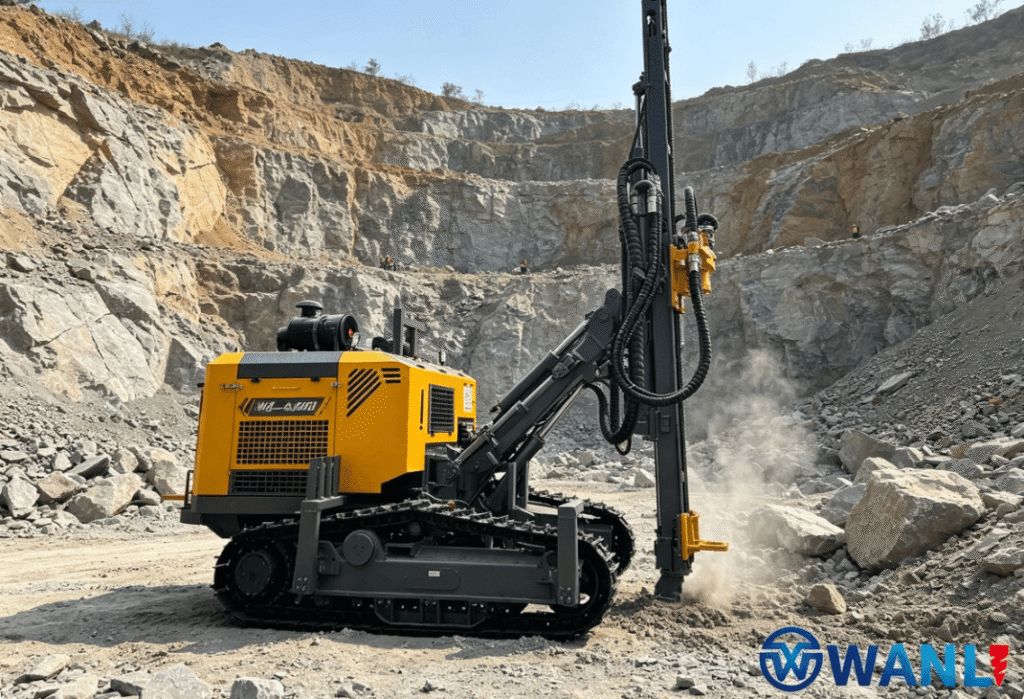
The most common DTH drilling rig applications are found in the mining and quarrying industry. In 2026, surface mines use these rigs to create precise blast holes. These holes are then filled with explosives to break up the ore body. The ability to drill large diameters with high accuracy ensures a predictable fragmentation process. This leads to safer and more efficient material handling later in the production cycle.
Quarrying operations also benefit significantly from DTH technology. Operators use these rigs to extract dimension stone or aggregate materials. The rigs provide vertical stability that prevents hole deviation during deep drilling. Most quarry sites prefer DTH systems for their lower operating costs per meter. They can handle rock with a compressive strength exceeding 200 MPa with ease.
Data from recent 2026 mining surveys indicate that DTH rigs improve productivity by 25%. This is compared to traditional top-hammer systems in extremely hard rock formations. The reduced energy loss at depth allows for consistent penetration rates throughout the entire hole. This reliability makes them the first choice for large-scale earthmoving projects.
Civil Engineering and Infrastructure Projects
Infrastructure growth in 2026 relies heavily on stable foundation systems. Engineers utilize DTH drilling rig applications for piling and rock anchoring tasks. These rigs can drill through surface rubble and deep into solid bedrock. This creates a secure socket for bridge piers and skyscraper foundations. The stability provided by these boreholes is critical for seismic resistance in urban areas.
Road and railway construction through mountainous terrain requires extensive slope stabilization. DTH rigs are used to install horizontal and vertical rock bolts into cliff faces. These bolts reinforce the rock mass and prevent dangerous landslides or rockfalls. The compact footprint of modern rigs allows them to work on narrow construction benches. This flexibility is vital for expanding transportation networks in remote regions.
Tunneling projects often use DTH drilling for specialized ventilation and drainage shafts. These shafts must be perfectly straight to function correctly over long distances. DTH technology minimizes the risk of hole spiraling during the drilling process. This ensures that utility lines and ventilation fans fit perfectly within the shafts. The high torque capacity of these rigs handles unpredictable subsurface voids effectively.
Why Choose DTH Over Other Drilling Methods?
Selecting the right equipment depends on the specific geological conditions of the site. DTH drilling rig applications are chosen when rock hardness exceeds the capacity of rotary drills. Rotary drilling often requires immense downward pressure to break hard formations. In contrast, DTH rigs use percussive force, which is far more efficient in brittle materials. This reduces the overall weight and size requirements for the drilling machinery.
In 2026, energy efficiency has become a primary concern for engineering firms. DTH systems maintain a constant impact frequency regardless of the drilling depth. Top-hammer drills lose significant energy as the drill string grows longer. DTH rigs keep the power source right at the point of contact with the rock. This leads to a 15% reduction in fuel consumption for deep-hole projects.
Maintenance cycles are also more predictable for DTH equipment. The drill rods do not need to transmit the full impact force from the surface. This reduces the stress on joints and couplings throughout the drill string. Operators report fewer broken rods when using DTH methods in abrasive environments. Longer component life translates directly into higher profit margins for contractors.
Performance Comparison Data 2026
| Feature | DTH Drilling | Top-Hammer Drilling | Rotary Drilling |
| Rock Hardness | Hard to Very Hard | Medium to Hard | Soft to Medium |
| Typical Depth | 30 – 300 meters | 5 – 25 meters | 10 – 100 meters |
| Hole Straightness | High | Medium | Low |
| Impact Energy | Constant at Depth | Decreases with Depth | Not Applicable |
Specific Use Cases in Energy and Water Management
Water well drilling is one of the most vital DTH drilling rig applications globally. In 2026, many regions face water scarcity and must access deep underground aquifers. These aquifers are often protected by thick layers of volcanic rock or limestone. DTH rigs can penetrate these barriers much faster than traditional percussion or rotary methods. This speed is essential for providing emergency water relief to drought-stricken areas.
Geothermal energy extraction is another expanding field for DTH technology. Reaching the earth’s heat requires drilling boreholes that are several hundred meters deep. The constant penetration rate of DTH rigs makes them ideal for these vertical heat exchangers. They produce clean, uniform holes that maximize the efficiency of geothermal loops. This supports the global transition toward sustainable and green energy sources.
The oil and gas industry uses DTH hammers for specialized surface drilling. This is common when the initial layers of the ground are exceptionally hard. DTH technology prevents the drill bit from wandering off the intended path. Once the softer sedimentary layers are reached, the rig may switch to rotary methods. This hybrid approach ensures the integrity of the wellbore from the very beginning.
Deep Water Well Drilling
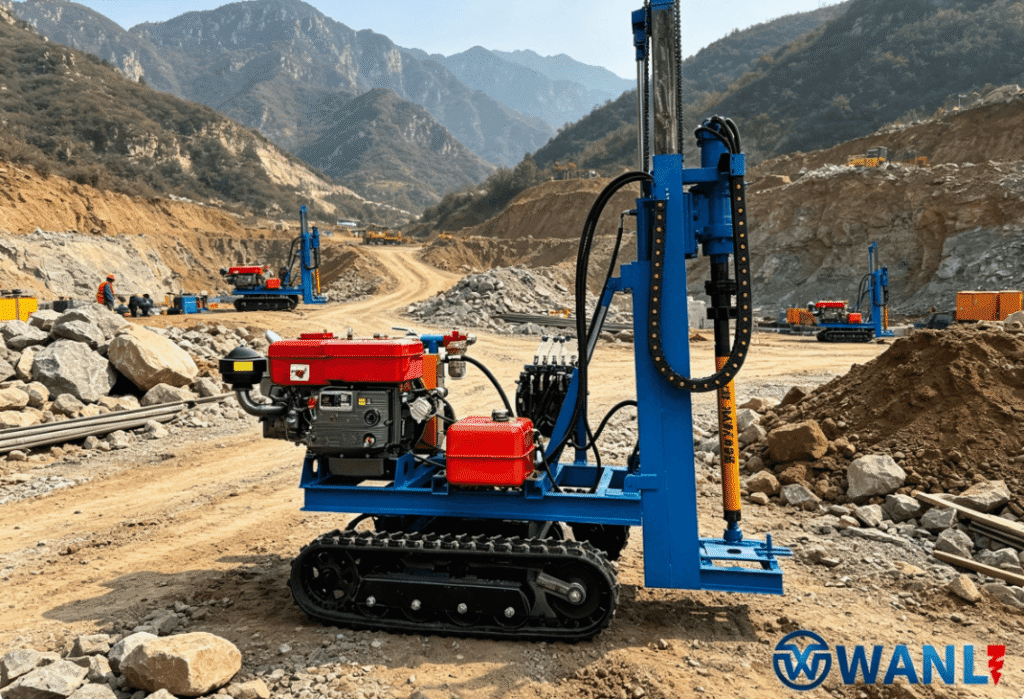
Drilling for water requires a system that can handle varying soil conditions. Many DTH drilling rig applications include an “overburden” casing system. This allows the rig to drill through loose soil and install a protective pipe simultaneously. Once the rig hits solid rock, the DTH hammer takes over for the final depth. This prevents the borehole from collapsing in unstable surface layers.
In 2026, modern water well rigs feature integrated high-pressure air compressors. These compressors deliver up to 2.5 MPa of pressure to drive the hammer. High air volume is also needed to lift water and cuttings to the surface. This allows the driller to monitor the water yield in real-time. Accurate yield testing is crucial for determining the long-term viability of the well.
Geothermal Energy Extraction
Geothermal projects often involve drilling multiple holes in a tight grid pattern. DTH drilling rig applications excel here because of their minimal surface vibration. Low vibration levels protect nearby buildings and existing utility infrastructure. The rigs can be equipped with advanced GPS for precise hole positioning. This ensures that the heat exchange field is optimized for maximum thermal output.
The durability of DTH bits is a major advantage in geothermal environments. These projects often encounter abrasive sandstone or igneous rock types. Specialized tungsten carbide inserts are used to extend the life of the drill bit. This reduces the frequency of “tripping” the drill string to replace worn parts. In 2026, automated bit-changing systems are becoming common on high-end DTH rigs.
How to Select the Right Equipment for Your Projects?
Determining the ideal setup for DTH drilling rig applications requires careful planning. Project managers must first analyze the rock’s compressive strength and abrasiveness. For very hard rock, a high-pressure hammer and heavy-duty bit are necessary. The desired hole diameter will dictate the size of the rig and compressor. Larger holes require more air volume to clear the heavy rock cuttings effectively.
Mobility is another critical factor when selecting a rig for 2026 projects. Crawler-mounted rigs are best for rugged terrain and steep slopes in mining. Truck-mounted units offer faster transit times between multiple water well sites. You should also evaluate the rig’s hydraulic system for cooling capacity. Rigs operating in desert environments need enhanced cooling to prevent hydraulic fluid breakdown.
When you are ready to evaluate specific down-the-hole drilling rig options, consider the long-term support. Reliable manufacturers provide comprehensive parts catalogs and technical assistance for their machines. Check the compatibility of the rig with different hammer brands to ensure operational flexibility. High-quality equipment will feature ergonomic cabins with advanced safety monitoring systems. These features improve operator retention and reduce the risk of site accidents.
Final selection should involve a review of the total cost of ownership. This includes fuel consumption, maintenance intervals, and the price of consumables. DTH rigs with computerized control systems can optimize drilling parameters automatically. This reduces the reliance on highly skilled labor, which is often in short supply. Investing in modern technology ensures your projects remain competitive throughout 2026 and beyond.
Summary
In 2026, DTH drilling rig applications provide the most efficient solution for hard rock engineering. These machines deliver high-impact energy directly to the bit, ensuring straight and deep boreholes. From mining and quarrying to water wells and geothermal energy, their versatility is unmatched. By choosing the right rig based on geological data and air requirements, contractors can significantly improve their project outcomes.
FAQ
1. What are the main benefits of DTH drilling rig applications in mining?
The primary benefits include high penetration rates in hard rock and excellent hole straightness. This ensures that blasting operations are efficient and predictable for ore extraction. It also reduces the overall cost per ton of material moved.
2. Can DTH rigs be used in soft soil conditions?
DTH rigs are primarily designed for hard rock formations. In soft or loose soil, the hammer action may not be as effective as rotary drilling. However, using a casing system allows them to pass through soil to reach underlying rock.
3. How does air pressure affect DTH drilling rig applications?
Air pressure is the primary power source for the pneumatic hammer. Higher pressure generally leads to faster penetration and better removal of cuttings. It must be carefully matched to the hammer’s specifications for optimal performance.
4. Are DTH drilling rig applications environmentally friendly?
Modern DTH rigs are designed with dust collection systems to minimize air pollution. They also produce less surface vibration than heavy blasting or older drilling methods. This makes them more suitable for projects near populated or sensitive areas in 2026.
5. What is the maximum depth for DTH drilling rig applications?
Standard engineering rigs typically reach depths of 50 to 100 meters. However, specialized rigs for water wells or geothermal energy can reach 300 to 500 meters. The depth is limited by the air compressor’s ability to lift cuttings from the hole.
Reference Sources
Global Mining Guidelines Group (GMG). Operational Efficiency in Surface Mining Rigs.