The global drilling industry faces increasing demands for speed and site flexibility. Traditional drilling methods often struggle with remote locations or tight urban schedules. Consequently, vehicle mounted drilling rig features have become essential for modern engineering projects. These rigs combine a powerful drilling apparatus with a heavy-duty truck chassis. This integration allows for rapid transit and immediate operation upon arrival. Operators no longer need separate transport trailers for their main equipment. By streamlining the mobilization process, companies significantly reduce their operational overhead costs.
Modern drilling environments require machines that can handle diverse geological challenges. Whether drilling for water or conducting geotechnical surveys, precision remains the top priority. Vehicle mounted drilling rig features provide the stability and power needed for deep penetration. These machines utilize advanced hydraulic systems to manage complex drilling tasks effectively. A well-designed mobile rig offers the same performance as a stationary unit. However, it adds the invaluable benefit of high-speed road travel. Understanding these features helps contractors choose the most productive tools for their specific needs.
Technical excellence in drilling equipment directly impacts the profitability of a project. High-performance vehicle mounted drilling rig features ensure that downtime is kept to a minimum. These rigs are engineered to withstand harsh environments and continuous heavy-duty use. From reinforced masts to high-torque power heads, every component serves a vital purpose. Investing in quality mobile equipment leads to better borehole quality and safer working conditions. This article provides a comprehensive look at why these specific features are critical. We will examine the technical components and operational advantages that define these versatile machines.
Understanding Primary Vehicle Mounted Drilling Rig Features
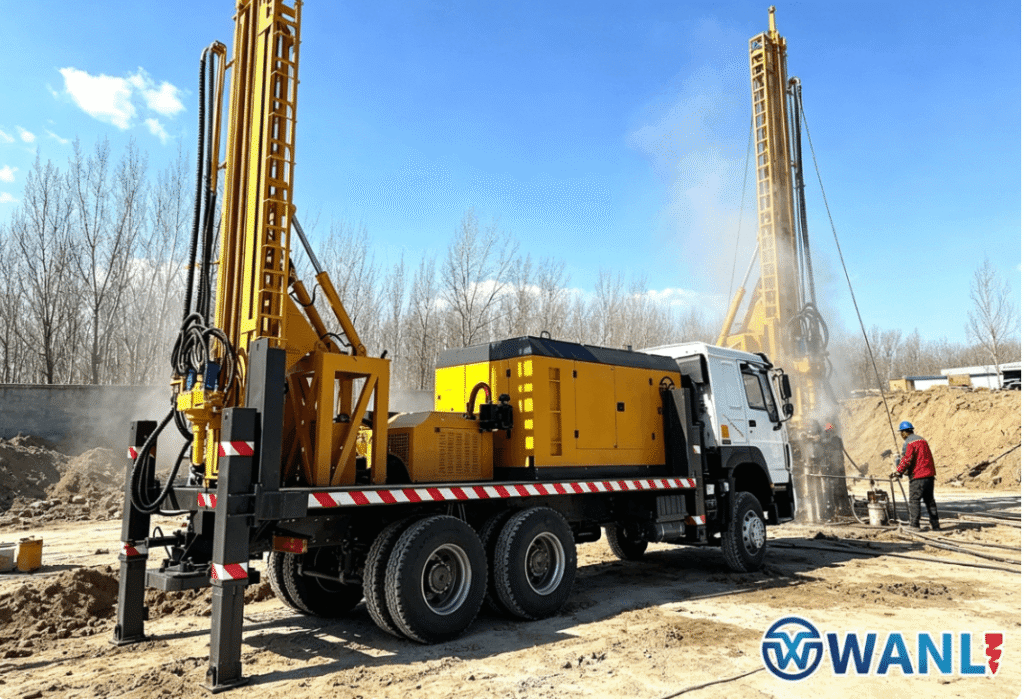
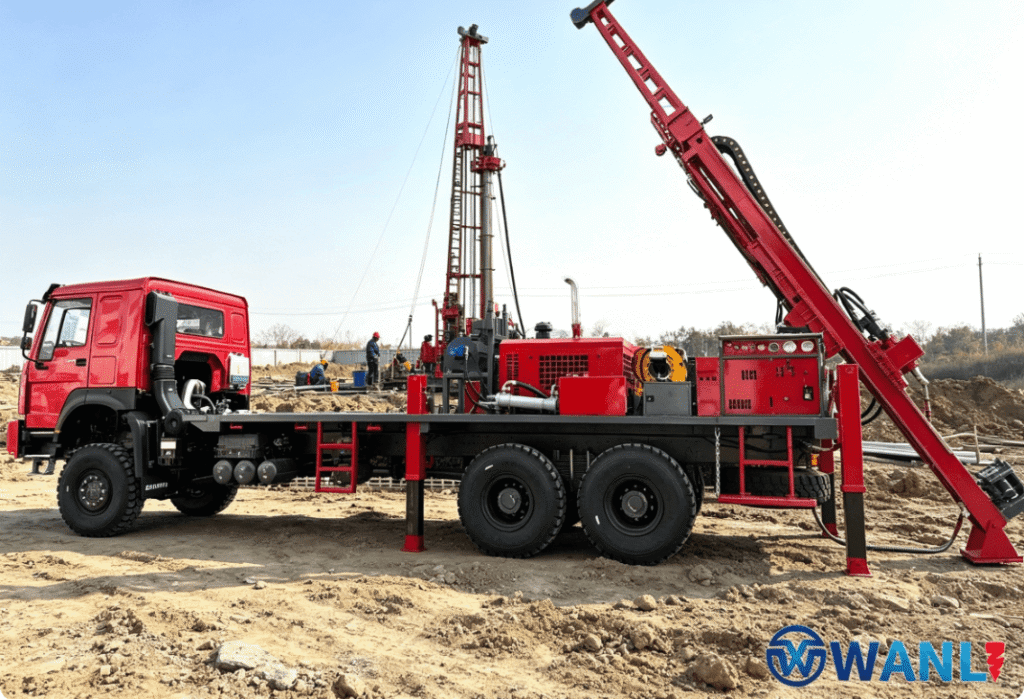
The most notable feature of these machines is their integrated mobile platform. Manufacturers typically mount the drilling system on a professional truck chassis like Shacman or Sinotruk. This configuration allows the rig to navigate highways and rough site roads with equal ease. Vehicle mounted drilling rig features focus on this structural harmony between the truck and the rig. The chassis must support the massive weight of the mast and the hydraulic components. Robust suspension and multi-axle designs ensure that the machine remains stable during transit. This mobility is a game-changer for contractors working across large geographical areas.
Hydraulic systems represent the core of vehicle mounted drilling rig features and overall performance. These systems drive the rotation, hoisting, and leveling functions of the machine. High-pressure hydraulic pumps deliver consistent power to the top-drive power head. This allows for smooth drilling even in challenging rock formations or dense clay. Most modern rigs include independent hydraulic control valves for each major function. This level of control enables operators to fine-tune the drilling speed and pressure. Precision hydraulics also contribute to the long-term durability of the mechanical parts.
The mast and hoisting system are equally critical to the rig’s functional success. Modern vehicle mounted drilling rig features often include a telescoping or folding mast design. These masts are raised and lowered using powerful hydraulic cylinders in minutes. A high lifting capacity is necessary for handling heavy drill pipes and casing strings. Most rigs in this category offer a lifting force ranging from 15 to 30 tons. This ensures the rig can recover tools from deep boreholes without mechanical strain. The structural integrity of the mast determines the maximum depth the rig can achieve.
Advanced Hydraulic Leveling Systems
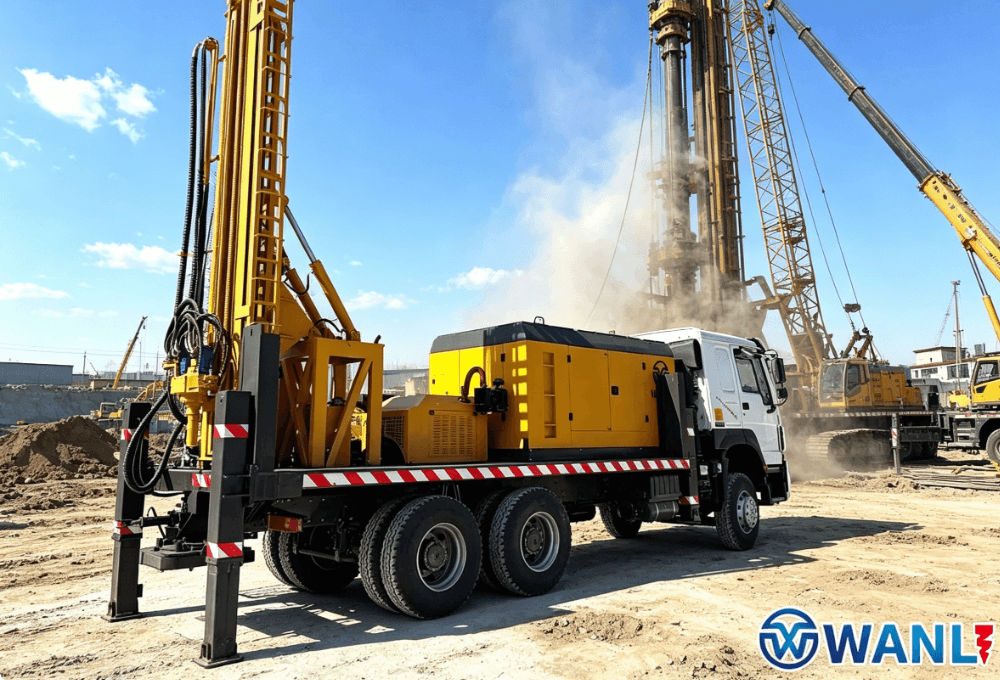
Stability is the foundation of any successful drilling operation on uneven terrain. Vehicle mounted drilling rig features include four heavy-duty hydraulic leveling jacks. These jacks allow the operator to level the truck chassis perfectly before starting. A level rig prevents the drill string from bending or drifting off-course. It also protects the truck’s suspension from the intense vibrations of the drilling process. Proper leveling is especially important when using high-impact DTH (Down-The-Hole) hammers. Without these features, the risk of equipment failure or borehole collapse increases significantly.
Integrated Power Head Technology
The power head is responsible for providing the rotational force to the drill bit. Vehicle mounted drilling rig features emphasize high torque and variable speed ranges. A top-drive power head allows for easier pipe handling and faster drilling cycles. Operators can adjust the rotation speed based on the hardness of the geological layers. For example, slow rotation with high torque is ideal for large-diameter water wells. Conversely, fast rotation is used for smaller pilot holes or soil sampling. This versatility makes the mobile rig suitable for a wide range of applications.
Technical Specifications and Performance Data
When evaluating vehicle mounted drilling rig features, data-driven analysis is essential for accuracy. These rigs are built to meet specific engineering standards for depth and diameter. Most units can reach depths between 200 and 600 meters depending on the model. The engine power typically ranges from 70 kW to over 130 kW for heavy units. This power supports both the truck’s movement and the drilling system’s hydraulic requirements. High-performance rigs often feature a mud pump with a displacement of 450 to 600 liters per minute. Such specifications ensure that the rig can handle professional-grade water well projects.
The drilling diameter is another crucial aspect of vehicle mounted drilling rig features. These machines can typically drill holes ranging from 140 mm to 450 mm in diameter. This range accommodates various casing sizes used in irrigation and industrial water supply. The weight of the entire unit is carefully distributed across the axles to meet road regulations. Most rigs weigh between 10 and 25 tons, depending on the integrated equipment. This balance of weight and power allows for maximum penetration without sacrificing mobility. Technical data confirms that these rigs offer a highly efficient power-to-weight ratio.
| Feature Component | Typical Measurement | Operational Impact |
| Max Drilling Depth | 300 – 600 Meters | Enables deep aquifer access |
| Rotation Torque | 4500 – 8500 N.m | Drives bits through hard rock |
| Lifting Speed | 15 – 25 Meters/Min | Speeds up pipe tripping time |
| Truck Driving Speed | 50 – 75 KM/H | Fast transit between job sites |
| Hydraulic Pressure | 16 – 25 MPa | Provides consistent system power |
Key Advantages of Using Mobile Drilling Platforms
The primary advantage of these rigs is the significant reduction in setup time. Vehicle mounted drilling rig features allow a team to start drilling within an hour of arrival. Traditional modular rigs may take an entire day to assemble and position correctly. This efficiency allows contractors to complete more projects within a single season. Speed is particularly important for emergency water well drilling in drought-stricken areas. A mobile rig can move from one village to the next with minimal delay. This rapid response capability provides a competitive edge in the service market.
Cost-effectiveness is another major benefit derived from vehicle mounted drilling rig features. By integrating the rig onto a truck, the need for a dedicated transport fleet is reduced. This lowers fuel consumption and maintenance costs associated with multiple vehicles. Labor costs also decrease because fewer personnel are needed for equipment mobilization. One or two operators can manage the entire transport and setup process effectively. Over time, these savings contribute to a faster return on investment for the machinery. The dual-use nature of the truck engine further optimizes the operational budget.
Versatility in drilling methods allows operators to tackle different soil conditions. Vehicle mounted drilling rig features often support both mud circulation and air drilling. Air drilling with a compressor is highly effective in hard rock and mountainous regions. Mud drilling is preferred for soft soil, sand, or areas with high water tables. The ability to switch between these methods on a single platform is invaluable. It ensures that the contractor is prepared for any geological surprises encountered underground. This flexibility increases the success rate of reaching the target depth safely.
Enhanced Operator Safety and Control
Safety is a critical component of modern vehicle mounted drilling rig features. Centralized control panels allow operators to monitor all systems from a safe distance. Gauges for hydraulic pressure, torque, and drilling depth are clearly displayed for real-time tracking. Emergency stop buttons are standard features on all professional-grade mobile units. These systems protect the crew from mechanical failures or unexpected geological shifts. Furthermore, the stable truck base reduces the risk of the rig tipping during heavy lifts. Safety features are essential for maintaining compliance with international industrial regulations.
Durability in Harsh Climates
Mobile rigs are often deployed in extreme environments, from deserts to humid jungles. Vehicle mounted drilling rig features include reinforced cooling systems to handle high temperatures. Hydraulic oil coolers prevent the system from overheating during continuous operation. Dust-proof seals and heavy-duty air filters protect the engine and mechanical parts. These design choices ensure that the rig remains operational in the most demanding conditions. Durability is a key factor in the long-term value of a vehicle-mounted system. A rig that can perform reliably in any climate is a superior asset.
How to Determine if a Mobile Rig Suits Your Project
Choosing the right equipment depends on your specific project depth and soil type. Vehicle mounted drilling rig features vary between light, medium, and heavy-duty models. If your work involves frequent travel between distant sites, a truck-mounted unit is ideal. However, you must ensure the truck chassis is compatible with local road weight limits. Consider the maximum diameter required for your typical water well or core sample. A rig with a higher torque rating is necessary if you frequently encounter granite or basalt. Evaluating these criteria helps you avoid purchasing underpowered or oversized equipment.
Reliability and manufacturer support are vital factors in your decision-making process. High-quality vehicle mounted drilling rigs should feature components that are easy to service. Standardized hydraulic parts allow for faster repairs and less downtime in the field. You should also look for rigs that offer a comprehensive warranty on the mast and hydraulics. A well-documented maintenance schedule ensures the machine stays in peak condition for years. Quality features provide the confidence needed to bid on large-scale infrastructure or mining projects. Always prioritize equipment that balances technical power with ease of maintenance.
The long-term success of your drilling business relies on the efficiency of your fleet. Vehicle mounted drilling rig features provide the technological foundation for this success. By investing in a rig that offers mobility and power, you maximize your field productivity. Look for features that enhance operator comfort and reduce physical labor during pipe changes. Automatic break-out tools and hydraulic winches are excellent additions for high-volume work. Ultimately, the best rig is one that meets your technical needs while minimizing operational risks. Selecting a machine with proven features ensures your team can deliver consiste
Summary
The core value of vehicle mounted drilling rig features is the combination of mobility and power. These rigs reduce mobilization costs, speed up project timelines, and offer immense versatility across different terrains. By focusing on high-quality hydraulics and robust chassis integration, operators can ensure reliable performance in any environment.
FAQ
1. What are the main benefits of vehicle mounted drilling rig features?
The main benefits include extreme mobility, rapid deployment, and reduced labor costs. These features allow operators to drive the rig directly to the site and start drilling almost immediately. The integration of the rig onto a truck chassis eliminates the need for extra transport equipment.
2. Can these rigs handle both soft soil and hard rock?
Yes, they can handle both soil and rock by using different drilling methods. Many rigs are designed to work with both mud pumps for soft soil and air compressors for hard rock. This versatility is one of the most important vehicle mounted drilling rig features for professional contractors.
3. How deep can a typical vehicle mounted drilling rig go?
A typical mobile rig can reach depths between 200 and 600 meters. The exact depth depends on the model’s lifting capacity and the power of its hydraulic system. Heavy-duty models are specifically engineered for deep-water exploration and complex geological surveys.
4. Why is the hydraulic leveling system so important?
The hydraulic leveling system ensures that the rig remains stable and vertical on uneven ground. Proper leveling prevents the drill pipe from bending and protects the machine from excessive vibrations. It is a critical safety feature that ensures the accuracy of the borehole.
5. What maintenance do vehicle mounted drilling rig features require?
Routine maintenance includes checking hydraulic fluid levels, inspecting hoses for wear, and greasing the mast. The truck chassis also requires standard engine and tire maintenance like any other heavy vehicle. Regular inspections help prevent unexpected breakdowns during critical drilling projects.
Reference Sources
International Association of Drilling Contractors at https://www.iadc.org
Occupational Safety and Health Administration at https://www.osha.gov/
American Society of Civil Engineers at https://www.asce.org/