Selecting the right equipment is the most critical decision in any groundwater project. Ground conditions vary significantly from soft coastal sands to hard volcanic rock. This diversity means a one-size-fits-all approach often leads to equipment failure or high costs. Understanding water well drilling rig selection ensures you achieve the required depth safely and efficiently.
The geological profile of your site determines the drilling method and the necessary torque. Different rigs use specific mechanisms like percussion, rotation, or vibration to penetrate the earth. Matching the machine’s capabilities to the soil profile reduces wear and fuel consumption. It also prevents borehole collapse in unstable formations.
Modern engineering has produced specialized machines for every environment. Whether you are drilling in a residential backyard or a remote mountain range, the right rig exists. This guide breaks down the selection process by analyzing common soil types and the corresponding technology required for success.
Understanding Geological Impact on Water Well Drilling Rig Selection
The primary factor in water well drilling rig selection is the compressive strength of the ground. Soil is generally categorized into unconsolidated formations, medium-hard strata, and hard rock. Unconsolidated soils include sand, gravel, and silt, which require different stabilization techniques compared to solid granite.
In loose, sandy soils, the main challenge is preventing the walls of the hole from caving in. Mud rotary drilling is often the preferred method here. The drilling fluid creates a filter cake on the walls, providing hydrostatic pressure to keep the hole open. This method is highly effective for depths reaching 300 to 500 meters in alluvial plains.
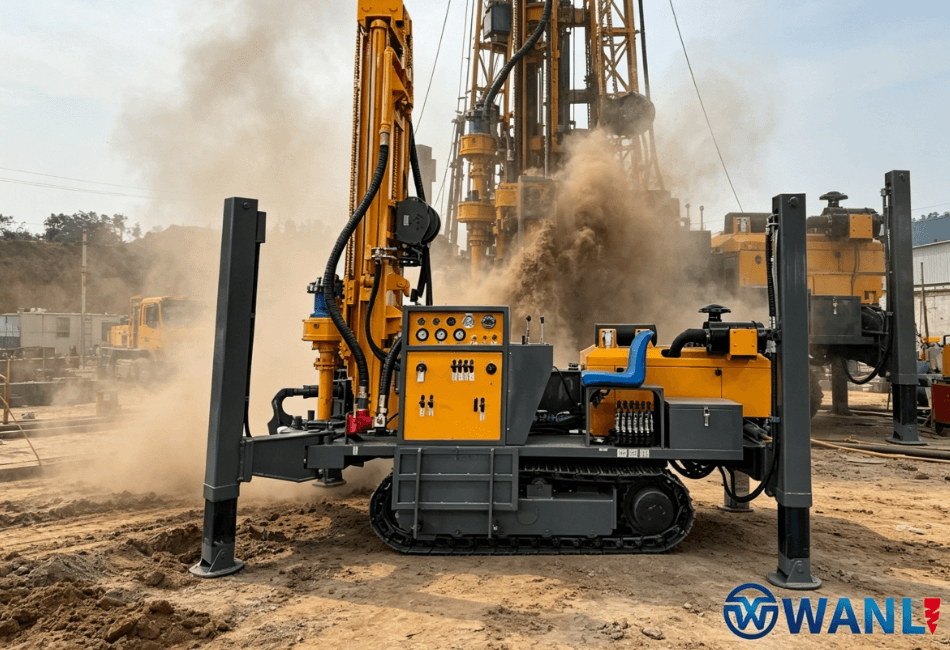
For hard rock formations, such as basalt or limestone, traditional rotary bits struggle to make progress. These conditions require high-frequency impact force. A specialized pneumatic water well drilling rig utilizes an air compressor to power a Down-The-Hole (DTH) hammer. This setup can penetrate hard rock at speeds of 10 to 25 meters per hour.
| Ground Type | Recommended Drilling Method | Key Equipment Feature |
| Soft Soil/Clay | Mud Rotary | High Mud Pump Capacity |
| Loose Sand/Gravel | Casing Drilling | Dual-wall Pipe Capability |
| Hard Rock/Granite | DTH Pneumatic | High Air Pressure (2.5 MPa+) |
| Mixed Strata | Multi-function Rotary | Adjustable Torque and Speed |
How to Select a Rig Based on Site Accessibility and Terrain
Site accessibility often dictates the physical configuration of the machinery. Even if a rig has the power to drill through rock, it is useless if it cannot reach the location. Rural or mountainous areas require high mobility and off-road capability to ensure the project stays on schedule.
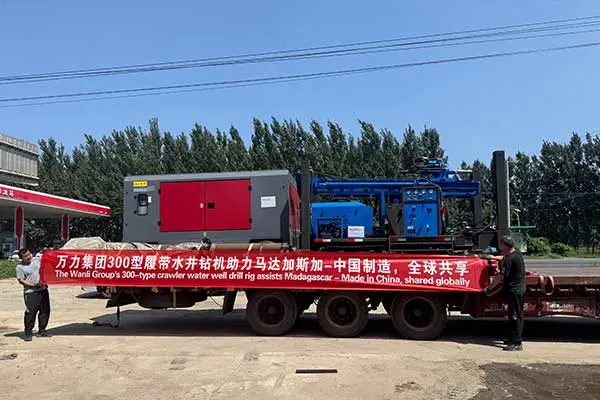
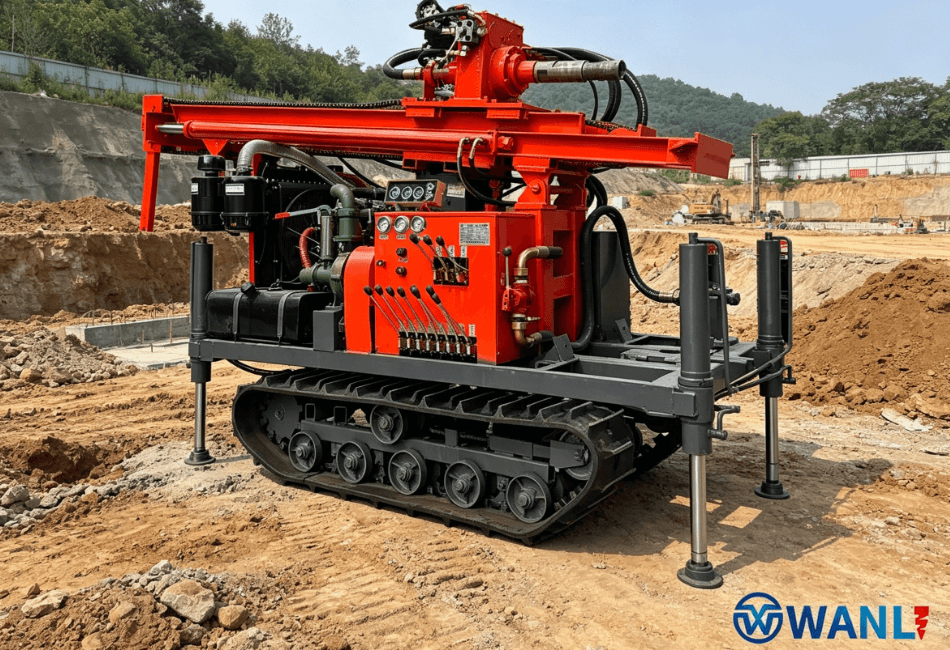
For rugged terrain with steep slopes or muddy paths, a crawler type water well drilling rig is the industry standard. These units feature steel or rubber tracks that distribute weight evenly. This low ground pressure prevents the machine from sinking into soft earth. Most crawler units can climb gradients of up to 25 or 30 degrees.
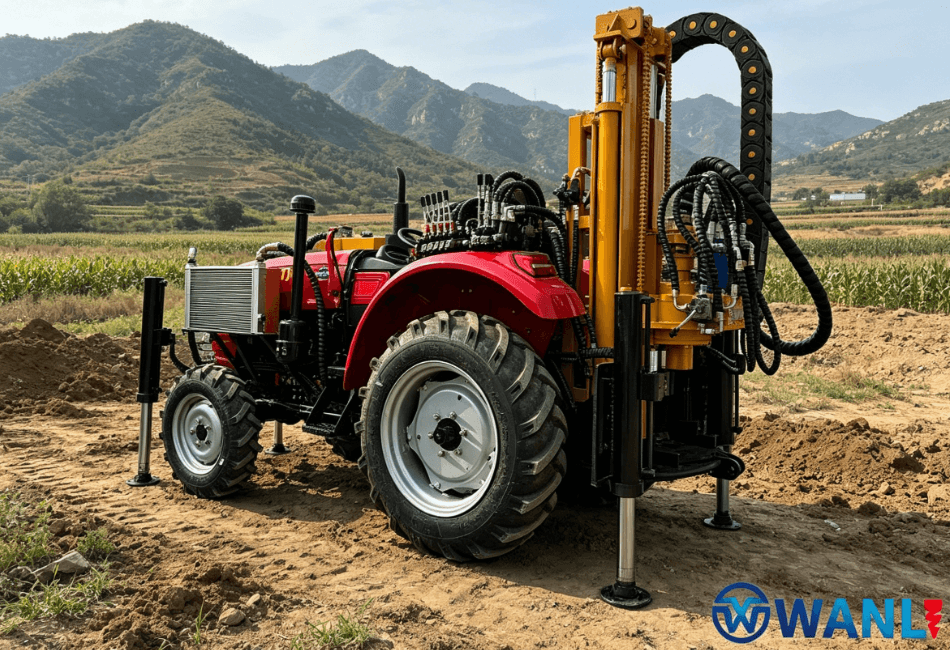
In contrast, agricultural projects or large-scale farm irrigation may favor a tractor water well drilling rig. These systems are integrated into standard tractor frames, making them easy to transport between fields. They utilize the tractor’s engine and hydraulic system, which significantly lowers the initial investment cost for many operators.
Why Air Pressure and Torque Matter in Hard Rock Conditions
When dealing with hard formations, the technical specifications of the water well drilling rig selection become paramount. Torque is the rotational force that breaks the rock or turns the auger. In clay, high torque at low speeds is essential to overcome the stickiness of the material.
However, in hard rock, the “impact” is more important than pure rotation. A pneumatic system relies on a high-pressure air compressor. For deep rock wells exceeding 200 meters, a compressor providing 25 bar (2.5 MPa) of pressure is typically required. This pressure ensures that cuttings are lifted to the surface efficiently.
If the air pressure is too low, the rock dust accumulates at the bottom of the hole. This causes the bit to regrind old material, wasting energy and wearing down the carbide buttons. Therefore, always verify the compatibility between the rig’s hydraulic system and the external air compressor’s output before starting.
Key Factors in Determining the Best Equipment for Your Project
The success of water well drilling rig selection depends on several technical variables. First, evaluate the maximum drilling depth and the desired hole diameter. A rig designed for 200 meters may struggle if pushed to 300 meters, leading to critical engine overheating or structural stress.
Second, consider the lifting capacity of the rig’s mast. The machine must be able to pull the weight of the entire drill string plus the friction from the borehole. For deep wells, a lifting force of at least 15 to 20 tons is often necessary. This ensures you can recover the tools if they become stuck.
Finally, evaluate the cooling system of the hydraulic unit. Drilling in tropical climates or high-temperature deserts puts immense strain on hydraulic fluids. Rigs equipped with oversized oil coolers prevent system failure during continuous 24-hour operations. Always check the manufacturer’s operational temperature ratings before deployment in extreme environments.
How to Evaluate Technical Specs for Different Ground Types
When you are ready to finalize your water well drilling rig selection, you must look at the specific capabilities of the machine. If your work involves a mix of clay and rock, a versatile water well drilling rig with both mud pump and air compressor ports is ideal. This flexibility allows you to switch methods seamlessly.
For those focusing on deep industrial or municipal wells, the crawler-based units offer the stability needed for heavy-duty pipes. The heavy chassis absorbs vibrations, which extends the life of the hydraulic components. These units often feature telescopic masts to accommodate longer drill pipes, reducing the time spent on manual connections.
If your primary work is in arid regions with consistent hard rock layers, a dedicated pneumatic system is the most cost-effective choice. Its specialized design maximizes the efficiency of the air-driven hammer. Conversely, for shallow domestic wells in rural areas, the tractor-mounted variety provides the best balance of mobility and affordability.
The final decision should be based on the most frequent ground condition you encounter. While specialized rigs exist for every soil, choosing a machine that handles 80% of your typical projects will yield the best return. You should examine the complete water well drilling rig catalog to find the specific model that matches your local soil profile.
Summary
Choosing the right rig requires matching the drilling method to the geological formation. Hard rock demands pneumatic power, while loose soils require mud circulation or casing. By prioritizing mobility, torque, and depth capacity, you ensure long-term operational success and lower maintenance costs across all your complex drilling projects.
FAQ
1. What is the best rig for very hard granite?
A pneumatic water well drilling rig equipped with a DTH hammer is the most effective for hard rock. It uses high-pressure air to strike the rock, providing faster penetration than traditional rotary methods in solid stone.
2. Can a crawler rig work on soft, marshy ground?
Yes, a crawler type water well drilling rig is designed specifically for unstable terrain. The tracks provide a large surface area that prevents the machine from sinking and ensures stability during the drilling process in mud.
3. How deep can a tractor-mounted rig go?
A tractor water well drilling rig is typically used for shallow to medium depths, usually up to 150 meters. Its depth is often limited by the power take-off (PTO) capacity of the tractor and the total weight of the drill string.
4. Why is mud circulation used in sandy soil?
Mud circulation is used to stabilize the borehole walls. The thick drilling fluid creates a protective layer that prevents loose sand from collapsing into the hole while also transporting heavy cuttings to the surface during the operation.
Reference Sources
National Ground Water Association (NGWA): Manual of Water Well Construction Practices
International Association of Drilling Contractors (IADC): Drilling Manual and Procedures
United States Geological Survey (USGS): Ground Water and Well