Selecting the right industrial machinery requires a deep understanding of geological conditions. Many contractors struggle with balancing power, portability, and long-term operating costs. This DTH drilling rig buying guide provides the technical framework needed for professional decision-making. High-performance drilling depends on the seamless integration of air pressure and mechanical torque.
Down-the-hole (DTH) technology excels in hard rock environments. The hammer is located directly behind the bit. This arrangement minimizes energy loss during the impact process. It allows for straighter holes even at significant depths. Understanding these mechanics is the first step toward a successful equipment purchase.
Reliable equipment ensures that projects stay on schedule and within budget. Modern rigs offer various features that enhance safety and operational efficiency. Choosing the wrong machine can lead to high maintenance costs. It may also result in slower penetration rates in challenging terrain.
How to Assess Your Project Requirements for DTH Equipment
Every drilling project has unique demands based on the site location. You must evaluate the specific geological formations you will encounter. Harder rocks like granite require higher impact energy. Softer formations might need faster rotation speeds instead. Identifying the rock hardness is essential for choosing the correct hammer and rig.
Geologists often use the Mohs scale or Unconfined Compressive Strength (UCS) for measurement. Rigs designed for rock with a UCS over 120 MPa must be robust. These machines need high-pressure pneumatic systems to maintain efficiency. Failure to match the rig to rock hardness leads to premature bit wear. It can also cause mechanical strain on the entire drill string.
The scale of the project also dictates the required machine size. Small-scale water wells differ significantly from large mining operations. Consider the maximum hole depth your clients typically request. Most commercial water wells range from 150 to 300 meters deep. Always select a rig that provides a 20% buffer beyond your maximum target.
Analyzing Geological Conditions and Site Access
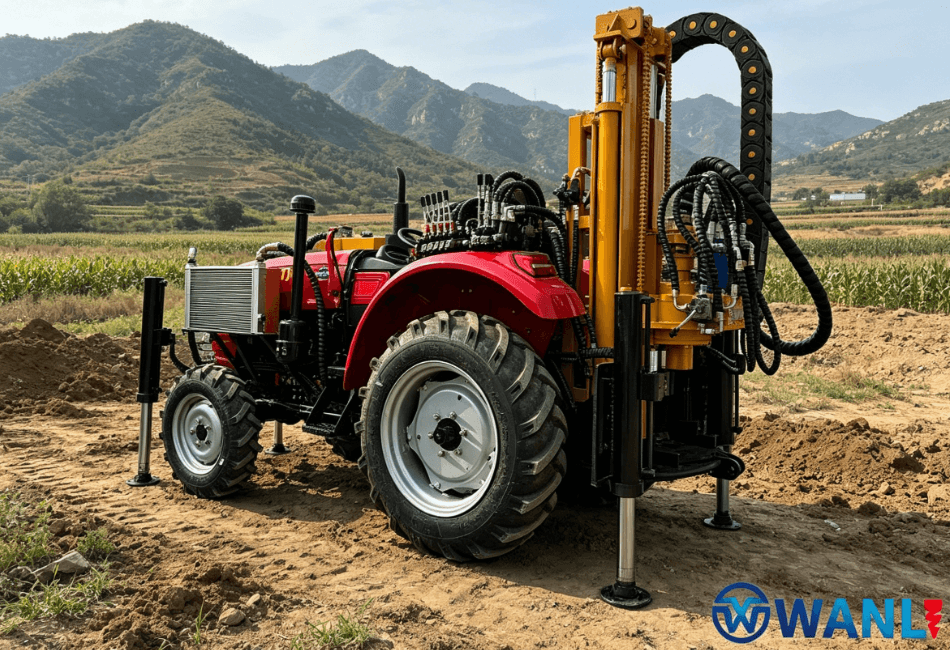
Site accessibility determines the physical configuration of the drilling unit. Narrow paths in mountainous regions require compact crawler designs. These machines offer a low center of gravity for better stability. They can navigate slopes of up to 25 or 30 degrees safely. Stability is a critical safety factor when operating on uneven ground.
Wet or marshy conditions demand wide tracks to distribute weight. High ground pressure can cause a heavy rig to sink. This leads to project delays and potential equipment damage. Look for machines with a ground pressure rating below 0.06 MPa for soft soil. This ensures the rig remains mobile in diverse environmental conditions.
Urban sites present different challenges such as noise and space constraints. Truck-mounted rigs are often preferred for their rapid deployment. They can move between sites using standard road networks. However, they require more level ground for setup compared to crawlers. Evaluate your primary working environment before committing to a specific chassis.
Determining Maximum Drilling Depth and Hole Diameter
Hole diameter directly influences the required air volume and pressure. Larger holes require more air to lift cuttings to the surface. For a 150mm hole, a compressor providing 20 cubic meters per minute is common. Using insufficient air volume leads to the regrinding of rock particles. Proper chip flushing is vital for maintaining high penetration rates.
Drilling depth affects the weight the rig must be able to lift. As you add more drill pipes, the total string weight increases. A rig with a 15-ton lifting capacity is standard for medium depths. For holes exceeding 400 meters, you may need a 25-ton capacity or more. Ensure the hydraulic cylinders are rated for these heavy loads.
The diameter of the drill rods must match the hole size. Narrow rods in a wide hole can lead to excessive vibration. This reduces the life of the rotation motor and hammer. A professional DTH drilling rig buying guide recommends maintaining a specific clearance. The gap should allow for efficient air exhaust and debris removal.
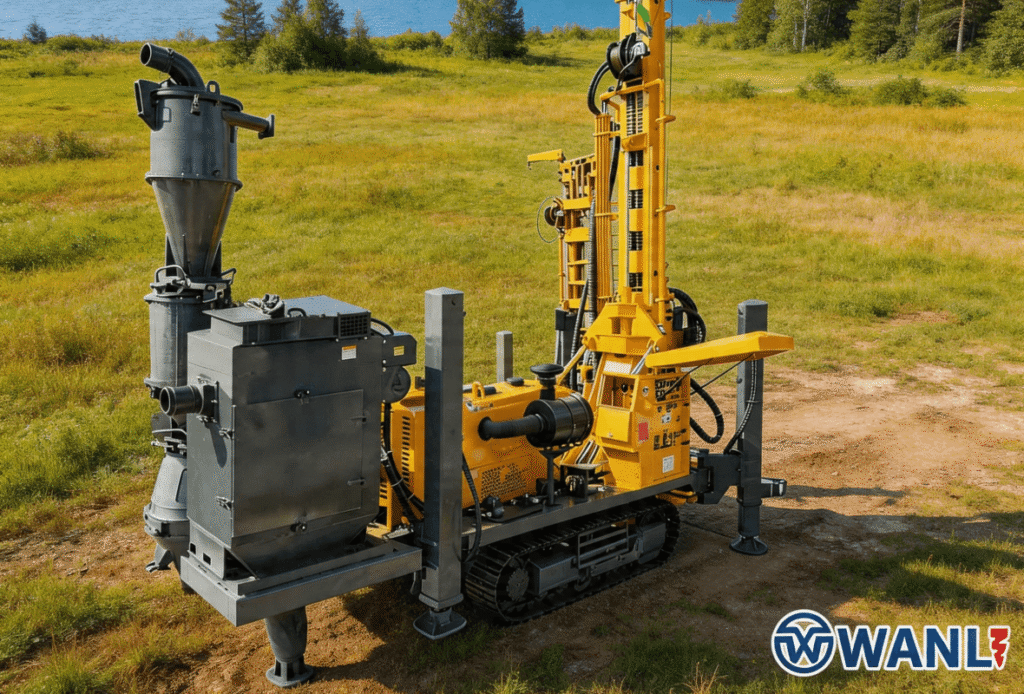
Key Technical Specifications in the DTH Drilling Rig Buying Guide
Technical parameters define the limits of what a machine can achieve. You must look beyond the exterior design to the core components. The engine power, hydraulic pump capacity, and air system are the most important. Matching these specs to your workload ensures long-term operational reliability. These components must work in harmony to deliver peak performance.
Fuel consumption is a major operating expense for any drilling company. Modern engines with electronic control modules optimize fuel delivery. This can reduce daily operating costs by approximately 12% to 15%. Look for Tier 4 or Stage V compliant engines for better efficiency. These engines also meet stricter environmental regulations in many regions.
The cooling system is often overlooked during the purchasing process. Drilling generates significant heat in both the hydraulic and pneumatic systems. Large-capacity radiators prevent overheating during continuous 24-hour operations. Rigs equipped with independent oil coolers perform better in tropical climates. This feature extends the life of hydraulic seals and valves.
The Critical Role of Air Pressure and Volume
The pneumatic hammer is the heart of the DTH system. It requires a consistent supply of high-pressure air to function. Standard hammers operate between 1.7 MPa and 2.5 MPa for optimal results. Higher air pressure translates directly into faster impact frequencies. This allows the bit to shatter hard rock more effectively.
Air volume, measured in Cubic Feet per Minute (CFM), is equally important. It serves as the primary medium for cooling the drill bit. It also carries the rock dust out of the borehole. For deep-hole applications, a dual-stage compressor is often necessary. This provides the high pressure needed to overcome the hydrostatic head in wet holes.
Check if the rig features an integrated or external compressor. Integrated units are more convenient for mobile operations. They reduce the footprint of the equipment on the job site. External compressors are easier to service and can be swapped if they fail. Your choice depends on the balance between portability and maintenance ease.
Rotation Torque and Feed Force Requirements
The rotation unit provides the necessary torque to turn the drill string. High torque is essential for drilling through fractured or loose formations. These conditions often cause the drill bit to bind or stick. A rig with at least 4,500 Nm of torque can handle most challenges. Sufficient torque prevents costly drill string losses in difficult strata.
Feed force is the downward pressure applied to the hammer. Too much pressure can damage the bit buttons and reduce speed. Too little pressure causes the hammer to bounce, leading to internal wear. Most professional rigs offer adjustable feed pressure controls. This allows the operator to fine-tune the force based on real-time feedback.
Lifting speed is another factor that impacts overall project productivity. Fast winch speeds reduce the time spent adding or removing pipes. This is particularly important on deep projects where pipe handling is frequent. Look for multi-speed hydraulic motors on the rotation head. These provide high speed for light work and high torque for heavy drilling.
| Component | Specification | Importance |
| Engine Power | 70 – 250 kW | Drives all hydraulic and air systems. |
| Air Pressure | 1.7 – 3.5 MPa | Determines the hammer’s impact energy. |
| Rotation Torque | 3,000 – 8,500 Nm | Prevents sticking in fractured rock. |
| Lifting Force | 100 – 300 kN | Determines maximum drilling depth. |
| Tramming Speed | 2.0 – 3.5 km/h | Affects mobility between holes on-site. |
Evaluating Rig Mobility and Construction Efficiency
Efficiency on the job site is not just about penetration rates. It also involves the time required to set up and move. A highly mobile rig reduces the “non-drilling” time during a workday. This allows for more holes to be completed in a single shift. Efficient site movement directly increases the profitability of every project.
Consider the leveling system of the machine. Hydraulic jacks allow the rig to be leveled quickly on uneven ground. This ensures that the borehole is perfectly vertical. Verticality is crucial for structural foundations and deep water wells. Rigs with four independent jacks offer the best stability and precision.
The control layout also plays a role in operator efficiency. Intuitive controls reduce the learning curve for new staff. Centralized panels allow the operator to monitor all systems from one spot. Modern digital displays provide real-time data on pressure and depth. This information helps in preventing mechanical failures before they occur.
Crawler vs. Truck-Mounted Systems
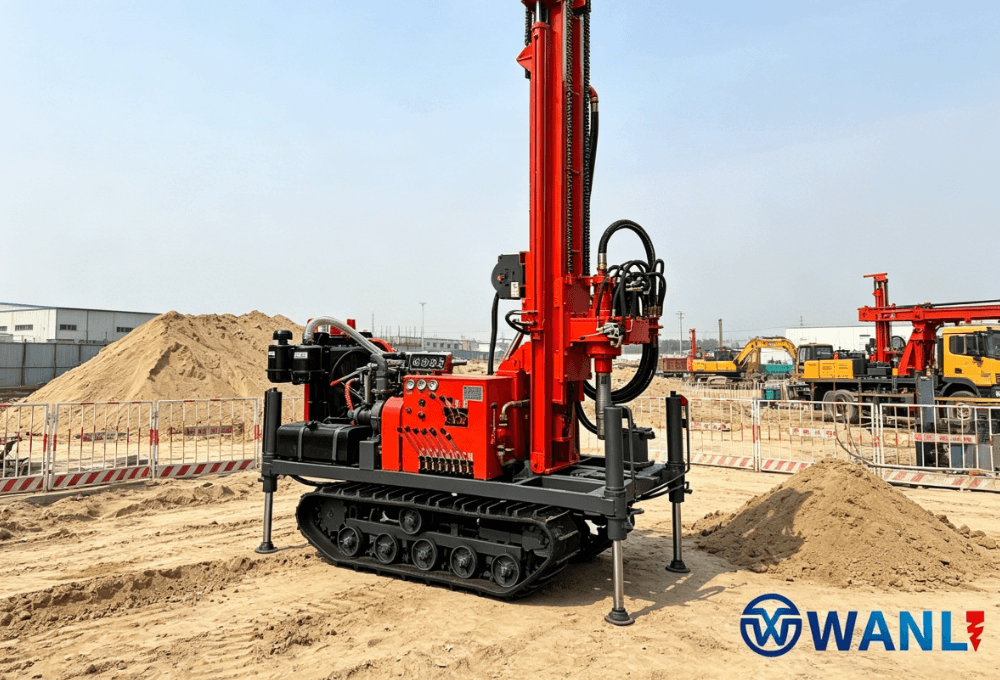
Crawler rigs are the workhorses of the mining and quarrying industry. Their heavy-duty tracks provide excellent traction on loose debris. They can climb steep grades that would stop a truck-mounted unit. The heavy chassis also absorbs much of the vibration from the hammer. Crawler systems are preferred for long-term projects in rugged environments.
Truck-mounted rigs offer the advantage of high-speed transit. They are ideal for contractors who cover large geographic areas. A truck rig can travel at 80 km/h on the highway safely. This eliminates the need for expensive low-loader transport services. However, they may require additional support vehicles for tools and pipes.
Maintenance requirements differ between these two chassis types. Truck rigs involve standard automotive maintenance for the vehicle part. Crawler undercarriages require regular inspection of the rollers and idlers. Both systems need a consistent hydraulic service schedule to remain reliable. Choose the system that matches your company’s logistics and transport capabilities.
Hydraulic System Reliability and Maintenance
Hydraulic pumps are the muscles of the drilling rig. They power everything from the tracks to the rotation head. High-quality pumps from reputable brands offer better longevity. Variable displacement pumps are more efficient as they only provide power when needed. Reliable hydraulics are the foundation of a durable DTH rig.
Contamination is the primary enemy of hydraulic systems. Look for rigs with high-efficiency filtration units. These filters remove microscopic particles that cause wear on valves. An integrated oil temperature sensor is also a valuable feature. It alerts the operator to potential issues before they cause a breakdown.
Accessibility for maintenance is a key consideration in any DTH drilling rig buying guide. Components like filters and hoses should be easy to reach. This reduces the time needed for routine oil changes and inspections. Machines with a modular design allow for faster part replacements in the field. This minimizes downtime and keeps the project moving forward.
Choosing the Right Equipment for Long-Term Value
Investing in a drilling rig is a significant financial commitment. You must look for a balance between the initial price and total cost of ownership. High-quality materials and components may cost more upfront. However, they significantly reduce the frequency of expensive repairs over time. Long-term value is found in machines that offer consistent uptime.
Evaluating the manufacturer’s support network is a vital part of the process. Even the best machines will eventually need spare parts. Ensure that the supplier has a reliable distribution system in your region. Fast access to seals, filters, and hoses prevents minor issues from stopping work. A reputable partner provides technical guidance to help you optimize your operations.
When assessing different models, comparing specialized configurations is helpful. Looking at various options in the down-the-hole drilling rig selection allows for a detailed side-by-side analysis. This helps you identify which features are standard and which are optional. Understanding these differences ensures you do not pay for unnecessary features. You can then focus your investment on the specifications that truly impact your project’s success.
Summary
Selecting a rig requires matching technical specs to geological challenges. This DTH drilling rig buying guide emphasizes that air pressure, torque, and mobility are the most critical factors. By evaluating rock hardness and depth requirements, you can choose a machine that ensures long-term efficiency. Investing in high-quality components and reliable support leads to the best professional results.
FAQ
1. How do I determine if a DTH rig has enough air pressure?
You must check the hammer manufacturer’s requirements against the rig’s compressor output. For hard rock, a pressure of 2.4 MPa is typically needed for efficient penetration. Ensure the volume also meets the CFM rating for your specific hole diameter.
2. Is a crawler rig better than a truck-mounted rig?
A crawler rig is better for rough, off-road terrain where stability is the priority. A truck-mounted rig is superior for projects requiring frequent travel between distant urban locations. Your choice should depend on the typical terrain and distance of your job sites.
3. What maintenance is most important for a DTH drilling rig?
Hydraulic oil filtration and compressor servicing are the most critical maintenance tasks. Clean oil prevents valve failures, while a well-maintained compressor ensures the hammer functions correctly. Regularly greasing all moving parts and checking hoses will also extend the machine’s life.
4. Can one DTH rig handle different hole diameters?
Yes, most rigs can handle a range of diameters by changing the hammer and bit. However, the air compressor must have enough volume to clear debris from the largest hole size. You must also ensure the rotation head provides enough torque for larger bits.
5. Why is fuel efficiency important in a drilling rig buying guide?
Fuel represents one of the highest ongoing costs in any drilling operation. An efficient engine can save thousands of dollars over a year of heavy use. Modern rigs with automated power management help reduce these costs without sacrificing drilling performance.
Reference Sources
International Association of Drilling Contractors (IADC). IADC Official Site.
National Ground Water Association (NGWA). NGWA Home.
Occupational Safety and Health Administration (OSHA). OSHA Safety Guidelines.
Geological Society of America (GSA). GSA Scientific Resources.