Selecting a coring drilling rig is a high-stakes decision that dictates the accuracy of geological data and the overall ROI of a mining exploration project. In the field, the difference between a successful core sample and a collapsed borehole often comes down to specific mechanical and hydraulic capabilities.
Whether you are conducting greenfield exploration or infill drilling, understanding technical nuances is critical. For instance, manufacturers like Shandong Wanli emphasize high-torque hydraulic systems to manage the friction encountered in deep-hole applications.
Top 10 Coring Drilling Rig Features for Mining
High-Torque Hydraulic Power Systems
In mining, the ability to maintain consistent rotation through varying lithologies is paramount. Full hydraulic core drills provide infinitely variable speed and torque control. This allows operators to fine-tune rotation to match rock hardness. When drilling through abrasive quartz, high torque at low speeds prevents bit glazing and reduces rod chatter.
Versatile Drilling Depth and Diameter Compatibility
A project’s scope often changes as geological models evolve. A versatile rig should accommodate multiple wireline sizes, including NQ, HQ, and PQ.
- NQ (47.6mm core): Ideal for deep exploratory holes where speed is prioritized.
- HQ (63.5mm core): The industry standard for balanced geological mapping.
- PQ (85mm core): Necessary for metallurgical testing and soft formations.
Integrated Crawler Mobility
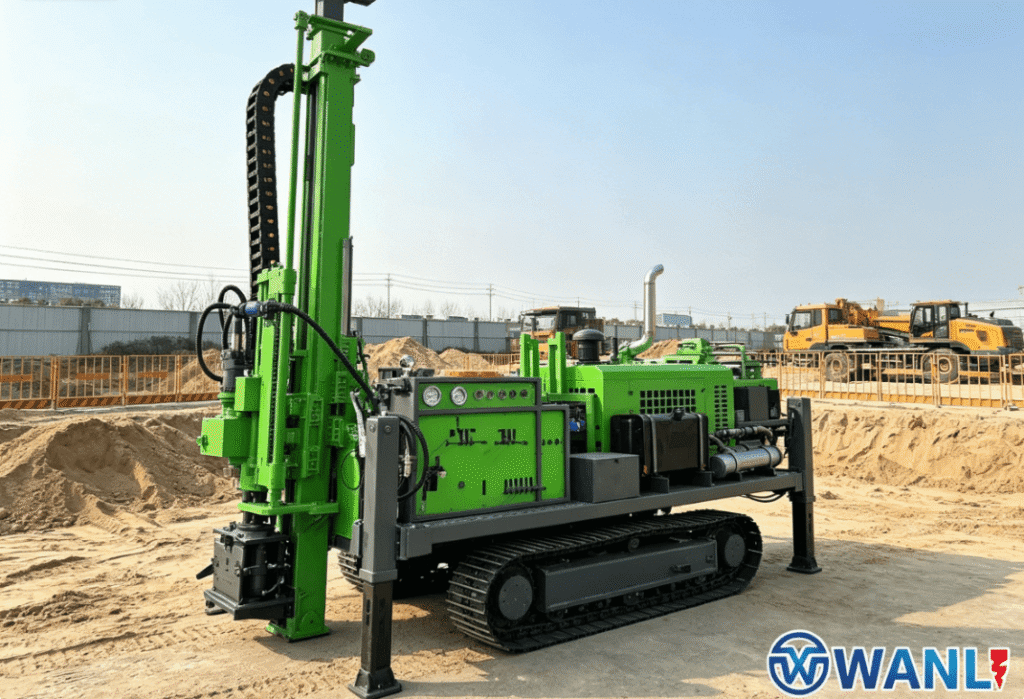
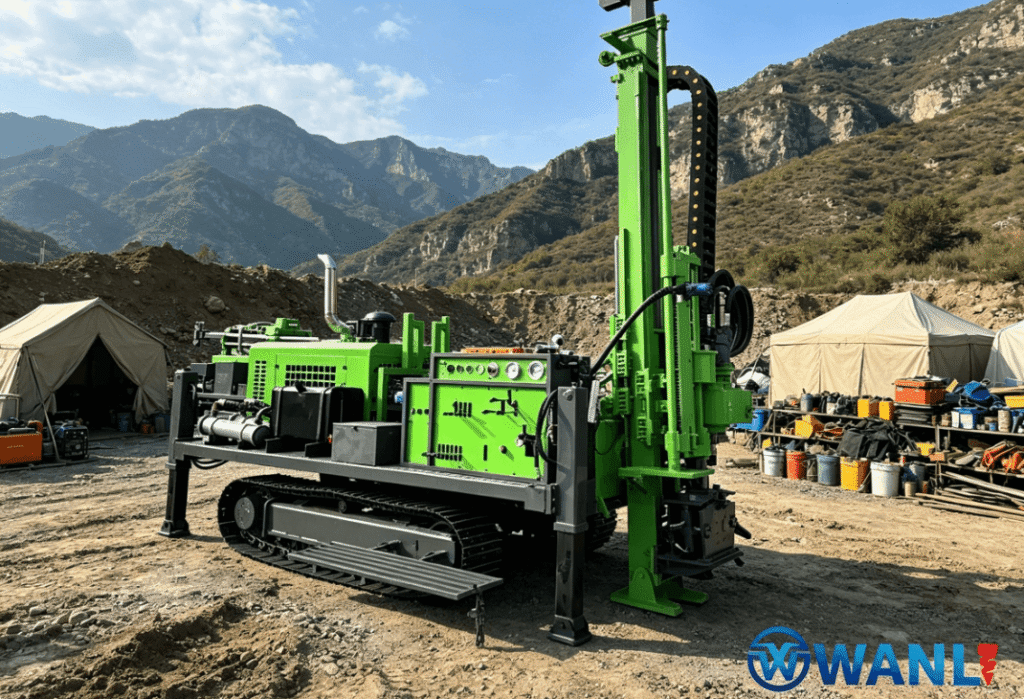
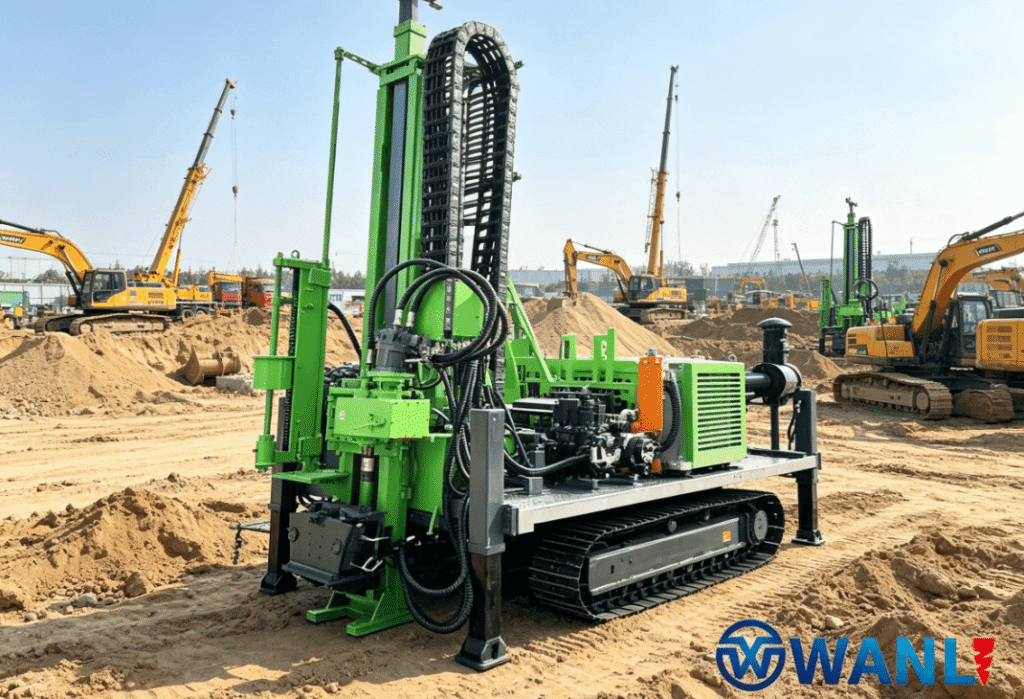
Mining environments are rarely level or easily accessible. A crawler-mounted chassis is a necessity for reducing mobilization time. Steel or rubber-tracked rigs allow the machine to traverse slopes up to 30 degrees. This mobility ensures the rig reaches exact GPS coordinates required by the geological survey.
Precision Feed and Pullback Capacity
The feed system controls the Weight on Bit (WOB). In diamond coring, improper pressure can burn the bit or lead to diamond “polishing.” Top-tier rigs utilize a hydraulic cylinder and leaf chain system for vibration-free movement. High pullback capacity ensures the rig can recover the drill string if it becomes stuck in heavy clays.
Advanced Mast Design and Telescopic Capability
The mast is the backbone of the rig. For deep-hole mining projects, look for a mast that supports “long-stroke” drilling. A 6m stroke allows for longer drill rods, reducing the number of connections required. Telescopic masts are valuable for underground mining or projects with height restrictions.
Automated Rod Handling and Safety Guards
Safety is the primary driver of modern rig engineering. Manual rod handling is a leading cause of injury. Rigs equipped with automated rod loaders and hydraulic clamps minimize human contact. Interlocked safety cages that stop rotation when opened have become a standard requirement for major mining houses.
Real-Time Digital Monitoring and Telemetry
Advanced rigs now feature digital interfaces that display critical data points. Telemetry systems allow project managers to monitor drilling progress from a central office. This enables data-driven decisions on when to pull the core or change the bit.
- Bit Pressure: Real-time WOB tracking.
- Rotation Speed (RPM): Essential for diamond life optimization.
- Fluid Pressure: Detects “washouts” or blockages.
- Fuel Consumption: Vital for remote logistics planning.
Efficient Mud Pump and Fluid Management
Coring is a “wet” process. The rig’s mud pump must deliver consistent flow to cool the diamond bit and lift cuttings. In environmentally sensitive areas, features that support “closed-loop” fluid systems are essential. This allows the rig to recycle drilling water and settle out solids.
Power-to-Weight Ratio and Engine Compliance
In remote exploration, fuel logistics are a significant cost factor. Rigs powered by Tier 3 or Stage V compliant engines (like Cummins or Perkins) offer a superior power-to-weight ratio. These engines provide necessary horsepower for deep-hole torque while optimizing fuel burn and meeting regional emission standards.
Modular Cooling Systems for Extreme Environments
Mining projects often take place in extreme temperatures. A high-performance hydraulic oil cooling system is vital to prevent component failure. Look for rigs with independent cooling circuits that can maintain hydraulic viscosity even under 24/7 high-load operations in desert or arctic conditions.
Spindle vs. Full Hydraulic Rigs Comparison
| Feature | Spindle-Type Rig | Full Hydraulic Core Drill |
| Control | Manual Gearbox | Infinitely Variable |
| Safety | Exposed Moving Parts | Integrated Safety Guards |
| Mobility | Often Skid or Trailer | Usually Crawler-Mounted |
| Core Quality | Higher Vibration | Low Vibration / High Recovery |
| Best For | Shallow / Budget Projects | Deep / Technical Mining |
Why Do These Features Matter for RQD?
The Rock Quality Designation (RQD) measures the quality of a rock core. If a rig has a jerky feed system or insufficient torque, it can mechanically fracture the core during the drilling process. This leads to an “artificial” lowering of the RQD.
By selecting a rig with precision feed and high-torque hydraulics, you ensure the extracted core is a true representation of the subsurface lithology. This directly impacts the accuracy of the mine’s feasibility study and future safety planning.
Summary
Choosing the right coring drilling rig requires balancing depth capacity, mobility, and safety features. For modern mining exploration, the transition toward full hydraulic systems with digital monitoring is undeniable. Rigs like those found in the Shandong Wanli coring series demonstrate how these ten features integrate to provide high-yield results in challenging terrains.
FAQ
1. What is the most important feature for deep-hole coring?
Hoisting capacity and hydraulic torque are the most critical factors. As the drill string gets longer, the weight of the rods increases exponentially. The rig must have the mechanical strength to lift that weight and the torque to rotate it against increasing borehole friction.
2. Can a crawler-mounted rig be used for underground mining?
Yes, provided it has a modular or low-profile mast. It must also have an engine equipped with appropriate exhaust scrubbing or be electric-powered to manage air quality within confined underground spaces.
3. How does hydraulic cooling affect core recovery?
If hydraulic oil overheats, the feed system may become inconsistent or “spongy.” This leads to erratic weight-on-bit, which can cause the core to break or grind inside the inner tube, ultimately ruining the geological sample.
4. Why is wireline capability standard in mining rigs?
Wireline drilling allows the core barrel to be retrieved through the center of the drill rods. This eliminates the need to pull the entire rod string to the surface every time a core sample is taken, saving significant time and labor.
Reference Sources
ASTM D2113 Standard Practice for Rock Core Drilling
ISO 22475-1 Geotechnical Investigation Sampling Methods