Maximizing the service life of a water well drilling rig requires moving beyond basic oil changes. In the drilling industry, where machines face extreme torque, abrasive dust, and high-pressure hydraulic demands, maintenance is the difference between a profitable contract and a catastrophic mechanical failure.
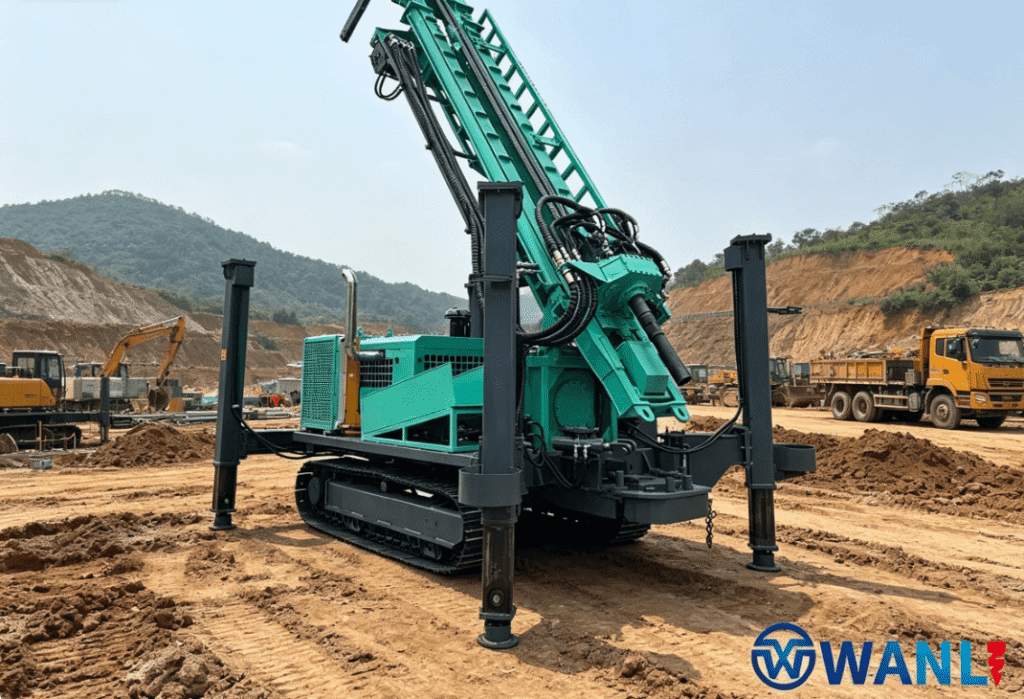
Whether operating a crawler-mounted pneumatic rig or a heavy-duty truck-mounted unit, the core components—the hydraulic system, the power pack, and the drill string—require a disciplined technical approach to prevent premature fatigue.
Why Proactive Maintenance Dictates Drilling Rig Service Life
A water well drilling rig is a complex integration of mechanical, hydraulic, and pneumatic systems. The environment it operates in is inherently hostile. Fine silica dust can act as an abrasive in the engine intake, while fluctuating ambient temperatures affect hydraulic fluid viscosity.
Neglecting a $50 seal can lead to the failure of a $5,000 hydraulic pump. Strategic maintenance shifts the focus from “fixing what is broken” to “preserving systemic integrity.” This approach ensures that the rig maintains its rated pull-back capacity and spindle torque over thousands of operating hours.
The Hydraulic Core: Preventing Pressure Drops and Component Wear
The hydraulic system is the “nervous system” of any modern water well drilling rig, such as the high-efficiency models found in Wanli’s crawler rig series. Contamination is the leading cause of hydraulic failure.
Fluid Analysis and Viscosity Management: Regularly monitor the hydraulic oil’s clarity. Cloudiness usually indicates water emulsion, while a dark smell suggests thermal degradation. Use fluids that match the operating environment’s temperature range to maintain optimal film strength.
Filter Integrity: Do not wait for the “clogged filter” indicator. Replace high-pressure and return-line filters at 250-hour intervals or as specified by the OEM. Even microscopic particles can score valve spools, leading to internal leakage and loss of drilling pressure.
Hose Inspection: Check for “weeping” at the swage fittings. In high-pressure pneumatic drilling, hoses are subject to constant vibration. A burst hose doesn’t just stop production; it poses a significant safety risk to the operator.
Managing the Pneumatic Circuit and DTH Hammer Lubrication
For rigs utilizing Down-The-Hole (DTH) hammers, the air system requires specialized attention. The friction generated during rock penetration creates immense heat.
Inline Lubricators: Ensure the rock drill oiler is functioning and filled with the correct grade of lubricant. The DTH hammer requires a constant mist of oil to prevent seizing of the internal piston.
Air Compressor Maintenance: The compressor is the heart of the cleaning cycle. Monitor the separator element. If oil carryover occurs, it will contaminate the drill hole and reduce the efficiency of the air hammers.
Pressure Relief Valves: Regularly test all safety pop-off valves. Over-pressurization can lead to catastrophic tank or hose failure.
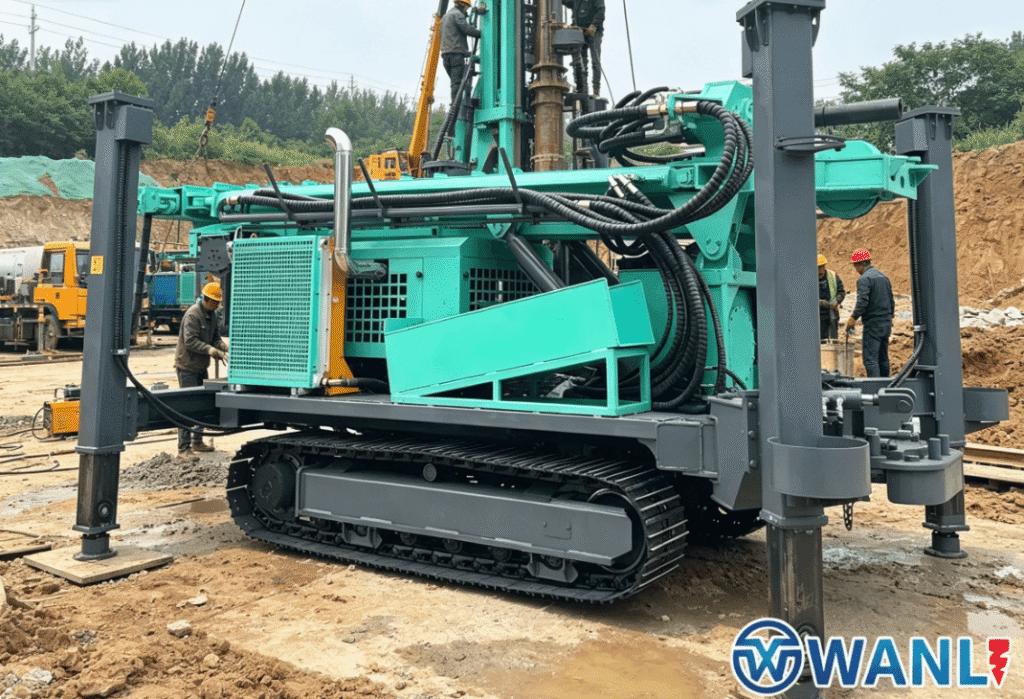
Structural Integrity: Crawler Undercarriage and Mast Alignment
The physical frame of the rig absorbs the reactive forces of the drilling process. Structural fatigue often begins at pivot points and weldments.
Undercarriage Tension: For crawler-mounted rigs, track tension is critical. Tracks that are too tight cause excessive wear on idlers and drive sprockets. Tracks that are too loose risk de-tracking on uneven terrain.
Mast and Feed System: The mast must remain perfectly vertical (or at the intended angle) to prevent crooked holes and excessive wear on the drill pipe threads. Check the slide blocks or rollers for play. Replace wear pads before they wear down to the steel backing.
Greasing Schedules: Use high-pressure, lithium-based grease on all bushings and pins. Focus specifically on the crown block sheaves and the leveling jacks, which often bear the weight of the entire rig during operation.
Technical Maintenance Schedule for Industrial Drilling Rigs
| Component | Task | Frequency |
| Hydraulic Oil | Check levels and look for foaming/discoloration | Daily |
| Air Filters | Clean or replace (essential in dusty environments) | Daily |
| Drill Pipe Threads | Clean and apply fresh thread compound (Z-50 or equivalent) | Every Rod Change |
| Hydraulic Filters | Replace return and suction filters | Every 250 Hours |
| Undercarriage | Inspect track tension and bolt tightness | Weekly |
| Engine Coolant | Check PH levels and anti-corrosion additives | Monthly |
Optimizing Maintenance Based on Drilling Environment
The geology of the job site dictates your maintenance intensity.
When drilling in abrasive sandstone or granite, the external wear on drill pipes and the stabilizer is accelerated. You must inspect the wall thickness of the drill string more frequently to prevent down-hole snaps.
In coastal or high-salinity environments, corrosion becomes the primary enemy. Electrical connectors should be treated with dielectric grease, and the rig’s chassis should be washed daily to prevent salt-induced oxidation of the hydraulic lines.
For operators using portable or truck-mounted rigs, ensure that the vehicle’s PTO (Power Take-Off) system is checked for alignment. Any vibration in the PTO shaft can transmit back into the hydraulic pumps, leading to premature bearing failure.
The Role of Genuine OEM Parts in Longevity
Using “will-fit” parts is a common mistake in fleet management. While a generic seal might fit, it may not possess the thermal resistance required for continuous deep-hole drilling. High-performance rigs, like those manufactured by Shandong Wanli, are engineered with specific tolerances. Utilizing genuine OEM filters and seals ensures that the system operates within its designed flow and pressure parameters, ultimately extending the machine’s life by years.
FAQ
Q: How often should I change the hydraulic oil in a water well drilling rig?
A: Most manufacturers recommend a full change every 1,000 to 2,000 operating hours. However, this should be superseded by fluid analysis. If the oil shows signs of oxidation or high metal content, change it immediately regardless of hours.
Q: What is the most common cause of drill rig engine failure?
A: Dust ingestion. Because rigs operate in dry, dusty environments, the air filtration system is often overwhelmed. Use a pre-cleaner and never “blow out” a primary filter more than twice before replacing it.
Q: Why is my rig losing pull-back power?
A: This is typically due to internal leakage in the hydraulic cylinder or a worn-out main pump. Check the pressure at the pump outlet; if pressure is high but movement is slow, the seals in the pull-back cylinder are likely bypassed.
Q: Does the type of drilling fluid affect rig maintenance?
A: Yes. If using mud circulation, the mud pump liners and pistons are high-wear items. Abrasive solids in the mud will quickly erode the internal components of the pump and the swivel.
Reference Sources
International Society of Pump Industry (ISPI): Guidelines on hydraulic fluid contamination standards (ISO 4406).
National Ground Water Association (NGWA): Best practices for drilling equipment safety and maintenance.
American Petroleum Institute (API): Standards for drill pipe thread lubrication and inspection (API RP 5A5).
Manufacturer Documentation: Maintenance manuals for Shandong Wanli Drilling Equipment.