Efficiency in a mining environment is rarely about a single metric. For project managers and site engineers, mining drilling rig efficiency is the calculated balance between Rate of Penetration (ROP), fuel consumption, and mechanical availability. In modern mineral exploration and site development, the difference between a profitable quarter and a budget overrun often depends on the technical specifications of the fleet.
Optimizing drilling operations requires a deep understanding of how specific rig designs—ranging from high-precision coring units to heavy-duty water well systems—interact with varying lithologies.
Technical Drivers of Rate of Penetration (ROP)
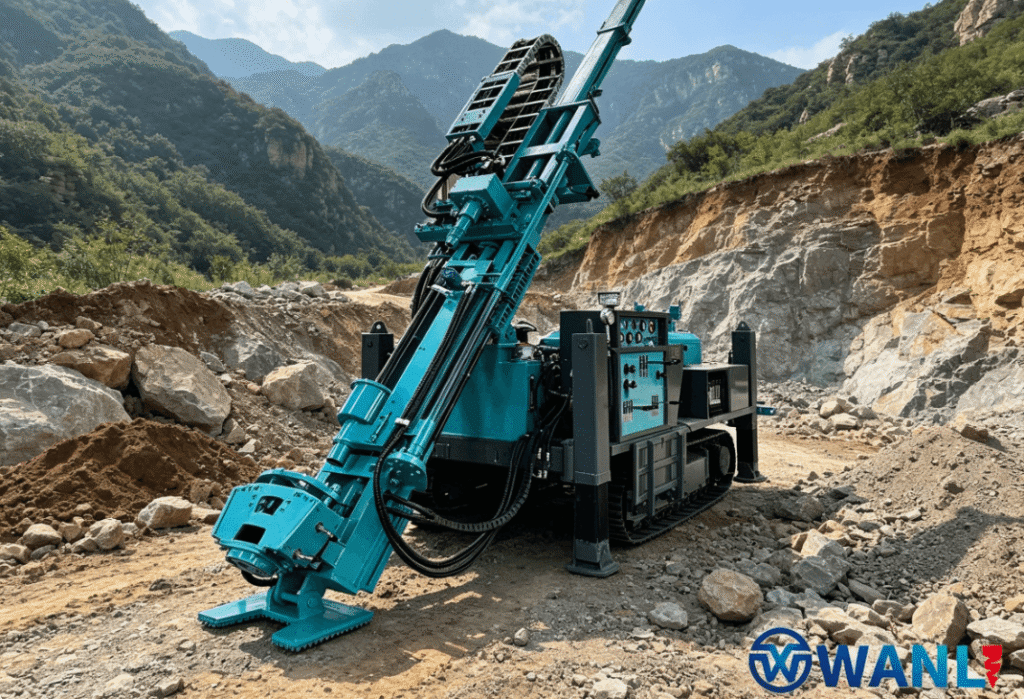
The most visible indicator of efficiency is ROP. However, chasing speed without considering tool wear is counterproductive. High-efficiency mining rigs utilize advanced hydraulic systems to manage the Weight on Bit (WOB) and rotation speed (RPM) dynamically.
Torque vs. Speed: In hard rock exploration, coring rigs require high RPM with consistent torque to ensure high-quality sample recovery.
Feed Systems: Modern rigs utilize “pull-down” and “hoisting” capacities that allow operators to maintain optimal pressure on the drill string, even as the hole deepens.
Power-to-Weight Ratio: Efficient rigs deliver maximum hydraulic horsepower to the drill head while remaining portable enough to reduce setup and teardown times.
In large-scale operations, even a 5% increase in ROP across a 50-hole program can save hundreds of hours in labor and fuel costs.
Strategic Rig Selection: Coring vs. Utility Drilling
Efficiency starts with matching the machine to the geological objective. Mining companies often struggle when using “general-purpose” rigs for specialized tasks.
Exploration and Resource Definition
For mineral identification, coring drilling rigs are the industry standard. Efficiency here is measured by the core recovery rate. A rig that preserves the integrity of the sample reduces the need for “re-drilling,” which is the ultimate efficiency killer. High-tier coring units feature vibration-dampening designs that allow for deeper penetration without compromising the diamond bit lifespan.
Mine Infrastructure and Dewatering
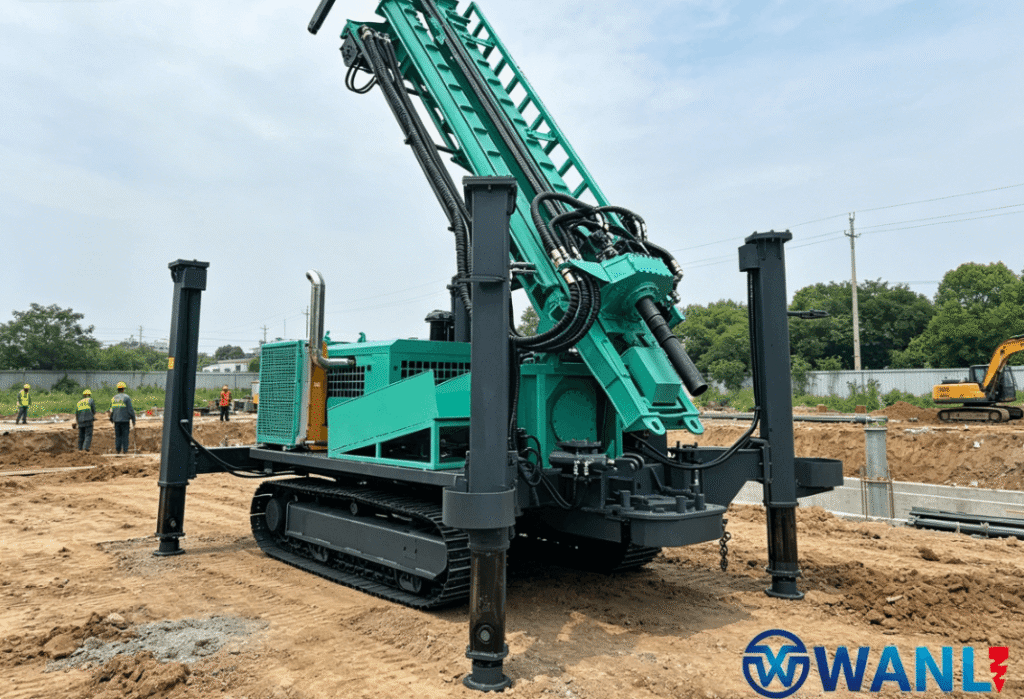
Mining isn’t just about finding ore; it’s about managing the environment. Water well drilling rigs are essential for site dewatering and providing process water. These rigs prioritize hole diameter and air-compressor compatibility. Efficiency in this sector is driven by the rig’s ability to handle “overburden” and large-diameter casings quickly to prevent borehole collapse.
Comparison of Drilling Methods in Mining
| Feature | Coring Drilling Rigs | Water Well / Utility Rigs |
| Primary Goal | Geologic Sampling | Fluid Management / Infrastructure |
| Key Metric | Core Recovery % | Meters per Hour (Speed) |
| Typical Depth | 300m – 2000m+ | 100m – 600m |
| Tooling | Diamond Bit / Wireline | DTH Hammer / Rotary Mud |
| Efficiency Driver | Precision & Sample Integrity | Hole Stability & Volume |
Reducing Non-Productive Time (NPT)
In the mining sector, the rig is only efficient when the bit is on the bottom. Non-Productive Time (NPT)—caused by equipment failure, difficult rod handling, or slow setups—can account for up to 40% of total project costs.
Engineering solutions to reduce NPT include:
Automated Rod Handling: Reduces manual labor and the risk of “tripping” injuries, which cause costly shutdowns.
Modular Hydraulic Circuits: Allows for faster troubleshooting and field repairs without needing a full factory overhaul.
Telemetry and Monitoring: Real-time data on oil temperature, pressure, and engine load helps maintenance teams move from “reactive” to “predictive” maintenance.
Fuel Consumption and Environmental Compliance
With rising energy costs and stricter ESG (Environmental, Social, and Governance) mandates, fuel efficiency has become a core commercial requirement. Modern rigs integrated with Tier 4 or Stage V engines optimize fuel injection based on real-time load.
Furthermore, the transition to high-pressure hydraulic systems allows for the same mechanical output with smaller engine displacements, significantly lowering the carbon footprint per meter drilled.
Evaluating OEM Capability for Custom Projects
For B2B procurement, the “efficiency” of a rig is also tied to the manufacturer’s support ecosystem. When evaluating suppliers like SDWanli, engineers should look for:
Customization: Can the rig be mounted on crawlers for rugged terrain or truck-mounted for rapid mobilization?
Component Standard: Use of globally recognized hydraulic valves and pumps ensures that spare parts don’t have a 6-week lead time.
Technical Documentation: Comprehensive manuals and schematics are vital for field engineers to maintain peak performance in remote locations.
Final Procurement Logic for Mining Operations
Improving mining drilling rig efficiency is a multi-step process. It begins with selecting a rig with the correct torque-to-speed ratio for your specific lithology. It continues with a rigorous maintenance schedule and the use of high-quality consumables.
For companies focusing on mineral exploration, investing in dedicated coring rigs ensures high-quality data. Conversely, for site preparation and dewatering, a high-torque water well rig offers the speed necessary to keep the mine site operational. By reducing NPT and optimizing ROP, mining companies can significantly lower their “Cost Per Meter,” ensuring long-term project viability.
FAQ
Q: How does the “Rate of Penetration” (ROP) affect the total cost of ownership?
A: Higher ROP reduces the time spent on a single hole, lowering labor and fuel costs. However, if ROP is pushed too high, it can lead to premature bit failure and increased NPT, actually raising the total cost of ownership. The goal is “Optimal ROP.”
Q: Can a water well drilling rig be used for mineral exploration?
A: While a water well rig can drill the hole, it typically lacks the wireline coring systems required to recover intact geological samples. Using the wrong rig type significantly decreases data efficiency and can lead to inaccurate resource modeling.
Q: What are the most common causes of downtime in mining rigs?
A: Hydraulic hose failures, engine overheating due to poor ventilation in deep pits, and rod handling issues are the primary drivers of NPT. Selecting rigs with simplified hydraulic layouts can mitigate these risks.
Q: How do environmental conditions impact rig efficiency?
A: Extreme temperatures affect hydraulic fluid viscosity. Rigs designed for mining often include specialized cooling systems for desert environments or pre-heaters for arctic operations to maintain consistent efficiency.
Reference Sources
International Society of Explosives Engineers (ISEE): Technical guidelines on borehole stability and drilling patterns.
ISO 18758-1:2018: Mining and earth-moving machinery — Rock drilling equipment — Part 1: Safety.
Society for Mining, Metallurgy & Exploration (SME): Research papers on “Optimization of Drilling and Blasting Operations.”
SGS Mineral Services: Technical bulletins on core recovery standards and geological sampling precision.