Exploration projects live and die by the quality of the subsurface data they retrieve. In mineral exploration, the “truth” is found in the core sample. However, extracting a continuous, undisturbed cylindrical section of rock from 1,000 meters underground involves a complex interplay of torque, feed pressure, and geological unpredictability. For project managers and drilling contractors, selecting a coring drilling rig isn’t just about horsepower; it is about matching mechanical capability to the specific resistance of the strata.
Commercial success in mining ventures depends on reducing the “cost per meter” while maintaining a high core recovery rate (CRR). This case study analyzes the performance benchmarks of modern coring rigs, contrasting traditional spindle designs with advanced full hydraulic systems to provide a roadmap for procurement and operational strategy.
Engineering Dynamics of Modern Coring Operations
At the heart of any mineral exploration project is the requirement for geological integrity. Coring rigs differ from standard rotary drills by utilizing hollow bits—often impregnated with industrial diamonds—to cut a core rather than grinding the rock into chips.
The efficiency of this process is governed by the “Drilling Trio”:
- Rotation Speed (RPM): Essential for diamond bit cooling and cutting through hard crystalline rock.
- Weight on Bit (WOB): The downward force required to maintain contact between the diamonds and the rock face.
- Fluid Management: The circulation of drilling mud to remove cuttings and prevent the bit from “burning” in the hole.
In high-stakes mineral exploration, a failure in any of these three leads to “lost core” or borehole deviation, both of which can invalidate a multi-million dollar exploration program.
Comparative Analysis: Full Hydraulic vs. Spindle Type Rigs
When evaluating equipment for a fleet upgrade or a new project, the primary commercial decision revolves around the drive system.
| Feature | Spindle Coring Rig | Full Hydraulic Coring Rig |
| Control Precision | Manual, step-gear shifts | Infinitely variable speed/pressure |
| Depth Capacity | Excellent for shallow to mid-depth | Superior for deep-hole (1500m+) |
| Operator Safety | High physical involvement | Lower physical strain, remote options |
| Maintenance | Mechanical, easier field repair | Specialized hydraulic technician needed |
| Core Recovery | Good in stable formations | Exceptional in fractured/soft strata |
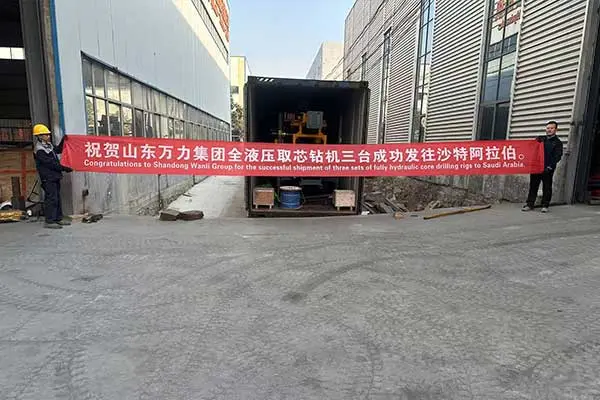
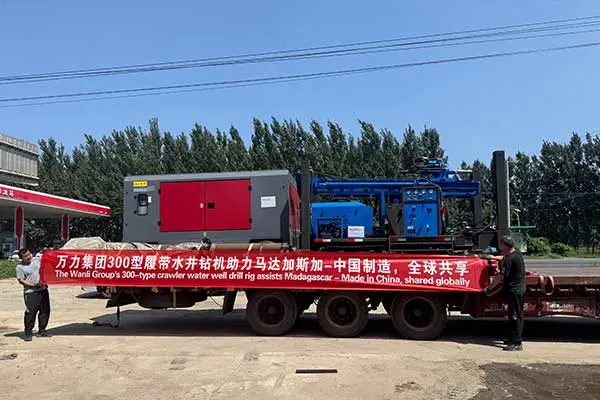
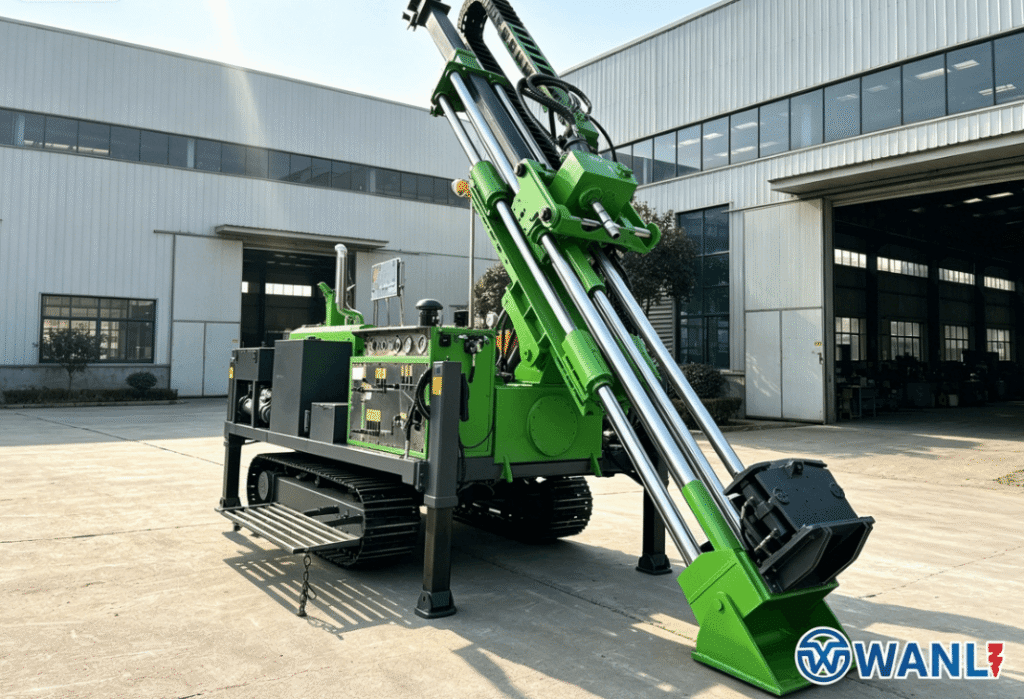
For companies like SD Wanli, providing a range that includes both portable spindle units (like the XY series) and heavy-duty crawler-mounted hydraulic rigs allows contractors to scale their equipment to the specific geography of the mine site.
Case Study: 1,200-Meter Gold Exploration in Fractured Strata
The Challenge:
A gold exploration project in a remote, mountainous region faced significant “core washing” issues. The upper 400 meters consisted of highly fractured sedimentary rock, while the target zone sat at 1,000 meters in hard quartz veins. Previous attempts using lightweight, low-torque rigs resulted in frequent rod sticking and a core recovery rate of less than 65%.
The Solution:
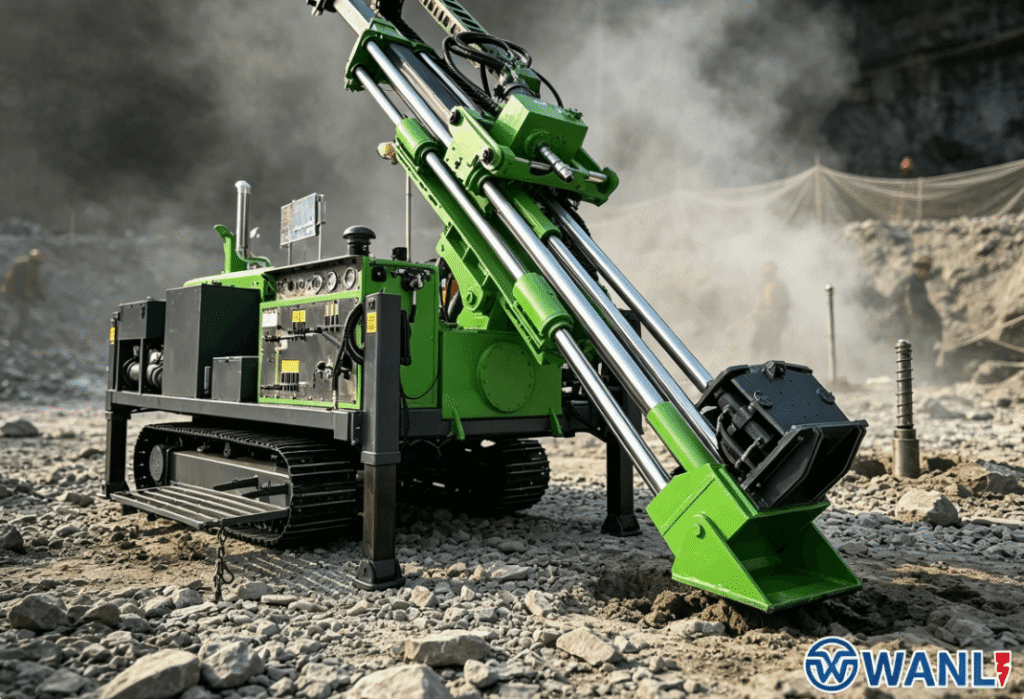
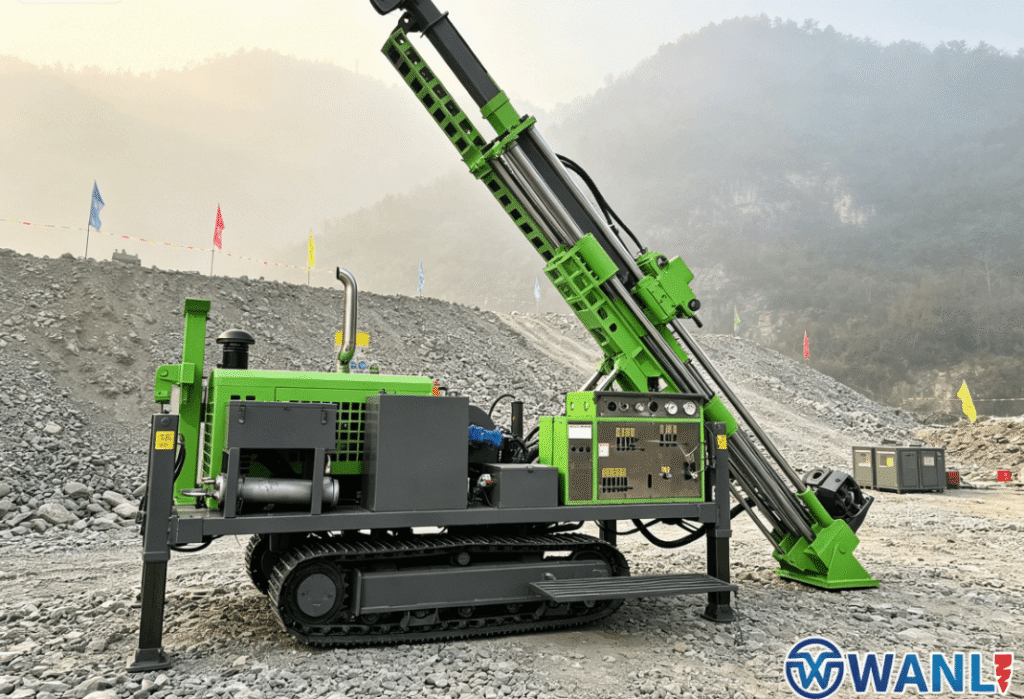
The project transitioned to a crawler-mounted, full hydraulic coring rig with a telescopic mast. The choice was driven by the need for:
- Variable Feed Pressure: To delicately navigate the fractured zones without collapsing the borehole.
- High Torque at Depth: To maintain rotation through the high-friction quartz veins.
- Mobility: The crawler system allowed the rig to move between sites in rugged terrain without needing heavy support trucks.
The Results:
By implementing a rig capable of precise pressure feedback, the team achieved:
- 98% Core Recovery: Ensuring the geologists had a near-perfect record of the mineralization.
- 20% Increase in ROP (Rate of Penetration): The hydraulic system optimized the cutting speed, reducing the days spent on-site.
- Reduced Consumable Cost: Precise control over the WOB extended the life of the diamond bits by 15%.
Technical Considerations for Industrial Procurement
When moving from the informational phase to a commercial purchase, B2B buyers must look beyond the spec sheet. The “Total Cost of Ownership” (TCO) of a coring drilling rig includes several hidden variables.
1. Power-to-Weight Ratio
In remote mineral exploration, logistics is the largest non-drilling expense. A rig that offers 1,000-meter depth capacity but requires a 20-ton crane for mobilization is commercially inferior to a modular or self-propelled unit in difficult terrains.
2. Hydraulic System Efficiency
Modern rigs should utilize “Load Sensing” hydraulic systems. These systems only provide the flow and pressure required for the current task, significantly reducing fuel consumption and heat generation. In a 24/7 drilling operation, a 10% fuel saving translates to thousands of dollars over a single season.
3. Customization and OEM Support
No two mineral deposits are the same. A manufacturer’s ability to customize the wireline winch speed, mud pump integration, or crawler width is a critical factor for long-term operational success. For instance, SD Wanli’s focus on diverse rig configurations—from portable backpack styles for initial mapping to heavy spindle rigs for deep sampling—reflects the necessity for application-specific engineering.
Maximizing ROI in Mineral Exploration
The ultimate goal of a coring drilling rig case study is to demonstrate how technical precision leads to financial viability. In the mineral sector, “cheap” equipment often leads to “expensive” holes.
Commercial buyers should prioritize:
- Drilling Stability: Vibration is the enemy of the diamond bit. A rigid frame and high-quality hydraulic stabilizers are non-negotiable for deep holes.
- Safety Compliance: Ensure the rig meets international standards (such as CE or ISO) for emergency stops and guarding.
- Parts Interchangeability: In remote locations, the ability to source standard hydraulic hoses or bearings can prevent weeks of downtime.
Conclusion: Data-Driven Selection
As this case study illustrates, the transition from geological theory to mineral reality depends entirely on the capability of the coring rig. By selecting a machine that offers the right balance of torque, mobility, and precision control, exploration companies can ensure that their field data is accurate, their timelines are met, and their commercial objectives are achieved.
Whether deploying a portable unit for remote lithium sampling or a heavy-duty hydraulic rig for deep copper exploration, the focus must remain on the integrity of the core. At the end of the day, the core is the only asset that justifies the investment.
FAQ
What is the average core recovery rate required for a successful mineral exploration project?
Most geological standards require a minimum of 90% to 95% core recovery. Anything below this can lead to “missing” the ore body or miscalculating the grade of the deposit. High-quality hydraulic rigs are specifically designed to maximize this rate in difficult ground conditions.
How does drilling depth affect the choice of a coring rig?
As depth increases, the weight of the drill string increases, requiring more hoisting capacity. Additionally, “hole drag” increases, necessitating higher torque. While spindle rigs are excellent for depths up to 600m, deep-hole exploration (800m-2000m+) typically requires the advanced hoisting and rotation control of full hydraulic systems.
Can a coring drilling rig be used in environmental or geotechnical applications?
Yes. While this case study focuses on mineral exploration, the same technology is used for “Soil Nailing” or “Site Investigation” in construction. However, geotechnical rigs often prioritize larger diameter samples (HQ or PQ) at shallower depths compared to the deep, slim-hole NQ drilling common in mining.
What are the primary maintenance costs for a hydraulic coring rig?
The main expenses include hydraulic fluid changes, filter replacements, and the inspection of high-pressure hoses. Mechanical wear items include the drive chuck jaws, wireline cables, and the cooling system for the engine.
Reference Sources
- ASTM D2113: Standard Practice for Rock Core Drilling and Sampling of Rock for Site Investigation.
- International Society for Rock Mechanics (ISRM): Guidelines for core logging and sampling.
- SD Wanli Technical Documentation: Specification sheets for the Full Hydraulic and Spindle Coring Series.
- SGS Mineral Services: Technical bulletins on core recovery and geological data integrity.