Geological exploration requires precision and efficiency to locate valuable mineral deposits. Traditional methods often take too much time or cost too much money. An RC drilling rig for exploration solves these problems by using advanced pneumatic technology. This method remains a global standard for initial mineral resource definition in 2026. It allows geologists to collect high-quality samples from great depths very quickly.
Modern mining projects depend on reliable data to secure investment and plan operations. The RC drilling rig for exploration provides a continuous stream of dry samples. These samples represent the geology at specific intervals without significant contamination. Choosing the right equipment ensures that your exploration program remains on schedule. It also helps in keeping the overall project budget under control.
This article examines the technical performance and operational advantages of reverse circulation technology. We will look at how these machines function in various terrains. You will learn why this equipment is essential for modern mineral exploration. Understanding these features will help you make better decisions for your next drilling project. Let us dive into the mechanics and benefits of this powerful technology.
How Does an RC Drilling Rig for Exploration Work?
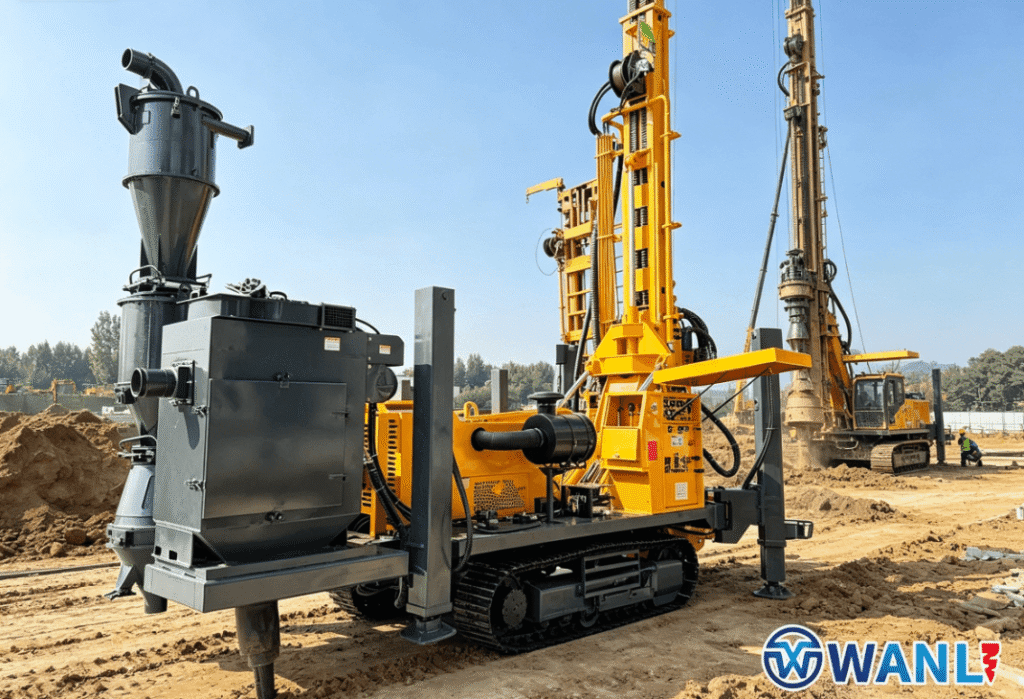
The fundamental principle of reverse circulation involves a dual-walled drill pipe. High-pressure air is forced down the outer annulus of the pipe. This air drives a pneumatic hammer at the bottom of the hole. The hammer breaks the rock into small chips or “cuttings.” These cuttings are then forced back up the center tube.
The use of a center tube prevents the sample from touching the borehole walls. This is why an RC drilling rig for exploration provides such high sample purity. In conventional drilling, samples often mix with materials from different layers. RC technology eliminates this risk by shielding the cuttings inside the inner pipe. This “closed-loop” system is vital for accurate geological mapping.
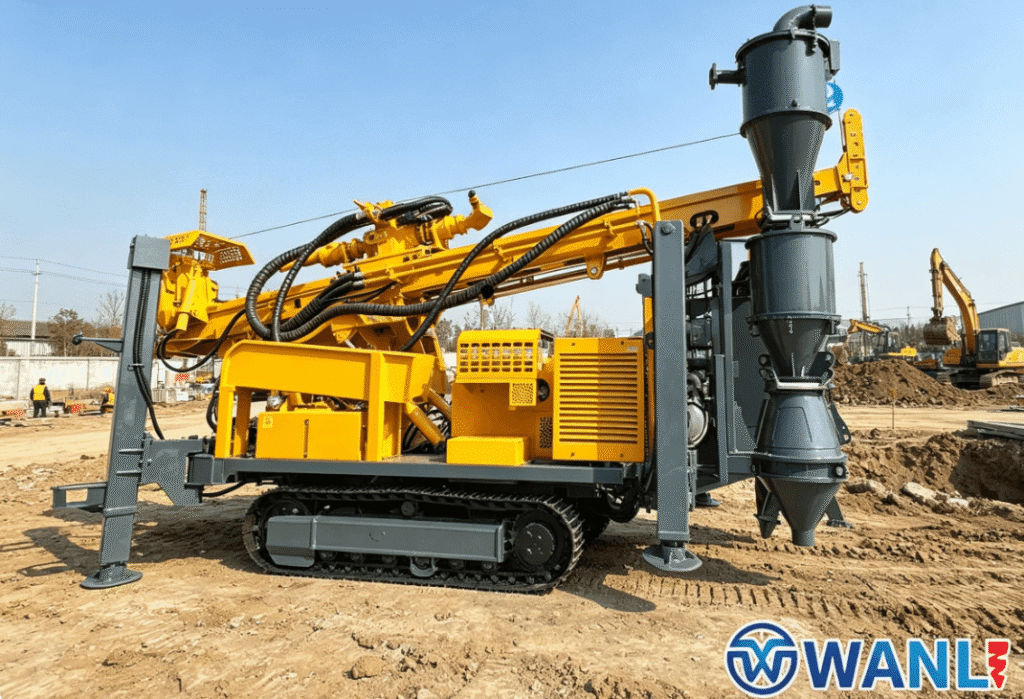
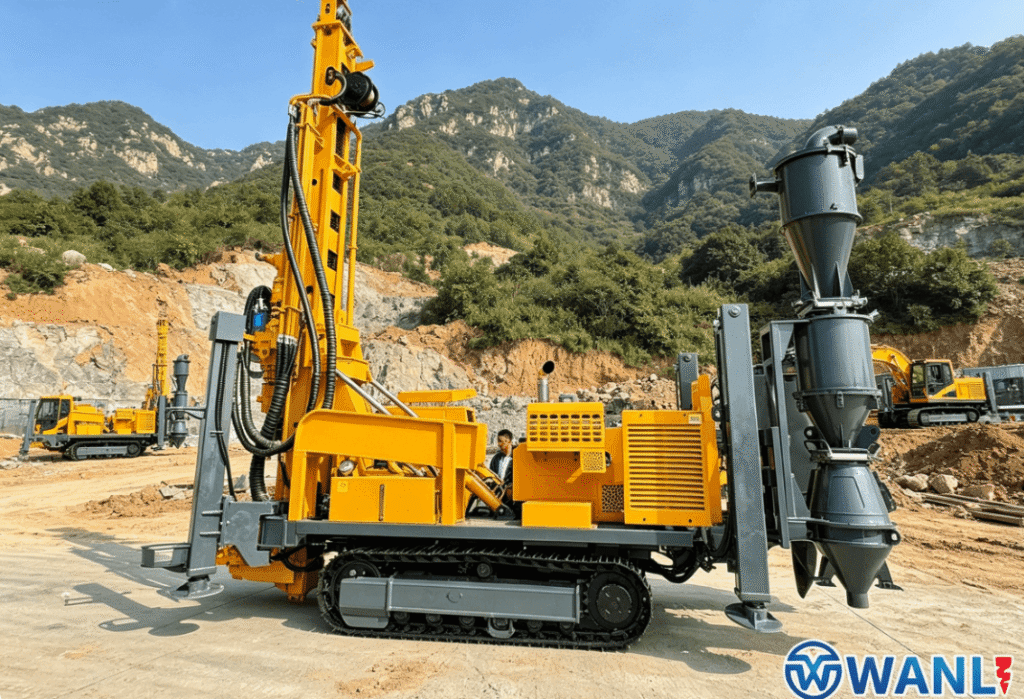
Once the cuttings reach the surface, they enter a cyclone system. The cyclone slows down the air velocity and allows the chips to drop. These chips are then collected in bags for laboratory analysis. The entire process happens in real-time as the rig progresses deeper. This allows for immediate on-site evaluation of the geological formations.
Performance Benefits of Using an RC Drilling Rig for Exploration
Speed is the most significant advantage of this drilling method in 2026. An RC drilling rig for exploration can penetrate hard rock much faster than diamond coring. It often achieves drilling rates of 100 to 200 meters per shift. This high productivity allows companies to complete large-scale surveys in weeks. Faster results lead to quicker decision-making for mining investors.
Superior Speed and Productivity?
The rapid penetration rate directly impacts the project timeline. An RC drilling rig for exploration reduces the time spent on each hole. This efficiency is critical when working in remote areas with limited seasons. Most projects in 2026 aim for maximum meterage with minimal downtime. High-speed drilling ensures the rig moves to the next site quickly.
Productivity also extends to the ease of setup and breakdown. Modern RC rigs feature automated rod handling systems. These systems reduce manual labor and improve overall site safety. A smaller crew can manage the entire drilling operation effectively. This streamlined approach maximizes the return on investment for the exploration company.
Unmatched Sample Quality and Integrity?
Sample integrity remains high despite the rapid drilling speed. The RC drilling rig for exploration recovers nearly 100% of the material. This provides a representative sample of the entire mineralized zone. Geologists can trust the data for calculating ore grades and volumes. Reliability in sampling is the foundation of any successful mining venture.
The closed-circuit nature of the drill string prevents outside contamination. Ground water or loose soil cannot mix with the extracted chips. This precision is essential for detecting low-grade gold or copper deposits. Every meter of the hole provides a clean geological record. Sample accuracy is the primary reason for choosing RC rigs over RAB methods.
Significant Cost Reduction per Meter?
Cost efficiency is a critical factor for exploration managers in 2026. Operating an RC drilling rig for exploration typically costs 30% to 40% less than diamond drilling. The reduction in cost comes from lower labor and faster completion. Additionally, RC drilling requires significantly less water than traditional core drilling. This makes it ideal for remote or arid environments.
| Performance Metric | RC Drilling Rig (2026) | Diamond Core Drilling |
| Average Daily Depth | 150 – 250 Meters | 40 – 60 Meters |
| Relative Cost | Lower (65%) | Higher (100%) |
| Sample Recovery Rate | 98% – 99% | 99% (Core) |
| Water Requirement | Minimal | High |
| Site Crew Size | 3 – 4 Persons | 4 – 6 Persons |
Technical Data and Operational Parameters
Technical specifications determine the effectiveness of an RC drilling rig for exploration. Most 2026 models feature powerful air compressors capable of 500 to 1,000 PSI. This pressure is necessary to lift cuttings from depths of 500 meters. High-torque rotation heads are also standard for handling various rock hardness levels. These components must work in perfect synchronization for optimal performance.
The weight and mobility of the rig affect its accessibility to remote sites. Many RC drilling rig for exploration models are mounted on crawler tracks. This design allows them to navigate steep slopes and uneven terrain. A typical medium-sized rig might weigh between 15 and 25 tons. This balance of power and mobility is essential for early-stage projects.
Fuel consumption is a major operational expense to consider. An RC drilling rig for exploration optimizes fuel use through advanced hydraulic systems. These systems provide power only when needed, reducing waste. Efficient engines also minimize the environmental footprint of the exploration site. Modern rigs often feature low-emission engines to meet 2026 standards.
Managing Air Pressure and Volume?
Air management is the heart of the reverse circulation process. The RC drilling rig for exploration must maintain consistent air volume. This volume ensures that heavy rock chips move up the inner tube. If the pressure drops, the hole can become blocked. Operators monitor digital gauges to ensure the pneumatic balance is perfect.
Modern rigs in 2026 use dual-stage compressors for better performance. These systems allow for deeper drilling without losing lifting power. The air must also be clean and dry to prevent hammer damage. High-quality filters and water separators are standard on professional exploration rigs. Proper air management extends the life of the entire drill string.
Rotation Torque and Pullback Capacity?
Rotation torque is necessary to turn the heavy drill string. An RC drilling rig for exploration needs high torque for deep holes. As the depth increases, the friction against the pipe also grows. A strong rotation head prevents the drill string from getting stuck. This feature is vital when drilling through fractured or difficult rock.
Pullback capacity determines the maximum depth the rig can handle. The rig must be able to lift the entire weight of the pipes. In 2026, most mid-range rigs offer 20 to 30 tons of pullback. This capacity ensures safe operation in deep mineral exploration projects. Always match the rig’s pullback rating to your target depth requirements.
How to Select the Right RC Drilling Equipment for Your Project?
Choosing the correct machine depends on your specific exploration goals. You must first determine the maximum depth required for your targets. If you need to reach 600 meters, you need a high-pressure compressor. An RC drilling rig for exploration with a 25-ton hoist is usually sufficient. Check the compressor capacity to ensure it can handle the load.
Consider the portability of the equipment if your site is remote. Crawler-mounted rigs offer the best stability for off-road exploration. You should also evaluate the ease of maintenance for the specific model. Rigs with accessible hydraulic components and standardized parts save time. Researching the latest RC reverse circulation drilling rig options helps identify the best fit for your terrain.
Performance history and reliability are the most important factors for value. You should examine the build quality of the mast and rotation head. A robust RC drilling rig for exploration provides years of reliable service. Evaluate the safety features, such as emergency stops and protective cages. These elements protect your crew while ensuring the project stays on track.
Summary
An RC drilling rig for exploration is the most efficient tool for mineral sampling in 2026. It combines rapid penetration speeds with high-quality, uncontaminated sample recovery. By choosing RC technology, companies significantly reduce exploration costs and timelines. This equipment provides the critical data needed to turn a prospect into a mine.
FAQ
1. What is the maximum depth an RC drilling rig for exploration can reach?
Most modern RC rigs in 2026 can reach depths between 400 and 600 meters. This depends on the compressor’s air pressure and the rig’s pullback capacity. Specialized systems can go deeper in very dry or stable geological conditions.
2. Why is RC drilling considered better for the environment?
It uses compressed air instead of water-based drilling muds to flush the hole. This eliminates the need for large mud pits and reduces water consumption significantly. The process generates less liquid waste and has a smaller physical footprint.
3. How does an RC drilling rig for exploration prevent sample contamination?
The system uses a dual-wall pipe where the sample travels up a protected inner tube. This prevents the rock chips from touching the borehole walls during transport. It ensures that the material collected at the surface is purely from the drill bit’s location.
4. Is RC drilling suitable for gold exploration in 2026?
Yes, it is the global industry standard for defining gold ore bodies. The speed allows for dense grid sampling to accurately map the grade of the deposit. It provides the large sample volumes needed for reliable fire assay testing in labs.
5. Can an RC rig be used in wet ground conditions?
Yes, but it requires higher air pressure and specialized tools like “super-hole” hammers. Large auxiliary compressors are often used to keep the sample dry and moving upward. High-pressure air effectively pushes groundwater out of the way to maintain sample integrity.
Reference Sources
ADIA (Australian Drilling Industry Association) The Drilling Manual and Industry Standards
USGS (United States Geological Survey) Mineral Exploration and Drilling Techniques