The success of a groundwater project depends less on the total power of a machine and more on the precise alignment between the drilling rig’s technical specifications and the geological environment. For contractors and project managers, “Water Well Drilling Solutions” are not one-size-fits-all products; they are engineered systems designed to overcome specific subterranean challenges.
Selecting the right borehole drilling equipment for water wells requires a deep understanding of torque, lifting capacity, and the fluid dynamics involved in chip removal. Whether you are operating in fractured hard rock or unstable alluvial plains, the equipment configuration determines your meters-per-hour efficiency and, ultimately, your project’s ROI.
Key Technical Factors Influencing Borehole Equipment Selection
Before evaluating specific models, engineers must define the technical boundaries of the project. The interaction between the drill bit and the formation dictates the mechanical stress the rig must endure.
- Geological Formation Compatibility: This is the primary decision driver. Soft formations (sand, clay) typically require rotary drilling with mud circulation to prevent borehole collapse. In contrast, hard rock formations (granite, basalt) necessitate DTH (Down-the-Hole) hammers powered by high-pressure air compressors.
- Drilling Depth and Diameter: Lifting capacity (pullback force) must exceed the total weight of the drill string plus an added safety margin for “stuck pipe” scenarios. For wells reaching 300 to 600 meters, hydraulic systems must provide consistent pressure without overheating.
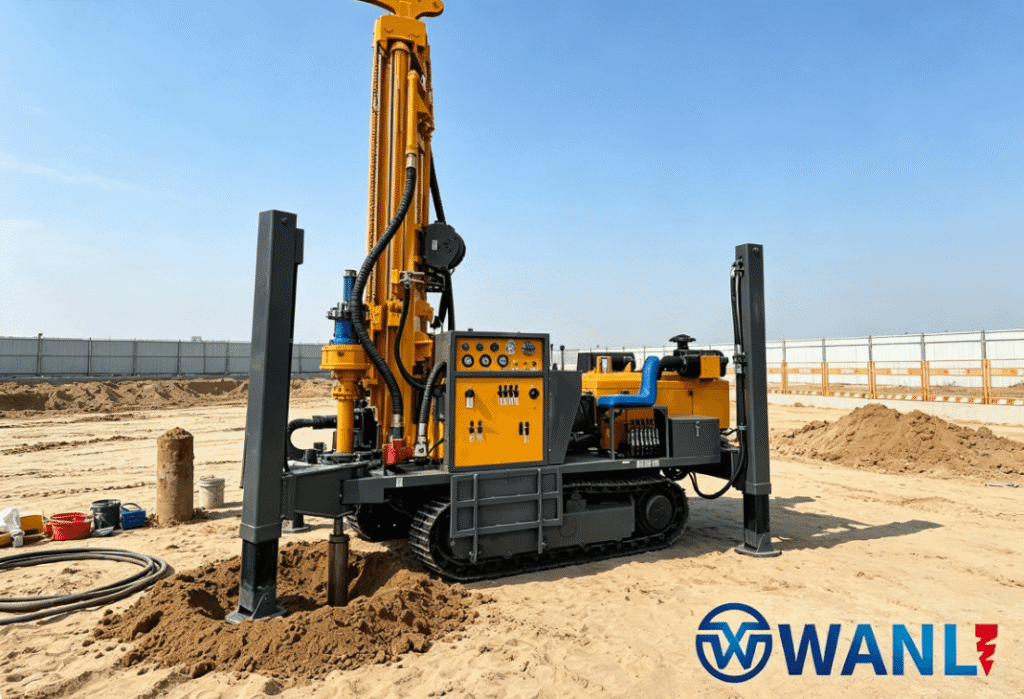
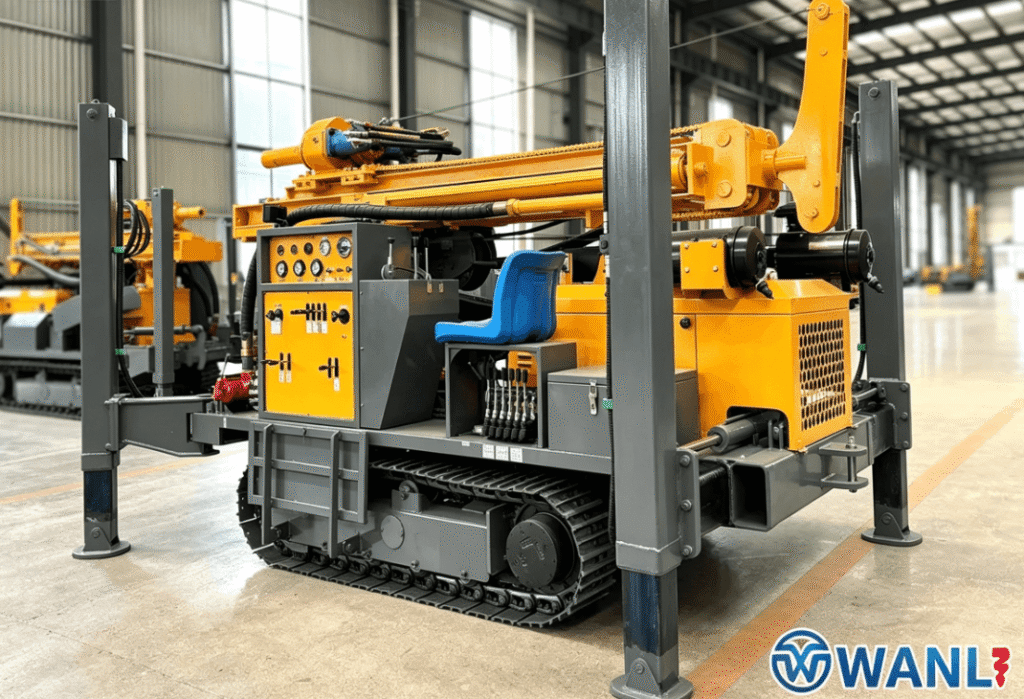
- Mobility and Site Access: In rural or mountainous regions, a crawler-mounted rig offers the necessary traction. For projects involving multiple sites across paved networks, truck-mounted or trailer-mounted solutions reduce mobilization time.
Matching Rig Configurations to Operational Environments
Modern water well drilling rigs are categorized by their chassis and power delivery systems. Each configuration addresses a specific logistical or geological constraint.
| Rig Type | Best Use Case | Key Advantage |
| Crawler-Mounted Rigs | Rugged terrain, soft soil, off-road sites. | Exceptional stability and low ground pressure. |
| Trailer-Mounted Rigs | Budget-conscious projects, agricultural use. | Easy to tow with existing fleet vehicles. |
| Truck-Mounted Rigs | Large-scale municipal projects, long-distance travel. | High-speed mobilization and integrated power. |
| Pneumatic (DTH) Rigs | Hard rock, mountainous regions. | Extremely fast penetration in consolidated strata. |
Hydraulic System Efficiency
Advanced borehole drilling equipment now utilizes load-sensing hydraulic systems. These systems direct power only where it is needed—whether for rotation or hoisting—reducing fuel consumption and mechanical wear. For industrial-scale water wells, multi-functional hydraulic rigs allow for a seamless transition between mud drilling and air drilling modes.
Critical Specifications for Deep Well Success
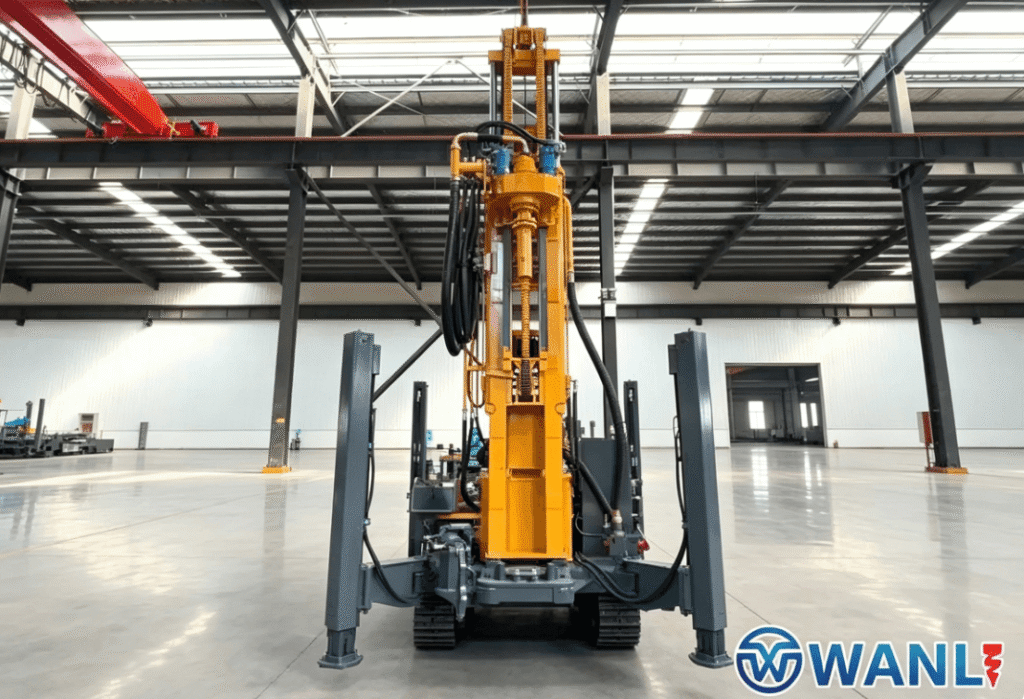
When reviewing technical data sheets, such as those provided for SDWanli Water Well Drilling Rigs, four metrics stand out as non-negotiable for professional operators:
- Lifting Force: For wells exceeding 400 meters, a lifting force of at least 15–20 tons is often required to manage the weight of the heavy-duty casings and drill rods.
- Rotary Torque: High torque is essential when using large-diameter bits (e.g., 300mm or larger) in sticky clay or dense formations to prevent the drill string from stalling.
- Walking Speed and Gradeability: For crawler units, the ability to climb 25–30 degree slopes is vital for reaching remote borehole locations in hilly regions.
- Power Plant Reliability: Diesel engines from reputable global brands (such as Quanchai or Yuchai) ensure that spare parts remain accessible regardless of the project’s geographic location.
The Role of Air Compressors in Borehole Drilling
A common oversight in procurement is the mismatch between the drilling rig and the air compressor. When using DTH technology, the compressor is the “engine” of the drilling process.
For efficient chip removal at depths of 200m+, the compressor must provide sufficient CFM (Cubic Feet per Minute) and PSI (Pounds per Square Inch). Insufficient air pressure results in “re-drilling” cuttings, which accelerates bit wear and slows down the penetration rate. High-efficiency solutions often integrate the compressor’s controls into the rig’s main operator panel for streamlined management.
Evaluating Manufacturers: Beyond the Machine
In the B2B procurement of heavy machinery, the “solution” includes the manufacturer’s support ecosystem. An equipment provider is also a technical consultant.
- Customization (OEM/ODM): Does the manufacturer allow for specific hydraulic component upgrades or chassis modifications? Professional manufacturers like SDWanli often offer variations in mast height and winch capacity to suit regional drilling standards.
- Material Science: The durability of the drill mast is critical. High-strength alloy steels are preferred to withstand the constant vibration of DTH hammering without developing fatigue cracks.
- Compliance and Safety: Ensure the equipment meets international safety standards, featuring emergency stop mechanisms, hydraulic locks, and shielded high-pressure hoses.
Procurement Framework for Water Well Drilling Solutions
For organizations moving toward a purchase, the following workflow ensures technical and commercial alignment:
- Formation Analysis: Conduct a geological survey to determine the ratio of soil to rock.
- Capacity Mapping: Match the rig’s maximum depth rating to 120% of your deepest intended well to ensure the machine is not constantly running at peak load.
- Logistics Planning: Evaluate if your current fleet can transport trailer units or if self-propelled crawlers are required for site access.
- Lead Time and Logistics: Confirm production schedules. Heavy drilling equipment often requires 15–30 days for manufacturing and rigorous factory testing before shipment.
By focusing on these engineering fundamentals, contractors can ensure that their borehole drilling equipment for water wells remains a high-performance asset rather than a maintenance liability.
FAQ
Q: What is the difference between mud drilling and air drilling?
A: Mud drilling uses a liquid medium (bentonite slurry) to carry cuttings to the surface and stabilize the borehole wall in soft ground. Air drilling (DTH) uses high-pressure air to power a hammer bit and blow cuttings out, making it ideal for hard rock.
Q: How do I choose between a crawler and a truck-mounted rig?
A: Choose a crawler if your work sites are off-road, muddy, or involve steep inclines. Choose a truck-mounted rig if you have projects spread across a large geographic area and need to travel on highways frequently.
Q: What is the typical lifespan of a hydraulic water well drilling rig?
A: With proper maintenance of the hydraulic filters, oil levels, and engine, a high-quality rig can operate for 10–15 years. The lifespan is largely dictated by the frequency of servicing and the quality of the components used during manufacturing.
Q: Can one rig handle both small domestic wells and large industrial wells?
A: Many modern rigs are “multi-functional.” However, using a large 600m-capacity rig for a 30m domestic well is often not cost-effective due to fuel consumption and mobilization costs. It is best to match the rig size to the majority of your project types.
Reference Sources
- International Society for Soil Mechanics and Geotechnical Engineering (ISSMGE): Technical reports on borehole stability and drilling fluid dynamics.
- ISO 18674: Measurement of pore water pressure and geotechnical monitoring standards for drilling.
- American Ground Water Trust (AGWT): Industry standards for water well construction and equipment efficiency.
- Manufacturer Technical Documentation: Specifications for hydraulic torque and pullback systems (Reference: SDWanli Technical Specs).